

Politics
Trump-Zelensky talks yield no progress on Ukraine-Russia territorial issues

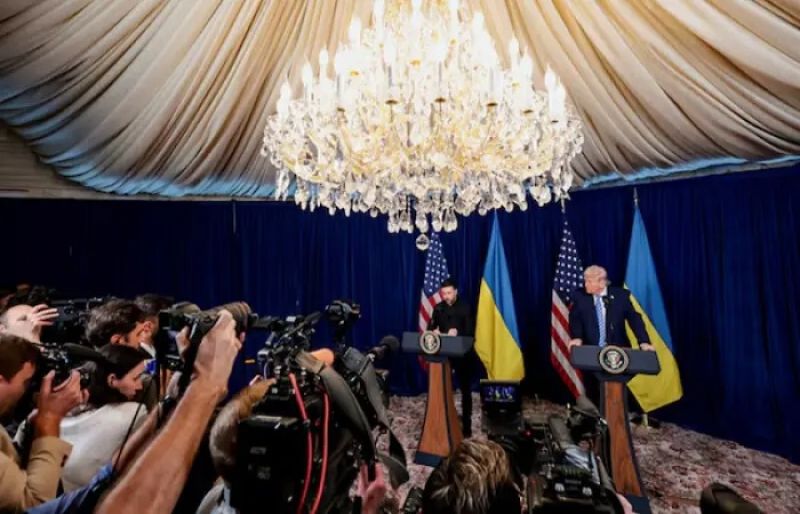

Russia and Ukraine on Monday remained far apart on territorial issues that are blocking a peace deal, despite progress on security guarantees for Kyiv at talks between US President Donald Trump and Ukrainian leader Volodymyr Zelensky.
Trump said after his talks with the Ukrainian president on Sunday that they were “getting a lot closer, maybe very close” to an agreement to end Russia’s war in Ukraine, but that “thorny issues” were still there.
Zelensky said two main issues outlined in a 20-point peace proposal remained to be resolved – control of Ukraine’s Zaporizhzhia nuclear power station, which is in Russian hands, and the fate of the Donbas area of eastern Ukraine.
“Two questions remain: the station – how will the station operate? – and the territory,” Zelensky told reporters on Monday.
Underlining how far apart Kyiv and Moscow are on territory, Kremlin spokesman Dmitry Peskov said Ukraine must withdraw its troops from the small part of Donbas that it still controls, and that Kyiv would lose more land if it did not agree to a deal.
“We are talking about the withdrawal of the regime’s armed forces from the Donbas,” Peskov said.
He said a call was planned soon between Trump and Russian President Vladimir Putin, but did not say when.
Security Guarantees
Trump’s decision to hold talks with Zelensky in Florida on Sunday had widely raised hopes of at least some progress being made towards ending what has become Europe’s deadliest conflict since World War Two.
Russia controls about a fifth of Ukraine, including the Crimean peninsula, which it annexed in 2014. It claims Donbas – comprising the Donetsk and Luhansk regions – as well as the Zaporizhzhia and Kherson regions, although they are all internationally recognised as Ukraine’s sovereign territory.
Russia wants Kyiv to withdraw troops from parts of the Donetsk region it has failed to occupy in four years of war since its invasion of Ukraine in February 2022. Kyiv wants fighting halted along the current front lines, and Washington has proposed a free economic zone if Ukraine pulls troops back.
“There is no detailed concept for a free economic zone yet,” Zelensky said.
Russia has rejected the idea of a ceasefire to allow a referendum to be held on any territorial concessions by Ukraine.
One sign of progress on Sunday came when Zelensky said a bilateral agreement had been reached on security guarantees for Kyiv, although Trump said they were only 95pc ready.
“I told (Trump) that we have been at war for almost 15 years, and would very much like the guarantees to be for longer,” Zelensky said, adding that he had asked Trump to consider a security deal for up to 50 years.
Trump said on Sunday he expected European countries to “take over a big part” of that effort with US backing. Agreement on such moves could be complicated, as Russia has said any foreign troop deployment in Ukraine would be unacceptable.
French President Emmanuel Macron said progress was being made on security guarantees, and countries in the so-called “Coalition of the Willing” would meet in Paris in early January to “finalise concrete contributions”.
Trust between Russia and Ukraine is low.
Despite the recent peace overtures and some exchanges of prisoners of war, mistrust runs deep between Ukraine and Russia.
Russia launched a heavy attack on Ukraine before the talks in Florida began, and has stepped up attacks on Ukraine’s energy facilities as winter approached. Large parts of the capital Kyiv were without power on Monday after the strike, as temperatures were below freezing.
Trump repeated on Sunday, after his call with Putin, that he believed the Russian leader wants the war to end.
“In my opinion, (Putin’s) actions do not coincide with the seemingly peaceful rhetoric he uses in his dialogue with the US president,” Zelensky said, questioning Putin’s commitment to peace.
Zelensky said he was open to any format of communication with Russia, and a meeting would be possible after Trump and European leaders agree on the framework for peace. Peskov said no call between Putin and Zelensky was being discussed.
Putin has said Russia will achieve its aims in Ukraine by force if Kyiv does not want to resolve the conflict diplomatically – making clear it must accept Moscow’s demands.
Several Ukrainians who spoke to Reuters in Kyiv on Monday voiced scepticism about prospects for a lasting peace.
“Putin doesn’t need territory; he doesn’t need Donbas — he wants to destroy the Ukrainians. He destroys us as a nation,” said Nadiia Yevtushenko, a 57-year-old Kyiv resident.
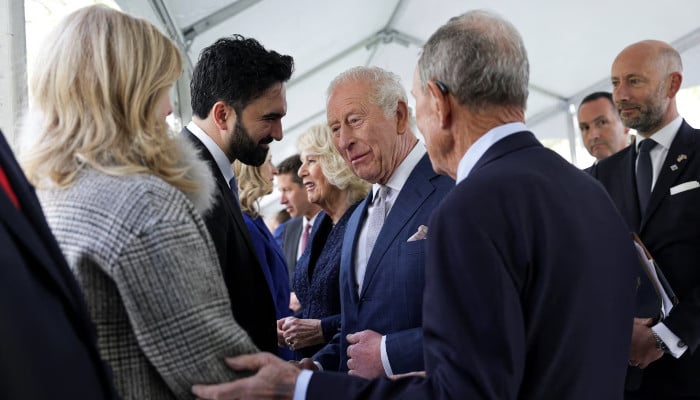
New York City Mayor Zohran Mamdani said on Wednesday he encourages Britain’s King Charles to return the Koh-e-Noor Diamond, with his comments coming during the British monarch’s ongoing US visit.
“If I were to speak to the king separately from that, I would probably encourage him to return the Koh-e-Noor Diamond,” Mamdani, who is Indian American, said when asked at a press conference hours before a ceremony that commemorated victims of the deadly September 11, 2001, attacks.
Later in the day, the king spoke with Mamdani at the ceremony. Buckingham Palace declined to comment. Mamdani’s office did not respond to a request to comment on whether Mamdani brought up the issue with the king.
India has previously repeatedly demanded that Britain return the 105-carat diamond.
Britain’s then colonial governor-general of India arranged for the huge diamond to be presented to Queen Victoria in 1850 after the East India Company had annexed the region of Punjab in 1849 and taken the diamond from a deposed Indian leader.
Charles on Wednesday commemorated victims of the September 11, 2001, attack on New York City, laying a floral bouquet at the memorial where the World Trade Centre’s twin towers once stood.
India received independence from British rule in 1947. The British colonisation of India and the widespread atrocities committed against people during that period remain sensitive issues in the country.
India has previously said the diamond was a “valued piece of art with strong roots in our nation’s history.” The diamond’s possession by the British is seen by many Indians as a symbol of colonial atrocities during British rule.
The diamond has been previously owned by India’s Mughal emperors, shahs of Iran, emirs of Afghanistan, and Sikh maharajas, according to the Historic Royal Palaces charity.
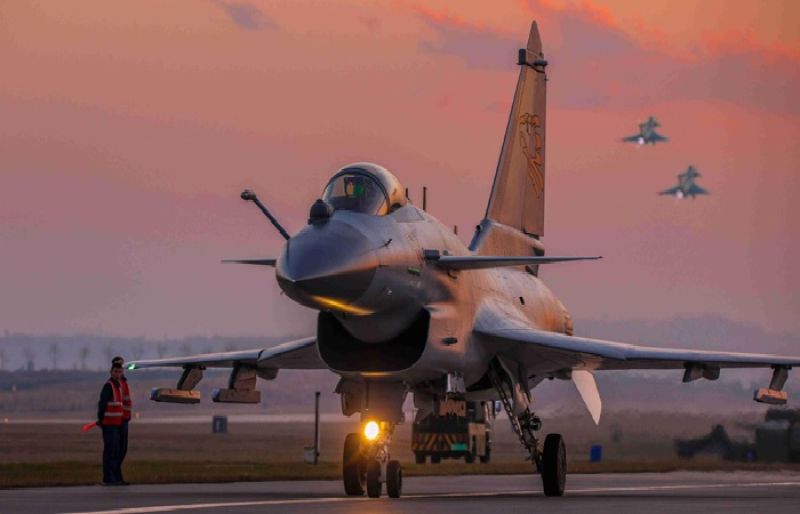
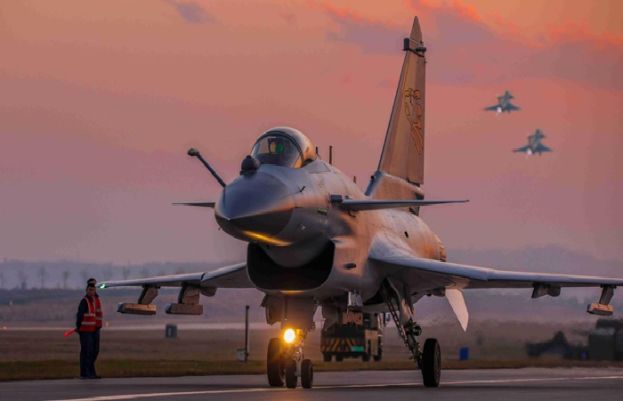
China’s AVIC Chengdu Aircraft Corporation, the maker of J-10C aircraft used by Pakistan to down India’s French-made planes in May last year, has reported a significant surge in profits, according a report by Bloomberg.
Revenue increased by 15.8% to 75.4 billion yuan ($11 billion) in 2025, with profit up 6.5% to 3.4 billion yuan in 2025, the publication cited the jetmaker as saying in a statement.
The numbers are the highest-ever for the company, Bloomberg reported, adding that Chengdu’s first-quarter sales rose almost 80% on year.
The Pakistan Air Force (PAF) inducted J-10C in March 2022, in a major boost to the country’s military capabilities to defend airspace.
At the time, the government said that the fighter jet could carry more advanced, fourth-generation air-to-air missiles, including the short-range PL-10 and the beyond-visual-range PL-15.
The fighter jet saw its first combat use in May 2025 when India launched an unprovoked attack on Pakistan on May 6, following an attack on tourists in the Indian Illegally Occupied Jammu and Kashmir.
Pakistan, during the 87-hour conflict, downed seven Indian fighter jets, including French-made Rafale, and dozens of drones.
The four-day war saw Pakistan successfully employing the Chinese-made HQ-9 air-defence system, PL-15 air-to-air missiles, and J-10C fighter aircraft, credited with downing multiple Indian aircraft.
The PAF also used its JF-17 Thunder jets to destroy India’s S-400 air defence system in Adampur by using hypersonic missiles.
The war between the two nuclear-armed nations ended on May 10 with a ceasefire agreement brokered by the US.
Months after the conflict, Inter-Services Public Relations (ISPR) Director-General (DG) Lieutenant General Ahmed Sharif Chaudhry praised the performance of Chinese-made weapons, saying they performed “exceptionally well. “Of course, lately, recent Chinese platforms, they’ve demonstrated exceptionally well,” Lt Gen Chaudhry said in an interview in October last year.
In November last year, a report presented to the United States Congress acknowledged Pakistan’s “military success over India” in the war.
The US-China Economic and Security Review Commission report — reviewing US-China security and foreign affairs — stated that Pakistan employed advanced Chinese weaponry to enhance its military edge over India.
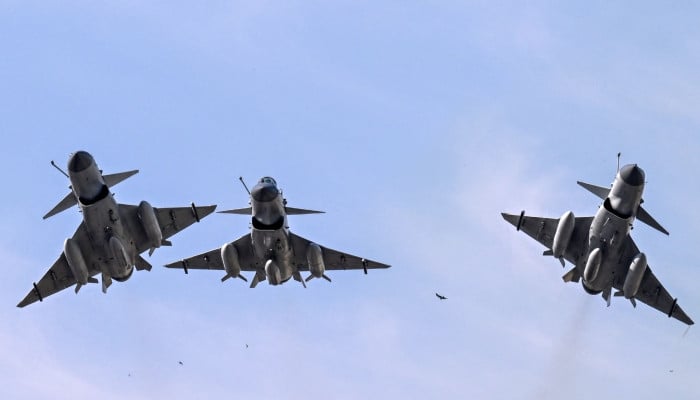
- Revenue up by 15.8% to 75.4 billion yuan in 2025: report.
- Company’s profits up by 6.5% to 3.4 billion yuan in 2025.
- Chengdu sales in first-quarter rose almost 80% on year.
China’s AVIC Chengdu Aircraft Corporation, the maker of J-10C aircraft used by Pakistan to down India’s French-made planes in May last year, has reported a significant surge in profits, according a report by Bloomberg.
Revenue increased by 15.8% to 75.4 billion yuan ($11 billion) in 2025, with profit up 6.5% to 3.4 billion yuan in 2025, the publication cited the jetmaker as saying in a statement.
The numbers are the highest-ever for the company, Bloomberg reported, adding that Chengdu’s first-quarter sales rose almost 80% on year.
The Pakistan Air Force (PAF) inducted J-10C in March 2022, in a major boost to the country’s military capabilities to defend airspace.
At the time, the government said that the fighter jet could carry more advanced, fourth-generation air-to-air missiles, including the short-range PL-10 and the beyond-visual-range PL-15.
The fighter jet saw its first combat use in May 2025 when India launched an unprovoked attack on Pakistan on May 6, following an attack on tourists in the Indian Illegally Occupied Jammu and Kashmir.
Pakistan, during the 87-hour conflict, downed seven Indian fighter jets, including French-made Rafale, and dozens of drones.
The four-day war saw Pakistan successfully employing the Chinese-made HQ-9 air-defence system, PL-15 air-to-air missiles, and J-10C fighter aircraft, credited with downing multiple Indian aircraft.
The PAF also used its JF-17 Thunder jets to destroy India’s S-400 air defence system in Adampur by using hypersonic missiles.
The war between the two nuclear-armed nations ended on May 10 with a ceasefire agreement brokered by the US.
Months after the conflict, Inter-Services Public Relations (ISPR) Director-General (DG) Lieutenant General Ahmed Sharif Chaudhry praised the performance of Chinese-made weapons, saying they performed “exceptionally well,” The News reported, citing Bloomberg.
“Of course, lately, recent Chinese platforms, they’ve demonstrated exceptionally well,” Lt Gen Chaudhry said in an interview in October last year.
In November last year, a report presented to the United States Congress acknowledged Pakistan’s “military success over India” in the war.
The US-China Economic and Security Review Commission report — reviewing US-China security and foreign affairs — stated that Pakistan employed advanced Chinese weaponry to enhance its military edge over India.


EU laws push APAC factories towards data over certificates

David Allan Coe, country singer who wrote “Take This Job and Shove It,” dies at age 86

EU a step closer to extending GSP for 10 more years
Us-India Trade Talks: US–India trade deal: Where do talks stand & what to expect – explained – The Times of India

PSL 11: Hyderabad Kingsmen opt to field after winning toss against Multan Sultans

Trump administration in advanced talks for a rescue package for Spirit Airlines, source says

-
Business1 week ago
Us-India Trade Talks: US–India trade deal: Where do talks stand & what to expect – explained – The Times of India
-
 Sports1 week ago
PSL 11: Hyderabad Kingsmen opt to field after winning toss against Multan Sultans
-
Business1 week ago
Trump administration in advanced talks for a rescue package for Spirit Airlines, source says
-
 Business1 week ago
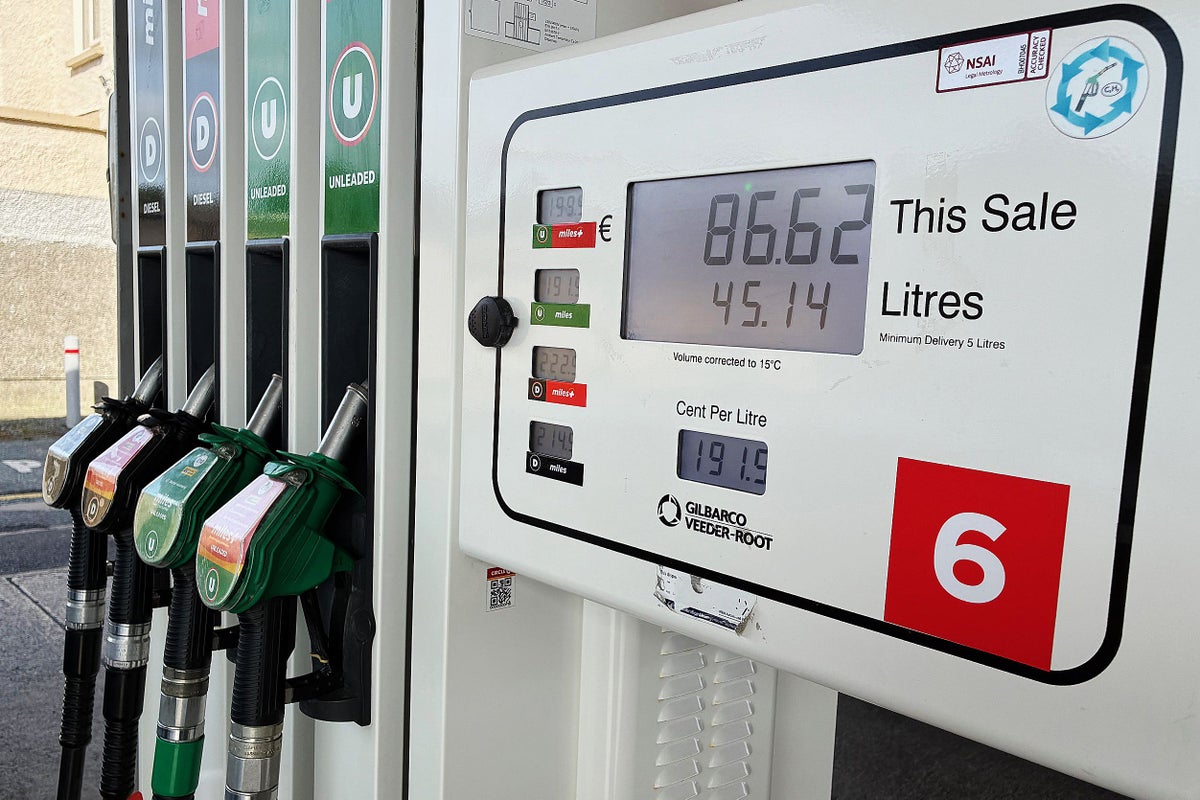
UK inflation accelerates after Iran war drives sharp rise in fuel prices
-

 Tech1 week ago
Nation states responsible for ‘nationally significant’ cyber attacks against UK, says NCSC chief | Computer Weekly
-

 Tech1 week ago
Microsoft faces court battle in £2bn Windows Server class action | Computer Weekly
-

 Entertainment1 week ago
Anne Hathaway shares major news about ‘Princess Diaries 3’
-

 Tech1 week ago
Blackbox replaces two racks of HPE storage with 8U of Everpure | Computer Weekly