

Business
Trump’s tariffs struck down, what’s next? SBI suggests adopting a ‘counter-intuitive’ approach – The Times of India

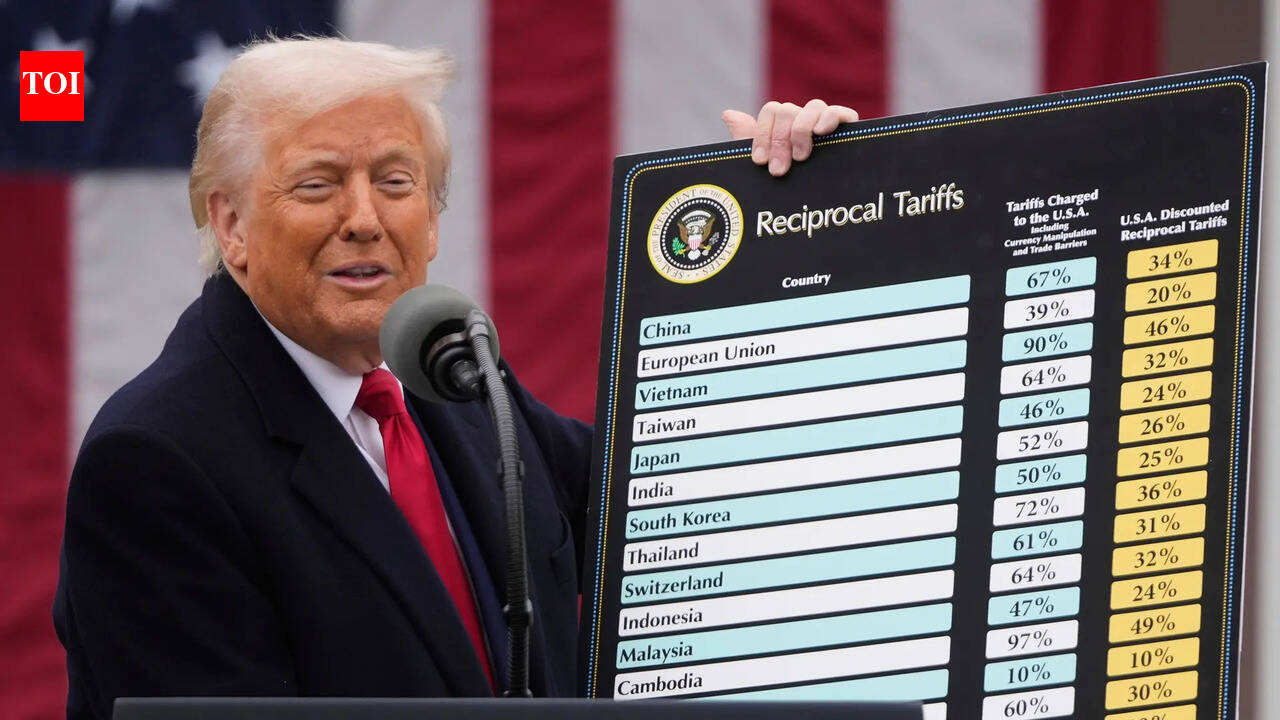
US Supreme Court’s recent striking down of President Donald Trump’s tariff framework could lift the policy outlook and influence the current climate of uncertainty. A recent report by SBI Research has suggested that countries may have to negotiate with a “counter-intuitive” approach in the interim phase, given that the final say on tariff matters rests with a closely divided US Congress.It further cautioned that the interaction between inter-sovereign treaties and the actions of juristic persons on tariff issues could complicate, and possibly disrupt, the effort to establish a consistent tariff regime.
“Unscrapping of the tariff structure by the Court(s) can upend uncertainty going forward while jurisdictions need to put in place counter intuitive negotiation to position themselves strategically in the intermittent period where ultimate power lies with a delicately balanced US Congress,” the report stated.The assessment comes after a landmark judgment by the US Supreme Court, which invalidated the President’s use of the International Emergency Economic Powers Act (IEEPA), 1977, to levy tariffs. SBI Research pointed out that the statute had never previously been deployed by any President for tariff imposition and has limited grounding during peacetime.Meanwhile, after the verdict, the executive branch has turned to Section 122 of the Trade Act of 1974 to introduce a temporary 10% global tariff on all imports into the United States. The report highlighted that this is the first time Section 122 powers have been exercised. The measure will come into force on 24 February 2026 and is set to run for 150 days, ending in July unless Congress approves its continuation.Under provisions of the Trade Act, the President may impose temporary import surcharges of up to 15% or apply quotas to address balance of payments concerns. Such actions, however, cannot extend beyond 150 days unless lawmakers pass legislation to prolong them.The newly imposed 10% tariff includes carve-outs. Goods from Canada and Mexico that meet the requirements of the US-Mexico-Canada Agreement (USMCA) are exempt, as are certain national security tariffs that are already operational.SBI Research expects the administration to use the interim window to complete investigations and potentially impose tariffs through Section 301 and Section 232 mechanisms.The report also observed that the court’s ruling may not fully block Trump from introducing similar tariffs under other statutory authorities.It further warned of implications for existing trade arrangements. Because IEEPA-related tariffs have supported trade agreements worth trillions of dollars, including those involving China, the United Kingdom and Japan, the judgment could create fresh uncertainty around several current deals, the report said.

The platforms have grown in popularity, with some users making bets on global events.
Source link
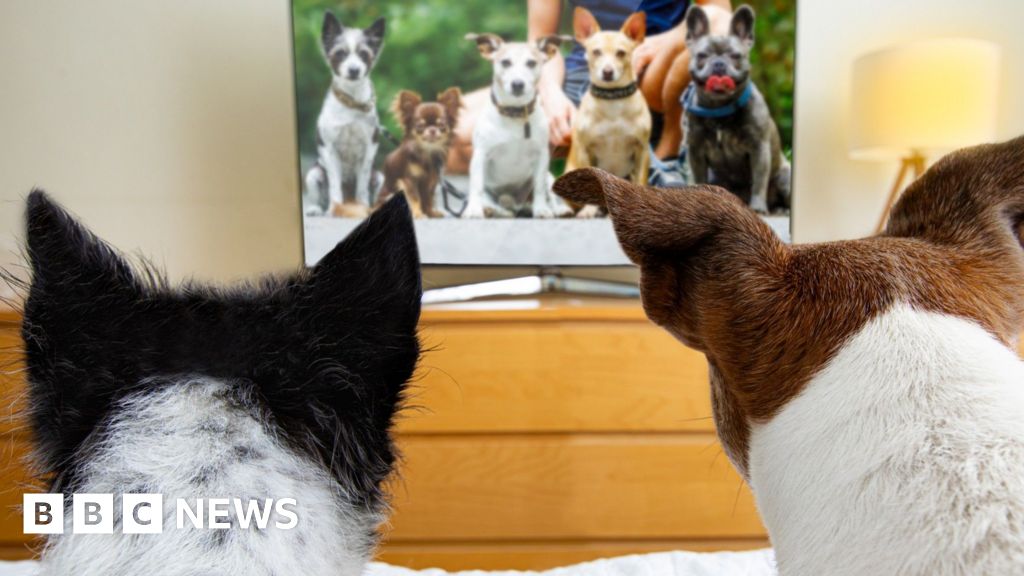
TV channels for dogs are multiplying but research is mixed on whether dogs are watching.
Source link
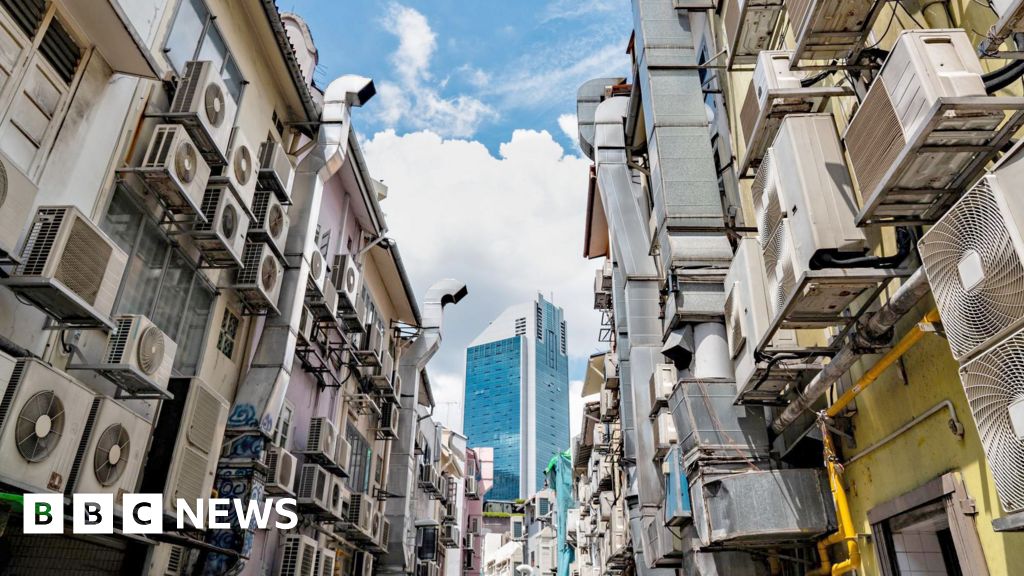
The rise in energy prices has hit Asia particularly hard as many nations are heavily reliant on Gulf oil.
Source link


Bangladesh garment exports down, March sees steeper drop

South Korea’s apparel imports rise slightly to $1.9 bn in Jan-Feb

Khamenei says Iran does not want war but ‘criminal agressors’ won’t go unpunished

-
 Business1 week ago
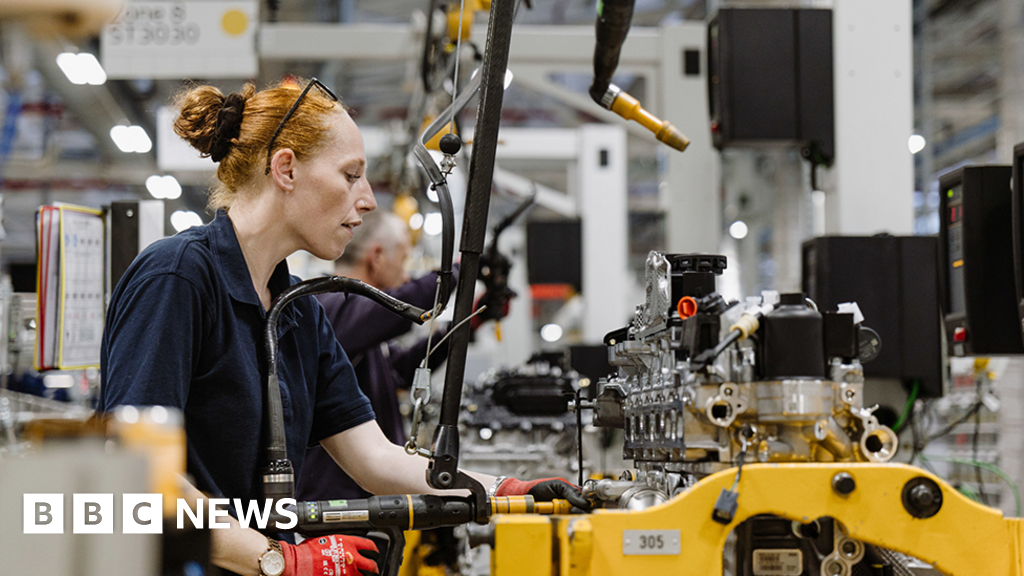
Jaguar Land Rover sees sales recover after cyber attack
-
Uncategorized1 week ago
[CinePlex360] Please moderate: “Trump signals p
-

 Entertainment6 days ago
Joe Jonas shares candid glimpse into parenthood with Sophie Turner
-

 Tech6 days ago
Our Favorite iPad Is $50 Off
-
 Sports6 days ago
UConn Final Four run could trigger a $50M furniture giveaway for Massachusetts-based Jordan’s Furniture
-

 Entertainment6 days ago
Blake Lively reacts to harassment claims dismissal against Justin Baldoni
-
 Fashion1 week ago
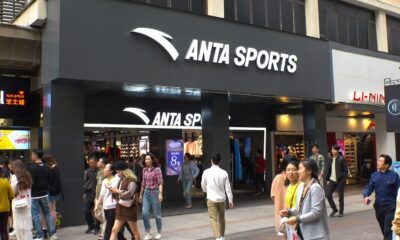
China’s Anta Sports posts record $11.62 bn revenue in 2025
-

 Sports7 days ago
PSL 11: Lahore Qalandars defeat Multan Sultans in rain-shortened clash