

Business
TUC in call for gender equality over pensions


Retired women effectively go more than four months every year without getting a pension because of a gender gap, according to research.
The TUC estimated women were losing the equivalent of £7,600 a year on average.
The union organisation said compared to men, retired women effectively stop receiving pension income from today.
The income gap between men and women in retirement is now 36.5%, according to research from the Prospect union.
The Government has revived the Pension Commission, which will bring together unions, employer and independent experts to look into the causes of the gap.
TUC general secretary Paul Nowak said: “Everyone deserves dignity and security in retirement, but too many retired women have been left without enough to get by.
“We must make sure that these inequalities are addressed for future generations.
“That’s why reviving the Pensions Commission – bringing together unions, employers and independent experts – is a vital step forward.
“We now have a chance to make sure everyone, including women, receive the decent retirement income that all workers need.”
A Government spokesperson said: “We’re determined to close the gender pensions gap, and the new state pension has already reduced historic inequalities faced by women and low earners.
“Alongside this, the Pensions Commission will tackle barriers to close the gender pensions gap in private pensions to ensure women have the dignity and security they deserve in retirement.”
Business
Asian stocks today: Markets inch higher on US-Iran peace hopes; Nikkei jumps 2%, HSI adds 360 points – The Times of India

Asian stocks edged higher on Thursday, as investor sentiments were lifted by hopes of United States and Iran extending their ceasefire and moving a step closer to reopening the crucial Strait of Hormuz. The gains were led by Japan’s Nikkei, which was up 1,214 points or 2% to 59,348. In South Korea, Kospi jumped 1.7% to 6,195. Hang Seng Index of Hong Kong, followed the rally, adding, 360 points. Shanghai and Shenzhen were also trading in green, up 0.5% and 1%. Meanwhile, Singapore’s benchmark STI recorded a marginal dip, down 1 point as of 10:30 am IST.The broader rally across the region came after a strong session on Wall Street, where benchmark indices touched all-time highs. While S&P 500 closed above the 7,000 mark, Nasdaq ended higher than 24,000.Attention is pinned on diplomatic efforts to end the Middle East conflict, which is now nearing its seventh week. Officials from Washington and Tehran are expected to convene in Islamabad for a second round of talks, with both sides exploring a pathway to de-escalation.White House Press Secretary Karoline Leavitt said that further negotiations “would very likely” take place in the Pakistani capital. “Those discussions are being had,” she noted, adding that “we feel good about the prospects of a deal”.US Vice President JD Vance, who led the earlier round of negotiations, described the proposal on the table as a “grand bargain” aimed at ending the conflict.A Pakistani delegation has arrived in Tehran carrying a fresh communication from Washington, after US President Donald Trump indicated talks could restart this week. An Iranian foreign ministry spokesman said “several messages” had been exchanged through Islamabad since discussions concluded on Sunday.However, tensions have not eased entirely as Iran warned it could extend disruptions beyond the Gulf by shutting down the Red Sea and the Sea of Oman unless the United States removes a naval blockade imposed on its ports after last weekend’s failed negotiations.On the economic front, IMF Managing Director Kristalina Georgieva cautioned that “tough times ahead” could follow if the conflict continues and energy prices remain high, adding that inflation risks may begin to affect food costs.In commodities, oil prices remained largely unchanged and stayed below $100 per barrel, as traders continued to watch developments around the Strait of Hormuz, a crucial route for around a fifth of global oil and gas supplies that has effectively been closed by Iran.

Citigroup initiated its coverage of Pine Labs with a buy rating and a target price of Rs 235. Analysts said that India’s payments fintech is on a monetization improvement trajectory, with leading players increasingly entrenched in respective core areas of leadership. While product, services and distribution build-outs into comprehensive plays will continue across the fintech ecosystem, large players don’t face significant disruption risks owing to: Across-the-board profitability push; rising regulatory costs and compliance requirements; and stickiness borne out of integration into enterprise business workflows. Further, while consumer payments have seen flux in competitive positioning in the past decade, there have been relatively fewer changes in positioning and leadership within segments in merchant payments.BoFA Securities has initiated its coverage of Groww (Billionbrains Garage Ventures) with a buy rating and a target price of Rs 235. Analysts said Groww is well positioned to capitalize on India’s retail investing tailwinds and they expect compounded annual growth rate (CAGR) for revenue at 30% over FY26-FY28. The company produces best-in-class profitability with further upside from operating leverage. Analysts have valued Groww at 39x FY28E price-to-earnings. They, however, said that the near-term risks for the stock are a weak capital market performance and the expiry of the six-month lock-in of shares post-IPO.Elara Capital initiated its coverage of Jindal Saw with a buy rating and a target price of Rs 280. Analysts said earnings recovery is expected over FY27–FY28, driven by water, and oil & gas demand. The company’s order book is at an all-time high, indicating strong visibility. They also feel Jal Jeevan Mission spending revival to drive domestic pipe demand, while the global pipeline capex is supported by energy security concerns. Analysts also pointed out that exports are rising, with diversification reducing dependence on domestic capex. The company’s capacity expansion to support margins and operating leverage. They feel the stock’s valuations are attractive, with rerating potential driven by execution and growth.Jefferies has downgraded Indus Towers to underperform from buy with a target price cut to Rs 375 from Rs 530. Analysts downgrade the stock due to site-renewal risks bunched up over second half of 2026 (H2CY26) and first half of 2027 (H1CY27) which could impact revenues and growth. Elevated capex levels due to higher growth and maintenance capex which will impact earnings growth as well free cash flow and payouts. They cut Indus Towers’ revenue and profit after tax (PAT) estimates by 2-6% to factor renewal risks post which stock offers 3% EPS growth and a 4% yield. They said risks on growth outlook should weigh on re-rating potential too.Kotak Institutional Equities has a buy on Ujjivan SFB with a target price of Rs 72. Analysts said that the RBI has returned Ujjivan SFB’s application for a universal bank license, citing need for further loan portfolio diversification. While the outcome is clearly not favourable, the regulator has flagged no concerns relating to governance, compliance or operational soundness. Analysts said their investment thesis did not factor in any benefit from a potential transition to a universal bank. Hence, they maintained a buy but remained watchful of any sharp changes in asset mix strategy in response to RBI’s feedback.(Disclaimer: Recommendations and views on the stock market, other asset classes or personal finance management tips given by experts are their own. These opinions do not represent the views of The Times of India)
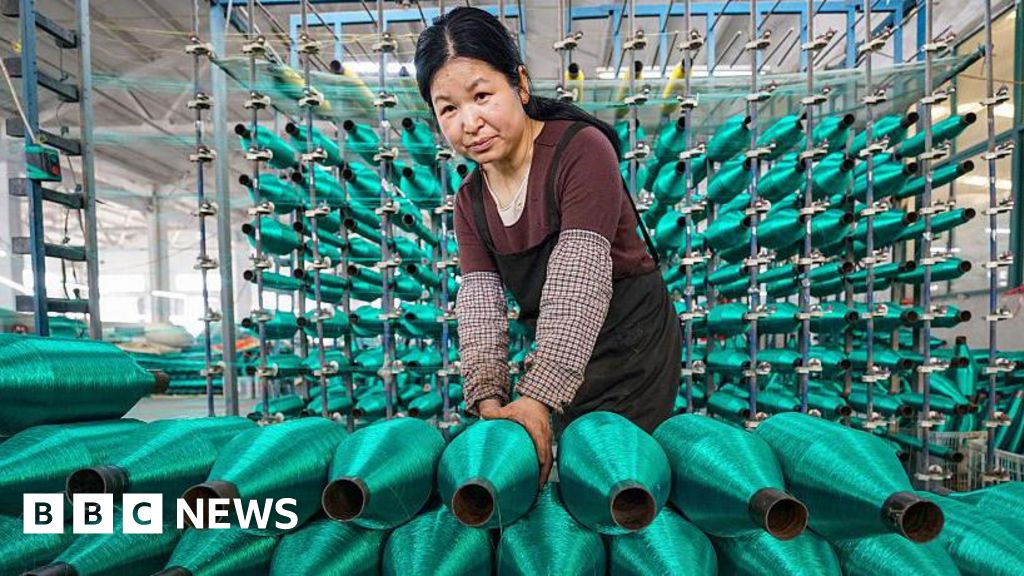
The better-than-expected GDP data comes as Asian countries have been hit hard by the impact of the conflict.
Source link

Asian stocks today: Markets inch higher on US-Iran peace hopes; Nikkei jumps 2%, HSI adds 360 points – The Times of India

Switzerland’s apparel imports grow double-digit in Jan–Feb 2026

No vote after NCAA urges further study of age eligibility changes to college sports

-

 Fashion1 week ago
India’s exports face reset as EU links trade to carbon metrics: EY
-

 Entertainment1 week ago
Lamar Odom shocking response to Khloé Kardashian account of his overdose
-

 Entertainment1 week ago
Queen Elizabeth II emotional message for Archie, Lilibet sparks speculation
-

 Tech1 week ago
Azure customers up in arms over ‘full’ UK South region | Computer Weekly
-

 Tech1 week ago
As the Strait of Hormuz Reopens, Global Shipping Will Take Months to Recover
-

 Fashion1 week ago
CII submits 20-pt agenda to Indian govt to back firms hit by Iran war
-

 Tech7 days ago
This AI Button Wearable From Ex-Apple Engineers Looks Like an iPod Shuffle
-

 Politics6 days ago
Indian airlines hit hardest after Dubai limits foreign flights until May 31