

Politics
Turkey, Muslim allies back Palestinian self-governance as key to Gaza’s future

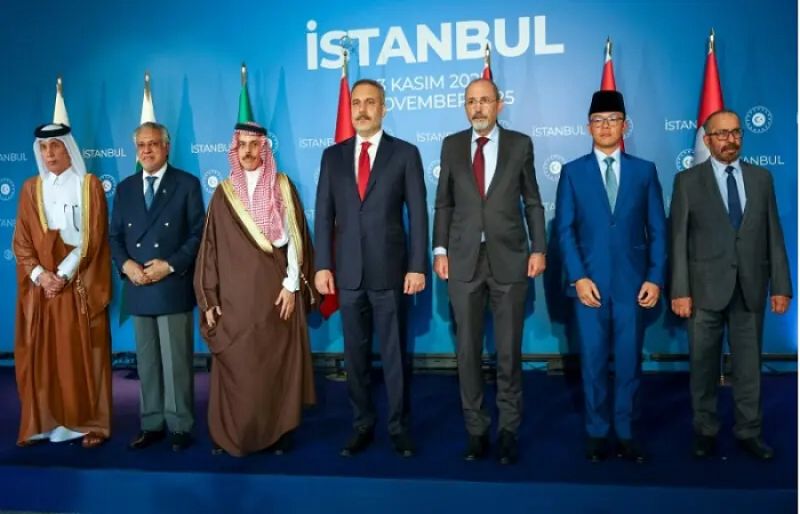

Gaza’s future must be determined and led by Palestinians themselves, Turkey and six key Muslim nations declared on Monday following high-level talks in Istanbul — warning against any new form of external control over the war-ravaged territory.
Turkey, which played a pivotal role in brokering the now fragile three-week-old ceasefire, urged Muslim countries to use their collective influence in shaping Gaza’s reconstruction and long-term stability.
“Our clear principle is that Palestinians should govern themselves and ensure their own security,” Turkish Foreign Minister Hakan Fidan said at a post-meeting news conference.
“The international community should support this in the best possible way — diplomatically, institutionally, and economically. No one wants to see a new system of tutelage emerge.”
The October 10 ceasefire, brokered by US President Donald Trump to end two years of relentless fighting, has remained uneasy amid renewed Israeli strikes and reports of Palestinian attacks on Israeli forces.
The Istanbul meeting brought together foreign ministers from Saudi Arabia, Qatar, the United Arab Emirates, Jordan, Pakistan, and Indonesia — all of whom were previously consulted by Trump in September during the UN General Assembly before he unveiled his Gaza peace plan.
“We’ve now reached a critical juncture,” Fidan said. “We do not want the genocide in Gaza to resume.” He added that all seven nations supported allowing Palestinians to take full control of Gaza’s security and governance.
Fidan, who met over the weekend with a Hamas delegation led by chief negotiator Khalil al-Hayya, said the group was “ready to hand Gaza’s administration to a Palestinian committee.”
He also voiced optimism that ongoing reconciliation talks between Hamas and the West Bank-based Palestinian Authority “will bear fruit soon,” adding that unity between Palestinian factions would “strengthen Palestine’s position within the international community.”
Earlier, Turkish President Recep Tayyip Erdoğan said Hamas was “committed to upholding the ceasefire agreement” and called on Muslim nations to take “a leading role” in Gaza’s recovery and reconstruction.
“We believe the reconstruction plan prepared by the Arab League and the OIC (Organisation of Islamic Cooperation)should be implemented immediately,” he said of the plan unveiled in March.
Task force needs UN mandate
Turkey has been instrumental in backing Hamas, whose October 7, 2023 attack on Israel sparked the war in Gaza.
Fidan said it was crucial that the emerging International Stabilisation Force that will monitor the Gaza ceasefire under Trump’s plan, have a “mandate defined by a UN Security Council resolution and a framework for legitimacy”.
Washington is currently working with Arab and international partners to decide on the composition of the force, with Turkey hoping to play a role, despite fierce opposition from Israel.
“The countries we’ve spoken with say they will decide whether to send troops based on … the ISF’s mandate and authority,” Fidan said.
“First, a general consensus needs to be reached on a draft, then it needs to be approved by the members of the Security Council.
“And it needs to be free from vetoes by any of the permanent (UNSC) members,” he said of a blocking move frequently used by key Israel ally Washington.
Israel has long viewed Turkey’s diplomatic overtures with suspicion over Ankara’s close ties with Hamas and adamantly opposes it joining the task force that is meant to take over after Israeli troops withdraw from Gaza.
A Turkish disaster relief team, sent to help efforts to recover the remains of those trapped under the rubble — including Israeli hostages seized by Hamas — has been stuck at the border because of Israel’s refusal to let them in, according to Ankara.
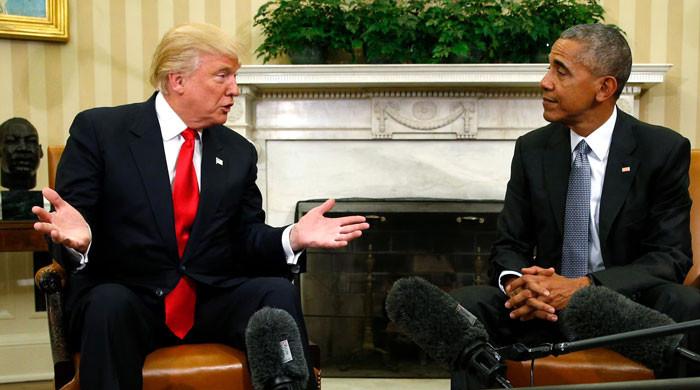
WASHINGTON: US President Donald Trump triggered outrage on Friday after he posted a video depicting Barack Obama, the first Black president in American history, and his wife Michelle as monkeys.
A top Democrat called Trump “vile” while even a senior Republican senator said the video posted the president’s own Truth Social account was blatantly racist.
But the White House was unrepentant over Trump’s post, rejecting what it called “fake outrage” and saying the video was from an “internet meme.”
Near the end of the one-minute-long video promoting conspiracies about Republican Trump’s 2020 election loss, the Obamas are shown with their faces on the bodies of monkeys for about one second.
The song “The Lion Sleeps Tonight” plays in the background when the Obamas appear.
The video repeats false allegations that ballot-counting company Dominion Voting Systems helped steal the 2020 election from Trump and hand victory to Joe Biden, who was Obama’s vice president at the time.
As of early Friday, the video had been liked several thousand times on the president’s social media platform.
“This is from an internet meme video depicting President Trump as the King of the Jungle and Democrats as characters from the Lion King,” White House Press Secretary Karoline Leavitt said in a statement to AFP.
“Please stop the fake outrage and report on something today that actually matters to the American public,” added Leavitt.
There was no immediate reaction from the Obamas.
But the top Democrat in the House of Representatives, Hakeem Jeffries, called Trump “vile, unhinged and malignant” and a “sick individual.”
“Every single Republican must immediately denounce Donald Trump’s disgusting bigotry,” Jeffries posted on X.
During negotiations to avoid a US government shutdown last year Trump posted a video of Jeffries, who is Black, wearing a fake mustache and a sombrero. Jeffries called the image racist.
There was one unusually strong expression of outrage from Trump’s own party.
Tim Scott, the only Black Republican senator and a contender for the 2024 presidential nomination, called the video “the most racist thing I’ve seen out of this White House.”
Scott said he was “praying it was fake” and called for Trump to remove it.
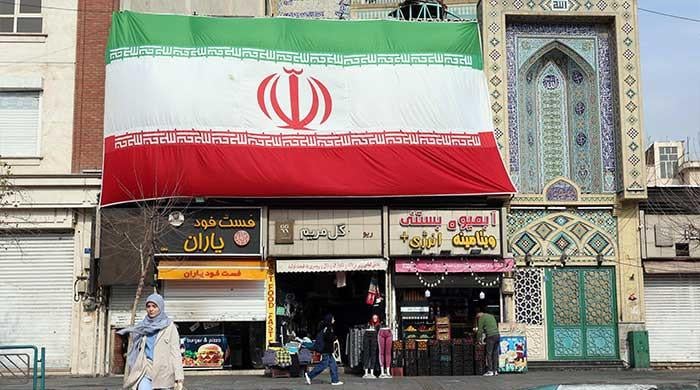
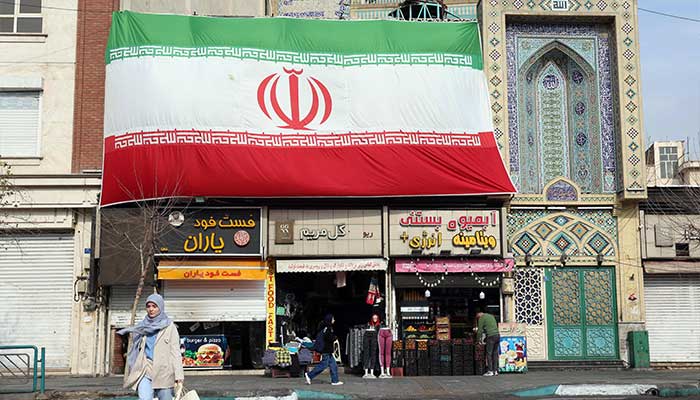
The United States on Friday announced new sanctions to curb Iran’s oil exports, including targeting 14 vessels, moments after the adversaries wrapped up a day of indirect talks in Oman.
State Department spokesperson Tommy Pigott said Iran uses oil revenue to “fund destabilising activities around the world and step up its repression inside Iran.”
President Donald Trump is “committed to driving down the Iranian regime’s illicit oil and petrochemical exports under the administration’s maximum pressure campaign,” Pigott said in a statement.
The State Department said it would order a block of any transactions with 14 vessels said to transport Iranian oil, including ships flagged from Turkey, India and the United Arab Emirates.
It also announced sanctions on 15 entities and two people.
Since Trump’s first administration, the United States has imposed sanctions to force all other countries to stop buying Iranian oil.
Iran’s foreign minister met indirectly in Oman on Friday with senior Trump envoys on his country’s nuclear programme and said there was a “positive atmosphere.”
Trump had threatened the use of force against Iran and ramped up the US military presence near Iran’s shores.
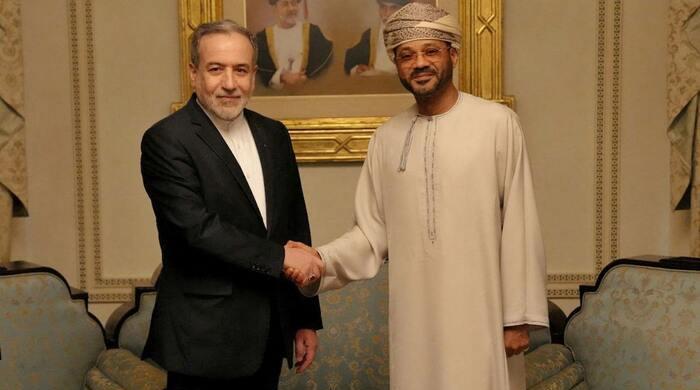
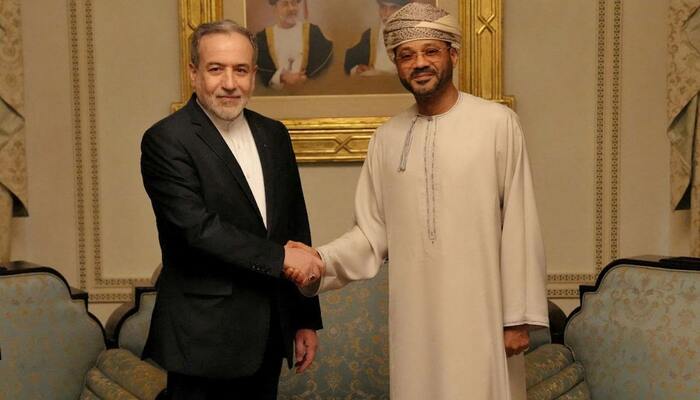
- US concerned over Iran’s missiles, support for proxies.
- Washington has significant naval buildup in the region.
- Iran says ballistic missile programme non-negotiable.
Iran and the United States started high-stakes negotiations in Oman on Friday in efforts to overcome sharp differences over Tehran’s nuclear programme, but a dispute over widening the agenda risks derailing diplomacy and triggering another Middle East conflict.
While both sides have signalled readiness to revive diplomacy over Tehran’s long-running nuclear dispute with the West, Washington wants to expand the talks to also cover Iran’s ballistic missiles, support for armed groups around the region and “treatment of their own people”, US Secretary of State Marco Rubio said on Wednesday.
Iran has said it wants Foreign Minister Abbas Araqchi and US Middle East envoy Steve Witkoff to discuss only the nuclear issue in Muscat. US President Donald Trump’s son-in-law, Jared Kushner, who helped mediate in Gaza ceasefire talks, is also due to take part in the talks.
“Iran enters diplomacy with open eyes and a steady memory of the past year. We engage in good faith and stand firm on our rights. Commitments need to be hono[u]red,” Araqchi said on X on Friday.
Tehran’s clerical leadership remains deeply concerned that Trump may still carry out his threats to strike Iran after a military buildup by the US Navy near Iran.
In June, the US struck Iranian nuclear targets, joining in the final stages of a 12-day Israeli bombing campaign. Tehran has since said its uranium enrichment work has stopped.
The US naval buildup, which Trump has called a massive “armada”, has followed a bloody government crackdown on nationwide protests in Iran last month, heightening tensions between Washington and Tehran.
Trump has warned that “bad things” would probably happen if a deal could not be reached, ratcheting up pressure on Tehran in a standoff that has led to mutual threats of air strikes.
“While these negotiations are taking place, I would remind the Iranian regime that the president has many options at his disposal, aside from diplomacy, as the commander-in-chief of the most powerful military in the history of the world,” White House Press Secretary Karoline Leavitt on Thursday told reporters.
Iran has vowed a harsh response to any military strike and has cautioned neighbouring Gulf Arab countries hosting US bases in the oil-rich region that they could be in the firing line if they were involved in an attack. Iran has one of the Middle East’s biggest stockpiles of ballistic missiles.
Missile programme red line for Tehran
Negotiators in Oman will have to navigate Iran’s red line on discussing its missile programme to reach a deal and avert future military action. Tehran has flatly ruled out talks on its “defence capabilities, including missiles and their range.”
In a show of defiance, Iran’s state TV said hours before the talks that “one of the country’s most advanced long-range ballistic missiles, the Khorramshahr-4,” had been deployed at one of the Revolutionary Guards’ vast underground “missile cities”.
However, Tehran is willing to show “flexibility on uranium enrichment, including handing over 400 kg of highly enriched uranium (HEU) and accepting zero enrichment under a consortium arrangement as a solution,” Iranian officials told Reuters last week.
Iran also insists that its right to enrich uranium is not negotiable and demands the lifting of sanctions, reimposed since 2018 when Trump ditched Iran’s 2015 nuclear deal with six powers.
The United States, its European allies and Israel accuse Tehran of using its nuclear programme as a veil for efforts to try to develop the capability to produce weapons. Iran says its nuclear programme is for peaceful purposes only.


Spanish figure skater gets last-minute approval for Minions-themed Olympic program

Olympic star posts graphic anti-ICE message ahead of Milan Cortina Games
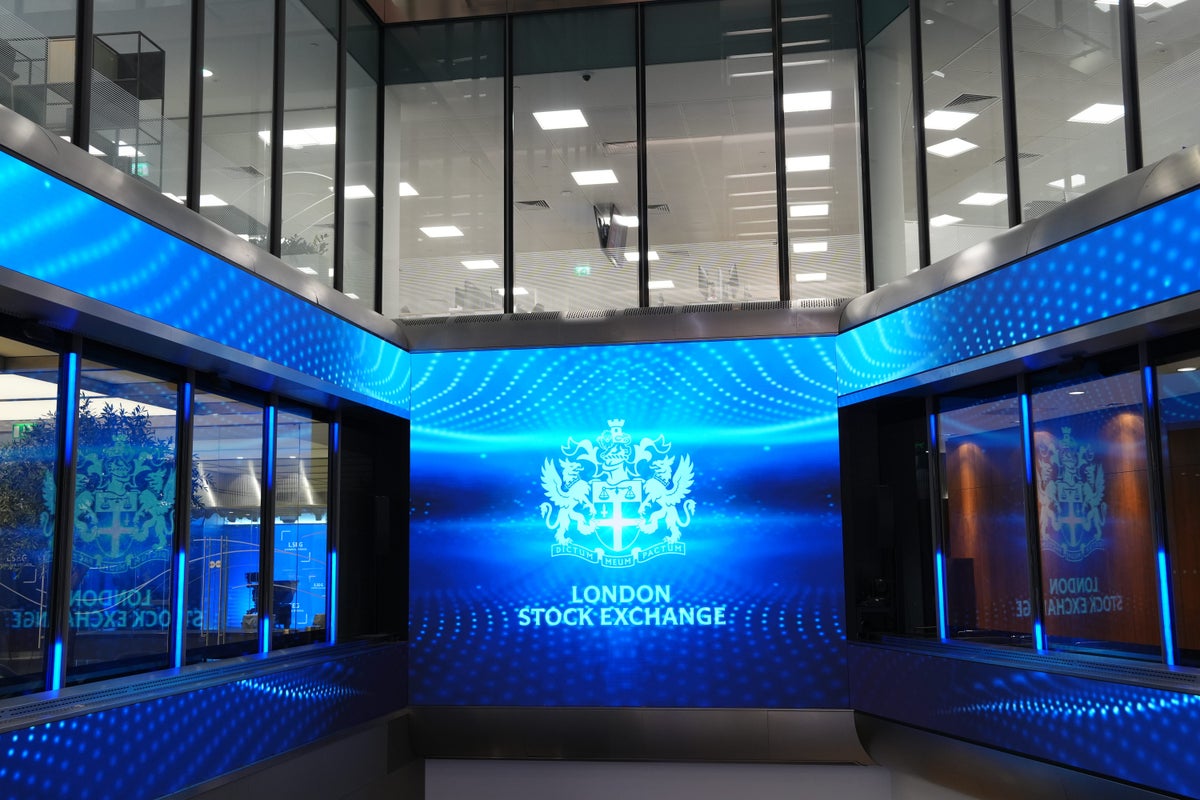
FTSE 100 closes choppy week higher amid US rally

-
 Business1 week ago
PSX witnesses 6,000-point on Middle East tensions | The Express Tribune
-

 Tech4 days ago
How to Watch the 2026 Winter Olympics
-
 Tech1 week ago
Here’s the Company That Sold DHS ICE’s Notorious Face Recognition App
-
 Business4 days ago
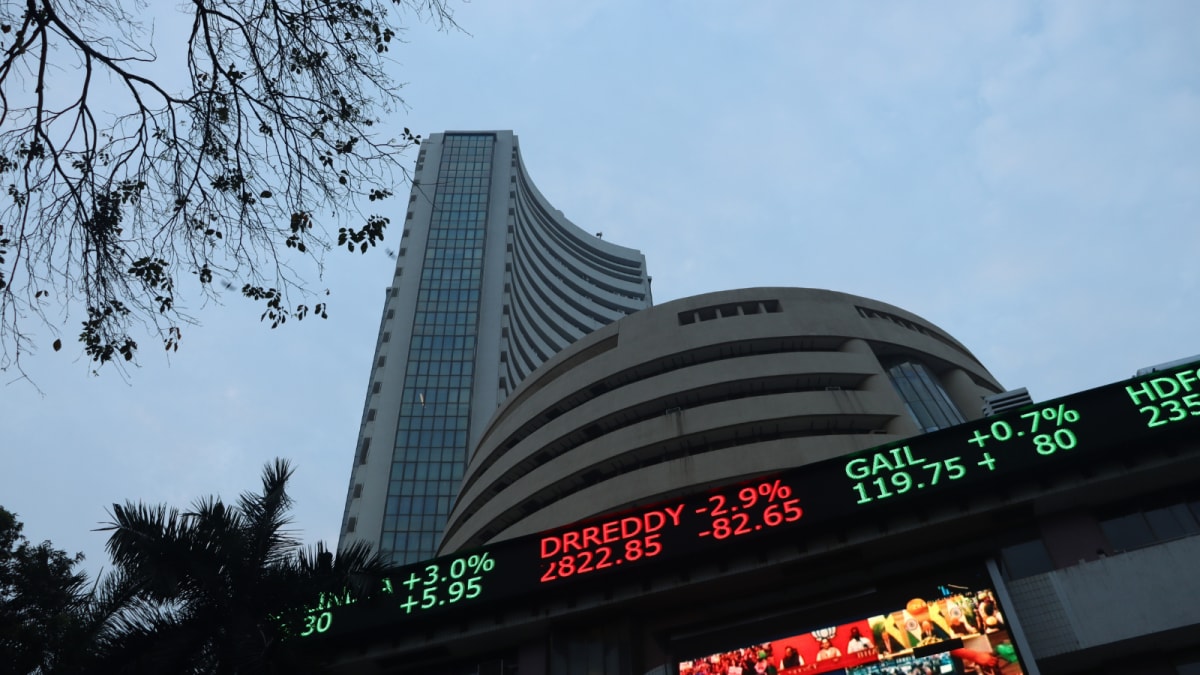
Post-Budget Session: Bulls Push Sensex Up By Over 900 Points, Nifty Reclaims 25,000
-

 Tech7 days ago
Right-Wing Gun Enthusiasts and Extremists Are Working Overtime to Justify Alex Pretti’s Killing
-
 Business7 days ago
Labubu to open seven UK shops, after PM’s China visit
-

 Fashion1 week ago
Italy’s Brunello Cucinelli debuts Callimacus AI e-commerce experience
-
 Fashion1 week ago
US Upland cotton exports down 51%, Pima rises: USDA