

Fashion
Turkiye’s manufacturing sector weakens in March amid Middle East war

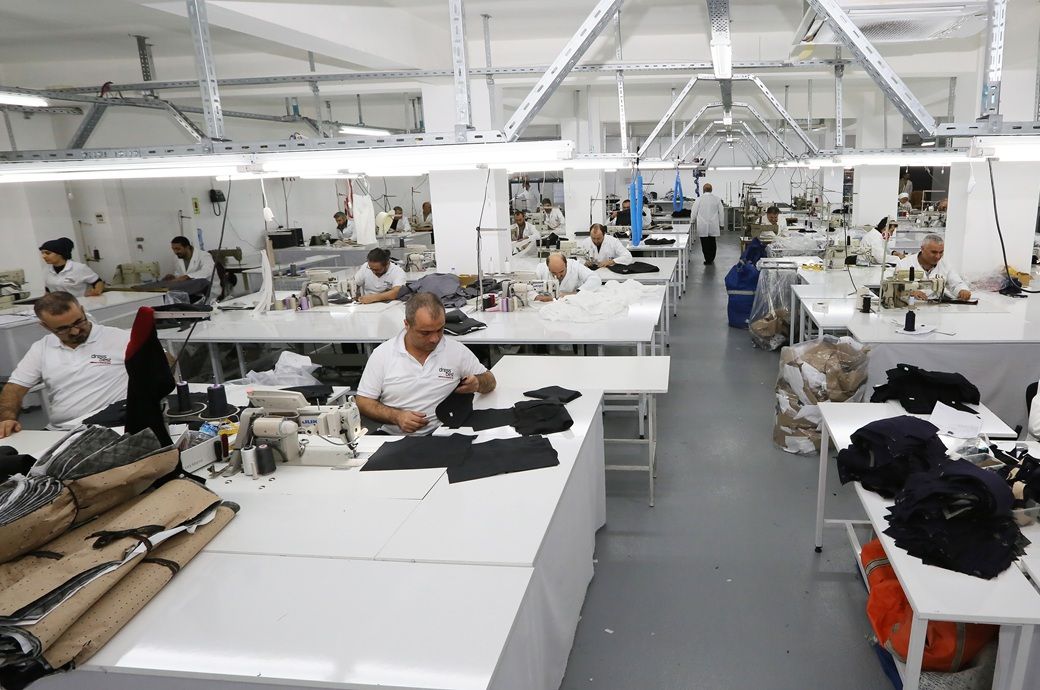
The latest reading, the lowest in five months, reflected sharper contractions in output and new orders, as escalating tensions in the Middle East intensified inflationary pressures and weighed on demand. The sector has now remained in contraction territory for two consecutive years, S&P Global said in a press release.
Turkiye’s manufacturing PMI fell to 47.9 in March from 49.3 in February, marking a five-month low and extending the sector’s contraction.
The slowdown was driven by weaker demand, rising inflation and supply disruptions linked to the Middle East conflict.
Output and new orders declined sharply, while firms cut employment and purchasing activity amid higher input costs and ongoing uncertainty.
New business and export orders declined at a faster pace during the month, with firms citing weakened demand linked to geopolitical uncertainty and rising prices. This led manufacturers to scale back production at the sharpest rate since November.
Inflationary pressures strengthened significantly, driven by higher costs of fuel, oil, freight, and raw materials. Input costs and output prices rose at the fastest rates in 23 months and 25 months respectively, adding further strain on operating conditions.
Supply chains also came under pressure, with suppliers’ delivery times lengthening to the greatest extent since August 2024 due to material shortages and transportation disruptions. As demand softened, firms reduced employment to the largest degree in six months, while also cutting purchasing activity and inventory levels in response to weaker output requirements.
Andrew Harker, economics director at S&P Global Market Intelligence, said: “The Turkish manufacturing sector suffered something of a setback in March, after conditions had looked to be on the path to becoming more favourable in February. The more pronounced slowdown in the sector at the end of the first quarter can largely be linked to the war in the Middle East, which acted to push up costs for inputs including fuel and oil, and also disrupted supply chains.”
“Therefore, the near-term fortunes of the sector will likely depend on how long the conflict persists and the ramifications for global price and supply conditions,” added Harker.
Fibre2Fashion News Desk (SG)












The company reported revenue of $11.3 billion in Q3 FY26 ended February 28, posting a 3 per cent year-on-year (YoY) decline. The weakness in digital and owned retail channels was partially offset by Nike Brand revenues posting marginal growth.
Nike has reported decline in Q3 FY26, with revenue at $11.3 billion, down 3 per cent YoY, reflecting DTC weakness and mixed regional trends.
Wholesale growth and modest Nike Brand gains provided some support.
Margins contracted but remained better than expected, while net income fell 35 per cent.
China weakness and broader cost pressures weighed on EBIT across regions.
“This quarter we took meaningful actions to improve the health and quality of our business. The pace of progress is different across the portfolio and the areas we prioritised first continue to drive momentum,” said Elliott Hill, president and CEO, Nike. “The work is not finished, but the direction is clear, our teams are moving with focus and urgency, and our foundation is getting even stronger to build the future of Nike.”
“We delivered third quarter results in line with our expectations, and our teams continue to execute with discipline,” said Matthew Friend, executive vice president and CFO, Nike. “Win Now actions will continue to impact results over the balance of the calendar year, and we remain confident in our ability to position the Company for profitable growth long-term.”
Nike Brand sees modest growth amid regional headwinds
Nike Brand revenues were $11 billion in Q3, up 1 per cent, driven by strength in North America and declines in Europe, Middle East and Africa (EMEA) and China, Nike said in a press release.
Wholesale revenues were up 5 per cent, primarily due to growth in North America, while Nike direct revenues fell 4 per cent to $4.5 billion amid weaker digital sales and store performance. Converse revenues declined sharply by 35 per cent to $264 million across all markets.
The gross margin contracted by 130 basis points to 40.2 per cent, majorly due to higher tariffs in North America and increased product costs.
Net income dropped 35 per cent to $520 million, with diluted earnings per share (EPS) also falling 35 per cent to $0.35. This suggests tariff and cost pressures were less severe than anticipated.
China’s weak profitability weighs on regional performance
The performance in China remained weak, with EBIT falling 9 per cent to $480 million, underscoring continued demand softness, with country’s total revenue standing at $1.62 billion, a decline of 7 per cent YoY. Asia Pacific and Latin America also declined 4 per cent to $332 million.
North America EBIT declined to $981 million from $1,103 million, signalling margin pressure even as the region supported revenue growth. EMEA showed relative resilience, rising 7 per cent to $515 million, making it one of the few bright spots.
Global brand divisions saw a sharp 20 per cent drop, while Converse EBIT fell 11 per cent, reflecting brand-specific challenges. At the group level, total Nike Brand EBIT declined 14 per cent, contributing to 18 per cent fall in total EBIT to $635 million.
Fibre2Fashion News Desk (SG)
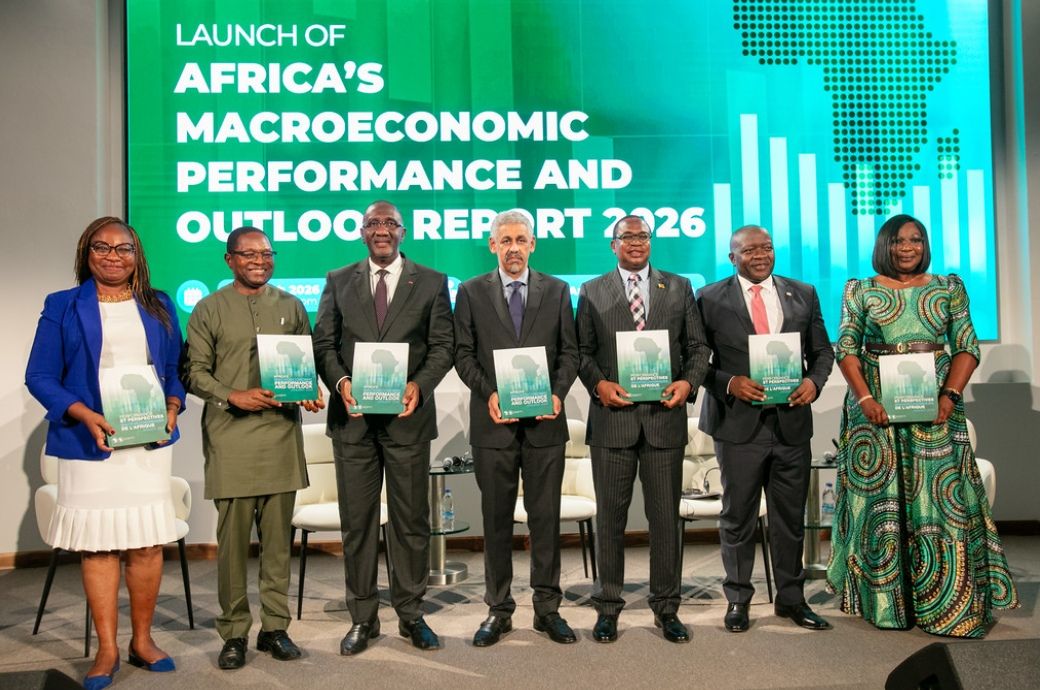
Despite ongoing regional and global headwinds, Africa continues to demonstrate impressive resilience and maintains its status as a global growth frontier, it noted.
Africa’s real GDP growth is projected to stabilise at 4.3 per cent in 2026 and grow further to 4.5 per cent in 2027, an African Development Bank report said.
Growth in 2025 exceeded 5 per cent in 22 African nations and topped 7 per cent in six.
Despite regional and global headwinds, Africa continues to demonstrate impressive resilience and maintains its status as a global growth frontier, it noted.
Africa outpaced the global average in 2025 as its real GDP surged to 4.2 per cent, up from 3.1 per cent in 2024, comfortably eclipsing the 3.1-per cent world average, the report said.
A key finding in the report is the ‘broad-based’ surge, with growth exceeding 5 per cent in 22 African countries, and topping 7 per cent in six, bolstered by easing inflationary pressures, improved macroeconomic management and favourable agricultural conditions, an AfDB release noted.
Twelve of the 20 fastest-growing economies in the world last year were African.
East Africa maintained its lead last year as the continent’s fastest-growing region, posting 6.4-per cent GDP growth, with its expansion driven by the surge in growth performances of 9.8 per cent in Ethiopia, 7.5 per cent in Rwanda and 6.4 per cent in Uganda.
Africa’s GDP per capita growth rose from 0.9 per cent in 2023 to 1.1 per cent in 2024 and 1.9 per cent in 2025, but still remains too low to propel rapid poverty reduction.
Inflation is declining, with average inflation estimated at 13.6 per cent in 2025, down from 21.8 per cent in 2024; further reductions are projected for 2026 and 2027.
Foreign direct investment rebounded sharply in 2024, rising by more than 75 per cent to reach $97 billion.
Remittance flows to the continent rebounded strongly in 2024, rising by more than 14 per cent to $104.6 billion—offsetting the 6-per cent decline recorded in 2023 and making remittances the largest single source of external non-debt financing, surpassing foreign portfolio investment.
Fibre2Fashion News Desk (DS)
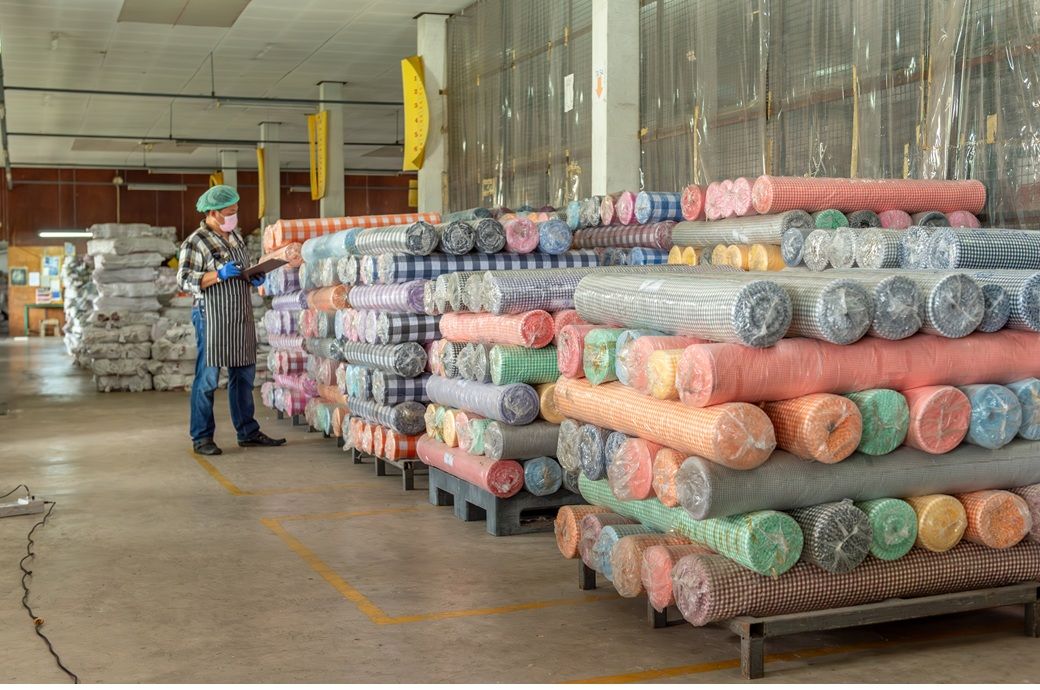
This hidden inventory is best understood through indirect but telling indicators. In Bangladesh, for instance, total textile capacity is estimated at ~*.*–*.* million tons, while actual consumption has dropped to around *.* million tons, implying utilisation levels of just ~** per cent, leaving a significant portion of capacity effectively idle. Similar patterns are visible across South Asia, where spinning and weaving units are operating well below optimal levels. In India and Pakistan, industry feedback suggests mills are running at **–** per cent capacity, with yarn inventories building up due to slower offtake from downstream buyers. Cotton dynamics are adding to the pressure, with global inventories exceeding *** million bales, keeping prices volatile and discouraging fresh procurement.
The pressure intensifies further along the value chain. Fabric manufacturers, particularly in Bangladesh, are facing delayed or reduced orders from garment exporters, leading to a build-up of greige and processed fabric stocks. At the same time, exporters themselves are holding finished goods as shipment cycles lengthen. Geopolitical disruptions around the Strait of Hormuz have increased transit times by *–** days on key routes, while freight costs have risen by **–** per cent, slowing inventory movement and delaying cash realisation.


US’ Nike’s Q3 earnings dip as DTC weakness offsets wholesale strength

Pakistan, other mediators ‘make last-ditch’ efforts for Iran-US ceasefire: report

The imperium of ego

-

 Sports1 week ago
USMNT handed reality check by Doku, Belgium ahead of World Cup
-

 Sports1 week ago
2026 NCAA men’s hockey tournament: Schedule, results
-
Uncategorized3 days ago
[CinePlex360] Please moderate: “Trump signals p
-
Uncategorized7 days ago
[CinePlex360] Please moderate: “Further tariff
-

 Tech2 days ago
Our Favorite iPad Is $50 Off
-

 Entertainment1 week ago
The Avett Brothers’ bassist explains why he wrote a book about John Quincy Adams
-

 Entertainment3 days ago
Joe Jonas shares candid glimpse into parenthood with Sophie Turner
-

 Sports1 week ago
Man City show why they are worthy WSL title winners as tired United wilt