

Tech
Two Kitchen Robots Turned Me Into Their Prep Cook for Thanksgiving

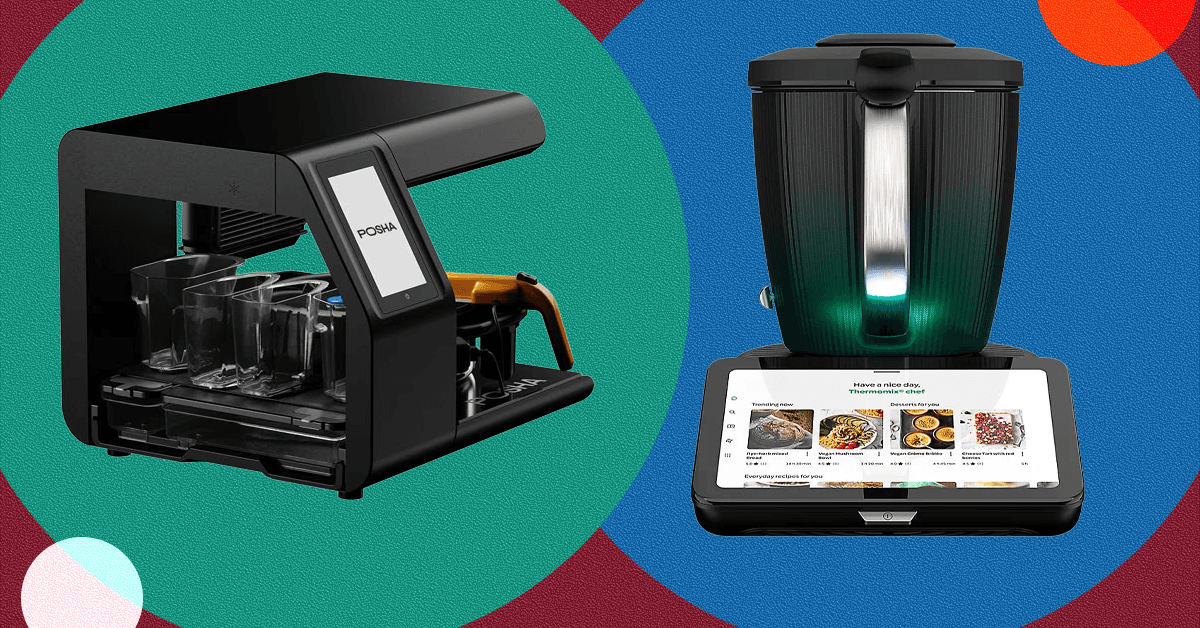
The holiday is still almost a week away, and I’m sick of Thanksgiving. I’ve already made four rounds of mashed potatoes, three of mac and cheese, and three turkeys (with more still waiting in my fridge) as part of testing smart probes to help smoke turkeys outside and preparing seven-course holiday meal kits for friends and family.
I was eager to finally outsource some of the cooking by testing two very different robo-chef devices, the Thermomix TM7 and the Posha kitchen robot. Both promise to plan my meals and also do most of the cooking, which sounds pretty good to me.
The Thermomix descends from a German device launched in 1968—a time when the best-known robot chef was cartoon Rosie on The Jetsons—that was essentially a blender with a heater. It’s since caught on big in countries from Italy to Portugal to Australia, and over the years it’s added multi-tier steaming, baking, proofing, a touchscreen, an encyclopedic recipe app, and a whole lot of smart features. WIRED reviewer Joe Ray called 2020’s last-generation Thermomix TM6 (9/10, WIRED Recommends) the “smartest of the smart kitchen.” The newest version, the seventh-generation TM7, was released in August and looks like a giant trophy with a computer screen. It retails for $1,699 and its goal is to replace almost every appliance in your kitchen. It’ll even happily order groceries for you on InstaCart.
The newest robo-chef entrant is Posha, a Silicon Valley-via-Bangalore startup device that aims at truly autonomous one-pot cooking, once you’ve chopped up the proper ingredients into little bins. The Posha kitchen robot was released in January at a price of $1,750 and promptly sold out, as has each successive batch. The device comes complete with a robot stirring arm, and a camera to monitor moisture and browning. Press a button, and Posha will add ingredients at the appropriate moment, spice and stir your food, add water and oil, and cook it down, all without your participation.
I used both the Posha and Thermomix to make a spread of Thanksgiving sides: candied yams, mashed potatoes, mac and cheese, brussels sprouts, and a more complex wild card entry chosen because I thought my Aunt Katherine might like it—and assessed cooking experience overall. Consider it a robo-chef face-off.
Here is my experience with each of the Thermomix and the Posha—and how each fared on five Thanksgiving side recipes.
Cooking Experience With Thermomix
-
Photograph: Matthew Korfhage
-
Photograph: Matthew Korfhage
-
Photograph: Matthew Korfhage
-
Photograph: Matthew Korfhage


WIRED
- Steams, blends, bakes, proofs, roasts, mixes, weighs, orders groceries….
- Choice of 100,000 recipes, often quite well tested
- Beautifully powerful and fast blending
TIRED
- You’re still doing all the prep
- Many recipes still call for an oven
- Cleaning the multiple parts is a chore if you don’t run the dishwasher
The Thermomix has almost 60 years of history. This is a good thing. It began as, essentially, a blender that can cook. It is still a very powerful blender that can cook. Lord, it makes pesto or mashed potatoes as quickly and easily as anything. I stood by in actual awe of its raw cooking-blending power.
But it’s also evolved into a whole lot more, an all-in-one device that purports to replace just about every appliance in your kitchen. Today’s Thermomix has become a beast of multifarious functionality.












Nvidia is the undisputed king of AI chips. But thanks to the AI it helped build, the champ could soon face growing competition.
Modern AI runs on Nvidia designs, a dynamic that has propelled the company to a market cap of well over $4 trillion. Each new generation of Nvidia chip allows companies to train more powerful AI models using hundreds or thousands of processors networked together inside vast data centers. One reason for Nvidia’s success is that it provides software to help program each new generation of chip. That may soon not be such a differentiated skill.
A startup called Wafer is training AI models to do one of the most difficult and important jobs in AI—optimizing code so that it runs as efficiently as possible on a particular silicon chip.
Emilio Andere, cofounder and CEO of Wafer, says the company performs reinforcement learning on open source models to teach them to write kernel code, or software that interacts directly with hardware in an operating system. Andere says Wafer also adds “agentic harnesses” to existing coding models like Anthropic’s Claude and OpenAI’s GPT to soup up their ability to write code that runs directly on chips.
Many prominent tech companies now have their own chips. Apple and others have for years used custom silicon to improve the performance and the efficiency of software running on laptops, tablets, and smartphones. At the other end of the scale, companies like Google and Amazon mint their own silicon to improve the performance of their cloud-computing platforms. Meta recently said it would deploy 1 gigawatt of compute capacity with a new chip developed with Broadcom. Deploying custom silicon also involves writing a lot of code so that it runs smoothly and efficiently on the new processor.
Wafer is working with companies including AMD and Amazon to help optimize software to run efficiently on their hardware. The startup has so far raised $4 million in seed funding from Google’s Jeff Dean, Wojciech Zaremba of OpenAI, and others.
Andere believes that his company’s AI-led approach has the potential to challenge Nvidia’s dominance. A number of high-end chips now offer similar raw floating point performance—a key industry benchmark of a chip’s ability to perform simple calculations—to Nvidia’s best silicon.
“The best AMD hardware, the best [Amazon] Trainium hardware, the best [Google] TPUs, give you the same theoretical flops to Nvidia GPUs,” Andere told me recently. “We want to maximize intelligence per watt.”
Performance engineers with the skill needed to optimize code to run reliably and efficiently on these chips are expensive and in high demand, Andere says, while Nvidia’s software ecosystem makes it easier to write and maintain code for its chips. That makes it hard for even the biggest tech companies to go it alone.
When Anthropic partnered with Amazon to build its AI models on Trainium, for instance, it had to rewrite its model’s code from scratch to make it run as efficiently as possible on the hardware, Andere says.
Of course, Anthropic’s Claude is now one of many AI models that are now superhuman at writing code. So Andere reckons it may not be long before AI starts consuming Nvidia software advantage.
“The moat lives in the programmability of the chip,” Andere says in reference to the libraries and software tools that make it easier to optimize code for Nvidia hardware. “I think it’s time to start rethinking whether that’s actually a strong moat.”
Besides making it easier to optimize code for different silicon, AI may soon make it easier to design chips themselves. Ricursive Intelligence, a startup founded by two ex-Google engineers, Azalia Mirhoseini and Anna Goldie, is developing new ways to design computer chips with artificial intelligence. If its technology takes off, a lot more companies could branch into chip design, creating custom silicon that runs their software more efficiently.

For months now, it seems that every day brings with it a new faction of MAGAworld getting angry with President Donald Trump over something he says or does.
In recent memory, to name a few, podcaster Joe Rogan has compared ICE raids to Gestapo operations; conspiracy theorist Alex Jones has questioned Trump’s cognitive abilities; former US representative Marjorie Taylor Greene claimed Trump had “gone insane;” former Fox News host Tucker Carlson called the president a “slave” to Israel; and conservative influencer Candace Owens claimed Trump belongs “to the Epstein class.”
Even on Truth Social, a social media platform created by Trump as a haven to post without any backlash, there is backlash. “What!?! You are way outta line,” a Truth Social account holder called CaliMAGA69 wrote in response to Trump’s recent criticism of Owens, Jones, Carlson, and former Fox News host Megyn Kelly as “low IQ” losers. “Most of these people, especially Alex Jones, have been your Day 1s!! You need to step back and take a good hard look at who is whispering in your ear. Get back to America 1st!!”
This week, MAGA Christians have raged at Trump, which reached fever pitch on Monday when he posted an AI-generated picture seemingly depicting himself as Jesus. Some of MAGA grew incensed, with multiple major conservative pundits and influencers debating whether or not this all meant Trump was the antichrist.
The pileup has only continued. White nationalist Nick Fuentes, who has long broken with Trump, posted on X a laundry list of complaints about the failures of the second Trump reign, including “regime change war with Iran” and “attacking the Catholic Church.”
Some MAGA conspiracy theorists are even abandoning Trump. Instead of discussing how the assassination attempt on Trump’s life in 2024 was a deep-state plot, some are now debating whether it even happened at all. “Where’s his scar today,” former pro wrestler and former Minnesota governor Jesse Ventura asked in an appearance on Piers Morgan’s show.
In what appears to be one of the biggest recent schisms in the Republican party, it’s not totally clear how much of the party is actually abandoning Trump—or if the events and criticisms of the past few months are nothing but a blip. The answer, it seems, is a little bit of both.
MAGA, the most powerful US political movement in recent decades, is not merely a political ideology; it is more akin to a cult of personality where supporters have generally been willing to back Trump no matter what he says. And there are still many willing to defend him: Over the weekend, former adviser Steve Bannon compared Trump to former presidents Abraham Lincoln and George Washington, claiming Trump will “return America to Her greatness.” Others have also spoken out in support.
But while key allies and outlets like Fox News remain loyal to the president, in recent years the right-wing media ecosystem has fractured. A new media landscape where figures like Carlson, Kelly, and Owens have huge audiences, and where their sound bites reach millions more on social media, is no longer willing to protect Trump no matter the cost.
As Dan Pfeiffer, a former adviser to President Barack Obama, notes in his latest newsletter, that’s a big problem for the GOP, especially when it comes to voters who may be wavering over their support for Trump and the GOP in the midterms.
“For these voters, the fact that the criticism is coming from Trump’s former allies matters a lot,” writes Pfeiffer. “When the criticism comes from someone with whom they share ideological affinity, it’s far more likely to land. One clip of Tucker Carlson attacking Trump is more effective than a thousand clips of Gavin Newsom, Hakeem Jeffries, or Pod Save America making the same point.”
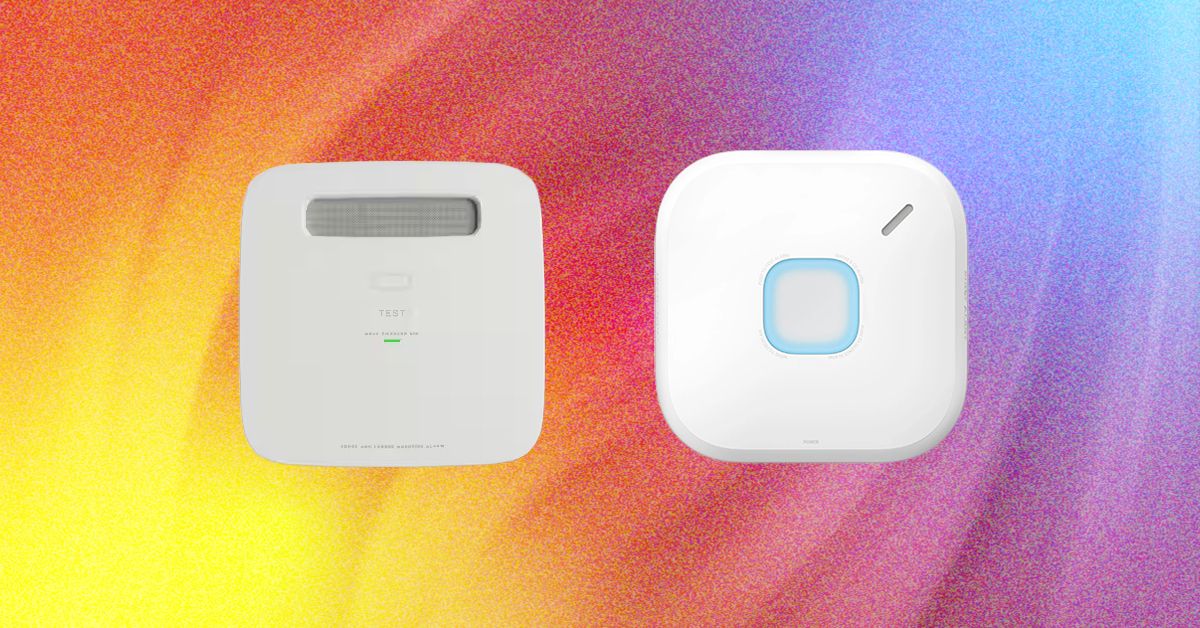
Adding Wi-Fi doesn’t always turn out to be as smart as it sounds. A smart smoke detector turns out to be dumber than I thought, even with Wi-Fi added.
Smart smoke detectors will let you know if a fire breaks out when you aren’t home, but other than that they don’t offer any extra benefits over a “dumb” model. And these devices introduce a problem: Most smart smoke detectors exclude one of two sensors to alert you about a fire. Every smart model I tested had only a photoelectric sensor, which picks up smoldering fires, while ionization sensors that pick up fast-burning fires were left behind. Ionization sensors are more likely to have nuisance alarms go off (while you’re cooking, for example), but it’s still a sensor you should have somewhere in your home, especially since modern building materials have shortened your window of time to escape a home fire.
It’s not to say smart smoke detectors are useless, since what matters most is having a working smoke detector at all. A photoelectric-only smoke detector is still a good smoke detector and will pick up smoldering electrical fires in your walls and similar-style smoke. Still, you’ll want to make sure there is an ionization sensor or two in your home, more so than needing a Wi-Fi model added. There are dual-sensor smoke detectors you can get too, but no smart models just yet with both sensors. Here’s everything you need to know if you’re considering getting a smart smoke detector for your home.
Does a Smoke Alarm Need to Be Smart?
You already know what a smoke alarm is: a device that sits on the ceiling (or sometimes high up on a wall) to alert you if it senses smoke in a home or building. Most buildings, whether residential or commercial, come equipped with modern smoke alarms to match current codes. In recent years, it’s been another device to go “smart,” or at least become Wi-Fi compatible. It’s not smart the way a smart thermostat would be, since you can’t meaningfully exert control over it over Wi-Fi. You’ll simply get alerts on your smartphone of choice when smoke is detected, so you’ll know if a fire happens while you aren’t home, in addition to the blaring of the regular alarm.
Is it necessary? No, but it’s a nice-to-have feature to get alerted, no matter where you are, if smoke is detected. But it’s not required to make these devices function, and it won’t help you with the speed at which fires are moving through newer homes.
“While newer smart features like Wi-Fi alerts and app connectivity can be convenient, they’re not essential for safety,” says Steve Clemente, president and COO at Mister Sparky, an electrical services company. “A well-placed, properly powered detector will do far more to protect your home than extra features like air quality monitoring. One exception worth considering is a combo smoke and carbon monoxide detector, which adds an extra layer of protection.”
How Do Smoke Alarms Work?
Smoke alarms have built-in sensors to sniff out smoke in your home. There are two primary sensors included: photoelectric and ionization. “Photoelectric models are better at sensing slow, smoldering fires—like upholstery or wiring—while ionization models respond faster to quick, flaming fires,” says Clemente.
He says neither is universally better, and rather the two styles are complementary. The National Fire Protection Association recommends having both types of smoke alarm sensors in your home, or a smoke alarm that has both sensors built into it (these are usually called dual-sensor smoke alarms). The NFPA doesn’t have any specific codes about which type of sensor you need to put in your home, but a spokesperson did recommend putting photoelectric smoke alarms near kitchens and bathrooms, since they’re less likely to be set off by daily use in these rooms (things like steam and cooking smoke are more likely to set off an ionization alarm).
However, all the smart models I tested included only photoelectric sensors. As I continued researching, most smart smoke alarms seem to only include photoelectric sensors, leaving out ionization altogether. It’s likely because of the sensitivity of ionization alarms. That’s a problem for me after talking to Nicole Sanders, public education lead for UL Research Institutes’ Fire Safety Research Institute, who warned me that new data shows you might only have three minutes to escape a house fire.


AI Could Democratize One of Tech’s Most Valuable Resources

PSL 11: Waseem, Khuzaima released from Karachi Kings squad

Starbucks launches beta app in ChatGPT to fuel new drink discovery

-

 Fashion1 week ago
India’s exports face reset as EU links trade to carbon metrics: EY
-

 Entertainment1 week ago
Queen Elizabeth II emotional message for Archie, Lilibet sparks speculation
-

 Entertainment1 week ago
Lamar Odom shocking response to Khloé Kardashian account of his overdose
-

 Tech7 days ago
As the Strait of Hormuz Reopens, Global Shipping Will Take Months to Recover
-

 Tech1 week ago
Azure customers up in arms over ‘full’ UK South region | Computer Weekly
-

 Fashion1 week ago
CII submits 20-pt agenda to Indian govt to back firms hit by Iran war
-

 Tech6 days ago
This AI Button Wearable From Ex-Apple Engineers Looks Like an iPod Shuffle
-

 Politics5 days ago
Indian airlines hit hardest after Dubai limits foreign flights until May 31