

Sports
U.S. Soccer recommends extending NCAA season

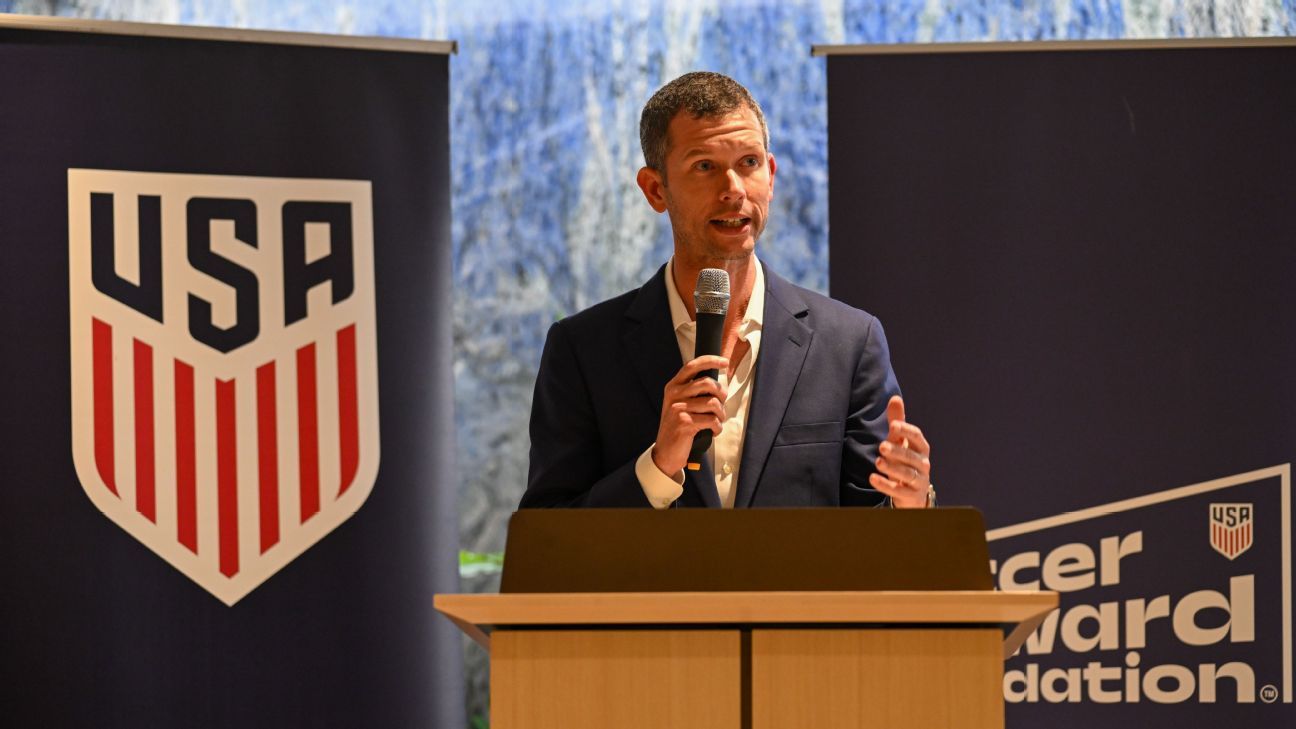
A committee working on behalf of U.S. Soccer has recommended that men’s college soccer switch to a season that stretches across the full academic year beginning fall 2026.
The recommendation comes after U.S. Soccer tasked the 17-person “NexGen College Soccer Committee” with finding solutions to evolve college soccer to, among other things, better prepare players to turn professional and compete at the international level.
The committee recommended that more time is needed to evaluate the best future construct of women’s college soccer, although the result could be the same recommendation as the men’s game. Regardless of how the college game evolves, the committee said in its report, which was released on Thursday, that it “believes strongly that any of these [four proposed] options are far superior to the status quo.”
Any changes, which still need clear the major hurdle of NCAA approval, would overhaul a college soccer system that has historically served as a development pathway for American pro players — especially women — but has not evolved with the modern professional game. Longstanding issues with college soccer include a truncated season played entirely in the fall, which puts heavy demand on athletes during that time and leaves them largely without competition for most of the year.
“The recommendations were designed to be able to deliver a better student athlete experience, to be able to provide financial stability, and to provide player development opportunities — which are the three things that everyone in college sports said they wanted,” U.S. Soccer CEO and secretary general JT Batson told ESPN. “We’re optimistic for this to be able to move at pace.”
Batson was not part of the committee. Dan Helfrich, principal and former CEO of Deloitte Consulting, chaired the group, which included club and league leaders from MLS, NWSL and USL, as well as athletic directors and a school president, among other stakeholders.
Under the proposal for men’s soccer, all 213 Division 1 men’s programs would still compete for the same championship, but in place of their traditional conferences, they would play regionally and within tiers of similarly competitive teams. Those tiers could change over time in a system similar to promotion and relegation.
Preliminary estimates in the committee’s report say that such a system could save programs $25,000 to $350,000 annually in operational costs depending on their current travel. Many current conferences, driven by college football, have been realigned with disregard for geography, creating cross-country trips for in-conference games.
Helfrich said two major “pain points” for college soccer are the condensed schedules that limit athlete recovery, as well as increasing costs associated with travel and preseason starting prior to convocation of schools.
-How Berhalter revived Chicago Fire after USMNT fired him
-Pochettino’s turnaround has USMNT no longer dreading World Cup
-NWSL U-19 ranking: Thompson, Hutton lead top young players
“The ultimate solution is a response to that,” he said.
The changes would only apply to NCAA Division 1 soccer.
Preseason would begin in mid-to-late August and the regular season would run until April, with a break from games and training in December and January. Games would largely be played on weekends, rather than the current structure of jamming multiple games into each week between August and December.
A championship would be played in May, which Helfrich said would give it a greater platform by not overlapping other college championships. That, too, Helfrich said, would have commercial benefits and give college soccer a greater platform for fan support, media visibility and sponsorship.
This proposed model would be better for everyone in college soccer, Helfrich said, not just the select few who are chasing professional careers.
“The experiences and the implications on all 14,000-15,000 Division 1 American soccer players, versus the hundreds that will or could play professionally, was a dominant part of the committee’s debate,” Helfrich told ESPN. “That was front of mind always: How do we make sure the solutions that we build are thoughtful to both of those constituencies?”
The 17-person committee held mostly virtual meetings every few weeks this year to work on the proposal and analyze four different potential options for college soccer’s evolution. The most conservative option that was analyzed, which could still happen on the women’s side, is a slightly expanded fall season with an added spring competition for elite teams.
Federation president Cindy Parlow Cone, who won three NCAA titles at North Carolina in addition to winning a World Cup and a pair of Olympic gold medals, initially brought the idea to Batson & VP of strategy Emily Cosler to see how the federation could help. Cone had been speaking with University of North Carolina athletic director Bubba Cunningham about the team’s budget and realized how unsustainable it was in the current model. That was Cone’s first “What if?” moment.
The women’s game is unique in several ways, including that it’s much larger at the college level with 350 D-1 programs — and the gap in quality between the national contenders and mid-major schools is much wider.
Batson said it is “a huge red flag” that American women’s players in that college age range (roughly 18-22 years old) are not playing the same number of minutes as their peers in Europe.
Cone and Helfrich both said they hope to have a recommendation in place to implement in women’s college soccer for the 2027-28 academic year.
“There are more challenges on the women’s side, so we feel like we needed to have more discussions, more learnings there, until we put out, ‘this is best for the women’s game,'” Cone told ESPN. “It could be different from the men’s game. It could be exactly the same. But we need to take a look at it, as Emma [Hayes, USWNT coach] likes to say, through the female lens. There’s still more to do there, so we are going to do that work.”
The next challenge in the entire process is the NCAA, which has historically been slow to evolve and included significant bureaucratic red tape, as evidenced with how women’s college basketball had to force structural changes in recent years. There have been major overhauls of late in the NIL (name, image, likeness) era, however, which has left everyone at U.S. Soccer confident that these changes could be implemented quickly. Cone said everyone in the process is “leaning in.”
Helfrich said the next step in the men’s college soccer process should be the committee holding formal conversations with NCAA soccer sub-committees in the coming weeks, and that wider group drafting legislative proposals and timelines before the end of the calendar year. The goal is to have the new system launch next August.
“I will tell you confidently that neither the conferences nor the NCAA will be surprised by this release, because we’ve been collaborative,” Helfrich said. “Part of the reason we’ve done that is to create a smoother on-ramp to governance conversations.”
Among the ideas in the proposal is increased flexibility around player eligibility, which is specifically a pain point in soccer, where players sometimes turn professional as teenagers and sacrifice their college eligibility. The ideas include a “second chance” pathway for players have a stalled professional career, as well as increased opportunities with professional teams without sacrificing college eligibility.
These proposals come at a time when development leagues continue to sprout up in the U.S. MLS Next and multiple tiers of USL already exist on the men’s side, while the NWSL has said it plans to launch a second division in the coming years, in addition to WPSL Pro — which combined would add over 1,000 new professional roster spots on the women’s side.
U.S. Soccer believes these can all co-exist with college soccer — and that the federation’s responsibility is to unite them.
“It’s an example of when you bring all of the parts of the American soccer ecosystem together, you can come up with ways to drive greater impact and greater outcomes,” Batson said. “The American soccer market has grown tremendously over the last couple of decades.
“However, there’s a lot of fragmentation. The role of U.S. Soccer here is one of a convener, an aligner, and ultimately our goal is to catalyze that great energy into the outcomes that everyone cares about. We want soccer everywhere in this country, and we want our teams to win. We are now a soccer country.”
NEWYou can now listen to Fox News articles!
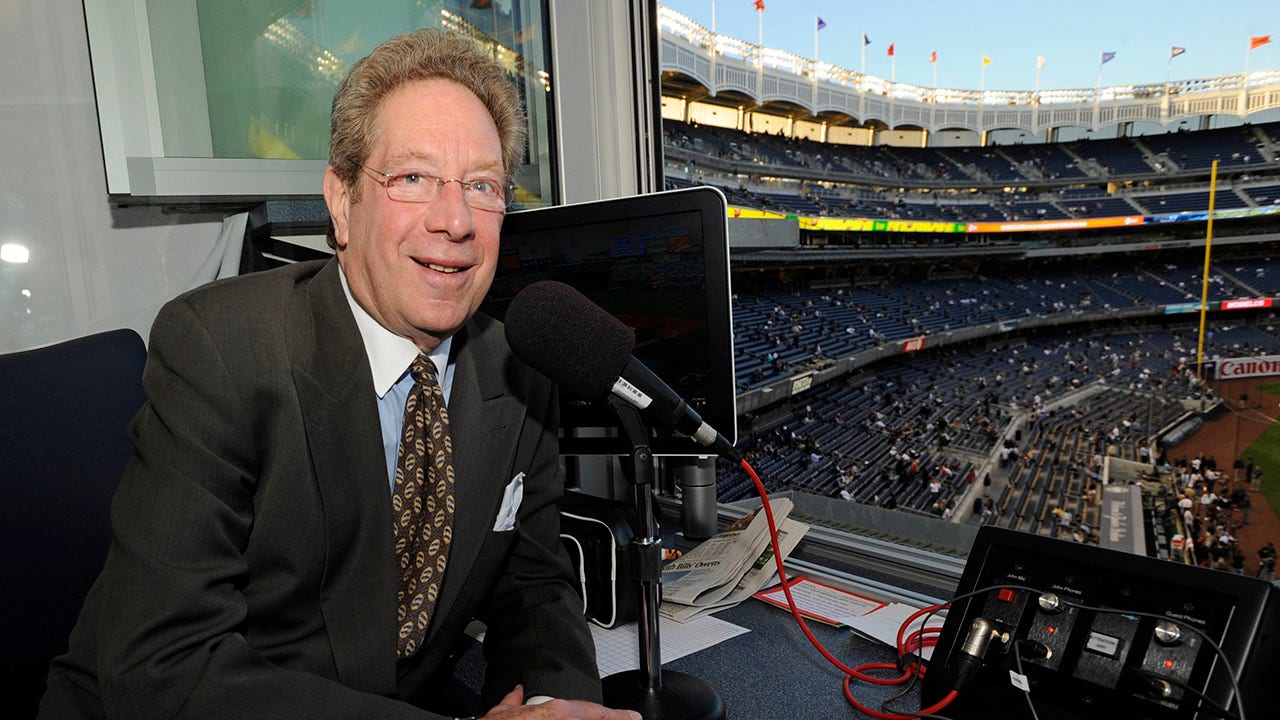
New York Yankees radio legend John Sterling has died, WFAN Sports Radio in New York announced on Monday. He was 87.
“We are devastated to hear about the passing of John Sterling, a WFAN and Yankees radio icon whose voice was synonymous with an entire generation of Yankee fandom,” the radio station wrote on social media.
John Sterling sits in the broadcast booth before the New York Yankees game against the Boston Red Sox at Yankee Stadium in New York on Sept. 25, 2009. (Bill Kostroun/AP)
Sterling suffered a heart attack in January and was said to be in good spirits. He retired from broadcasting in April 2024 after 64 years in the industry.
Since 1989, Sterling has been gracing the New York airwaves as the voice of the Yankees, and that has included the multiple World Series titles.
CLICK HERE FOR MORE SPORTS COVERAGE ON FOXNEWS.COM
“It is high, it is far, it is gone!” is something Yankees fans have heard for decades, and Sterling usually followed it up with specific calls for each player, including, “It’s an A-bomb from A-Rod” for Alex Rodriguez and “Here comes the Judge!” for Aaron Judge.
CLICK HERE TO DOWNLOAD THE FOX NEWS APP
This is a breaking news story. Check back for updates.
NEWYou can now listen to Fox News articles!
Boston Celtics star Jaylen Brown accused NBA officials of having an “agenda” against him in the team’s playoff series against the Philadelphia 76ers, which ended in a Game 7 defeat.
Brown touched on 76ers center Joel Embiid getting calls after Boston lost to Philadelphia on Saturday night. He further went after referees in a livestream.
ZERO BS. JUST DAKICH. TAKE THE DON’T @ ME PODCAST ON THE ROAD. DOWNLOAD NOW!
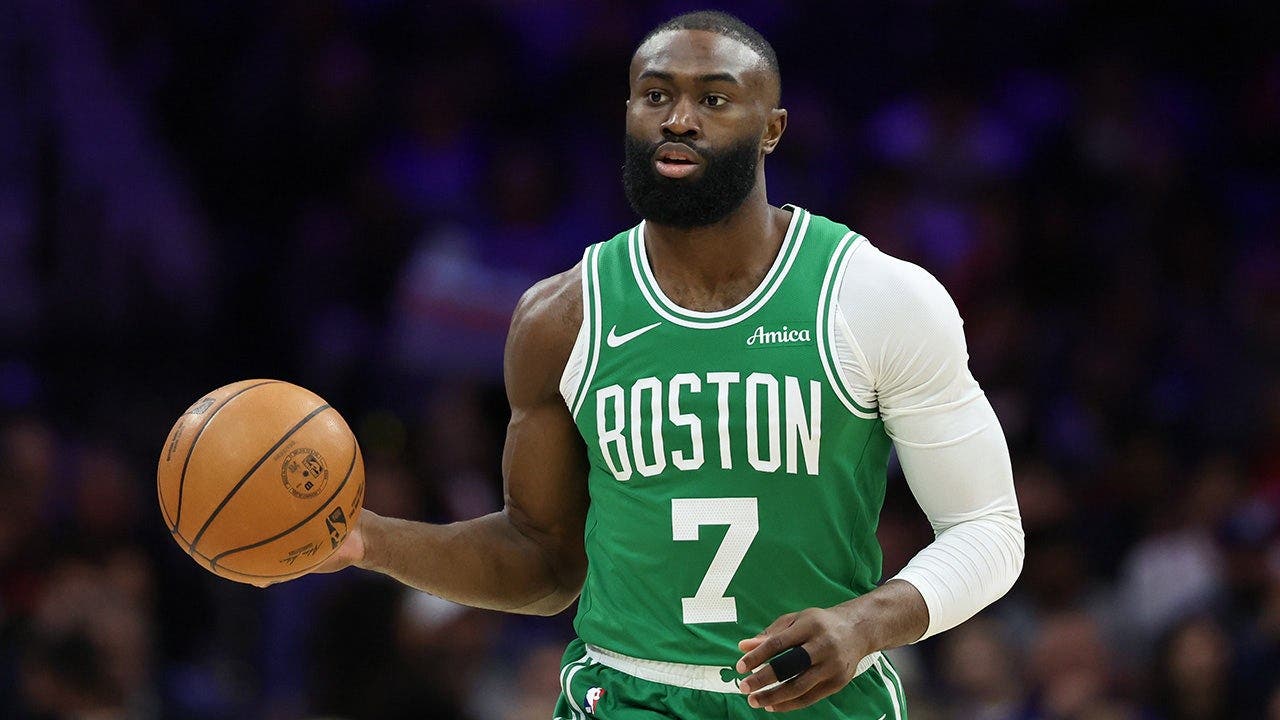
Boston Celtics guard Jaylen Brown dribbles the ball against the Philadelphia 76ers during the first quarter at Xfinity Mobile Arena in Philadelphia, Pa., on April 30, 2026. (Bill Streicher/Imagn Images)
“They keep saying there are push-offs and stuff like that,” he said, via MassLive. “Do you know how many players do that? That’s the common play, a basketball play. Every player does it. So why are you targeting me? They clearly had an agenda. Maybe because I had spoken and was critical of the refs in the regular season. So you know how they responded? You’re going to lead the playoffs in offensive fouls. That was the response from the officiating crew.
“I actually spoke to some refs and there was an agenda going into each game. Anytime Jaylen brings his arm up, just from reputation, just call it. Paul George does the same thing. Jalen Brunson does the same thing. I can go down the list. It’s a basketball play, whether y’all believe it or not. Everybody does that when you drive, especially when you got bodies on you. Philly took advantage of it, and they took advantage of the officiating, and it cost us to some degree.”
Philadelphia won the final game of the series, 109-100. Embiid had 34 points, 12 rebounds and six assists. Embiid made nine of his 11 free-throw attempts.
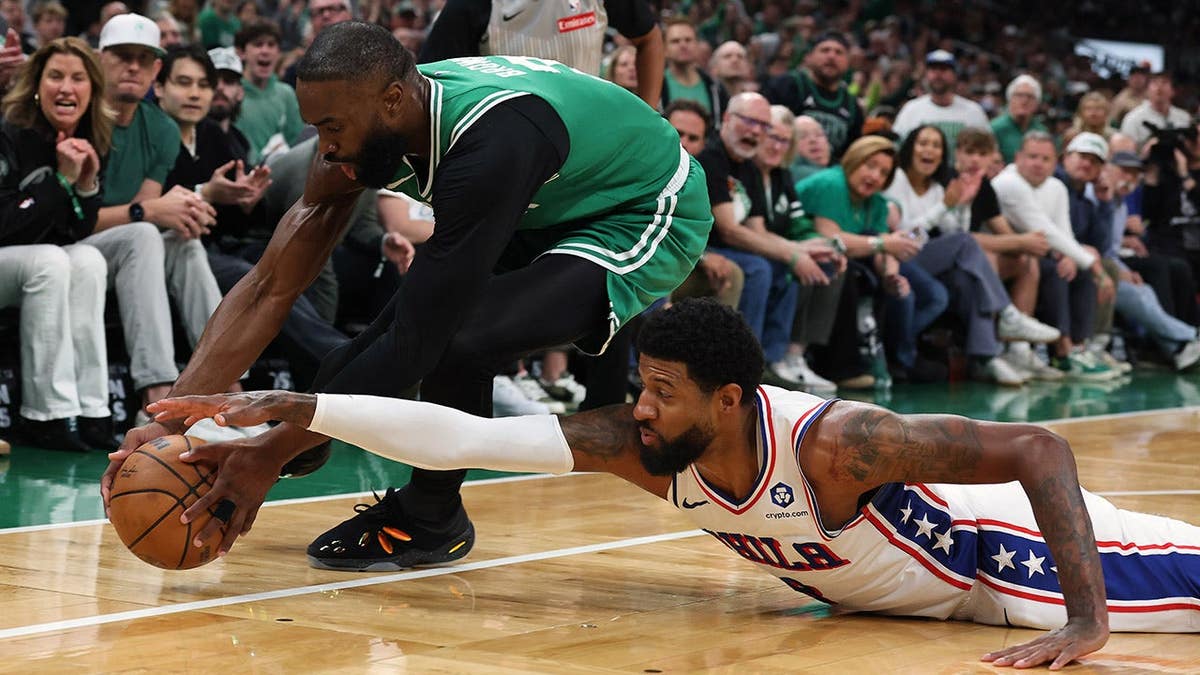
Philadelphia 76ers forward Paul George and Boston Celtics guard Jaylen Brown compete for a loose ball during the first quarter of game seven in the first round of the 2026 NBA playoffs at TD Garden in Boston, Mass., on May 2, 2026. (Winslow Townson/Imagn Images)
Brown made critical comments toward Embiid.
CLICK HERE FOR MORE SPORTS COVERAGE ON FOXNEWS.COM
“Embiid put a lot of pressure on us, like on all our bigs and our guards,” he said. “We didn’t really have an answer for him. We tried a bunch of different things and he just, he’s a big body, and also he was flopping around. He got some extra calls and stuff like that, and they rewarded him for that. That’s the league that we’re in. So, that’s all I got to say.”
Brown averaged 25.7 points per game and shot 45.5% from the floor.
He was the best Celtics’ player all season as the team was without Jayson Tatum for most of the season. He played in 71 games and averaged 28.7 points, 6.9 rebounds and 5.1 assists per game.
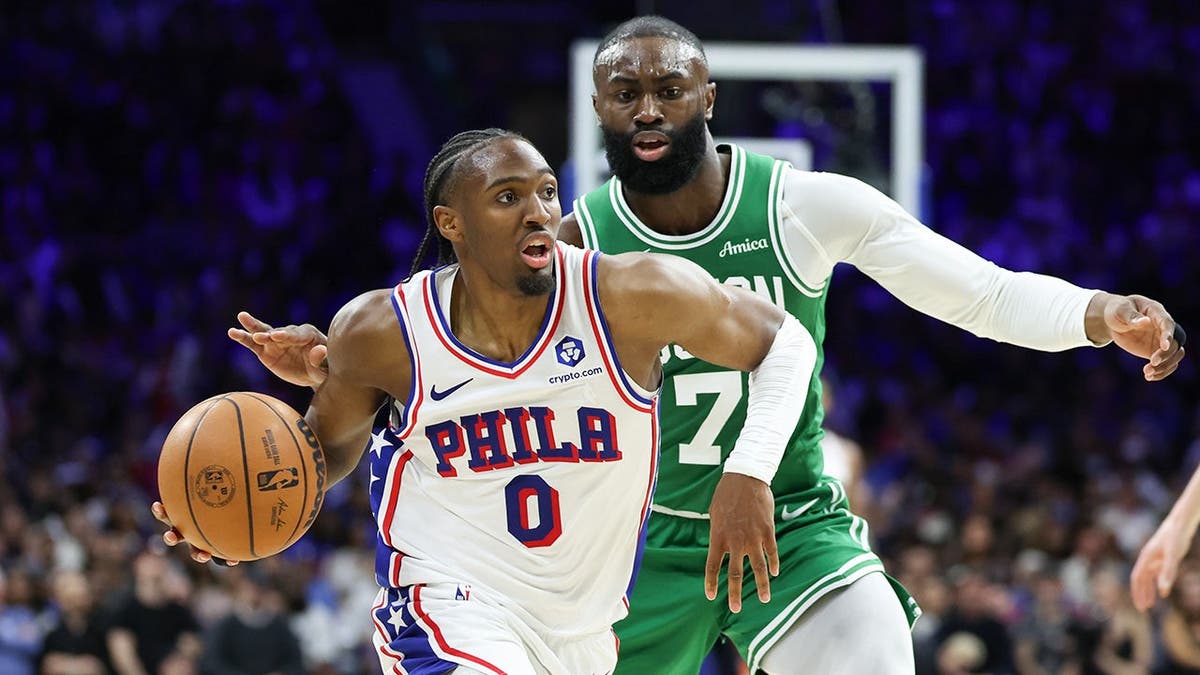
Philadelphia 76ers guard Tyrese Maxey drives past Boston Celtics guard Jaylen Brown during the third quarter at Xfinity Mobile Arena in Philadelphia, Pennsylvania, on April 30, 2026. (Bill Streicher/Imagn Images)
CLICK HERE TO DOWNLOAD THE FOX NEWS APP
Boston was 56-26 and finished second in the Eastern Conference.
LOS ANGELE:
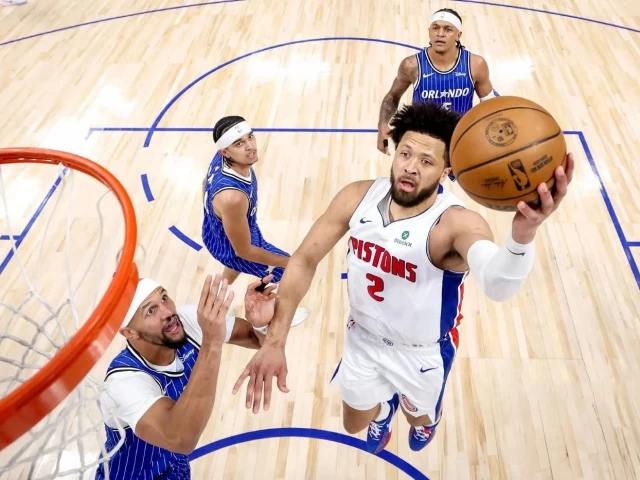
The Detroit Pistons routed the Orlando Magic 116-94 on Sunday to cap a remarkable NBA playoff comeback and book an Eastern Conference semi-final clash with Cleveland.
Cade Cunningham scored 32 points and handed out 12 assists and Tobias Harris added 30 points with nine rebounds as the Pistons, who trailed 3-1 in the best-of-seven series, wrapped up a 4-3 triumph.
In Cleveland, the Cavaliers weathered a hot start from Toronto to beat the Raptors 114-102 and secure a 4-3 win in a series in which the home team won every game.
The Pistons, who locked up the top seed in the East with the third-best record in the league, notched their first playoff series victory since 2008.
“It’s great,” Cunningham said after the Pistons became the 15th team to climb out of a 3-1 hole — one day after the Philadelphia 76ers accomplished the feat against Boston.
“We had a great regular season, we built a lot of momentum going into these playoffs,” Cunningham said. “To lose in the first round would have really stung.
“To come back from 3-1, odds against us, and to come back and win it at home — it feels good.”
Detroit had already fended off elimination with victories in games five and six against the Magic — erasing a 24-point deficit on Friday to force Sunday’s decider.
It’s the second time the Pistons have rallied from 3-1 down to top the Magic, having accomplished the feat in the first round in 2003.
“They really pushed us to the limit,” Cunningham said. “We’ve grown a lot because of this series, because of that team.”
Paolo Banchero scored 38 points with nine rebounds and six assists for Orlando but got precious little scoring support.
Banchero scored the Magic’s first 11 points and Orlando emerged from a tight first quarter with a two-point lead.
The back-and-forth action continued early in the second, Detroit finally creating some separation behind a 17-point second-quarter outburst from Harris.
They led 60-49 at halftime and pushed their lead to as many as 25, taking full advantage of 16 Magic turnovers that led to 19 Pistons points.
“We’re excited for what’s to come,” Cunningham said. “We want to win games, win series and (our) ultimate goal is a championship.”
That quest continues with game one against Cleveland on Tuesday.
Allen masterclass
The Cavs, behind a masterclass from center Jarrett Allen, notched the franchise’s fifth straight game-seven triumph as they vanquished the Raptors for the fourth time in four post-season meetings.
Cleveland erased an early 10-point deficit to go into halftime tied at 49-49 and opened the third quarter on a 9-0 scoring run.
They out-scored the Raptors 38-19 in the third, Allen scoring 14 of his 22 points and pulling down 10 of his 19 rebounds in the period.
“I just wanted to show my teammates that we can win this game,” said Allen, who added two steals and three blocked shots.
His dominance on the boards helped the Cavs win the rebounding battle 60-33.
“Energy and effort, that’s what I believe wins games,” Allen said. “If you do it on the defensive end, everything translates to the offense.
“Every single possession, it means a lot,” he added of the game-seven intensity. “Every single possession means it could be the end of the season.”
Donovan Mitchell added 22 points for Cleveland and emerged unscathed from his own energetic leap for a ball which landed him in the third row of Rocket Arena seats early in the third quarter.
Veteran James Harden chipped in 18 points.
Scottie Barnes led the Raptors with a game-high 24 points, but Toronto’s ability to respond in the second half took a hit when foul trouble sent him to the bench for extended minutes.


Yankees radio icon John Sterling dead at 87

Taylor Swift causes new uproar for ‘TS13’ after countdown drama

Do Lightsaber Blades Have Mass?

-

 Tech7 days ago
A Brain Implant for Depression Is About to Be Tested in Humans
-

 Tech1 week ago
Almost 90% of women leave tech industry within 10 years | Computer Weekly
-
 Business7 days ago
‘I had £20,000 stolen and had to fight a 13-month fraud reporting rule to get it back’
-
 Business1 week ago
Pakistan’s oil market is fuelling the crisis | The Express Tribune
-

 Sports6 days ago
Pro wrestling star Steph De Lander reveals how colleague’s advice helped lead her to title triumph at ACW
-

 Entertainment7 days ago
Norway joins Type 26 Frigate Programme to boost NATO naval power
-

 Entertainment7 days ago
Melania Trump says ABC should ‘take a stand’ on late-night host Kimmel
-

 Tech6 days ago
This Ambitious Laptop Doesn’t Leave Much Room for Your Hands