

Business
UK forecast to be second-fastest growing economy in G7 – IMF


Faisal IslamBBC Economics Editor
 Getty Images
The UK is forecast to be the second-fastest growing of the world’s most advanced economies this year, according to new projections from the International Monetary Fund (IMF).
The rates of growth remain modest at 1.3% for this year and next, but that outperforms the other G7 economies apart from the US in 2025, in a torrid year of trade and geopolitical tensions.
However, UK inflation is set to rise to the highest in the G7 in 2025 and 2026, the IMF predicts, driven by larger energy and utility bills.
UK inflation is forecast to average 3.4% this year and 2.5% in 2026 but the IMF says this will be “temporary”, and fall to 2% by the end of next year.
The G7 are seven advanced economies – the US, UK, France, Germany, Italy, Canada and Japan – but the group doesn’t include fast-growing economies such as China and India.
The IMF is an international organisation with 190 member countries. They work together to try to stabilise the global economy.
In the IMF’s forecast for economic growth, it predicts the UK will push Canada out of second place, after its trade-war-affected economy was hit by the biggest downgrades for 2025 and 2026. However, Canada is expected to retake second place next year when its economy is forecast to grow at a rate of 1.5%.
Germany, France and Italy are all forecast to grow far more slowly at rates of between 0.2 and 0.9% in 2025 and 2026.
Chancellor Rachel Reeves welcomed the fresh upgrade to the IMF’s outlook for the UK’s economy.
“But know this is just the start. For too many people, our economy feels stuck,” she said.
“Working people feel it every day, experts talk about it, and I am going to deal with it.”
But highlighting the inflation forecasts, shadow chancellor Sir Mel Stride said the IMF assessment on made for “grim reading”.
He said that UK households “were being squeezed from all sides”, adding: “Since taking office, Labour have allowed the cost of living to rise, debt to balloon and business confidence to collapse to record lows.”
The IMF said a slight overall upgrade for the UK in its World Economic Outlook, from its previous outlook in April, was due to “strong activity in the first half of 2025” and an improved trade outlook, partly thanks to the recently announced US-UK trade deal.
Trump tariffs loom large
The global outlook is dominated by the so far “muted response” of the world economy to the imposition of hefty tariffs on almost all imports into the US, a weakened dollar, questions about the independence of the US Federal Reserve and sky high valuations of US tech companies.
The IMF expect some of this to unwind soon, saying “resilience is giving way to warning signs”. In the US tariff costs which had been absorbed by exporters and retailers, are now feeding into higher goods prices.
So far tariffs have been reflected in higher prices for American shoppers of household appliances, but not for food and clothing.
The IMF cited Brexit as an example of how uncertainty around major changes in trading arrangements can, after a delay, lead to steady falls in investment.
AI warning
The Fund also pointed to a possible bursting of the US AI tech boom.
“Excessively optimistic growth expectations about AI could be revised in light of incoming data from early adopters and could trigger a market correction,” the IMF said.
Disappointing profit numbers could lead to a “reassessment of the sustainability of AI-driven valuations and a drop in tech stock prices, with systemic implications. A potential bust of the AI boom could rival the dot-com crash of 2000–01 in severity”.
The concentration of the stock market surge on a tiny number of firms and massive funding from less regulated sources outside the banking sector, were particular risks.
Slow growth could hit household wealth, with a lesser ability of major economies to use government borrowing to support their economies, as occurred in recent crises.
Conversely, the IMF also said that “faster AI adoption” could help unleash significant gains in productivity, helping the global economy is handled appropriately.
Elsewhere, the IMF again pointed to the outperformance of the Spanish economy, the fastest-growing large western economy. But the war economy growth seen in Russia last year has now petered out.
There are also concerns about funding for the world’s poorest countries now that aid budgets in many countries, such as the UK and US are being slashed in favour of increased defence spending.
The forecasts were released on the eve of the annual meetings of the IMF and World Bank attended by the world’s finance ministers and central bankers in Washington DC, with considerable attention on a new US bailout for Argentina.
Correction 14 October: An earlier version of this article said the UK would have the second-fastest growing economy of the G7 both this year and next. The UK will have the third fastest growing economy in 2026.

Reform UK leader Nigel Farage said in an interview on BBC Breakfast on Wednesday that “most of our gas now comes from Montana in the (US) Midwest”.
It is not the first time that Mr Farage has made a similar claim. Earlier in April he said: “Most of the gas we currently import comes from Montana.”
Evaluation
The US is only the third largest source of the UK’s gas supply, and the second largest foreign supplier. It is the largest supplier of liquid natural gas, the type that is transported by ship, rather than pipeline.
It is unclear why Mr Farage mentioned Montana specifically. Montana is not a major gas producing state.
The facts
Provisional data for 2025 shows that the UK’s own production of gas was 332,444 gigawatt hours (GWh). The country imported 463,692 GWh of gas. Of that, 320,249 GWh came from Norway and 104,360 GWh came from the US.
All the gas imported from the US was liquid natural gas (LNG) – the type that is super-chilled and transported by ship rather than in pipelines. The US was the UK’s largest supplier of LNG.
But it unclear how much – if any – of the UK’s gas comes from Montana specifically.
Data from the US Energy Information Administration (EIA) show that in 2024, the US produced a total of 37.7 trillion cubic feet of dry gas. Of this Montana accounted for around 40.0 billion cubic feet, or 0.1% of the total US production.
EIA data also show that Montana’s gas production was lower than its consumption of gas.
However, this does not mean that the state does not export any of its gas to other states or countries.
A 2023 report from the Montana Department of Environmental Quality said that while “Montana currently consumes more natural gas than it produces” a “significant portion” of the state’s production is exported.
Data from the US Census Bureau show that the US exported 2.8 billion US dollars worth of natural gas to the UK in 2025. This came from four states: Georgia, Louisiana, Maryland and Texas.
The data shows the state that the gas was exported from, not where the gas was actually initially produced. Although they are major LNG exporters, Maryland and Georgia produce little to no natural gas themselves.
The US Census Bureau data also show that Montana exported 525,083 US dollars worth of natural gas in 2025, all of which went to Canada.
A 2021 report from the UK’s Foreign and Commonwealth Office and Department for International Trade said that the UK was the fifth largest export market for Montana in 2019, selling 39 million US dollars worth of goods to the UK.
It listed the main goods exports from Montana to the UK in 2019 as electrical equipment, basic chemicals, navigational and measurement instruments, aerospace products and parts, and miscellaneous general purpose machinery.
There is no mention of gas in that report.
The US Census Bureau does not define Montana as being part of the Midwest.
Links
Facebook video (archived video download)
Gov.uk – Natural gas supply and consumption (archived page and spreadsheet)
Gov.uk – Natural gas imports (archived page and spreadsheet)
EIA – Natural Gas Gross Withdrawals and Production (archived)
EIA – Natural Gas Summary, Montana (archived)
Montana Department of Environmental Quality – Understanding energy in Montana (archived)
US Census Bureau – Foreign Trade (archived page and spreadsheet download)
EIA – Natural Gas Summary, Georgia (archived)
Gov.uk – UK-Montana trade and investment highlights (archived)
US Census Bureau – 12 States Make up the Midwest Region of the Country (archived)
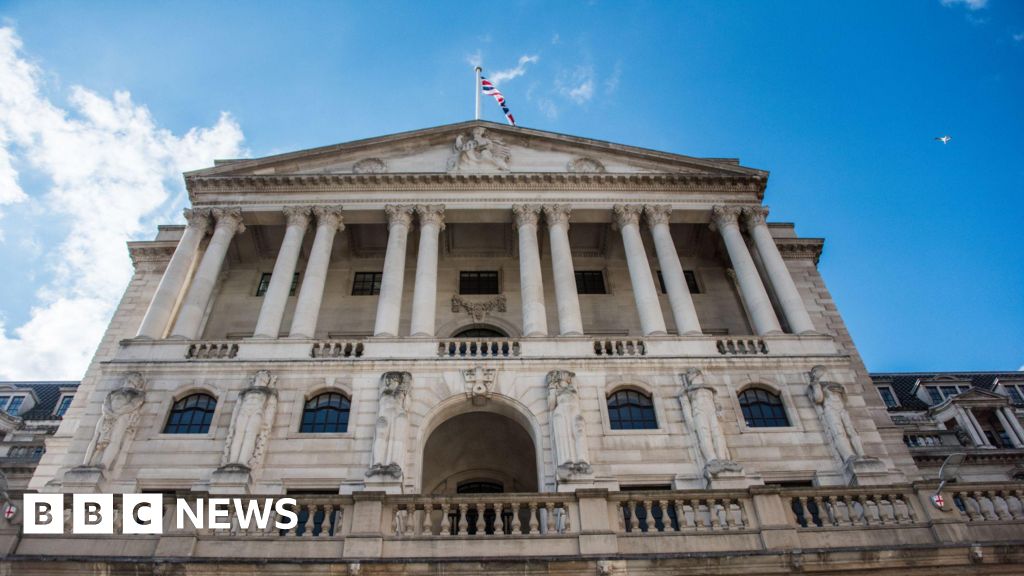
The Bank of England votes for no immediate change to borrowing costs as it monitors the knock-on effects of the Middle East conflict.
Source link
Business
India’s FDI inflow may cross $90 billion in FY26, says DPIIT secretary – The Times of India

India’s total foreign direct investment (FDI) inflows are likely to cross $90 billion in 2025-26 after already surpassing $88 billion during April-February, a top government official said on Thursday.DPIIT Secretary Amardeep Singh Bhatia said the government had undertaken a series of policy measures to attract foreign investments into the country, PTI reported.He said that during April-February 2025-26, inflows had crossed $88 billion and were “hopefully crossing $90 billion” for the full fiscal year.According to Bhatia, reform measures, free trade agreements and India’s fast-growing economy are helping the country attract strong investment flows.This reflects continued momentum in foreign investment inflows amid the government’s push to improve ease of doing business and expand global trade linkages.


EU laws push APAC factories towards data over certificates

David Allan Coe, country singer who wrote “Take This Job and Shove It,” dies at age 86

EU a step closer to extending GSP for 10 more years

Us-India Trade Talks: US–India trade deal: Where do talks stand & what to expect – explained – The Times of India

PSL 11: Hyderabad Kingsmen opt to field after winning toss against Multan Sultans

Trump administration in advanced talks for a rescue package for Spirit Airlines, source says

-
Business1 week ago
Us-India Trade Talks: US–India trade deal: Where do talks stand & what to expect – explained – The Times of India
-
 Sports1 week ago
PSL 11: Hyderabad Kingsmen opt to field after winning toss against Multan Sultans
-
Business1 week ago
Trump administration in advanced talks for a rescue package for Spirit Airlines, source says
-
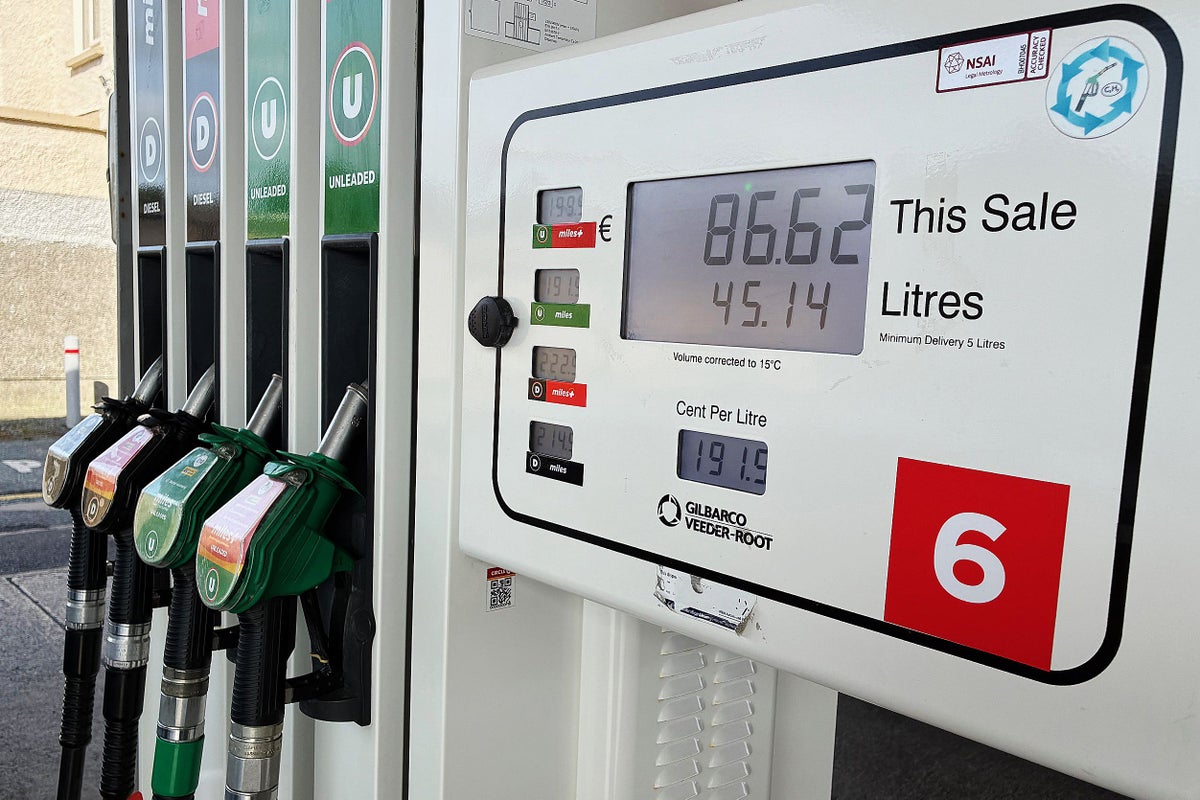 Business1 week ago
UK inflation accelerates after Iran war drives sharp rise in fuel prices
-

 Tech1 week ago
Nation states responsible for ‘nationally significant’ cyber attacks against UK, says NCSC chief | Computer Weekly
-

 Tech1 week ago
Microsoft faces court battle in £2bn Windows Server class action | Computer Weekly
-

 Tech1 week ago
Blackbox replaces two racks of HPE storage with 8U of Everpure | Computer Weekly
-

 Fashion1 week ago
Bangladesh RMG units call for allowing local FOC raw material sourcing