

Tech
UK prosecution of alleged Chinese spies was ‘shambolic’ says Parliamentary committee | Computer Weekly


The UK’s failed attempt to bring a prosecution against two alleged Chinese spies was “shambolic”, “beset by confusion” and suffered from “systemic failures”, a cross-party group of MPs and peers has concluded.
The high-profile espionage case against Christopher Cash and Christopher Berry collapsed in 2024, when the Crown Prosecution Service (CPS) decided there was not sufficient evidence to show that China was a threat to UK national security at the time of the alleged offences.
The CPS abandoned the case despite witness statements from the UK government deputy national security adviser (DNSA), who described China as “the biggest state-based threat to the UK’s economic security” and pointed to state-linked cyber attacks against government and commercial targets, according to the MPs’ report.
The chief prosecution witness in the case, DNSA Matthew Collins, wrote in witness statements that “China’s espionage operations threaten the UK’s economic prosperity and resilience, and the integrity of democratic institutions”, and that China was behind “malicious cyber activity … targeting democratic institutions and Parliamentarians as part of large-scale espionage campaigns”.
The two accused – Cash, a former Parliamentary researcher, and Berry, a teacher – were charged in April 2020 for spying offences under the Official Secrets Act 1911. They were accused of passing information about UK politics, MPs and UK government policy to a Chinese intelligence agent, before subsequently being acquitted after the government dropped the case.
According to a report published today by the Joint Committee on the National Security Strategy (JCNSS), it was “not immediately obvious” that the director of public prosecutions lacked the evidence to show that China was a threat to national security at the time of the alleged offences, given the strength of Collins’ witness statements.
According to the report, prosecutors raised questions about the case against Cash and Berry following a court ruling after the conviction in May 2025 of a Bulgarian spy ring working for the Russian state, led by . The ruling addressed the meaning of the word “enemy” under the Official Secrets Act 1911.
The Court of Appeal found that there was “no reason why the term ‘an enemy’ should not include a country which represents a current threat to the UK”. It went on to say that a jury would be well placed to assess the evidence and facts.
The director of public prosecutions, Stephen Parkinson, told the committee, however, that the Roussev judgment meant prosecutors needed to demonstrate that the “totality of threats posed by China” when the alleged offences took place “made China a threat to national security”.
Parkinson went on to tell Parliamentarians that prosecutors had been unable to secure evidence that China posed “an active” and “current” threat to UK national security at the time of the alleged offences.
The committee said that events in the case “raised eyebrows”, particularly following a decision to drop the prosecution two days after a meeting between the UK’s national security adviser (NSA), Jonathan Powell, and other officials to “discuss the management of the UK’s bilateral relationship with China”.
The committee said it did not find evidence of a coordinated high-level effort to collapse the prosecution or any deliberate efforts to obstruct it. But it did find evidence of a process “beset by confusion and misaligned expectations”.
Constitutional safeguards designed to protect the independence of criminal proceedings instead “catalysed a crisis of public confidence and fuelled allegations of conspiracy at the highest level of government”, the Parliamentarians found.
Matt Western MP, chair of the joint committee, which has made recommendations to improve the handling of future cases, said he hoped the committee’s investigation would draw a line under the case.
“As the global security environment worsens, sensitive national security cases will arise more frequently. The government must show the public that it is confident in standing up to adversaries when required. Failing to do so will corrode public trust in our institutions,” he added.
The Iran war has spiked gas prices. The RAM crisis has spiked prices on electronics. A wide swath of imported goods costs more than before due to Trump’s tariffs. Right now, your wallet is likely feeling the squeeze.
It’s a tumultuous time, and the constant media barrage of doom and gloom doesn’t help ease anxieties. It’s also hard to figure out when things will get better, so you’re stuck in a rut of worrying about finances. It’s OK. Take a breath. The first thing to remember, according to “The Budgetnista” Tiffany Aliche, is that the economy is cyclical.
“I’ve lived long enough to see many ‘worst times,’” Aliche says. She’s a financial educator and author of The New York Times Best Seller Get Good with Money. “Well, if it is the worst time, what the hell can I do about it? Sometimes you have to take the apps off your phone. I took Instagram off my phone, and I allow myself to check it on my laptop, which is far less addictive.”
Constrict your doomscrolling so you won’t feel the constant anxieties from the day’s news. Now, how can you actually find ways to conserve and save money? First, look at tightening your spending as much as possible. Aliche says you should analyze your credit card statements and see exactly where your money is going. Is there any wiggle room? Can you cut a few subscriptions to save a few bucks every month? She calls it the ramen noodle budget.
Once you make those adjustments, it’s worth thinking about bigger changes. It might be that those plans never have to come to fruition—like moving in with parents or getting a roommate to save money on housing. “Make the doomsday plan,” she says. “You don’t have to act on it now, but what is that plan if things really get rough, and start having those conversations.”
Sean Pyles, producer and host of NerdWallet’s Smart Money podcast (also a certified financial planner), echoed Aliche’s sentiment of starting with your most recent spending to see where your money is going, and see if it aligns with your values and goals. Do you really need to Uber everywhere? He’s also a fan of keeping a level head and avoiding rash decisions, especially when there’s a lot of volatility in the stock market. Focus on your time horizon instead, and ignore the swings in the market.
“The wiser step is to ignore it as noise and realize that this is someone else’s problem, not mine right now,” he says. “Focus on what you can control. Maybe you have a financial goal to save for a vacation or a wedding, or it is your retirement you’re investing for now—do what you can to make sure you’re on track to meet those goals.”
It’s prudent to build up an emergency fund. Aliche recommends saving up ideally six months of your noodle budget, which you’d typically spend on necessities like rent, mortgage, and utilities. Both Aliche and Pyles suggested automating your finances as much as you can. Set it up so that you have some cash—maybe $100—going into your emergency fund every paycheck. Aliche says you can even ask your employer to split your salary so that it goes into specific accounts, like half of it going into a checking account and the other half going to a high-yield savings account.
Expert Tips on Saving Money
With those budgeting tips in mind, I also asked the writers and editors on WIRED’s Gear and Reviews teams—along with Aliche and Pyles—for ways they save money, whether that’s through specific gear they own or services they use. Hopefully, some of these suggestions can help you save some cash not just now but whenever you’re in a pinch.
Cardmaxxing
“I have been really relying on my credit card points and doing what I can to maximize the points I’ve been earning on everyday purchases. If you have a solid credit card that’s getting a good reward rate for things like going out to eat or taking ride shares, that can actually offset the cost of summer travel, because we’ve seen jet fuel prices go up a lot recently. This might be a great time to cash in the points you have just sitting in your credit card account not being used.” —Sean Pyles
Energy Savings
“I have the Google [Nest] Thermostat—I travel a lot, so I have the thermostat on my phone. So if I’m not going to be at home, then I’m like, who’s heating the house? I’m not home, I don’t care. To a certain degree, obviously, you don’t want to freeze your pipes. Lean into your thermostat … use smart technology so that you’re not using energy in a way that’s inefficient.” —Tiffany Aliche
Baby Bonanza
My wife and I are both practiced deal hunters, so much so that she was actually excited when I told her I landed her engagement ring from an upscale consignment store. (I got it at half price!) She’s always been the pro to my amateur, but with the addition of our first child, she transitioned to fully operational Deals Terminator, where she zeroed in on a variety of resources to help us land most of our baby stuff for 10 cents on the dollar (or less).
We started by hitting up friends and family, but whatever we couldn’t procure from hand-me-downs has come from a mixture of local consignment stores, sites like Facebook Marketplace and Buy Nothing, Poshmark, and even good old-fashioned eBay. Swap programs like Just Between Friends are another great way to keep your baby clothed, and we’ve kept our library fresh by hitting up used bookstores as well as Dolly Parton’s Imagination Library, which grants you one free book a month. Virtually everything you buy in these early stages will be gone in a year or two at most. That makes going cheap on essentials a must for keeping costs down. —Ryan Waniata
Free Ride
Back in 2022, I wrote about how Filson’s Dryden Duffle Pack was hands down my favorite gear item ever. Then Filson killed it. The folly of discontinuing what was at the time the best bag in the world wasn’t lost on Huckberry, mind you, who, realizing Filson’s error, collaborated with the brand to bring a version back for its store. Now, finally seeing the error of its ways, Filson has resurrected the peerless Duffle Pack itself.
Why do I tell you this? Well, the money-saving genius of this bag lies in its ability to morph between a hand-carry, standard shoulder duffel, and a rucksack, thanks to two backpack straps cleverly hidden in the base. When I fly, I shun cabin cases in favor of the Duffle Pack, because low-cost, money-grabbing budget airlines increasingly like to charge extra for taking overhead carry-on cases onto a flight. Backpacks are usually free. You can easily fit a week’s worth of clothes, toiletries, tech (yes, there’s even a dedicated 16-inch laptop pocket), adapters, cables, and more into the Duffle Pack’s cavernous 46 liters of space. All you then need to do is waltz onto your flight with the trusty Filson in backpack mode, and you won’t have paid one cent extra. —Jeremy White
Too Good to Go
I’ve gobbled up so many delicious snacks, like artisanal conchas, and hefty dinners, like Mission-style burritos, at a discounted rate by using the Too Good to Go app (Android, iOS). Restaurants and bakers list their unsold food at the end of the day for people to buy through TGTG. While sometimes the portions can be on the smaller end, and you don’t get to pick what you get, the app is a reliable option for cheap, late-night munchies. —Reece Rogers
Buy Used

A user browsing Facebook on a computer in Tunis, Tunisia.Photograph: Imen Ben Youssef/Getty Images
A great deal of furniture in my home was acquired through Facebook Marketplace. Much depends on the area you live in, but you’ll be surprised at just how much stuff people list on there at reasonable prices, and you can usually haggle to get the price a little lower. Be very careful of scams, and always make sure you meet people in public spaces when making purchases. But Facebook Marketplace isn’t the only option for used gear; for big appliances or electronics, I usually check retail stores like Amazon or Best Buy for open-box or used listings, and if nothing comes up, usually I can find the item I want on eBay. I’ve bought several excellent lenses for my Nikon camera, saving hundreds of dollars had I bought new. —Julian Chokkattu
Or Buy Refurbished
Brand new always means paying a premium, but many folks are put off buying used because they don’t want the risk of a scuffed phone or a scammy seller. There is a happy middle ground: Buy refurbished. Go directly to major players like Apple, and you can get decent discounts on MacBooks or iPhones that come packaged like new with a warranty period. Our last two MacBooks were both refurbs from Apple, and they’re as good as new. I dive deeper into this in my guide on How to Buy Refurbished Electronics. —Simon Hill
Freeze Food
If you manage to find large quantities of food on markdown, you’d be surprised at how much you can freeze with little to no loss of flavor or texture. Beyond the usual suspects like meat, butter, and leftovers, I use Souper Cubes trays to portion cut-up fruit and about-to-be-expired sauces and condiments, I vacuum-seal hard cheeses, and I individually wrap baked goods like bread and buns before deep freezing. (As a bonus, freezing actually lowers bread’s glycemic index.) —Kat Merck
Skip the Gas-Guzzling Car

Courtesy of Specialized
Everyone thinks that transitioning away from driving your car (and paying insane gas prices!) means that it has to be all or nothing. This is not true. My rule is that when you can, just substitute one trip per day where you would’ve driven a car with a bike, ebike, scooter, walking, public transit, or carpooling. For me, that means biking my kids to school. For you, that might mean walking to the corner store instead of driving to the market for ketchup, or asking to get picked up on the way to the bar instead of meeting people there. Bonus: You might end up seeing your friends more, too. —Adrienne So
My Friend Libby
I can’t begin to add up the amount of money I’ve saved over the years with my tried and true Kindle + Libby app combo. I’m a big reader, and using Overdrive’s Libby in conjunction with my local library card gets me free and sometimes instant access to a huge variety of ebooks, audiobooks, and magazines. As any regular library user knows, sometimes you have to wait for the most popular titles to become available. The app even has a path to requesting that your library buy a new ebook license for books it might not have. Those resisting the siren call of Amazon’s e-reader can use Libby in conjunction with other devices, too (though that process is a little more complicated), or even choose to read some books natively, right in the app. —Aarian Marshall
You Need a Budget

Courtesy of YNAB
After reading WIRED editor Adrienne So’s story about YNAB, or You Need A Budget, I decided to give the app a go. I was instantly hooked on YNAB’s seemingly straightforward premise. Ideally, you can only spend the money you actually have, so why not plan for the best way to do that? Link YNAB to your bank account and divide your money into any categories you want. Then, every bit of payment and income is tracked and sorted into customized categories that show what you spend money on. It’s both a blessing and a curse to see exactly how much you spend on takeout, but YNAB makes it easy to reallocate those funds, little bits at a time, into something else you want to invest in. Yeah, there’s a yearly fee for the service, but at least the service shows you how to set aside the costs. —Boone Ashworth
Rush Tickets
Just because you’re saving money doesn’t mean you have to sit at home solemnly on the couch every night! You should consider calling your local theater to see what their policy is for night-of, rush tickets. The discount might be even deeper than you expect. Recently, my partner and I had a lovely date night at a theater in San Francisco that was showing a stage adaptation of Paranormal Activity. Spooky! We showed up around an hour before curtain and snagged two $15 tickets, which were originally priced over $100. There are official apps that specialize in these kinds of tickets, like TodayTix for Broadway shows in New York City, but there most likely is an option local to your area if you do some digging. —Reece Rogers
Budget Apparel
Noihsaf Bazaar. What the heck is a Noihsaf? Well, it’s “fashion” spelled backward, of course. But there’s nothing retrograde about this website, which lists gently used apparel, footwear, and decor from independent designers, small shops, and vintage resellers. That’s what makes Noihsaf Bazaar stand out among the Poshmarks and Depops of the used-clothing world. The stuff you’ll find here is, for the most part, unique and interesting and from labels that you haven’t heard of. Sure, you’ll find the occasional Pendleton flannel or Levi’s denim jacket, but the indie vibes always win out. Only the best stuff makes it onto the site, too. Noihsaf’s team of curators vets items before they get listed, and inventory turns over frequently, so shopping here is like stepping into the world’s most well-curated vintage shop. And the deals are often screamin’, with filters to show items that are on sale or listings that are expiring soon. —Michael Calore
Thrifting Fun
Speaking of vintage shops, you would not believe the treasure I find at the thrift store ($200-plus blouses and jeans with tags still on, hello?), which has ruined me forever for buying clothes at retail price. They always need a good clean when they come home, and I buy Blueland laundry detergent tabs in bulk. Bang for buck, no microplastics leeching into our water supply, and the Spring Bloom scent is lovely. —Julia Forbes
Aldi Girl
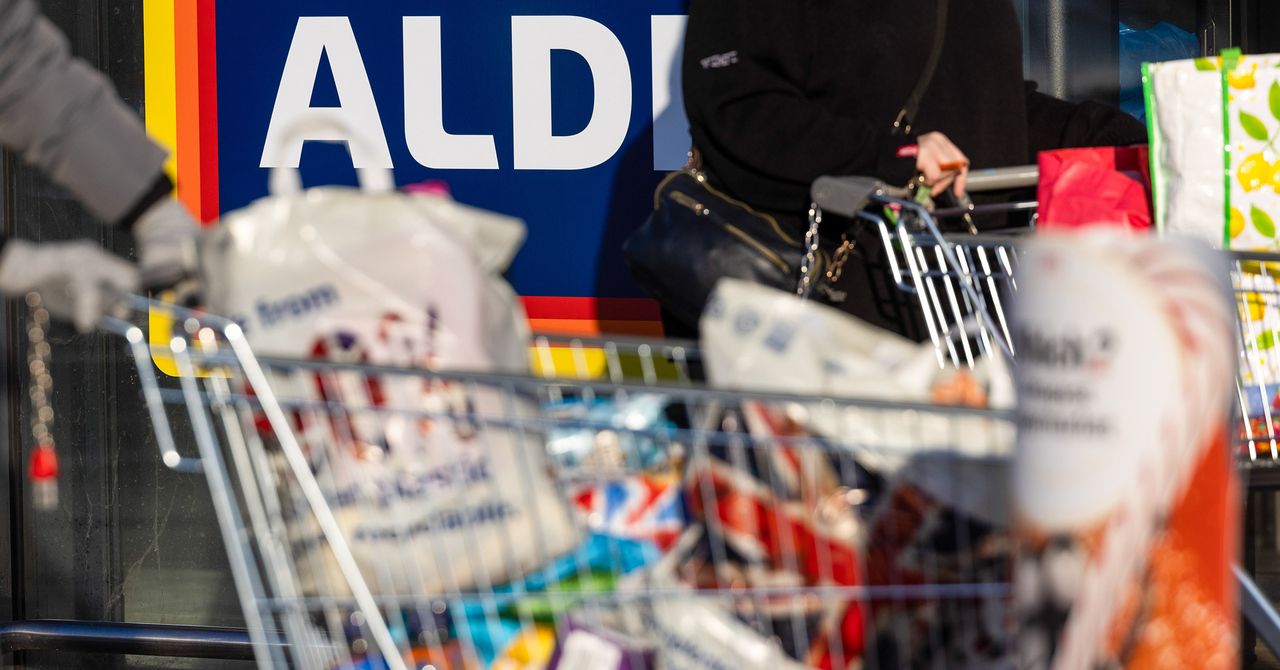
I’ve always been an Aldi girl, and quite frankly, I don’t understand how anybody can afford to be anything else. Aldi mostly sells private-label groceries with minimal packaging, and it charges for bags and shopping carts (though the latter fee is just a 25-cent deposit). Bring your reusable bag! Shopping there has cut my grocery budget in half. I did join Costco recently, too, for bulk items like protein shakes and energy drinks, and the gas savings from filling my tank there have paid for my membership so far. I also started meal prepping this year, which includes making extra batches of my favorites so I can DoorDash from my freezer instead of my phone. —Louryn Strampe

The Department of Justice announced Thursday that it arrested Gannon Ken Van Dyke, an enlisted member of the US Army’s special forces, for allegedly using “classified, nonpublic” information about the capture of Venezuelan president Nicolás Maduro to notch more than $400,000 in profits on Polymarket trades. A grand jury indicted him on five counts, including multiple violations of the Commodity Exchange Act.
Van Dyke is the first person to be charged with insider trading on a prediction market in the United States. Lawmakers have been voicing concerns for months about the high likelihood that politicians and public servants could use nonpublic information to profit from trades on leading industry platforms like Polymarket and Kalshi, which have exploded in popularity over the past year.
The arrest comes just weeks after Department of Justice prosecutors met with Polymarket about potential insider tradition violations. In February, Israeli authorities arrested two citizens, an army reservist and a civilian, for allegedly leaking classified information by making wagers on Polymarket related to military operations. Kalshi, Polymarket’s primary rival in the United States, recently fined three politicians for breaking its insider trading rules, but it did not flag the violations for further enforcement to the Commodity Futures Trading Commission (CFTC), the federal agency that oversees prediction markets.
After Van Dyke’s arrest was made public, Polymarket posted a statement to social media noting that it had “identified a user trading on classified government information” and “referred the matter to the DOJ & cooperated with their investigation.” The company declined to comment further.
According to court documents, Van Dyke has been an active duty US soldier since September 2008 and rose to the level of master sergeant in 2023. At the time of the alleged trading activity, he was stationed at Fort Bragg in Fayetteville, North Carolina, and assigned to the Army’s Special Operations Command Western Hemisphere Operations.
“I have been crystal clear that anyone who engages in fraud, manipulation, or insider trading in any of our markets will face the full force of the law,” CFTC chair Michael Selig said in a statement. “The defendant was entrusted with confidential information about US operations and yet took action that endangered US national security and put the lives of American service members in harm’s way.”
The complaint alleges that Van Dyke was involved in the planning and execution of Maduro’s arrest and that he was aware that he wasn’t authorized to share nonpublic information about US military operations. The complaint says that Van Dyke signed a nondisclosure agreement that forbade him from revealing sensitive or classified government information “by writing, word, conduct, or otherwise.” The complaint also alleges Van Dyke saved a screenshot to his Google account “displaying the results of an artificial intelligence query” outlining how the US Special Forces maintains many classified files including “operational details that are not available to the public.”
On December 26, Van Dyke allegedly opened an account on Polymarket and took out around $35,000 from his bank account before transferring it to a cryptocurrency exchange.
The following day, Van Dyke allegedly made his first Venezuela-related trade on Polymarket, putting a little less than $100 on a “YES” contract that US forces would be in Venezuela by January 31, 2026. Prosecutors accuse him of ultimately making 13 Venezuela-related transactions on the platform, seven of those—totaling hundreds of thousands of shares—on a “YES” contract for “Maduro out by … January 31, 2026.” In other words, Van Dyke allegedly stood to make an enormous profit if the Venezuelan leader wound up out of power by the end of the month.
Tech
Newly Deciphered Sabotage Malware May Have Targeted Iran’s Nuclear Program—and Predates Stuxnet
Instead, Kamluk saw that it was a self-spreading piece of code with very different intentions. Using what was referred to within the code as “wormlet” functionality, Fast16 is designed to copy itself to other computers on the network via Windows’ network share feature. It checks for a list of security applications, and if none are present, installs the Fast16.sys kernel driver on the target machine.
That kernel driver then reads the code of applications as they’re loaded into the computer’s memory, monitoring for a long list of specific patterns—“rules” that allow it to identify when a target application is running. When it detects the target software, it carries out its apparent goal: silently altering the calculations the software is running to imperceptibly corrupt its results.
“This actually had a very significant payload inside, and pretty much everybody who looked at it before had missed it,” says Costin Raiu, a researcher at security consultancy TLP:Black who previously led the team that included Kamluk and Guerrero-Saade at Russian security firm Kaspersky, which did early work analyzing Stuxnet and related malware. “This is designed to be a long-term, very subtle sabotage which probably would be very, very difficult to notice.”
Searching for software that met the criteria of Fast16’s “rules” for an intended sabotage target, Kamluk and Guerrero-Saade found their three candidates: the MOHID, PKPM, and LS-DYNA software. As for the “wormlet” feature, they believe that the spreading mechanism was designed so that when a victim double-checks their calculation or simulation results with a different computer in the same lab, that machine, too, will confirm the erroneous result, making the deception all the more difficult to discover or understand.
In terms of other cybersabotage operations, only Stuxnet is remotely in the same class as Fast16, Guerrero-Saade argues. The complexity and sophistication of the malware, too, place it in Stuxnet’s realm of high-priority, high-resource state-sponsored hacking. “There are few scenarios where you go through this kind of development effort for a covert operation,” Guerrero-Saade says. “Somebody bent a paradigm in order to slow down or damage or throw off a process that they considered to be of critical importance.”
The Iran Hypothesis
All of that fits the hypothesis that Fast16 might, like Stuxnet, have been aimed at disrupting Iran’s ambitions of building a nuclear weapon. TLP:Black’s Raiu argues that, beyond a mere possibility, targeting Iran represents the most likely explanation—a “medium-high confidence” theory that Fast16 was “designed as a cyber strike package” that targeted Iran’s AMAD nuclear project, a plan by the regime of Ayatollah Khameini to obtain nuclear weapons in the early 2000s.
“This is another dimension of cyberattacks, another way to to wage this cyberwar against Iran’s nuclear program,” Raiu says.
In fact, Guerrero-Saade and Kamluk point to a paper published by the Institute for Science and International Security, which collected public evidence of Iranian scientists carrying out research that could contribute to the development of a nuclear weapon. In several of those documented cases, the scientists’ research used the LS-DYNA software that Guerrero-Saade and Kamluk found to have been a potential Fast16 target.


North India cotton yarn steady despite continued push by spinners

The WIRED Gear Team’s Tips on Ways to Save Money

Bangladesh, EU sign Partnership and Cooperation Agreement

-

 Fashion1 week ago
France’s LVMH Q1 revenue falls 6%, shows resilience amid Iran war
-

 Entertainment1 week ago
Is Claude down? Here’s why users are seeing errors
-

 Sports1 week ago
PSL 11: Peshawar Zalmi win toss, opt to field first against Quetta Gladiators
-

 Tech1 week ago
CYBERUK ’26: UK lagging on legal protections for cyber pros | Computer Weekly
-
 Business1 week ago
PepsiCo earnings beat estimates as North American food business improves
-

 Fashion1 week ago
Raymond unveils luxury Chairman’s Collection Store in Mumbai
-

 Sports5 days ago
NCAA men’s gymnastics championship: All-time winners list
-

 Sports5 days ago
WWE WrestleMania 42 Night 2: Live match results and analysis