

Fashion
UK’s Next boosts FY27 profit forecast on strong online demand


The company increased its guidance for FY27 with profit before tax (PBT) to reach £1.22 billion (~$1.65 billion) from the earlier estimate of £1.21 billion. The revised forecast represents annual growth of 5.2 per cent year-over-year (YoY).
Next plc has raised its FY27 profit guidance after stronger-than-expected Q1 trading, driven by robust online and international sales.
Full-price sales rose 6.2 per cent YoY in Q1, exceeding forecasts, while FY27 PBT guidance increased to £1.22 billion (~$1.65 billion).
Despite Middle East-related logistics disruptions and higher freight and energy costs.
Next maintained its full-year full-price sales growth guidance at 5 per cent and expects FY27 full-price sales to reach £5.9 billion, while total group sales are projected at £7.3 billion. Post-tax earnings per share are forecast to rise 6.5 per cent to 792.9 pence.
For Q2, the retailer expects full-price sales growth of 4 per cent, with international sales projected to increase 17 per cent before moderating later in the year due to tougher comparisons following last year’s transition to ZEOS distribution services.
Online demand drives Q1 growth
Meanwhile, full-price sales rose 6.2 per cent YoY in the 13 weeks ended May 2, 2026, surpassing the company’s forecast of 4 per cent growth. Sales exceeded expectations by £28 million (~$38.08 million), contributing an additional £8 million (~$10.88 million) in profit.
The retailer said exceptionally strong trading during the first five weeks of the quarter, when full-price sales surged 11.8 per cent, drove the outperformance. However, momentum softened during weeks six to eight as the Middle East conflict disrupted regional delivery services and logistics operations.
“Trade began to recover in the Middle East as delivery services returned to normal,” the company said in its trading statement.
Total UK full-price sales increased 4.4 per cent in Q1, significantly ahead of the company’s internal forecast of 1.3 per cent growth. Online channels remained the main growth driver, with UK online Next brand sales rising 5.8 per cent and LABEL sales jumping 15.7 per cent. Retail store sales declined 3.4 per cent.
International online sales grew 12.8 per cent during the quarter despite temporary disruption in Middle Eastern markets.
Next also outlined the financial impact of the Middle East conflict, estimating additional annual costs of £47 million, largely linked to freight, distribution, fuel and energy expenses.
The company said these costs would be fully offset through overseas price increases, operational savings, currency gains in Europe and improved factory gate margins.
Price increases outside Europe will vary by market but will not exceed 8 per cent in any territory, while no further UK price increases are planned beyond the previously forecast 0.6 per cent rise.
Fibre2Fashion News Desk (SG)











The fibre mix shows Brazil’s import demand is strongly tilted towards man-made fibre apparel, which accounted for $***.*** million, or **.** per cent of total imports in the first quarter of this year. Cotton apparel stood at $***.*** million, representing **.** per cent, while other fibres accounted for **.** per cent. Wool/animal hair and silk apparel remained marginal, with shares of *.** per cent and *.** per cent respectively, according to *fashion.com/market-intelligence/texpro-textile-and-apparel/” target=”_blank”>sourcing intelligence tool TexPro.
Knit apparel continued to dominate Brazil’s import basket, with imports of $***.*** million, or **.** per cent of the total. Woven apparel accounted for $***.*** million, or **.** per cent. This reflects strong demand for casualwear, athleisure, value fashion and everyday apparel categories. By product category, trousers and shorts were the largest segment, with imports of $***.*** million, accounting for **.** per cent. Coats followed at $***.*** million, or **.** per cent, while shirts stood at $***.*** million, or **.** per cent. Jerseys and T-shirts accounted for *.** per cent and * per cent respectively.

Promising 40 per cent productivity gains, the F Series Vantage is here to transform the finishing workflow thanks to automation that anticipates errors before they happen, an open ecosystem and the widest tool library ever created. “We worked closely with customers and partners to understand their biggest challenges, which came down to preserving margins amidst rising costs, seizing new business opportunities and keeping safety a non-negotiable in the workshop.”, says Geert Pierloot, Managing Director at Summa. “That’s why we designed the F Series Vantage with the goal of keeping your operation moving and empowering operators. It’s the easiest to install flatbed we have ever made and it’s more intuitive to use than ever. Anyone can master this flatbed in under one hour, thanks to the ease of use and the GoProduce software.”
Summa has launched its F Series Vantage flatbed cutters at FESPA Barcelona, promising 40 per cent productivity gains through faster cutting, intelligent automation and easier operation.
The series supports wider material versatility, open workflow integration, improved safety, predictive insights and reduced downtime, with 1612 and 1625 models available immediately.
Sign & display businesses are looking to grow beyond their core activity into new, often rigid, materials like aluminum. Our new F Series, with its incredibly wide tool library featuring the new High frequency 3.7kW router, Fast+ & Core+ tangential modules and Rigid material & High precision cutout tools, answers that vision for you through the promise of unmatched material versatility.
Speed improvements run deeper than tooling alone. New motion control, unique blade recognition and a new media thickness sensor accelerate every stage, from setup to execution. The result: cleaner edges, fewer tool swaps, and a workflow that feels effortless.
“Everything about the F Series Vantage is built for speed and flow,” says Randi Kerkaert, Summa’s Product Manager. “Every choice, from firmware architecture to tool design, eliminates friction. The result is a system that moves faster across the entire finishing process, delivering the quickest ROI imaginable. Paired with one-click Action Sets and the new LED feedback strip, it offers precision without interruption.” That same philosophy extends to safety: with most shopfloor incidents caused by contact with moving machinery, the F Series’ safety ecosystem is designed to be non-negotiable and
impossible to bypass, protecting operators while also minimizing downtime and ensuring production keeps running at peak performance.
True to Summa’s philosophy, the F Series Vantage integrates seamlessly into any production environment. No lock-ins. No closed systems. Just freedom to build and evolve your workflow on your terms.
“Integration is everything,” said Kristof Tilleman, Software Development Manager at Summa. “With GoConnect and GoData, the F Series Vantage becomes a part of your ecosystem, open to any feeder or stacker. Automation, analytics, and predictive insights are now a certainty. With a Summa in your workflow, you’re assured to always be ready for whatever the future may hold for your business.”
The F Series Vantage is available right away in the 1612 and 1625 models and will be showcased throughout FESPA Barcelona at our unique booth built around the F Series Vantage and our promise as a brand to sharpen imagination. For more information, visit Summa at booth 2E30.
Summa is a global leader in digital cutting solutions, delivering innovative technology for signage, packaging, textiles, and industrial applications. Our product portfolio includes state-of-the-art vinyl, flatbed, and laser cutters that ensure exceptional precision and quality. Summa is headquartered in Gistel, Belgium, with regional hubs in USA and Italy. Leveraging more than 50 years of experience, we continue to pioneer cutting-edge technology that redefines precision cutting.
Note: The headline, insights, and image of this press release may have been refined by the Fibre2Fashion staff; the rest of the content remains unchanged.
Fibre2Fashion News Desk (JP)
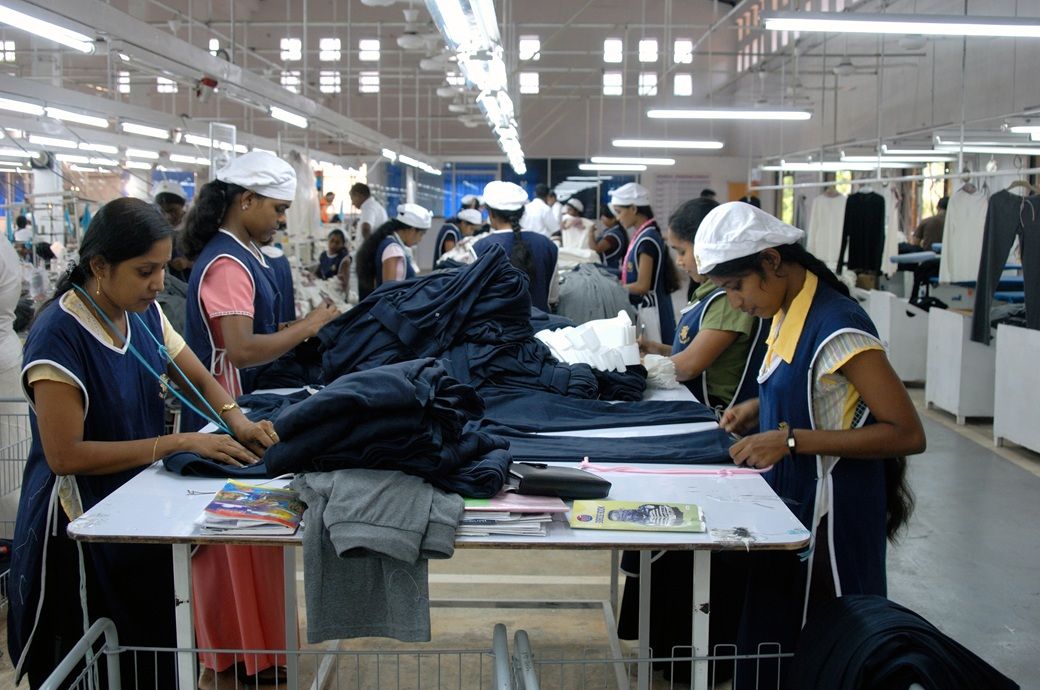
According to some estimates, the country’s apparel exports reportedly dropped around 8 per cent in the first quarter of 2026 compared with the same period last year, exposing growing pressure on one of Sri Lanka’s most critical export sectors.
What is making matters worse is the combination of weak global demand, geopolitical uncertainty and spiralling operational costs that are rapidly eating into already thin margins. Industry estimates reportedly show that rising fuel and electricity prices are adding nearly $3 million every month to apparel sector expenses, creating a serious burden for factories struggling to stay competitive in an increasingly volatile global market.
Sri Lanka’s apparel industry is facing mounting pressure as exports reportedly fell around 8 per cent in Q1 2026 amid weak global demand, rising fuel and electricity costs, shipping disruptions and geopolitical uncertainty.
Smaller manufacturers are being hit hardest, with industry bodies urging urgent policy support, energy reforms and stronger trade access to stabilise the sector.
For smaller players operating on razor-thin margins, the situation is becoming alarming.
According to a senior official from the country’s Free Trade Zones and General Services Employees Union, only a handful of large apparel companies currently appear stable, while a large section of small and mid-sized manufacturers battles a full-blown crisis.
Production costs have surged sharply in recent months as fuel prices climbed, pushing up transportation and factory operating expenses. Shipping costs have also reportedly shot up, adding another layer of pressure on manufacturers already struggling to manage rising overheads.
The fallout is now beginning to show across supply chains and factory operations. The result is a dangerous squeeze on profitability, leaving several factories vulnerable to closure.
Further, shipment delays are reportedly forcing many exporters into uncomfortable negotiations with buyers, many of whom allegedly resort to discount demands when delivery schedules are missed.
For Sri Lanka, the stakes could not be higher.
The apparel industry remains one of the country’s biggest export earners and a major source of employment, particularly for women. Any prolonged downturn in the sector could ripple through the broader economy, affecting jobs, foreign exchange earnings and industrial stability at a time when the country is still trying to rebuild economic confidence.
Meanwhile, a major trade body of the country has outlined an urgent action plan to stabilise the industry before conditions worsen further while reportedly underlining the immediate focus must be on accelerating energy reforms to reduce mounting cost pressures, securing GSP+ benefits to safeguard access to European markets, engaging proactively with the United States during Section 122 and Section 301 trade discussions, and deepening trade access with India to tap into a high-growth neighbouring market.
It reportedly stressed that these are not distant policy ambitions but immediate priorities requiring quick execution and measurable outcomes. The industry body also reportedly maintained that Sri Lanka’s apparel sector has weathered difficult periods before and possesses strong fundamentals, including a skilled workforce, long-standing buyer relationships and strategic proximity to major markets.
However, industry analysts warned that resilience alone may not be enough, especially for smaller manufacturers lacking the financial muscle of larger exporters, as global demand remains fragile, supply chain disruptions continue to create uncertainty, and operating costs show little sign of easing, while adding that without timely Government intervention and targeted policy support, smaller factories will find it increasingly difficult to survive the ongoing storm.
Fibre2Fashion News Desk (DR)


Brazil’s apparel imports rise 19% amid growing reliance on China

Examples of where inflation eased in April – and where it accelerated

UK’s Next boosts FY27 profit forecast on strong online demand

-

 Entertainment1 week ago
Conan O’Brien hat tricks as Oscar host
-

 Fashion7 days ago
Italy’s Zegna Group’s Q1 growth boosted by strong organic performance
-

 Tech1 week ago
Papa Johns Is Getting Into Drone Delivery—but Not for Pizza
-
 Business1 week ago
Pound wobbles and bonds suffer as Starmer battles on
-

 Sports1 week ago
2025-26 NBA Title Odds: Thunder, Spurs Favored; Knicks Rising
-

 Entertainment1 week ago
Urgent meeting held at Palace
-

 Fashion1 week ago
US T&A exports decline 10% to $5 bn on softer regional demand
-

 Entertainment4 days ago
Where Pete Davidson, Elsie Hewitt stand after breakup: Details revealed