

Politics
Unconventional paths that led to Nobels

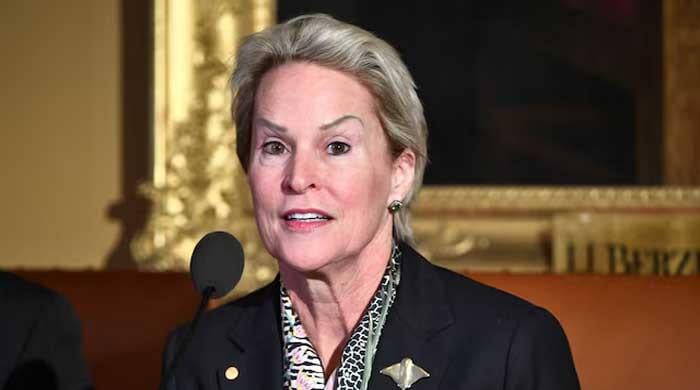
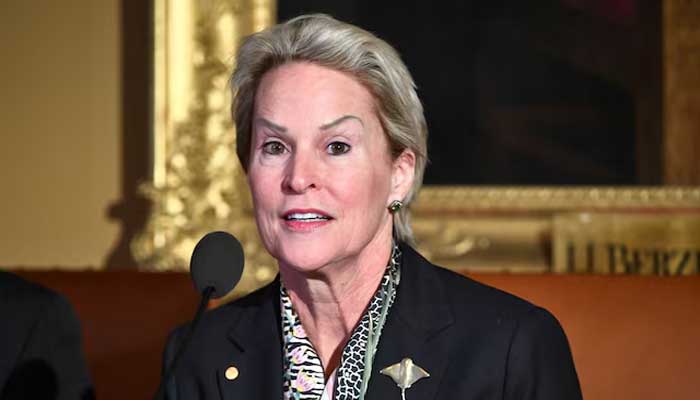
Some Nobel laureates were straight-A students from the get-go. But others AFP spoke to recounted how they cut class, got expelled, and had doubts about their future.
Perhaps the most illustrious Nobel Prize winner, Albert Einstein, was once a mediocre student at Zurich Polytechnic School, now ETH Zurich.
The young Einstein skipped classes, wanted to study physics exclusively, and finished second-last in his class in 1900.
After graduating, he was the only student not offered a research assistant position, according to the Swiss university’s website.
Einstein went on to win the Nobel Prize in Physics in 1921.
Frances Arnold, who won the 2018 Nobel Prize in Chemistry, also cut classes after a turbulent start to her education in the United States during the 1960s and 1970s.
“I was disruptive. I was just bored and well beyond what the rest of the kids in the class were doing. And the teachers often gave me little projects decorating the classroom and things like that,” she recalled in an interview with AFP.
At the age of 10, she was allowed to take high school courses such as geometry — a challenge she appreciated at first.
But by the time she reached her teens, she wasn’t enjoying school anymore to the point that she stopped going and was expelled.
“I guess I wasn’t interested in what they had to teach us. Or if I was interested in it, I just learned it on my own from a textbook. So I managed to pass all my classes despite many absences, I would say.”
Now aged 69, she acknowledges that hers is not a model to follow, but believes schools should show more flexibility.
“They don’t have the wherewithal to do anything special for the kids who really would benefit,” she lamented.
Overcoming challenges
David Card, the 2021 Nobel economics laureate, also had unconventional educational beginnings. “There’s almost nobody I’ve met… in an economics PhD programme that has a background like mine where they went to a rural school.”
Born on a farm in Canada in the 1950s, he was enrolled in a small one-room schoolhouse, where one teacher taught around 30 students at different grade levels.
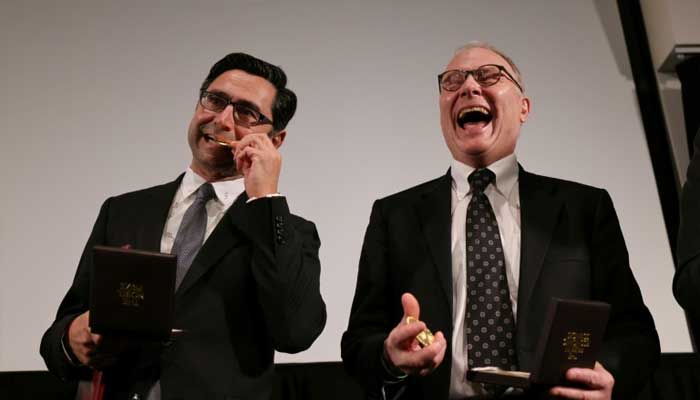
“The way the teacher did it was she would spend some time with each row, which was one of the grades. I actually paid attention to a couple of grades beyond mine for most of the material,” he said.
“So you could kind of accelerate very quickly, very easily.”
The system was less ideal for students who needed more individualised support, he acknowledged.
According to the Nobel Foundation, other laureates had to overcome major academic challenges before going on to win the prestigious Nobel.
The first woman to win the economics prize, Elinor Ostrom, was turned down when she applied for a PhD in economics; 2009 medicine prize laureate Carol Greider struggled with dyslexia as a child; and 2015 chemistry prize winner Tomas Lindahl failed chemistry in high school.
Humble beginnings
Arnold and Card both started working at a young age, which the two consider an important life experience.
In her teens, Arnold held odd jobs as a waitress, receptionist and taxi driver.
“You appreciate more what the university education can give to you, in terms of getting a job you actually might want to have for the rest of your life.”
“It also teaches you how to organise your time.”
Similarly, Card juggled school and farm life very early on.
“I don’t think there was that much homework back then in my schools. So there was lots of time,” he recalled.
“I helped my father. I learned to drive a tractor when I was about 11. Every morning, I got up at 5am and helped him milk the cows and then I would have a shower and go to school.”
Both prizewinners also studied other subjects before discovering their respective passions.
Arnold pursued studies in mechanical engineering and aeronautics before turning to chemistry.
“I wasn’t sure what I wanted to do with my life. I went into mechanical engineering because it had the fewest requirements for engineering,” she admitted.
And Card initially studied physics before switching to economics.
Despite their unconventional paths, both ultimately found their way to brilliance.
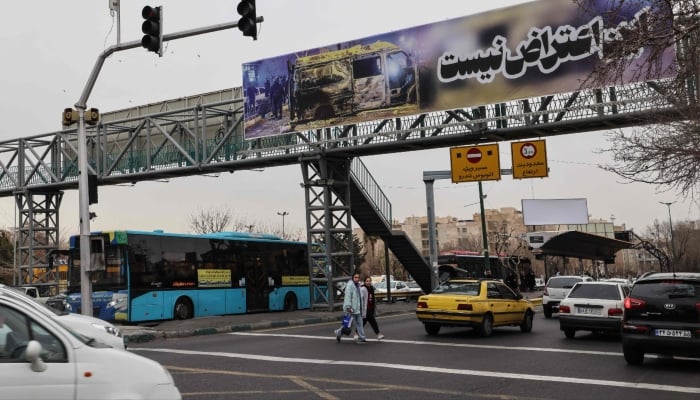
- Reza Pahlavi, son of Iran’s late shah, says govt will fall.
- Netblocks says internet blackout lasted over 180 hours.
- Tasnim reports rioters torched education office in Isfahan.
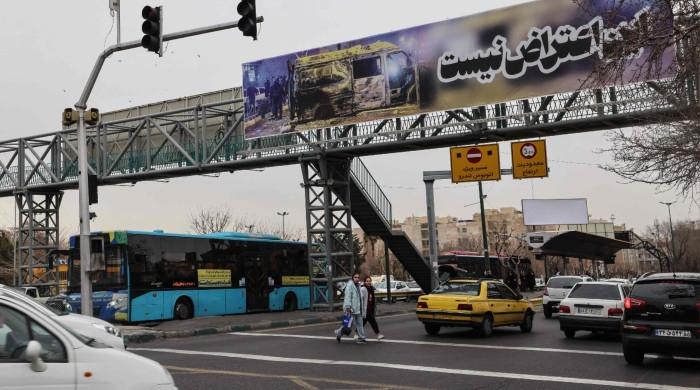
Tensions in Iran have subsided after three weeks of protests under an internet blackout, monitors said on Friday, a week after the start of the largest demonstrations in years challenging the country’s rulers.
The son of Iran’s late shah, however, said he was confident the government would fall and called for intervention, though the threat of new military action by the United States against Iran has appeared to have receded for the time being.
Protests sparked by economic grievances started with a shutdown in the Tehran bazaar on December 28 but turned into a mass movement demanding the removal of the system that has ruled Iran since the 1979 revolution.
People started pouring into the streets in big cities from January 8, but authorities immediately enforced a shutdown of the internet that has lasted over a week.
Reza Pahlavi, the son of Iran’s late shah, told a news conference in Washington that the government “will fall — not if, but when.”
“I will return to Iran,” he said.
Monitor Netblocks said that the “total internet blackout” in Iran had now lasted over 180 hours, longer than a similar measure that was imposed during the 2019 protests.
Amnesty International said this was being backed up by the use of heavily armed patrols and checkpoints to counter nationwide protests, with security forces visible in the streets.
‘Give Iran a chance’
Trump, who backed and joined Israel’s 12-day war against Iran in June, had not ruled out new military action against Tehran and made clear he was keeping a close eye on if any protesters were executed.
But a senior Saudi official told AFP on Thursday that Saudi Arabia, Qatar and Oman led “a long, frantic, diplomatic last-minute effort to convince President Trump to give Iran a chance to show good intention”.
While Washington appeared to have stepped back, the White House said on Thursday that “all options remain on the table for the president”.
Attention had focused on the fate of a single protester, Erfan Soltani, a 26-year-old who rights activists and Washington said was set to be executed as early as Wednesday.
The Iranian judiciary, however, said Soltani had not been sentenced to death, and his charges meant he did not risk capital punishment.
Rights groups have estimated that up to 20,000 people have been arrested. Security officials cited by the Tasnim news agency on Friday said around 3,000 people were arrested.
‘All Iranians united’
The US Treasury on Thursday announced new sanctions targeting Iranian officials including Ali Larijani, secretary of Iran’s Supreme Council for National Security.
Russian President Vladimir Putin, meanwhile, held telephone talks with Iranian President Masoud Pezeshkian in what the Kremlin described as “efforts to facilitate de-escalation”.
At the UN Security Council in New York, Iranian-American journalist Masih Alinejad, invited to address the body by Washington, said “all Iranians are united” against the government in Iran.
Iran’s representative at the meeting Gholamhossein Darzi accused Washington of “exploitation of peaceful protests for geopolitical purposes.”
There were, however, indications of unrest in some areas.
The state-affiliated Tasnim news outlet reported that rioters set fire to a local education office in Falavarjan County, in central Isfahan Province, on Thursday.
An elderly resident of a town in Iran’s northwestern region, where many Kurdish Iranians live and which has been the focus for many of the biggest flare-ups, said sporadic protests had continued, though not as intensely.
Describing violence earlier in the protests, she said: “I have not seen scenes like that before.”
The state-owned Press TV cited Iran’s police chief as saying calm had been restored across the country.
Tasnim news also reported what it described as the arrest of a large number of leaders of recent riots in the western province of Kermanshah, and the arrest of five people accused of vandalising a gas station and a base belonging to the Basij in the southeastern city of Kerman.
- New Delhi incurs $120m losses after exiting port development deal.
- Congress leader terms move “a new low” in India’s foreign policy.
- Experts say actions raise concerns about India’s role at Chabahar.
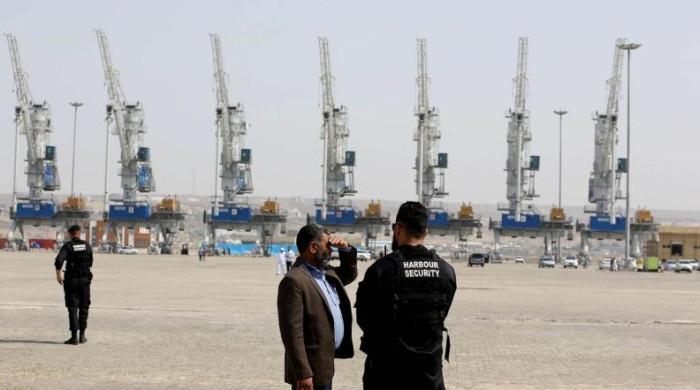
The Indian government, led by Prime Minister Narendra Modi, has come under heavy fire at home after it withdrew from the Chabahar port agreement with Iran, with critics arguing the move was a strategic retreat rather than a proactive foreign policy decision.
New Delhi was forced to abandon its involvement in the port after the United States imposed a 25% tariff on countries doing business with Tehran, The Economic Times reported on Thursday.
According to the publication, India’s withdrawal was carried out without any formal announcement, resulting in the loss of $120 million already paid to Iran.
The amount had been transferred before the decision to disengage and is now considered unrecoverable, the report stated.
The state-run company working at the port, India Ports Global Limited (IPGL), saw its board of directors submit collective resignations after the decision, while the company’s official website has also been shut down.
Congress party leader Pawan Khera termed the move “a new low” in the Modi-led government’s foreign policy.
“So the question is not of Chabahar Port or of Russian oil. The question is: Why is Modi allowing USA to arm-twist India?” he asked in an X post.
India assumed responsibility in 2024 for developing Chabahar port under a 10-year arrangement with Iran.
Meanwhile, a foreign journal reported that the $120 million already paid to Iran can now be used by it at its discretion for the port’s construction and development.
Observers described India’s withdrawal from Chabahar port as another major setback for New Delhi.
The Congress party sharply criticised the Modi-led government over the decision, saying the Indian prime minister “has once again surrendered to Trump”.
“$120 million of India’s taxpayers’ money was invested by the Modi government in this strategically important project, but now it’s all gone up in smoke,” read a post on the party’s X handle.
The Indian opposition party recalled Modi hailing the agreement as “a major strategic win”, saying India’s control over the port has been relinquished, with complete silence from the government.
“Unfortunately, Modi has bowed before Trump’s pressure and compromised India’s national interest,” the party stated.
Meanwhile, economic affairs experts believe the latest actions reinforced concerns surrounding India’s role at Chabahar.
They voiced concerns that India was using the port for nefarious objectives, saying that IPGL’s conduct suggested it was created primarily to acquire control of Chabahar.
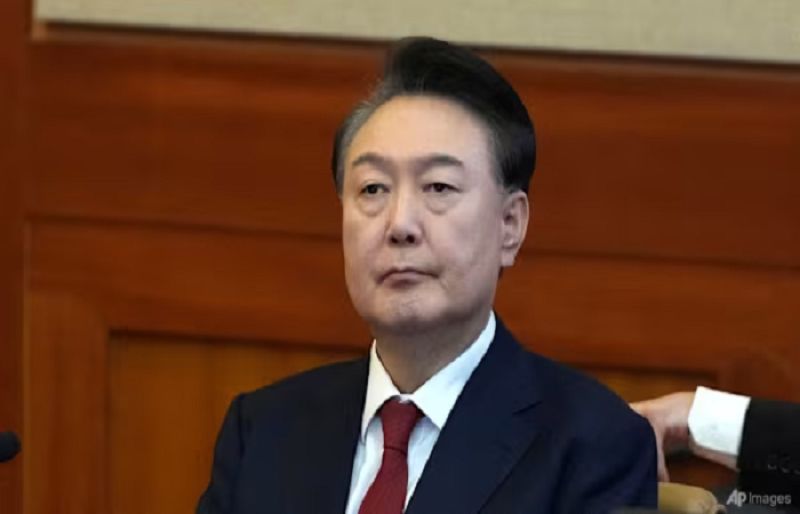

A South Korean court on Friday sentenced former President Yoon Suk Yeol to five years in prison on charges that included obstructing attempts by authorities to arrest him following his failed bid to impose martial law in December 2024.
The Seoul Central District Court found Yoon guilty of mobilising the presidential security service to block authorities from executing an arrest warrant that had been legally issued by a court to investigate him for his martial law declaration.
In televised proceedings, he was also found guilty of charges that included fabricating official documents and failing to comply with the legal process required for martial law.
The ruling is the first related to the criminal charges Yoon faces over his botched martial law declaration.
“The defendant abused his enormous influence as president to prevent the execution of legitimate warrants through officials from the Security Service, which effectively privatised officials … loyal to the Republic of Korea for personal safety and personal gain,” the lead judge on the three-justice panel said.
Speaking outside the court immediately after the decision, one of Yoon’s lawyers, Yoo Jung-hwa, said the former president would appeal the ruling. “We express regret that the decision was made in a politicised manner,” she said.
He could face the death sentence in a separate trial on a charge of masterminding an insurrection by declaring martial law without justification.
Yoon has argued it was within his powers as president to declare martial law and that the action was aimed at sounding the alarm over the obstruction of government by opposition parties.
Yoon, who also denied Friday’s charges, could have faced up to 10 years in jail over the obstruction charges related to when he barricaded himself inside his residential compound in January last year and ordered the security service to block investigators.
He was finally arrested in a second attempt involving more than 3,000 police officers. Yoon’s arrest was the first ever for a sitting president in South Korea.
Parliament, joined by some members of Yoon’s conservative party, voted within hours to overturn his surprise martial law decree and later impeached him, suspending his powers.
He was removed from office in April last year by the Constitutional Court, which ruled he violated the duties of his office.
While Yoon’s bid to impose martial law lasted only about six hours, it sent shockwaves through South Korea, which is Asia’s fourth-largest economy, a key US security ally, and long considered one of the world’s most resilient democracies.


This Jackery Power Station Can Save You in an Emergency, and It’s on Sale for $199

Princess Kate starts driving herself to events, ditches drivers

Syracuse AD Wildhack: College football needs wholesale changes

-
 Sports6 days ago
Clock is ticking for Frank at Spurs, with dwindling evidence he deserves extra time
-
 Business1 week ago
Trump moves to ban home purchases by institutional investors
-

 Tech4 days ago
New Proposed Legislation Would Let Self-Driving Cars Operate in New York State
-
Sports7 days ago
Commanders go young, promote David Blough to be offensive coordinator
-

 Fashion6 days ago
South India cotton yarn gains but market unease over US tariff fears
-
 Fashion6 days ago
China’s central bank conducts $157-bn outright reverse repo operation
-

 Entertainment3 days ago
X (formerly Twitter) recovers after brief global outage affects thousands
-

 Sports6 days ago
US figure skating power couple makes history with record breaking seventh national championship