

Politics
UNSC to meet Monday on US action in Venezuela

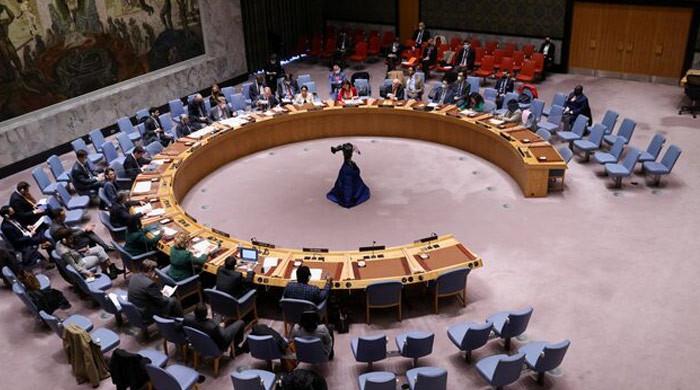
- Colombia seeks UNSC meeting with backing from Russia, China.
- Emergency UNSC meeting scheduled for Monday at 1500 GMT.
- Somalia holds UN Security Council presidency for January.
The United Nations Security Council (UNSC) will convene on Monday to discuss US military operations in Venezuela that culminated in the capture of President Nicolas Maduro, a move UN Secretary-General Antonio Guterres called “a dangerous precedent.”
Colombia, backed by Russia and China, requested the emergency meeting of the 15-member council, diplomats said.
“The presidency intends to hold the emergency meeting on Monday morning at 15:00 GMT”, said Khadija Ahmed, spokeswoman for the Somali Permanent Mission to the United Nations. Somalia holds the rotating presidency of the Security Council for the month of January.
Guterres’ spokesperson Stephane Dujarric said: “The secretary-general continues to emphasise the importance of full respect by all of international law, including the UN Charter. He’s deeply concerned that the rules of international law have not been respected.”
“Independently of the situation in Venezuela, these developments constitute a dangerous precedent,” she quoted Guterres as saying.
The meeting will be held under the title: “Threats to International Peace and Security.
The UN Security Council has met twice — in October and December — over the escalating tensions between the United States and Venezuela.

The development came after US President Donald Trump ordered an audacious US raid to capture the South American leader and take control of the country and its vast oil reserves.
As part of the dramatic operation early on Saturday that knocked out electricity in parts of Caracas and included strikes on military installations, US Special Forces seized Maduro and his wife, Cilia Flores, and transported them via helicopter to a US Navy ship offshore before flying them to the US.
“We will run the country until such time as we can do a safe, proper and judicious transition,” Trump told a press conference at his Mar-a-Lago resort in Florida.
For months, his administration criticised Maduro, 63, over what it called his involvement in shipping drugs to the US. It ramped up pressure with a massive military build-up in the Caribbean and a series of deadly missile attacks on alleged drug-running boats.
Maduro has denied any involvement in drug trafficking and says Trump wants Venezuela’s oil.
Venezuela’s UN Ambassador Samuel Moncada also wrote to the UNSC Saturday, calling the action “a colonial war aimed at destroying our republican form of government.”
He accused the US of violating the UN Charter, which prohibits members from using “the threat or use of force against the territorial integrity or political independence of any state.”
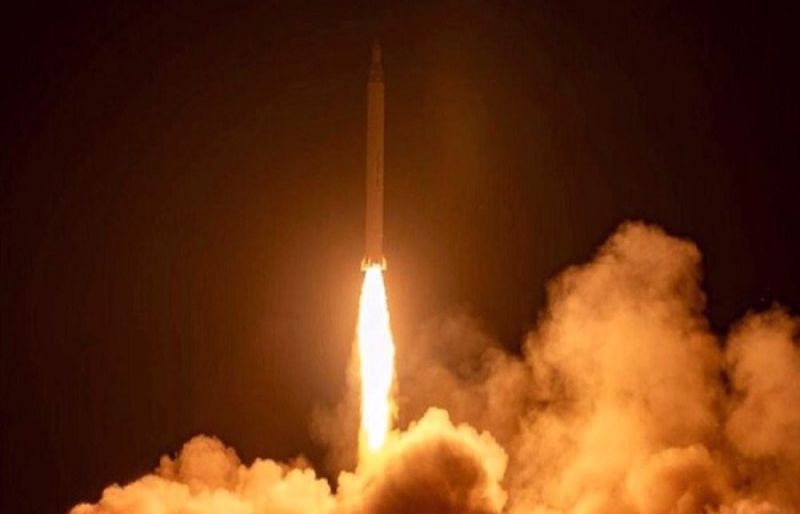

The Iranian armed forces have started a new wave of extensive drone and missile attacks on targets in the Israeli-occupied territories and US assets in regional countries.
A late Monday statement from the Islamic Revolution Guards Corps (IRGC) said that the 11th wave of offensive attacks under Operation True Promise 4 had been launched by the naval and aerospace units of the elite force.
The statement said the “extensive and high-density operation” had targeted American intelligence centers and military support warehouses in the Persian Gulf region, the Israeli communications industries complex in the occupied city of Beersheba, as well as 20 locations in the occupied regions of Tel Aviv, West al-Quds, and Galilee.
It said the “brave sons of Iran’s armed forces” had used more than 700 drones and hundreds of missiles to hit 60 strategic targets and 500 military locations linked to the United States and the Israeli regime since the start of the US-Israeli aggression on Iran on Saturday.
The statement said the number of missiles and drones and the success rate of the attacks had far outpaced records seen during the 12-day war with Israel and the US in June 2025.
The IRGC said recent “brutal and terrorist” attacks on Iran that targeted citizens in hospitals, schools, and offices of the national media service (IRIB) had further strengthened their resolve and determination to pursue an all-out war against the enemies.
The IRGC has been carrying out retaliatory attacks on US military assets across the region and on targets in the Israeli-occupied territories since Saturday, when the US and Israel started the unprovoked war of aggression against Iran and assassinated Leader of the Islamic Revolution Ayatollah Seyyed Ali Khamenei.
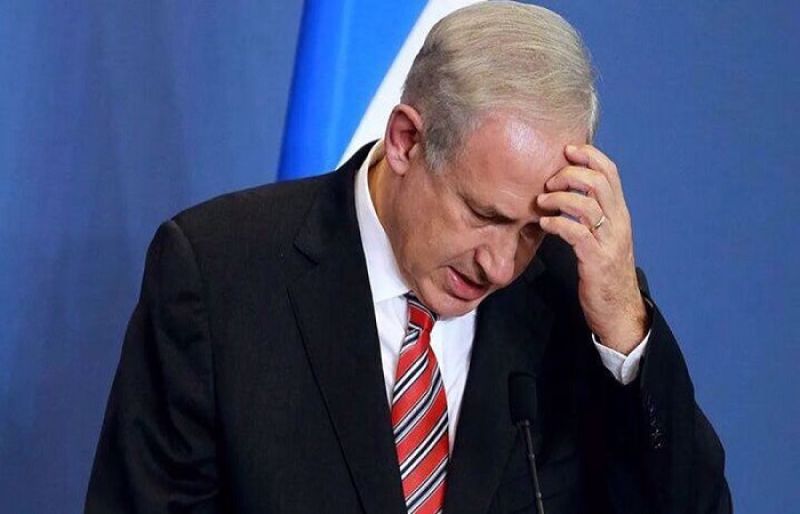

The Islamic Revolution Guards Corps (IRGC) says the fate of Israeli prime minister Benjamin Netanyahu is uncertain following “purposeful and surprise” attacks on his office and the residence of the regime’s air force commander.
In a statement on Monday, the IRGC said Iranian Armed Forces heavily attacked the office of Israel’s criminal prime minister and the residence of commander of the Israeli air force.
They were hit during “purposeful and surprise” attacks by Kheybar missiles, the elite force stated.
According to the statement, the 10th phase of Iran’s successful missile attacks on occupied territories focuses on the Israeli regime’s premises.
The IRGC said it would later announce the achievements of the attacks and provide further information.
The United States and Israel launched a joint war of aggression against Iran early on Saturday, assassinating Leader of the Islamic Revolution Ayatollah Seyyed Ali Khamenei and several senior military commanders before attacking military and civilian sites across the country.
Iranian armed forces have responded with massive missile and drone strikes, hitting strategic targets deep inside the Israeli-occupied territories as well as American military bases scattered across the region.
Iranian authorities say the retaliatory attacks will continue as long as necessary and that it will be the Islamic Republic that will decide when and how the war will end.
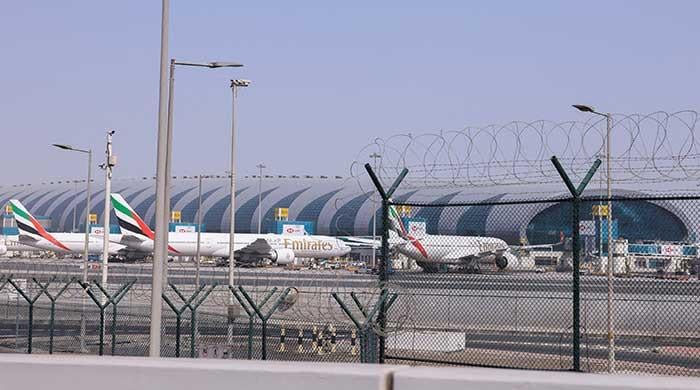
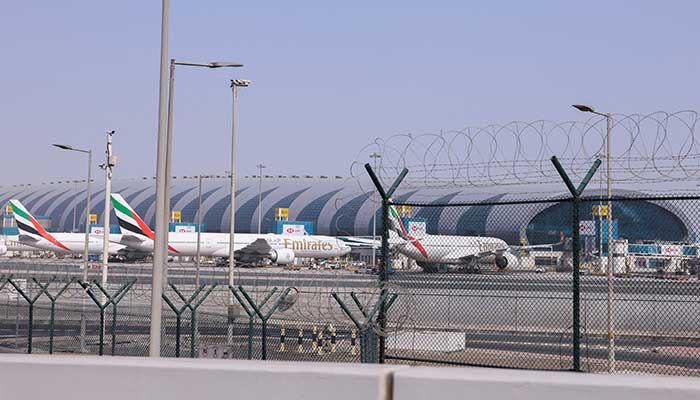
- Emirates, flydubai to restart limited flights from today.
- Etihad Airways announces resuming flights on Tuesday.
- Iran strikes targeted Gulf airports, airspace remains restricted.
Dubai Airports said “limited” flights would resume on Monday evening, three days after they were cancelled as Iran began striking targets in the Gulf, including Dubai and Abu Dhabi airports.
Global air travel remained in severe disarray since Sunday as sustained air strikes forced the closure of major Middle Eastern airports, including Dubai — the world’s busiest international transit hub — in one of the most significant aviation disruptions in recent years.
Transit gateways such as Dubai and Abu Dhabi in the United Arab Emirates, as well as Doha in Qatar, were either shut down or operating under heavy restrictions, with large sections of regional airspace closed.
The disruption followed US and Israeli strikes that reportedly killed Iranian Supreme Leader Ayatollah Ali Khamenei on Saturday, plunging the Gulf into heightened uncertainty.
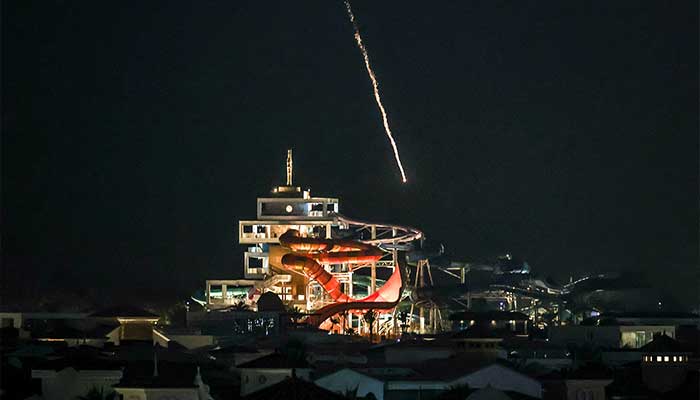
A fresh wave of attacks extended into a third consecutive day, deepening concerns over regional stability and prolonging the paralysis of air traffic.
“Dubai Airports announces a limited resumption of flights from Dubai International Airport (DXB) and Dubai World Central – Al Maktoum International Airport (DWC) starting this evening, Monday, March 2, 2026,” it said in a statement.
Emirates and low-cost carrier flydubai both said they would resume some flights on Monday evening.
In a post on X, Emirates, one of the UAE’s flag carriers, said it would prioritise passengers with existing bookings. Travellers rebooked on the limited services will be contacted directly by Emirates.
All other flights remain suspended until further notice, the airline said, urging passengers not to travel to the airport unless formally notified. It added that operations will be adjusted in line with developments on the ground.
Eihad Airways, which operates flights from Abu Dhabi, said it would resume flights on Tuesday.
Iran’s unprecedented bombardment in the Gulf states has hit military bases but also civilian infrastructure such as residential buildings, hotels, airports and sea ports, rattling a region long seen as a refuge from Middle East conflict.
Since Iran launched its campaign on Saturday, Dubai, Abu Dhabi, Kuwait and Manama airports were targeted.
Authorities reported one death in the Emirati capital Abu Dhabi in the “incident” at the facility.
On Saturday, the UAE announced it had closed its airspace “temporarily and partially” as an exceptional precautionary measure.
Dubai’s main airport (DXB) ranks as the second-busiest worldwide, behind Atlanta in the United States, according to Airports Council International.
The airspace closures hit a vital sector for the city, with Dubai’s air industry accounting for about a third of the emirate’s economy.

[CinePlex360] Please moderate: “Chinese company

Colorado opts to practice, mourn death of Dominiq Ponder
[CinePlex360] Please moderate: “China warns Jap

-
 Business6 days ago
Households set for lower energy bills amid price cap shake-up
-
 Entertainment1 week ago
Talking minerals and megawatts
-
 Business6 days ago
Lucid widely misses earnings expectations, forecasts continued EV growth in 2026
-

 Politics5 days ago
What are Iran’s ballistic missile capabilities?
-

 Sports1 week ago
Eileen Gu comments on Alysa Liu’s historic gold medal
-

 Sports5 days ago
Sri Lanka’s Shanaka says constant criticism has affected players’ mental health
-

 Tech6 days ago
Here’s What a Google Subpoena Response Looks Like, Courtesy of the Epstein Files
-

 Politics1 week ago
Supreme Court ruling angers Trump: Global tariffs to rise from 10% to 15%