

Fashion
US brand PVH partners with OpenAI to embed AI across global operations

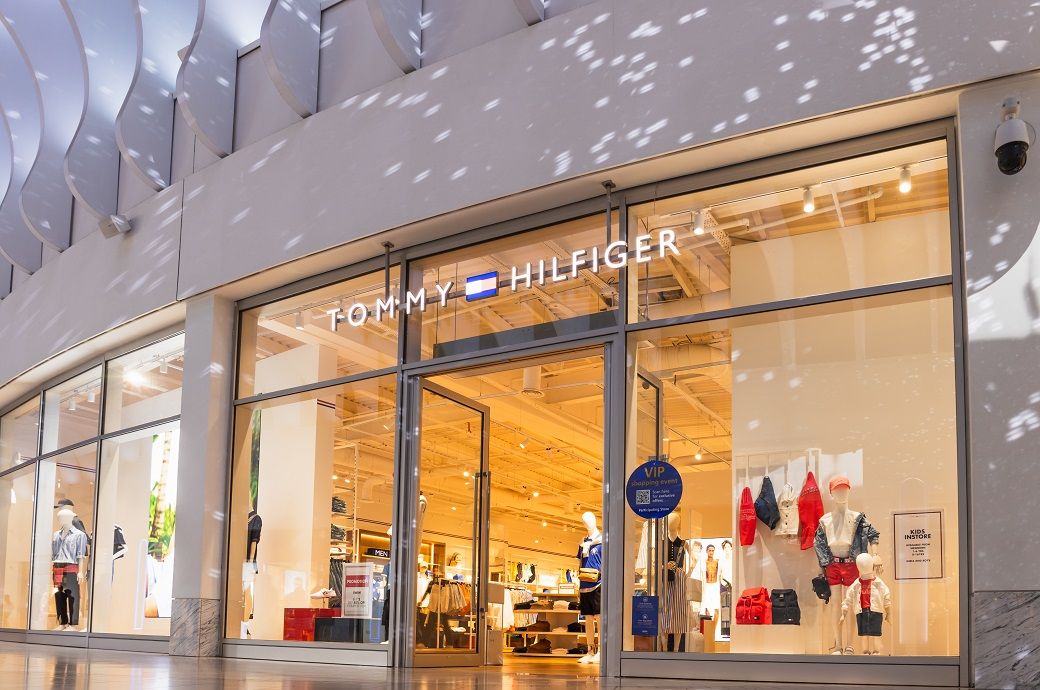
With OpenAI, PVH will co-create custom AI capabilities that will be embedded in PVH’s data- and demand-driven operating model – supporting areas such as product and design, demand planning, inventory optimization and consumer engagement. These new capabilities will complement and amplify the creativity and talent of PVH’s teams, enabling sharper execution, more intelligent tools, and more personalized consumer experiences.
PVH Corp has partnered with OpenAI to integrate advanced AI across its global operations, supporting brands including Calvin Klein and Tommy Hilfiger.
The collaboration will enhance product design, demand planning, inventory optimisation and consumer engagement, strengthening PVH’s data-driven PVH+ strategy and enabling faster, more personalised decision-making across the value chain.
“As we build Calvin Klein and TOMMY HILFIGER into the most desirable lifestyle brands in the world, our collaboration with OpenAI will help us supercharge our brand-building journey and connect more meaningfully with our consumers,” said Stefan Larsson, Chief Executive Officer, PVH Corp. “Together with OpenAI, we will explore exciting new opportunities for our brands, accelerate our data-driven operating model and enable faster, more data-driven decision-making. With a test-and-learn approach, we’ll build practical use cases with scalable impact to drive value for associates, partners, and consumers, while helping us build a culture of innovation and agility from the ground up.”
PVH will also integrate OpenAI enterprise APIs to build modern workflows and accelerate outcomes end-to-end, across product, marketing, supply chain, and retail functions. The effort also includes ChatGPT Enterprise and will feature new applications and custom environments built exclusively for PVH teams.
“PVH shows what’s possible when AI is embedded into the core of a fashion leader,” said Giancarlo ‘GC’ Lionetti, Chief Commercial Officer at OpenAI. “The result is less friction, more creativity, and a sector-wide transformation accelerated by PVH deploying OpenAI at scale.”
The collaboration is grounded in PVH’s commitment to practical and scalable innovation that supports associates, transforms ways of working, and deepens connections to consumers.
Note: The headline, insights, and image of this press release may have been refined by the Fibre2Fashion staff; the rest of the content remains unchanged.
Fibre2Fashion News Desk (RM)












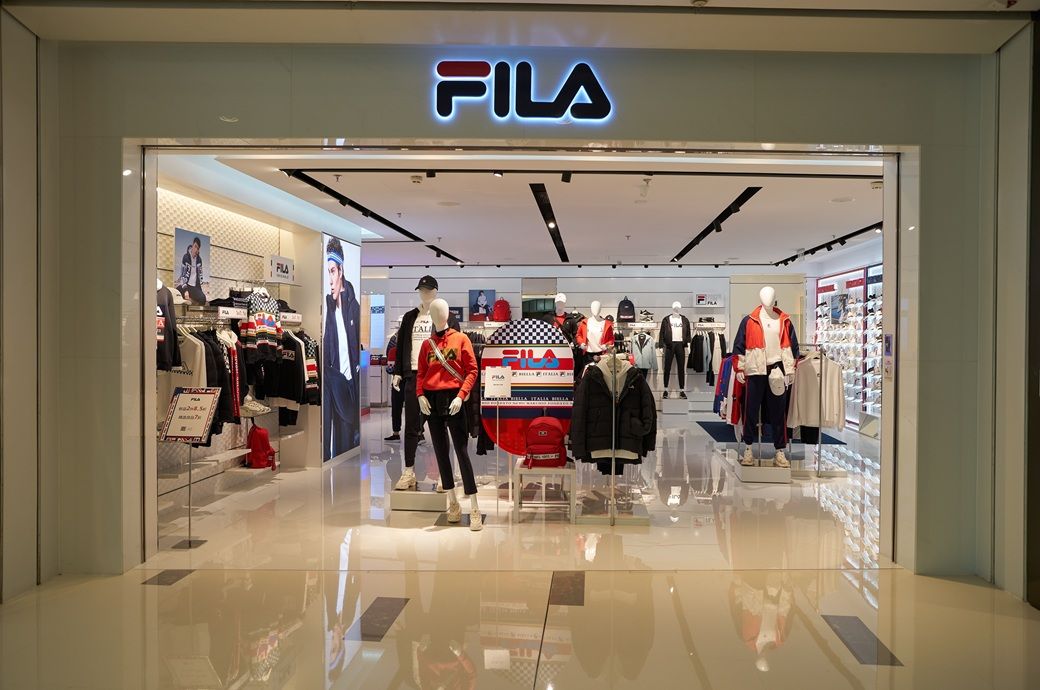
The Misto segment recorded annual revenue of KRW 829.6 billion, down 9.6 per cent YoY due to US restructuring and inventory clearance. However, operating profit rebounded to KRW 74.7 billion, signalling a strong turnaround, with the segment delivering its fourth consecutive quarter of profitability.
Misto Holdings has reported revenue of KRW 4.47 trillion (~$2.97 billion) in 2025, up 4.7 per cent YoY, with operating profit rising 31.6 per cent.
While the Misto segment declined, profitability improved.
Growth was driven by Greater China and steady Acushnet performance.
In Q4, revenue rose 6.3 per cent, led by Acushnet, while the company returned KRW 285.4 billion to shareholders.
The growth momentum was led by Greater China, which delivered triple-digit expansion in 2025 as the company scaled its presence through leading K-fashion brands such as Marithe+Francois Girbaud, Matin Kim, Rest and Recreation, and Raive. In Korea, Fila continued to benefit from stable demand in its footwear franchise models, Misto Holdings said in a press release.
The Acushnet segment maintained steady performance, supported by robust demand for golf equipment and premium positioning, contributing to overall earnings stability.
“2025 was a meaningful year in which we further clarified our identity as a global brand portfolio company following our corporate name change. Based on the expansion of our Greater China business, improved profitability in the Misto segment, and Acushnet’s solid growth, we strengthened the stability of our earnings. We will continue to enhance brand value, maintain profitability-focused management, and execute our shareholder return policy to support sustainable growth,” said Ho Yeon (Aaron) Lee, CFO of Misto Holdings.
Meanwhile, in the fourth quarter (Q4), revenue rose 6.3 per cent YoY to KRW 915.2 billion, supported by profitability-focused operations, restructuring of its US business, and continued growth at Acushnet despite macroeconomic uncertainty.
Acushnet remained a key contributor in Q4, with revenue increasing 10.9 per cent YoY to KRW 698.3 billion, driven by strong sales of Titleist T-Series irons and SM10 wedges, along with higher average selling prices for FootJoy golf shoes.
Misto Holdings also advanced its shareholder return strategy, returning approximately KRW 285.4 billion through dividends and share repurchases in 2025, achieving 57.1 per cent of its three-year target.
Fibre2Fashion News Desk (SG)

However, actual use of foreign direct investment (FDI) in the Chinese mainland declined during the same period, falling 5.7 percent year on year (YoY) to ¥161.45 billion ($23.43 billion), as mentioned in official ministry figures.
China established 8,631 new foreign-invested firms in the first two months of the year, up 14 per cent YoY, even as actual FDI inflows fell 5.7 per cent to ¥161.45 billion ($23.43 billion).
High-tech industries attracted ¥63.21 billion ($9.19 billion), rising 20.4 per cent and accounting for 39.2 per cent of total inflows, while investment from Canada and Switzerland surged sharply.
Sector-wise, FDI inflows totalled ¥47.52 ($6.90 billion) in manufacturing and ¥111.22 billion ($16.17 billion) in services, indicating continued dominance of the service sector in attracting foreign capital. High-tech industries remained a key growth area, drawing ¥63.21 billion ($9.19 billion) in investment, up 20.4 per cent year on year (YoY) and accounting for 39.2 percent of the national total.
In terms of source countries, investment from Canada and Switzerland recorded strong gains, surging 210 per cent and 41.3 per cent respectively compared with the same period last year, highlighting a shift in the composition of foreign capital entering the Chinese market.
Fibre2Fashion News Desk (JP)

In 2023, 73 per cent of APAC CEOs were optimistic about global economic prospects; however, it was down to 64 per cent in 2025. Globally, only 68 per cent of CEOs remain upbeat about this—the lowest level seen in four years.
APAC CEOs reported much more optimism in 2025 about the growth prospects of their own economies over the next three years, while confidence in global economic prospects dropped, KPMG said.
Optimism about their own country’s prospects was the highest in Australia and lowest in India last year.
About four-fifths of APAC CEOs also saw substantial growth opportunities for their organisations and industries.
Optimism about their own country’s prospects was the highest in Australia (90 per cent) and lowest in India (71 per cent) last year, a KPMG release said citing its latest annual ‘APAC CEO Outlook’.
The declining confidence of APAC CEOs in the global landscape also reflects ongoing uncertainty and volatility that has plagued the global markets, stemming from an evolving geopolitical landscape, persistent supply chain constraints and intensifying scrutiny on sustainability, KPMG noted.
Furthermore, about 80 per cent of APAC CEOs also saw substantial growth opportunities for their organisations and industries, in line with the global average.
In fact, in 2025, executives appear more certain that their companies are on an upward trajectory compared to the previous year: 61 per cent of respondents expect earnings to increase by more than 2.5 per cent this year, compared to just 52 per cent in 2024.
CEOs in Japan (76 per cent) are particularly optimistic about their earnings outlook compared to global and regional peers, reflecting its solid domestic demand and stable GDP performance.
This positivity is driving many in APAC to continue investing in their businesses, with executives noting that there is strong appetite for increased hiring (92 per cent) and mergers and acquisitions (87 per cent) over the next three years, and a substantial number (82 per cent) of APAC CEOs expecting to spend more than 10 per cent of their budgets on artificial intelligence (AI) in the next 12 months.
This clearly indicates that subdued global outlook has not dampened optimism around companies’ prospects in APAC, KPMG remarked.
Confidence in the growth prospects of the global economy is lowest among Chinese companies (58 per cent). This likely reflects, in part, the impacts of an uncertain tariff environment. Strained relations with its main export partner and uncertainty around global demand are likely some areas of concern among firms in China.
Global trade risks topped the minds of APAC CEOs last year, especially as geopolitical tensions and trade realignments dominated headlines. These trends have persisted in 2025, with supply chain resilience remaining a top three driver of organisational decision-making in the short term.
However, the landscape is shifting with the arrival of emerging technologies like generative AI. AI integration is the top issue driving APAC executives’ short-term decision-making, a notable contrast with global peers who are more focused on cybersecurity issues and supply chain resilience, KPMG added.
Fibre2Fashion News Desk (DS)


South Korea’s Misto Holdings’ 2025 profit jumps 31.6% on steady growth

Australia and EU agree sweeping trade deal in face of global uncertainty

How Jaxon Smith-Njigba’s contract extension impacts Seahawks

Strategic oil stocks to be released ‘immediately’ in Asia and Oceania: IEA

Transfer rumors, news: Real Madrid open to Camavinga exit, as Premier League clubs circle

New Income Tax Act 2025 To Take Effect From April 1: 10 Key Changes That Will Affect Your Money

-
 Entertainment1 week ago
Strategic oil stocks to be released ‘immediately’ in Asia and Oceania: IEA
-
Business1 week ago
New Income Tax Act 2025 To Take Effect From April 1: 10 Key Changes That Will Affect Your Money
-
 Sports1 week ago
Transfer rumors, news: Real Madrid open to Camavinga exit, as Premier League clubs circle
-

 Sports6 days ago
March Madness 2026 – How to watch in SA, start time, schedule, TV channel for NCAA championship basketball tournament
-

 Sports1 week ago
PCB files complaint over allowing Bangladesh to take review on penultimate ball – SUCH TV
-
 Business7 days ago
Stocks and pound rise as US rate call approaches
-

 Tech6 days ago
Justice Department Says Anthropic Can’t Be Trusted With Warfighting Systems
-

 Entertainment1 week ago
Conan O’Brien hilariously reveals what saved marriage to Liza Powel