

Fashion
US’ Caleres posts $658.5 mn Q2 sales; net income falls to $6.7 mn

The direct-to-consumer (DTC) channels accounted for approximately 75 per cent of total net sales, highlighting the company’s continued focus on consumer-centric growth. The gross profit came in at $285.8 million, translating to a gross margin of 43.4 per cent, down 210 basis points (bps) YoY, pressured by tariff-related costs, selective promotions, and higher inventory markdown provisions, Caleres said in a press release.
Caleres has reported net sales of $658.5 million in Q2 FY25, down 3.6 per cent YoY, with Famous Footwear and Brand Portfolio sales declining 4.9 and 3.5 per cent, respectively.
Gross margin fell 210 bps to 43.4 per cent, and net income dropped to $6.7 million.
The company achieved $15 million in annualised cost savings and completed the Stuart Weitzman acquisition.
Segment-wise, Famous Footwear posted a gross margin of 43.7 per cent, down 130 bps, while Brand Portfolio margins fell 240 bps to 40.3 per cent. Selling, general and administrative (SG&A) expenses rose to $269.7 million, or 41 per cent of sales, up 170 bps due to deleverage from lower revenue.
The net income of the company fell sharply to $6.7 million, with diluted earnings per share (EPS) at $0.2, and adjusted net earnings stood at $11.7 million, or $0.35 per diluted share, both benefitting from a discrete tax gain of $0.07 per share.
Quarter-end inventory was $693.3 million, up 4.9 per cent YoY, reflecting tariff-related stocking and preparations for the Stuart Weitzman acquisition. Borrowings under the revolving credit facility rose to $387.5 million, an increase of $241 million from the prior fiscal, partly to support this acquisition.
To strengthen liquidity, Caleres amended its credit agreement, extending the maturity of its asset-based revolving credit facility and increasing borrowing capacity. The company also achieved annualised cost savings of $15 million through structural efficiencies.
Shortly after the quarter’s close, Caleres completed its acquisition of Stuart Weitzman, enhancing its Brand Portfolio with a globally recognised luxury footwear label, added the release.
“While we did experience headwinds due to market uncertainty, we demonstrated the strength and resilience of our company this quarter. Sales trends improved sequentially in both segments of our business, and we saw market share gains in women’s fashion footwear and in shoe chains. We experienced strength in Lead Brands, our Brand Portfolio direct-to-consumer channels, and international. We also saw significant improvement in sales trends at Famous Footwear in July and continuing through August,” said Jay Schmidt, president and chief executive officer (CEO) at Caleres.
“As we look to address the changes in the operating environment, we completed our previously announced structural cost savings initiatives that will deliver annualized savings of $15 million and support a more efficient operating structure. Just after quarter-end, we completed the acquisition of Stuart Weitzman, adding a new Lead Brand to our portfolio that aligns with our strategic focus on premium, direct-to-consumer, and international business,” added Schmidt. “Longer term, we will continue looking for ways to leverage our greatest capabilities across our portfolio, and we are confident in our ability to execute our strategic plan, invest to fuel our growth initiatives, and drive sustained value for our shareholders.”
The company continues to withhold annual guidance due to macroeconomic uncertainty. For August, Famous Footwear same-store sales rose 1 per cent, while Brand Portfolio sales excluding Stuart Weitzman increased in the low-single digits. Management anticipates persistent tariff-driven pressure on Brand Portfolio gross margins in the third quarter, similar to Q2, with improvement expected in Q4 as mitigation measures take effect.
Fibre2Fashion News Desk (SG)








On March **, ****, India’s Directorate General of Foreign Trade (DGFT) issued Notification No. **/****–**, amending Para *.** of the Foreign Trade Policy and removing the long-standing ****;** lakh (about $**,***) per-consignment cap on courier exports. From April *, exporters can send consignments of any value through courier mode instead of splitting higher-value orders into smaller parcels.
For textiles and apparel, this is more than a procedural tweak. The sector is no longer driven only by large container-based orders from global retailers. It is increasingly shaped by samples, capsule drops, repeat orders, customised runs, premium home textiles, craft-led fashion, and direct-to-consumer cross-border fulfilment. In that world, courier flexibility matters.
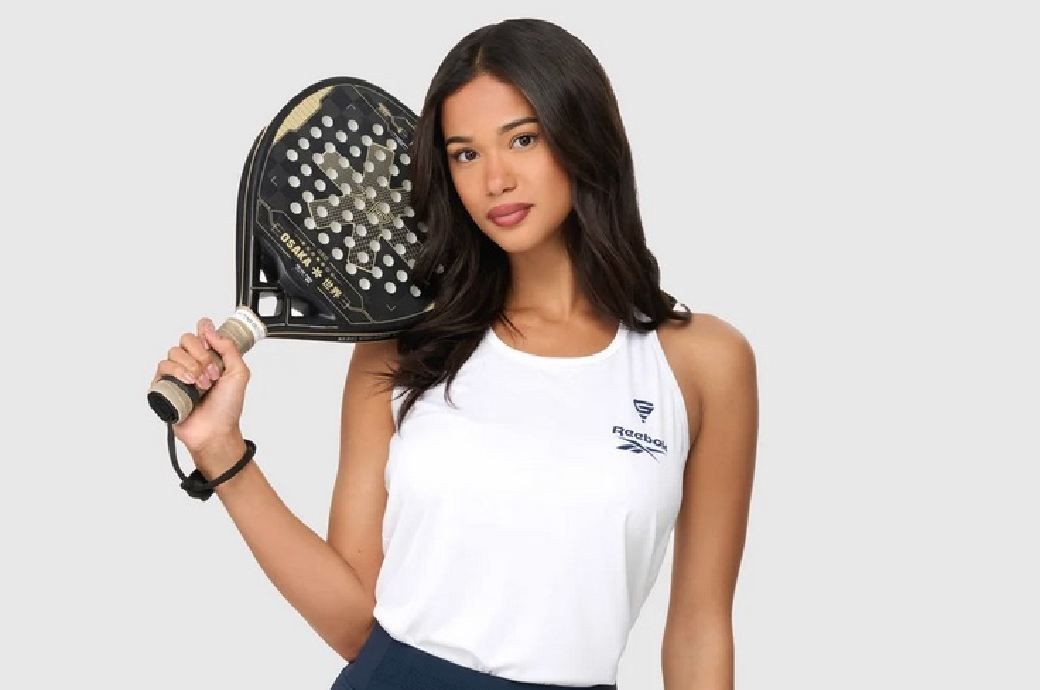
Padel, one of the world’s fastest-growing sports, has seen an explosion of participation and fan engagement in recent years. Recognizing the sport’s surging popularity and vibrant community, Reebok is stepping onto the padel court through a collaboration with GLDN PNT—a brand born from and built for the padel movement.
Reebok has partnered with GLDN PNT to launch a performance-driven padel apparel collection, tapping into the sport’s rapid global growth.
The range includes technical tees, tanks, bras and shorts designed for modern players, combining innovation, functionality and style, while strengthening Reebok’s presence in the fast-expanding padel community.
The Reebok x GLDN PNT collection features a range of high-performance apparel, including the ID Train Short Sleeve Tech Tee, Speed Racer Tank, ID Performance Tech Tee, ID Train Tri Back Bra, and WOR 9 in Woven Short. Each piece is designed with the modern padel player in mind, blending innovative materials, functional design, and bold style.
“Padel is more than a sport—it’s a global movement, and we’re thrilled to partner with Reebok to raise the bar for padel apparel,” said Scott London, Founder of GLDN PNT. “Our mission has always been to celebrate the culture and community of padel, and this collaboration gives us the reach and resources to inspire even more players around the world. We’re making the moment count—on and off the court.”
For Reebok, this partnership represents an opportunity to join the padel community in a meaningful and authentic way.
“Padel’s incredible growth represents the kind of energy and passion that Reebok has championed for decades,” said SVP of Reebok, Daniel Schachne. “By collaborating with GLDN PNT, a brand deeply rooted in the sport, we’re excited to deliver innovative performance apparel to padel athletes everywhere and support the vibrant community driving the sport forward.”
Note: The headline, insights, and image of this press release may have been refined by the Fibre2Fashion staff; the rest of the content remains unchanged.
Fibre2Fashion News Desk (RM)

The extension comes at a time when exporters are facing heightened pressure from geopolitical uncertainties, volatile demand, and rising logistics and input costs. By continuing the scheme, the government aims to provide stability and cost support to the labour-intensive apparel sector.
The extension of RoSCTL till September 30, 2026, or until the next Finance Commission approval, provides interim policy clarity amid global demand and cost pressures. Continued structure and rates support pricing competitiveness for apparel exporters.
However, its temporary nature signals a likely recalibration of export incentives in the upcoming policy cycle.
The scheme will continue without any change to its structure, coverage, rates, or eligibility criteria, ensuring policy continuity for exporters. Rebates will be provided through transferable duty credit scrips in a fully digital format, supporting ease of use and faster processing.
To maintain fiscal discipline, expenditure under the scheme will be reviewed on a quarterly basis by an inter-ministerial committee. The government has also retained the flexibility to revise rates and caps depending on evolving conditions, while keeping eligibility norms unchanged.
Effective April 1, 2026, the extension provides interim visibility to exporters as the government works towards finalising a longer-term framework under the upcoming Finance Commission period.
Fibre2Fashion News Desk (KUL)


15 Design-Forward DIY Tools Worth Upgrading to This Year

England’s Brook, Bethell warned after New Zealand nightclub incident

Italy’s soccer chief told to quit after latest World Cup failure

-

 Politics1 week ago
Afghanistan announces release of detained US citizen
-

 Sports1 week ago
Broadcast industry CEO says consolidation is ‘essential’ to compete for NFL soaring media rights prices
-

 Entertainment1 week ago
UN warns migratory freshwater fish numbers are spiralling
-

 Tech1 week ago
Can a Home Appliance Fix the Problem of Soft-Plastic Waste?
-
 Business1 week ago
Property Play: Home flippers see smallest profits since the Great Recession, real estate data firm says
-
 Business1 week ago
Gold prices soar in Pakistan – SUCH TV
-
 Business1 week ago
More women are entering wealth management, but few are in advisory roles, study finds
-

 Fashion1 week ago
ICE cotton slips on weaker crude, profit booking