

Politics
US Congress briefing reveals heavy US expenditure in Iran war

- White House may request $50bn additional funding for Iran war.
- Trump claims US has ‘won’ but will continue fighting.
- $5.6bn of munitions used on Iran in first two days.
WASHINGTON: Officials from President Donald Trump’s administration estimated during a congressional briefing this week that the first six days of the war on Iran had cost the US at least $11.3 billion, a source familiar with the matter said on Wednesday.
That figure, from a closed-door briefing for senators on Tuesday, did not include the entire cost of the war, but was provided to lawmakers as they have clamoured for more information about the conflict.
Several congressional aides have said they expect the White House to soon submit a request to Congress for additional funding for the war. Some officials have said the request could be for $50 billion, while others have said that estimate seems low.
The administration has not provided a public assessment of the cost of the conflict or a clear idea of its expected duration. Trump said during a trip to Kentucky on Wednesday that “we won” the war but that the US will stay in the fight to finish the job.
The $11.3 billion figure was first reported on Wednesday by the New York Times.
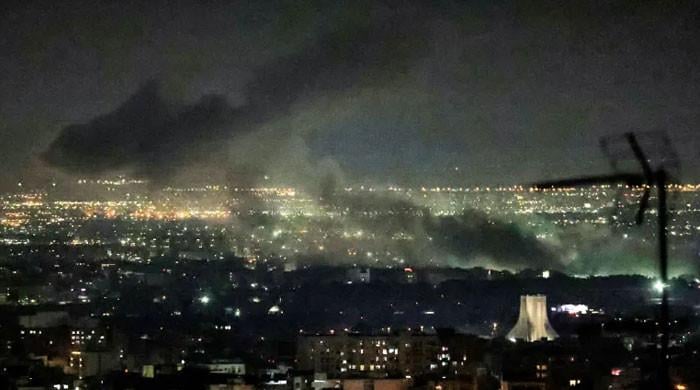
The campaign against Iran began on February 28 with US and Israeli airstrikes and has so far killed around 2,000 people, mostly Iranians and Lebanese, as the conflict has spread into Lebanon and thrown global energy markets and transport into chaos.
Administration officials also have told lawmakers that $5.6 billion of munitions were used during the first two days of strikes.
Members of Congress, who may soon have to approve additional funding for the war, have expressed concern that the conflict will deplete US military stocks at a time when the defence industry was already struggling to keep up with demand.
Trump met executives from seven defence contractors last week as the Pentagon worked to replenish supplies.
Democratic lawmakers have demanded public testimony under oath from administration officials about the Republican president’s plans for the war, including how long it might last and what his plans are for Iran once the fighting has stopped.
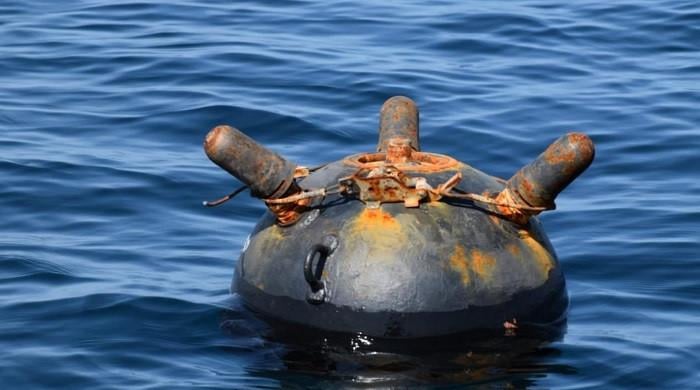

Following US and Israeli strikes on Iran, Tehran is believed to be seeking to choke the vital Strait of Hormuz — the world’s most important oil shipping route — with fears it may be deploying sea mines to disrupt tanker traffic.
US forces have struck 28 Iranian mine-laying vessels, President Donald Trump said Wednesday, more than a week into the Middle East war.
Any Iranian mining of the key shipping lane, as its forces did in the 1980s, would be a nightmare for Western demining teams.
Here’s an explainer:
What are sea mines?
“Mines are the weapon of the poor,” a former senior officer with the French navy and specialist on the subject told AFP on condition of anonymity.
Yet “they pose a fundamental threat to maritime trade and to the freedom of action of naval forces,” he said.
How many does Iran have?
Elie Tenenbaum, a researcher at the French Institute for International Relations (IFRI), said Iran was estimated to have some 5,000-6,000 naval mines, including “drifting mines that are extremely difficult to intercept”.
Contact mines can drift around on the surface with the current or can be moored to an anchor on the sea floor. They explode when they come into contact with a ship´s hull.
“It´s the most rudimentary mine, the cheapest one, and the main threat in the Strait of Hormuz,” said the former high-ranking member of the navy.
The Iranians also had influence mines adapted to the Gulf´s shallow waters, which are sown on the seabed and explode when a large ship is detected overhead, he said.
The Iranians could also use speedboats to attach limpet mines to the hulls of ships, which would be set to explode at a certain time, he added.
The Iranians can rapidly deploy all these mines “in the Persian Gulf and Strait of Hormuz using high-speed small boats equipped as minelayers”, the US Defence Intelligence Agency (DIA) said in a 2019 report.
“Iran has equipped many of its Ashoora small boats with mine rails capable of holding at least one mine,” it added.
But, said the ex-navy official, you could also convert another small boat to do the job more discreetly.
Have they been used before?
Tehran used deployed sea mines during its conflict with Iraq in the 1980s during the so-called “tanker war”, forcing the United States to escort commercial ships.
During the Gulf War in 1991, Iraqi forces deployed 1,300 mines, badly damaging two US Navy ships, including the USS Princeton, which it cost about $100 million to bring back online, according to US researcher Scott Truver, who has taught at the Naval War College.
“It took the multinational coalition forces more than two years of intensive mine-countermeasure operations to declare the northern gulf mine free,” he wrote in 2012.
What of demining?
Western nations have the means to demine the Strait of Hormuz should it be necessary, but such an operation would be long and complicated.
In January, the United States withdrew from service four Avenger-class mine hunters based in the Gulf state of Bahrain.
They are to be replaced by the same number of combat ships equipped with mine countermeasure capabilities, but not designed for that purpose.
“Strategically placed sea mines could become the Achilles heel of US naval operations,” the Centre for Maritime Strategy said last year, warning Iran, but also China and Russia, had acquired the cheap munition.
Yet “the navy is dismantling its already-limited mine countermeasures capability without fielding proven replacements,” it added.
Tenenbaum, of IFRI, said European capabilities were superior to those of the United States, but still “totally inadequate to confront this threat today”.
Britain in December withdrew the last of the four mine hunters it had stationed in the Gulf since 2003.
France only has eight such specialised ships, down from 13 previously. They have not been sent to the Gulf in a while.
Belgium and the Netherlands are considered to be experts in the field, but are still waiting for a delivery of state-of-the-art ships to deploy mine-seeking drones to identify and defuse sea mines at a safe distance.
As for Gulf countries, they do have demining scuba divers, the former navy officer said.
“But to neutralise mines, you have to find them first,” he said.


- US strike on Iran school caused by targeting error: NYT report.
- Outdated data led to US strike on Iranian school: NYT.
- Iran says over 150 killed in missile strike on Minab school.
The United States was responsible for a Tomahawk missile strike on an Iranian elementary school because of a targeting mistake, The New York Times reported on Wednesday.
The newspaper, citing US officials, said the investigation into the February 28 attack was ongoing, but preliminary findings were that the United States was responsible.
The US military was conducting strikes on an adjacent Iranian base of which the school building was formerly a part and target coordinates were set using outdated data, it said.
President Donald Trump suggested earlier this week that Iran itself may have been responsible but later said he could “live with” whatever the investigation reveals.
Asked by reporters about the Times report on Wednesday, Trump said: “I don’t know about it.”
Iran has said the strike on the elementary school in the southern city of Minab killed more than 150 people.

The Times said US Central Command officers created the target coordinates for the strike using outdated data provided by the Defence Intelligence Agency.
It said investigators were still looking at why outdated information was used in planning the strike and who failed to verify the data.
The newspaper said the school is on the same block as buildings used by the Islamic Revolutionary Guard´s navy and the site of the school was originally part of the base.
It said the building housing the school had been fenced off from the base between 2013 and 2016.
AFP has been unable to access the location of the strike to independently verify the circumstances around it or the toll reported by Iranian media.
President Masoud Pezeshkian blamed the United States and Israel for the strike.
Israel has consistently denied any involvement in or knowledge of the strike and US Secretary of State Marco Rubio said last that the United States would not intentionally target a school.
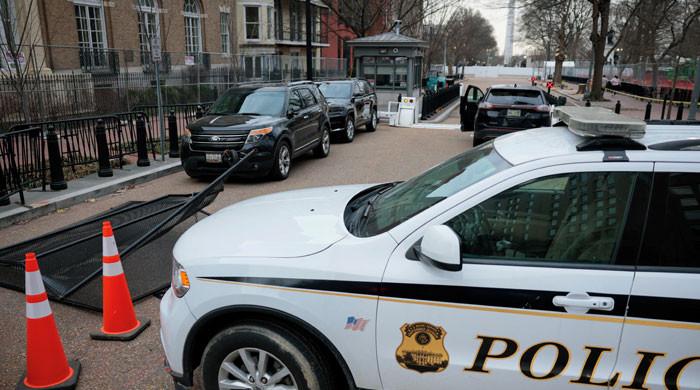

A van smashed through a security barricade near the White House early Wednesday, authorities said, forcing a temporary shutdown of the area in downtown Washington during morning rush hour.
The driver was taken into custody and there were no reported injuries following the pre-dawn incident at Lafayette Square, just north of the White House.
A police bomb squad cleared the vehicle and declared the scene safe, said a spokesperson for the US Secret Service, which handles presidential security.
“The individual is currently being interviewed by the Secret Service and criminal charges are pending,” the spokesperson said in a statement.
Washington has been under heightened security amid the US-Israel war on Iran.
Dozens of emergency vehicles with lights flashing descended on the scene, as police closed several major streets around the White House.
Traffic congestion snarled the area as office workers and tourists were blocked from passing through.


Sources: Syracuse to hire Toledo’s Bryan Blair as next AD

Was rapper close to her?

Reliance to fund oil refinery in US; Donald Trump calls it ‘historic $300 billion deal’ – The Times of India

-
 Politics5 days ago
India let Iran warship dock the day US sank another off Sri Lanka, say officials
-

 Sports5 days ago
Pakistan set for FIH Pro League debut | The Express Tribune
-
 Business5 days ago
Restaurant group changes name after bid to buys pubs across the UK
-

 Entertainment5 days ago
Harry Styles kicks off new era with ‘One Night Only’ comeback show
-
 Business5 days ago
Home heating oil: ‘Most of my pension has gone on home heating oil’
-

 Sports5 days ago
Winners and losers of the 2026 NHL trade deadline
-

 Entertainment5 days ago
Kanye ‘Ye’ West trips during trial: ‘Is he asleep?’
-
 Entertainment1 week ago
US launches military operations in Ecuador amid ongoing Iran War