

Business
US-India trade: Tariffs to hit leather sector; Kolkata exporters pondering ‘Made in Europe’ question – Times of India

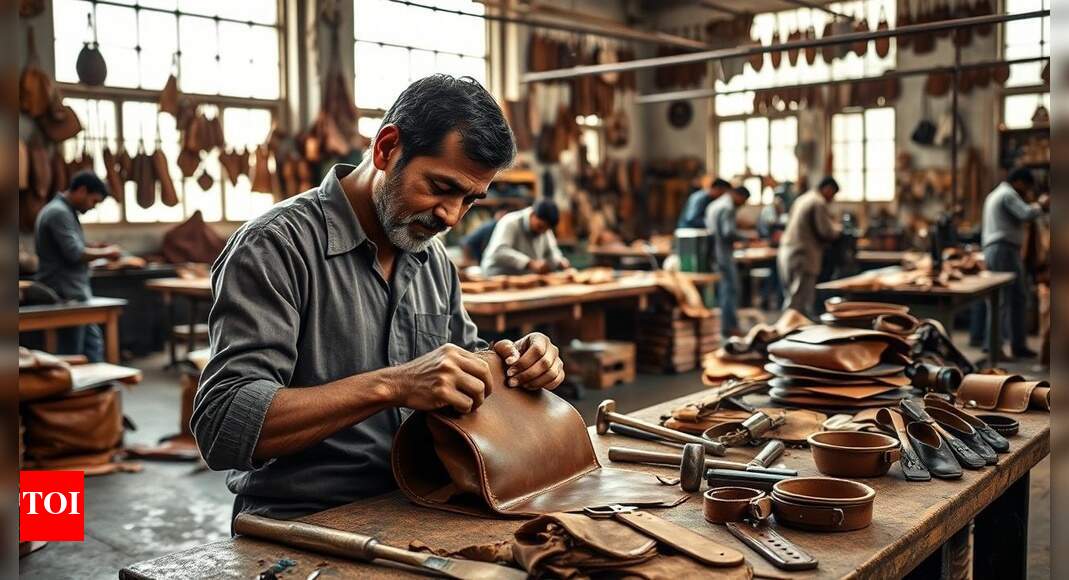
India’s leather industry, a vital labour-intensive sector with exports worth $4.1 billion, has been hit hard by US President Donald Trump’s decision to impose a 25% tariff on imports from India. The move, coupled with an additional 25% tariff on Russian oil purchases from 27 August 2025, is expected to deepen the crisis exporters are facing.Government data shows India exported nearly $4.1 billion worth of leather and leather products between April 2024 and February 2025, with the US accounting for $870 million. The American market makes up around 20% of India’s overall leather exports. Kolkata, one of the country’s key hubs for leather goods, faces the sharpest impact as West Bengal alone contributes 50% of India’s exports in this sector. Out of 2,020 tanneries nationwide, 538 operate in the state, which also houses 230 leather footwear units and 436 leather goods units, according to an ET report.According to experts, the sudden spike in duties has left them paralysed. Ramesh Juneja, vice chairman of the Council for Leather Exports, explained the uncertainty saying, “The industry is in a wait-and-watch mode. We are unable to offer any discounts to buyers either. Right now, we are just waiting for some clarity to emerge. Last year, the leather industry did Rs 50,000 crore business in leather and leather product exports and footwear. The US market is a significant geography for us.”Industry leaders further warned that the tariff structure will make Indian products far less competitive. “If it sticks to where it is now, we will have about an 8.5% MFN tax; 25% would be the reciprocal tax, and then the 25% extra tariff for the oil trade with Russia. This is going to have an impact on the price and cost at which the American importer imports the product from this country,” Arjun Mukund Kulkarni, president of the Indian Leather Products Association (ILPA) told ET. He also added that the shock will ripple into European markets as well, as Kolkata made products are sold to the Europe which then sells them to America.“So, it is going to be a challenge, and we will have to figure out ways and means around this situation,” Kulkarni noted.Exporters are already considering workarounds, such as partial production in Europe, ET reported. “A lot of people are thinking on these lines, and it could then be labelled as a ‘Made in Europe’ product, or from any other country where the final production takes place before being sold to the US. So, people are looking at such ideas where the final product can have a ‘Made in Europe’ stamp,” Kulkarni said.The footwear category is expected to suffer the most, given that it represents 40% of leather products worldwide. Kanishk Maheshwari, co-founder and managing director of Primus Partners India, highlighted the scale of the problem saying, “In 2024-25, leather footwear exports to the US were close to $500 million, which had been growing steadily over the last four years. With this new tariff, a pair of shoes that landed at $100 in US retail will now face almost 10 times more duty (from 5-8% to 50% now) and add an extra $50 to the price, while Vietnamese or Indonesian footwear competes at a duty of just 19-20%. This cost gap alone explains why US buyers are already pivoting orders away from the Agra and Kanpur clusters.”Although Vietnam, Indonesia and China also face tariffs, theirs remain significantly lower, Vietnam at 20%, China at 30%, and Bangladesh at 35%. “Only India and Brazil are subject to a 50% US tariff. This has instantly wiped the competitiveness that India had worked to build through various schemes like rebates under RoDTEP and various export incentives. India’s 1% share in the $100-billion US leather import market is about to shrink further,” Maheshwari told the outlet.Experts suggest market diversification, product repositioning, and quality upgrades may soften the blow, but stress that government support will be crucial. Kulkarni calls for urgent intervention, “The government needs to come up with some revolutionary ideas, subsidising or supporting the industry. The Brazilian government, for instance, has reached out and is giving subsidies. The Indian government will also have to think about something to keep the exporters afloat amid such high tariffs.”




The Oil and Gas Regulatory Authority (OGRA) has approved a fresh increase in the price of liquefied petroleum gas (LPG), raising the cost for both domestic consumers and commercial users.
According to the notification issued, the LPG price has been increased by Rs7.39 per kilogram, setting the new rate at Rs209 per kg for December. As a result, the price of a domestic LPG cylinder has risen by Rs87.21, bringing the new price to Rs2,466.10.
In November, the price of LPG stood at Rs201 per kg, while the domestic cylinder was priced at Rs2,378.89.
The latest price hike is expected to put additional pressure on households already grappling with rising living costs nationwide.
Business
Private sector data: Over 2 lakh private companies closed in 5 years; govt flags monitoring for suspicious cases – The Times of India
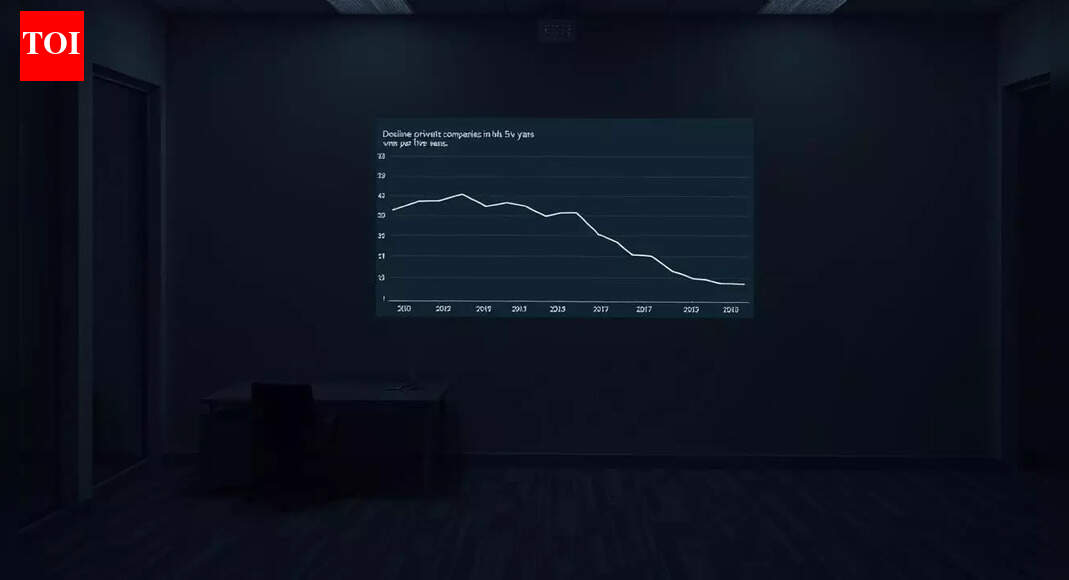
NEW DELHI: The government on Monday said that over the past five years, more than two lakh private companies have been closed in India.According to data provided by Minister of State for Corporate Affairs Harsh Malhotra in a written reply to the Lok Sabha, a total of 2,04,268 private companies were shut down between 2020-21 and 2024-25 due to amalgamation, conversion, dissolution or being struck off from official records under the Companies Act, 2013.Regarding the rehabilitation of employees from these closed companies, the minister said there is currently no proposal before the government, as reported by PTI. In the same period, 1,85,350 companies were officially removed from government records, including 8,648 entities struck off till July 16 this fiscal year. Companies can be removed from records if they are inactive for long periods or voluntarily after fulfilling regulatory requirements.On queries about shell companies and their potential use in money laundering, Malhotra highlighted that the term “shell company” is not defined under the Companies Act, 2013. However, he added that whenever suspicious instances are reported, they are shared with other government agencies such as the Enforcement Directorate and the Income Tax Department for monitoring.A major push to remove inactive companies took place in 2022-23, when 82,125 companies were struck off during a strike-off drive by the corporate affairs ministry.The minister also highlighted the government’s broader policy to simplify and rationalize the tax system. “It is the stated policy of the government to gradually phase out exemptions and deductions while rationalising tax rates to create a simple, transparent, and equitable tax regime,” he said. He added that several reforms have been undertaken to promote investment and ease of doing business, including substantial reductions in corporate tax rates for existing and new domestic companies.

Pakistan’s textile exports surged to $6.4 billion during the first four months of the 2025-26 fiscal year, marking the highest trade volume for the sector in this period.
According to the Pakistan Bureau of Statistics (PBS), value-added textile sectors were key contributors to the growth.
Knitwear exports reached $1.9 billion, while ready-made garments contributed $1.4 billion.
Significant increases were observed across several commodities: cotton yarn exports rose 7.74% to $238.9 million, and raw cotton exports jumped 100%, reaching $2.6 million from zero exports the previous year.
Other notable gains included tents, canvas, and tarpaulins, up 32.34% to $53.48 million, while ready-made garments increased 5.11% to $1.43 billion.
Exports of made-up textile articles, excluding towels and bedwear, rose 4.17%, totaling $274.75 million.
The report also mentioned that the growth in textile exports is a result of improved global demand and stability in the value of the Pakistani rupee.

OGRA Announces LPG Price Increase for December – SUCH TV

Richie Moriarty on season 5 of "Ghosts," his character and the cast: "We really are a family"

England’s Moeen Ali announces return to PSL after four-year hiatus

-

 Sports1 week ago
WATCH: Ronaldo scores spectacular bicycle kick
-

 Entertainment1 week ago
Welcome to Derry’ episode 5 delivers shocking twist
-

 Politics1 week ago
Washington and Kyiv Stress Any Peace Deal Must Fully Respect Ukraine’s Sovereignty
-
 Business1 week ago
Key economic data and trends that will shape Rachel Reeves’ Budget
-

 Politics1 week ago
53,000 Sikhs vote in Ottawa Khalistan Referendum amid Carney-Modi trade talks scrutiny
-

 Tech6 days ago
Wake Up—the Best Black Friday Mattress Sales Are Here
-

 Fashion1 week ago
Canada’s Lululemon unveils team Canada kit for Milano Cortina 2026
-

 Tech1 day ago
Get Your Steps In From Your Home Office With This Walking Pad—On Sale This Week