

Fashion
US’ Kontoor Brands’ Q3 revenue jumps 27% on strong Wrangler sales

Adjusted gross margin expanded 80 basis points (bps) to 45.8 per cent, while reported gross margin stood at 41.3 per cent. Adjusted operating income rose 14 per cent to $122 million, and adjusted earnings per share (EPS) increased 5 per cent to $1.44.
Kontoor Brands has posted a 27 per cent YoY revenue rise to $853 million in Q3 2025, driven by Wrangler and Helly Hansen.
Adjusted gross margin climbed to 45.8 per cent, and adjusted EPS rose 5 per cent to $1.44.
The company raised FY25 guidance, forecasting revenue of $3.09–3.12 billion and adjusted EPS of $5.5, citing strong brand performance and operational efficiencies.
The company made a $25 million voluntary term loan repayment and declared a quarterly dividend of $0.53 per share, reflecting a 2 per cent increase, Kontoor Brands said in a press release.
“Our third quarter results exceeded expectations driven by the strength of our expanded brand portfolio, gross margin expansion, and operational execution. Wrangler delivered another quarter of growth, Helly Hansen outperformed, and we improved marketplace health through disciplined inventory management. Based on strong year-to-date performance, we are raising our full-year outlook and are positioned to finish a record year with momentum,” said Scott Baxter, president, CEO, and chairman at Kontoor Brands.
Brand-wise, Wrangler global revenue reached $471 million, up 2 per cent YoY, despite shipment timing impacts. US revenue rose 1 per cent, driven by an 11 per cent increase in direct-to-consumer (DTC) sales, while wholesale remained flat.
International revenue grew 6 per cent, supported by gains in both wholesale and DTC channels. Lee brand global revenue was $187 million, down 8 per cent YoY, impacted by proactive inventory management actions in China worth $7 million.
US revenue decreased 9 per cent, as an 11 per cent drop in wholesale was partly offset by a 15 per cent increase in digital sales.
International revenue declined 5 per cent, reflecting inventory adjustments, with an 8 per cent rise in brick-and-mortar mitigating some declines.
Helly Hansen contributed $193 million in global revenue, comprising $143 million from sport, $42 million from workwear. The company recorded $7 million from Musto brand. The brand generated $40 million in US sales and $153 million internationally, performing above expectations in both revenue and profitability.
Kontoor’s adjusted gross margin improved to 45.8 per cent, reflecting benefits from its Project Jeanius initiative, product mix optimisation, and targeted pricing actions. The company noted a 60-bps impact from the Helly Hansen acquisition. Excluding Helly Hansen, adjusted gross margin increased 140 basis points, offsetting higher product costs and newly imposed tariffs, added the release.
Selling, general and administrative (SG&A) expenses were $288 million reported and $269 million adjusted, equating to 31.5 per cent of revenue. Excluding Helly Hansen, adjusted SG&A remained stable at $195 million, aided by reduced distribution and freight costs.
Adjusted operating income reached $122 million, up 14 per cent, representing a 14.3 per cent margin. Excluding Helly Hansen, operating income rose 4 per cent, with margin improving to 16.9 per cent. Adjusted EPS was $1.44, up 5 per cent, including a $0.03 contribution from Helly Hansen.
Kontoor ended the quarter with $82 million in cash and $1.34 billion in long-term debt. The company had no outstanding borrowings under its revolving credit facility and maintained $494 million available for borrowing.
Inventory stood at $765 million, inclusive of Helly Hansen. Excluding it, inventory increased 21 per cent to $560 million, driven by earlier receipts due to improved supply chain lead times and tariff effects. The company expects inventory to fall to about $645 million by the fourth quarter.
For the full fiscal 2025 (FY25), Kontoor Brands raised its guidance, projecting revenue to reach the high end of the $3.09–3.12 billion range, representing 19–20 per cent YoY growth. Adjusted gross margin is expected to reach 46.4 per cent, a 130-bps improvement over 2024. Adjusted operating income is forecast at $449 million, up 18 per cent, compared to the prior outlook of $443 million. Adjusted EPS is anticipated at $5.50, a 12 per cent rise from 2024 levels, slightly above the previous projection of $5.45.
Cash from operations is expected to approximate $400 million, higher than the earlier forecast of exceeding $375 million. The company plans an additional $185 million voluntary term loan repayment in Q4, bringing total 2025 repayments to $235 million.
Helly Hansen is expected to contribute $460 million in annual revenue and $0.20 to adjusted EPS, consistent with earlier guidance. Fourth-quarter revenue is projected between $970 million and $980 million, representing 39–40 per cent growth, with a four-point benefit from a 53rd week.
Kontoor anticipates capital expenditures of around $25 million and an effective tax rate of 21 per cent for the year. Interest expense should total $50 million and adjusted other expense approximately $11 million.
“We are raising our full year outlook to reflect stronger revenue and earnings growth, accelerating cash generation, and the scaling benefits from Project Jeanius,” added Baxter. “We expect the near-term environment to remain dynamic, but I am confident our strong fundamentals, operational execution, and increasing capital allocation optionality will continue to drive strong value creation for our shareholders.”
Fibre2Fashion News Desk (SG)









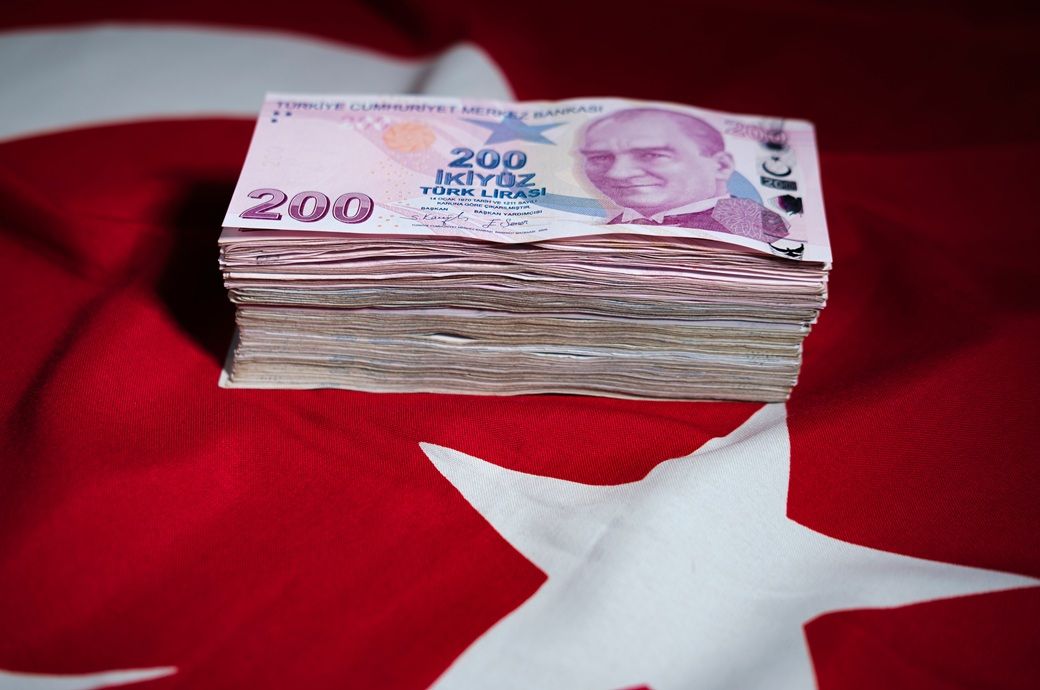
Current account excluding gold and energy indicated net deficit of $3.9 billion, while goods saw a deficit of $9.5 billion.
Turkiye recorded a current account deficit (CAD) of $9.6 billion in March, the country’s central bank said.
Treasury and Finance Minister Mehmet Simsek said the CAD is expected to widen this year, due to high energy and non-energy commodity prices.
Simsek said the deterioration is likely to remain temporary and manageable, thanks to stronger macroeconomic fundamentals and policy gains.
According to annualised data, current account deficit recorded as $39.7 billion (2.6 per cent of gross domestic product) in March, while the goods deficit recorded as $77.8 billion.
Simsek said the deterioration is likely to remain temporary and manageable thanks to stronger macroeconomic fundamentals and policy gains, domestic media outlets reported.
Turkiye is heavily reliant on imported energy, whose prices spiralled due to the Middle East conflict.
Simsek said elevated global commodity prices would put pressure on the external balance, but emphasised that the government’s economic programme had improved resilience against such shocks.
He said foreign direct investment (FDI) inflows totalled $1 billion in March, bringing annualised foreign direct investment to $12.6 billion.
The new investment incentive package under discussion in parliament now is expected to strengthen the country’s financing structure and support long-term capital inflows, he added.
Fibre2Fashion News Desk (DS)
During the first quarter of ****, the UK’s imports of textile fabrics eased down *.** to £*,*** million (~$*,*** million), against £*,*** million in January-March **** but slightly higher from £*,*** million in the fourth quarter of ****. Its imports of fibre were noted at £** million (~$***.** million) steady as £** million in Q*, **** but slightly lower than £** million in Q*, ****.
During the third month of this year, the country’s clothing imports declined *.** per cent to £*.*** billion (~$*.*** billion), compared with £*.*** billion in March ****. But the inbound shipment was slightly higher month on month compared with £*.*** billion in February ****.
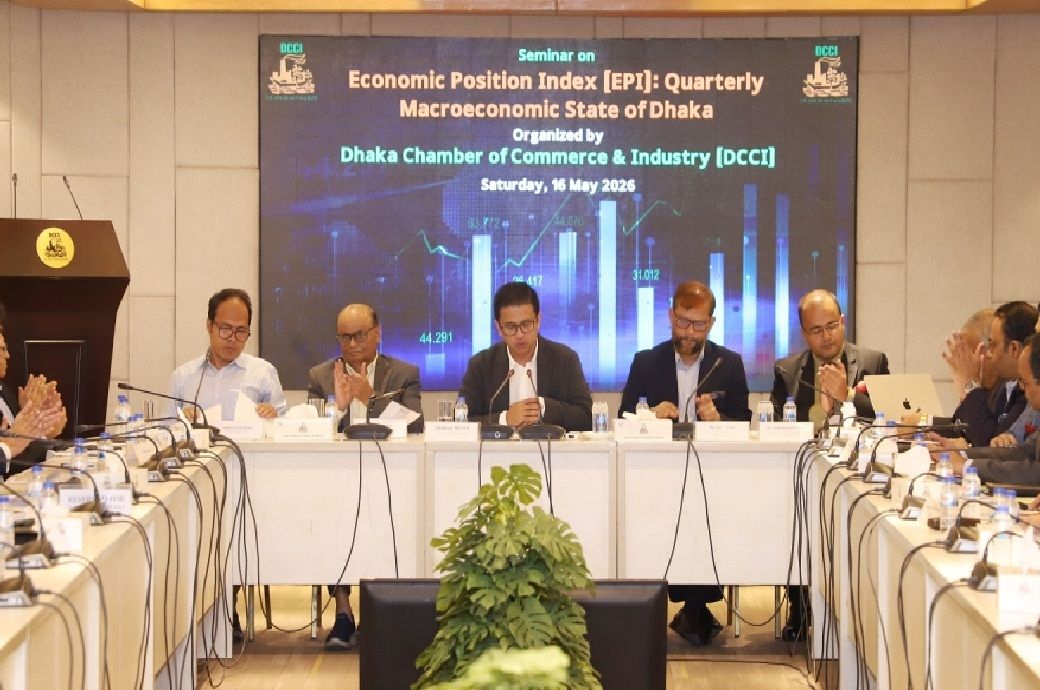
Higher rents, utility bills and fuel prices are eating away at already thin profit margins, it found.
High inflation is cutting deep into Bangladesh consumer spending, with weak demand turning one of the biggest concerns for businesses, DCCI said.
Higher rents, utility bills and fuel prices are eating away at already thin profit margins.
DCCI’s economic position index revealed that consumers have sharply reduced spending as the cost of living continues to rise.
SMEs are feeling the pressure the most.
The chamber’s economic position index (EPI) revealed that consumers have sharply reduced spending as the cost of living continues to rise, putting pressure on retailers, transport operators and other service providers.
Small and medium enterprises (SMEs) are feeling the pressure the most as they struggle to manage higher operating costs without losing customers.
Businesses also cited difficulties in obtaining bank loans, while delays in licensing and other regulatory procedures are adding to costs.
The DCCI report identified a shortage of skilled workers, particularly in technical and customer service roles, as another challenge for the sector.
The country’s inflation rose to 9.04 per cent in April from 8.71 per cent in March, according to official statistics.
Fibre2Fashion News Desk (DS)


CDC says American tests positive for Ebola in Africa, risk in the U.S. remains low

Elon Musk just lost another lawsuit. Will he keep fighting?

India will become history if it attempts any future misadventure, warns defence czar

-

 Entertainment6 days ago
Conan O’Brien hat tricks as Oscar host
-

 Tech1 week ago
Could Contact-Tracing Apps Help With the Hantavirus? Not Really
-
 Fashion5 days ago
Italy’s Zegna Group’s Q1 growth boosted by strong organic performance
-

 Entertainment1 week ago
Martin Short: Facing tragedy with joy
-

 Entertainment1 week ago
Tom Brady gets back at Kevin Hart during Netflix roast
-

 Sports1 week ago
Jacob Fatu unleashes vicious assault on Roman Reigns after World Heavyweight Championship loss at WWE Backlash
-

 Entertainment1 week ago
Martha Stewart: How to make an omelet
-

 Tech1 week ago
CUDA Proves Nvidia Is a Software Company