

Fashion
US PMI slips to 52 in Sept, tariffs slow factory output & new orders

The latest survey showed a weaker gain in production, whilst new order book growth softened as tariffs continued to weigh on exports. Tariffs and broader policy uncertainty also dampened firms’ assessment of the business outlook, but expectations of manufacturing production reshoring and hopes of better demand in the year ahead meant sentiment remained positive overall, S&P Global said in a press release.
Cost pressures meanwhile were again elevated, with tariffs reportedly the dominant factor pushing up overall purchase prices. Whilst firms sought to pass on higher supplier costs to clients, competitive pressures and signs of faltering demand meant output charge inflation softened to an eight-month low.
The S&P Global US Manufacturing PMI slipped to 52 in September from 53 in August, indicating slower expansion.
Tariffs weighed on exports—especially to Canada and Mexico—and drove up costs, while production and new orders rose modestly.
Despite weaker demand, employment increased, and optimism persisted on reshoring prospects.
Selling price inflation eased to an eight-month low.
Weaker growth emanated from a slowdown in new order book gains. Although up for a ninth successive month, new orders rose only modestly and at a pace below the survey average. Exports were a source of demand weakness, falling overall for a third month in a row. Tariffs were reported to have weighed on export sales especially to Canada and Mexico.
A slowdown in demand growth led to weaker output gains in September. Overall output increased at a much weaker pace than August’s recent high. However, rising to a faster degree than new orders, production increased sufficiently for firms to add to their stocks of finished goods for a second month in succession.
Work outstanding declined at the fastest pace for five months, in part due to an expansion of labour capacity. September’s survey showed that employment rose solidly as firms filled vacancies and as part of business expansion plans.
A positive outlook also helped encourage manufacturers to take on additional staff, with several anticipating an increase in sales over the next 12 months. In some instances, tariffs were seen as driving an expansion of domestic focused industrial output.
The overall business activity expectations subsequently improved slightly compared to August. That was despite some ongoing uncertainty amongst the panel related to trade and wider federal government policies.
Meanwhile, tariffs continued to push up input prices during September, with vendors reportedly raising their charges. Although input cost inflation weakened since August, it remained elevated in the context of the survey history. High prices discouraged purchasing activity in September, which overall rose only slightly on the month. Where buying rose, this was linked to a desire to bolster inventories, in part due to tariff and supply-side uncertainty. Difficulties importing goods and stock shortages were again noted as driving average vendor delivery times higher in September.
Regarding manufacturers’ own selling prices, these rose at a noticeably slower pace in September as competitive pressures and slower demand growth weighed on company pricing power. Although still rising at a historically strong pace, output price inflation softened in September to its lowest level since January, added the release.
“US manufacturing production rose for a fourth successive month in September, but the upturn lost momentum as companies reported a drop in order book growth alongside a buildup of unsold finished goods inventories,” said Chris Williamson, chief business economist at S&P. “Despite a slowing in demand growth, many factories produced more goods, using up raw materials that had been stockpiled ahead of tariff implementation. This poses a downside risk to future production in the absence of a pickup in demand, though also hints at some alleviation of price pressures: there is already evidence of companies offering excess stock to customers at reduced rates.”
“A growing uncertainty, however, relates to supply chains, with September seeing an increase in tariff-related vendor delays, which threaten to curb production and push up prices if these difficulties persist or intensify,” added Williamson.
Fibre2Fashion News Desk (SG)













The package establishes a modern framework for both sides, enabling frictionless access to a market of 460 million consumers in key sectors, delivering economic benefits to both parties.
European Commission President Ursula von der Leyen and Swiss President Guy Parmelin yesterday signed a broad package of agreements aimed at deepening and expanding EU-Switzerland ties.
By aligning standards and rules in closely integrated areas, it will provide legal certainty, simplify trade in goods like medical devices and food products, and ease cross-border supply for businesses on both sides.
By aligning standards and rules in closely integrated areas, it will provide legal certainty, simplify trade in goods like medical devices and food products, and ease cross-border supply for businesses on both sides of the border.
Additionally, it will ensure more consistent rules for individuals who live, work or study across the EU-Swiss border. Switzerland will contribute to the development of legislation in the areas covered by the package and will have the opportunity to influence these rules as they are being designed.
“By modernising and deepening our ties across key sectors, from trade and transport to health and energy—we are strengthening legal certainty, fostering innovation and creating new opportunities for our citizens and businesses,” von der Leyen said in a release from the Commission.
The package includes updates to four already existing agreements, which already give Switzerland access to the EU internal market, regarding air transport, land transport, the free movement of persons and mutual recognition of conformity assessment.
New agreements on food safety, electricity, health and Switzerland’s participation in the EU Agency for the Space Programme were signed. A new agreement introduced a permanent and fair financial contribution by Switzerland to economic and social cohesion within the EU.
Apart from a protocol on parliamentary cooperation, the package includes also a joint declaration on the establishment of a high-level dialogue on the broad bilateral package.
Fibre2Fashion News Desk (DS)

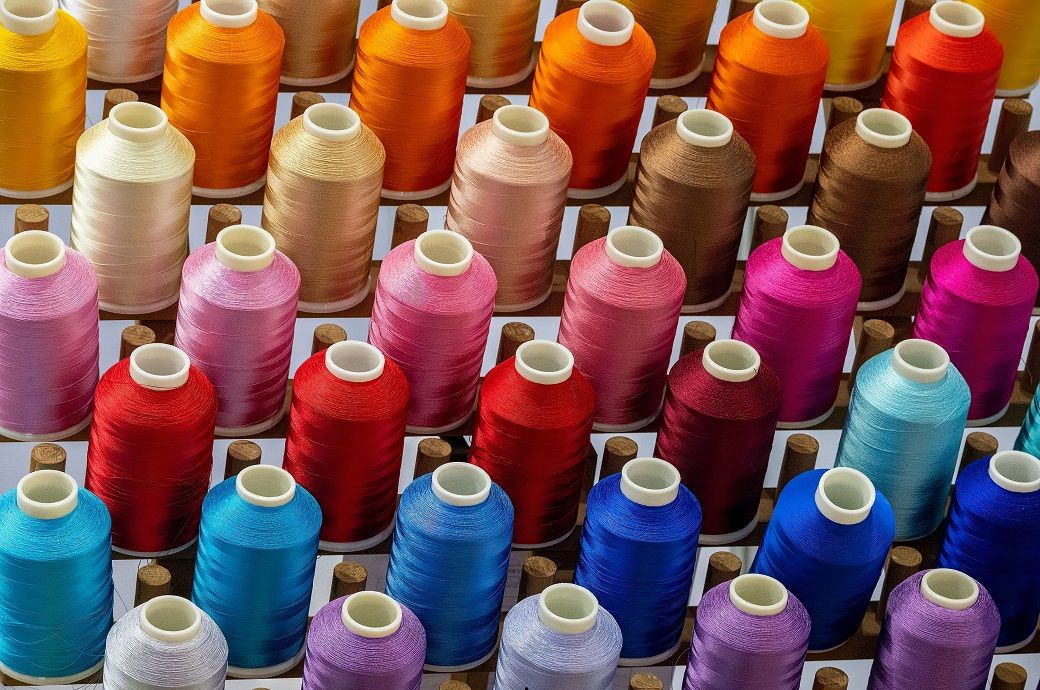
Following earlier increases in purified terephthalic acid (PTA), melt and PSF, Indian producers have now raised PFY prices. POY, FDY and PTY prices have been increased by ****;* per kg across all deniers and lustres with effect from March *, reflecting rapid cost pass-through amid heightened volatility in crude-linked value chains, according to the market sources.
In the previous weekly revision effective February **, ****, PTA was increased by ****;*.** per kg to ****;**.** per kg, while monoethylene glycol (MEG) was retained at ****;**.** per kg. Polyester melt prices were raised by ****;*.** per kg to ****;**.** per kg. Downstream PSF prices were also revised upward by ****;*.** per kg from March *.


Sydney Leroux teases comeback after missing 2025 NWSL season

Legendary football coach, commentator Lou Holtz dies at 89

Jake Cannavale shares his bit on Bobby Cannavale, Rose Byrne’s viral pet

India Us Trade Deal: Fresh look at India-US trade deal? May be ‘rebalanced’ if circumstances change, says Piyush Goyal – The Times of India

Households set for lower energy bills amid price cap shake-up

What are Iran’s ballistic missile capabilities?

-
Business6 days ago
India Us Trade Deal: Fresh look at India-US trade deal? May be ‘rebalanced’ if circumstances change, says Piyush Goyal – The Times of India
-
Business1 week ago
Households set for lower energy bills amid price cap shake-up
-
 Politics7 days ago
What are Iran’s ballistic missile capabilities?
-

 Politics7 days ago
US arrests ex-Air Force pilot for ‘training’ Chinese military
-
 Business6 days ago
Attock Cement’s acquisition approved | The Express Tribune
-

 Fashion6 days ago
Policy easing drives Argentina’s garment import surge in 2025
-

 Sports1 week ago
Top 50 USMNT players of 2026, ranked by club form: USMNT Player Performance Index returns
-
 Business5 days ago
Greggs to reveal trading amid pressure from cost of living and weight loss drugs