

Business
US Slashes Rates To Lowest Since 2022: What Powell’s Move Means For Jobs, Inflation And Your Wallet

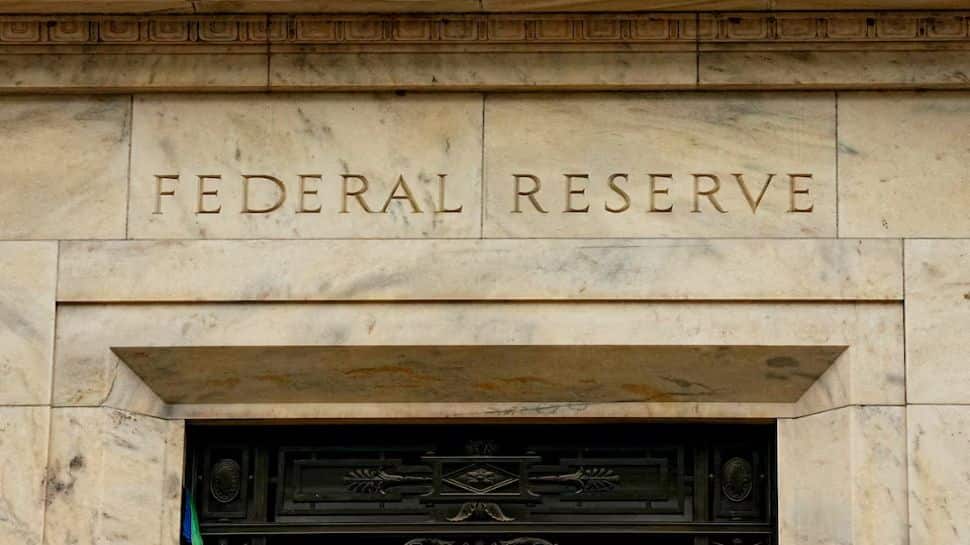
Washington: The US Federal Reserve opened its final chapter of 2025 with a small but meaningful step, trimming its benchmark interest rate by 25 basis points even as the country digests delayed economic data from the recent government shutdown. With this move, which was announced after a closely watched meeting in Washington, the federal funds rate now stands in the range of 3.5 to 3.75 per cent, its lowest level since late 2022, according to a report by CBS News.
This reduction becomes the third straight cut since September, adding up to a total easing of 0.75 percentage points for the year. The central bank has been handling a difficult moment in the US economy, where job creation is cooling noticeably while inflation remains stubborn in key pockets.
Even without the full set of timely numbers, Fed officials kept a close eye on private-sector indicators, including an Automatic Data Processing (ADP) report that showed a loss of 32,000 jobs in November, a sign that pressure on the labour market has intensified.
In its statement, the Federal Open Market Committee said it would keep evaluating “incoming data, the evolving outlook and the balance of risks” before deciding on any further adjustments. The message reflected the Fed’s attempt to stay measured as it heads into a leadership transition next year.
New quarterly projections shared by the Fed show officials expect only one rate cut in 2026, offering a hint of the caution inside the boardroom. Updated forecasts also paint a clearer picture of where the central bank believes the economy is heading. The Fed expects its preferred inflation gauge, the Personal Consumption Expenditures index, to ease to 2.4 per cent next year, a step down from the 2.9 per cent median estimate for 2025.
Economic growth, meanwhile, is projected to reach 2.3 per cent in 2026, with unemployment holding consistently at 4.4 per cent.
Economists outside the central bank read the signals in a similar way. Ryan Sweet, chief global economist at Oxford Economics, told investors that the Fed’s latest guidance points to what he described as an “extended pause” in the rate-cut cycle.
“The Fed is not going to be able to help the labour market because of what ails it,” he said, adding that monetary policy alone cannot address the structural issues weighing on hiring.
The latest cut brings the benchmark rate back to levels last seen in early November 2022, a period when the Fed was still tightening aggressively to respond to runaway inflation in the aftermath of the pandemic.
Lower rates typically encourage borrowing, which in turn supports hiring and consumer spending, but the central bank appears determined to proceed carefully.
The decision itself exposed a rare division inside the Federal Open Market Committee (FOMC). While Jerome Powell and eight members backed the 0.25-percentage-point cut, three policymakers disagreed. This is the highest level of dissent in six years.
Austan Goolsbee and Jeffrey Schmid argued for keeping rates unchanged, while Stephen Miran pushed for a 0.5-percentage-point reduction.
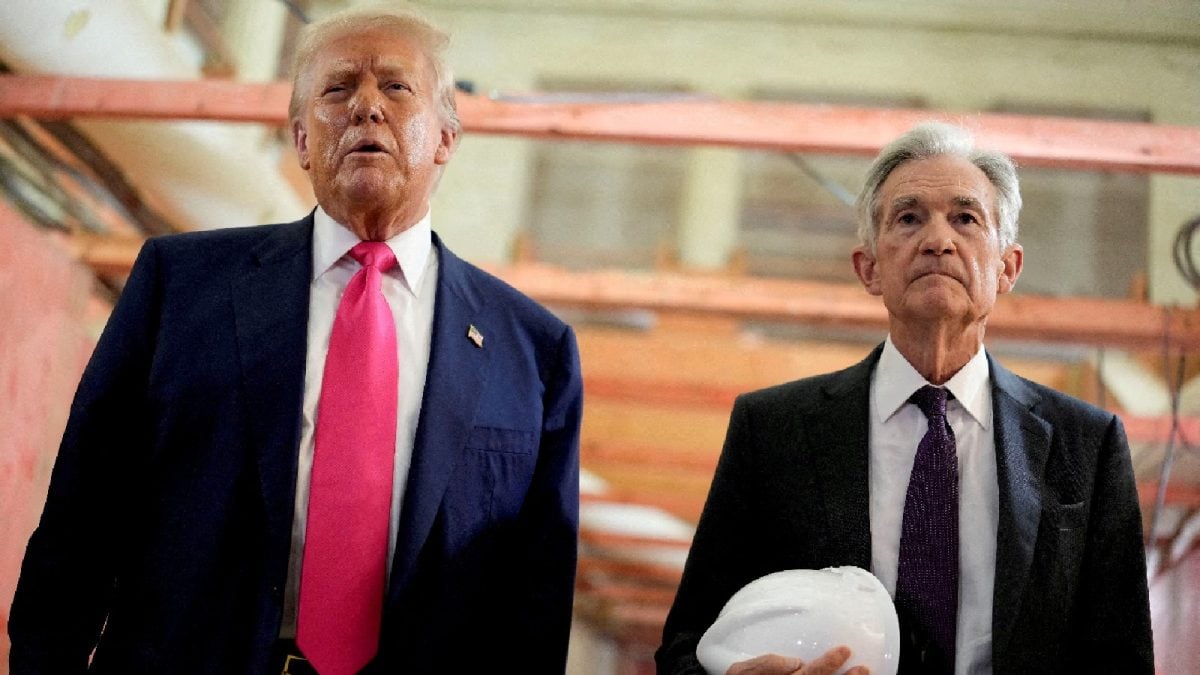
These debates come at a moment for the institution. Powell’s term as Fed chair ends in May 2026, and US President Donald Trump is preparing to select his successor. In a note shared with clients and cited by CBS News, Jeff Schulze of ClearBridge Investments said that “the outlook from the Powell-led FOMC bears less than usual on future Fed policy decisions given the imminent change in leadership”. It captures the sense of transition that now hangs over the central bank.



Business
Budget 2026 Live Updates: TCS On Overseas Tour Packages Slashed To 2%; TDS On Education LRS Eased
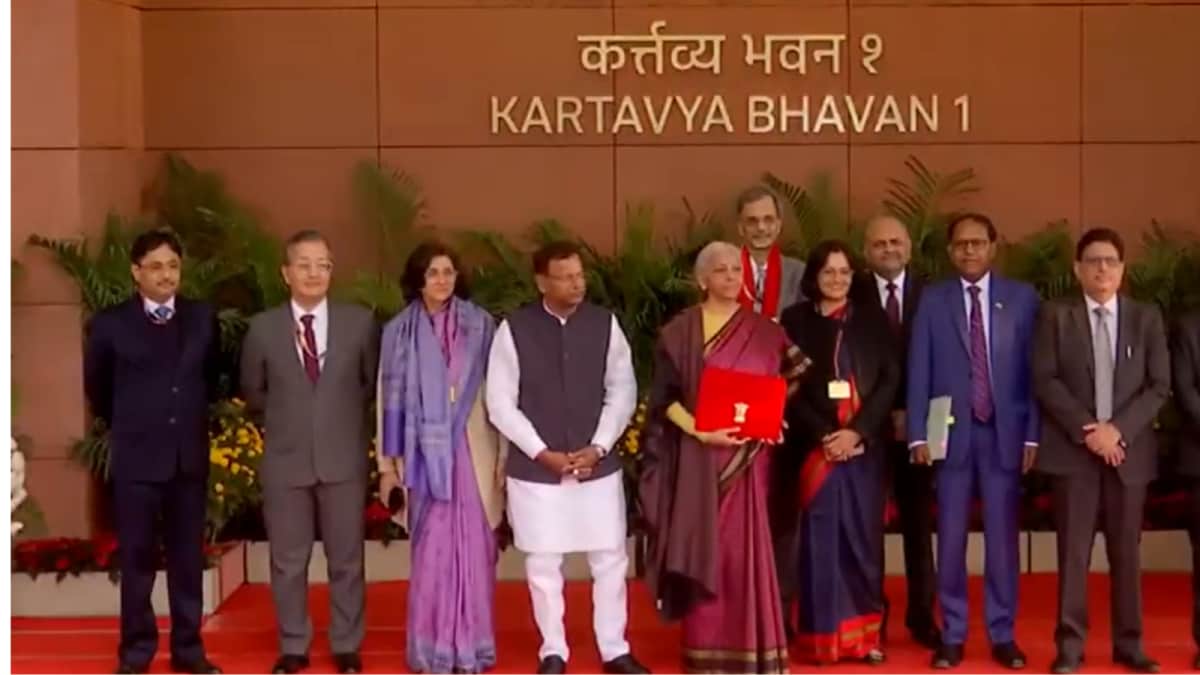
Union Budget 2026 Live Updates: Union Budget 2026 Live Updates: Finance Minister Nirmala Sitharaman is presenting the Union Budget 2026-27 in Parliament, her record ninth budget speech. During her Budget Speech, the FM will detail budgetary allocations and revenue projections for the upcoming financial year 2026-27. Sitharaman is notably dressed in a Kanjeevaram Silk saree, a nod to the traditional weaving sector in poll-bound Tamil Nadu.
The budget comes at a time when there is geopolitical turmoil, economic volatility and trade war. Different sectors are looking to get some support with new measures and relaxations ahead of the budget, especially export-oriented industries, which have borne the brunt of the higher US tariffs being imposed last year by the Trump administration.
On January 29, 2026, Sitharaman tabled the Economic Survey 2025-26, a comprehensive snapshot of the country’s macro-economic situation, in Parliament, setting the stage for the budget and showing the government’s roadmap. The survey projected that India’s economy is expected to grow 6.8%-7.2% in FY27, underscoring resilience even as global economic uncertainty persists.
Budget 2026 Expectations
Expectations across key sectors are taking shape as stakeholders look to the Budget for support that sustains growth, strengthens jobs and eases financial pressures:
Taxpayers & Households: Many taxpayers want practical improvements to the income tax structure that preserve simplicity while supporting long-term financial planning — including broader deductions for home loan interest and diversified retirement savings options.
New Tax Regime vs Old Tax Regime | New Income Tax Rules | Income Tax 2026
Businesses & Industry: With industrial output and investment showing resilience, firms are looking for policies that bolster capital formation, ease compliance, and expand infrastructure spending — especially in manufacturing and technology-driven sectors that promise jobs and exports.
Startups & Innovation: The startup ecosystem expects incentives around employee stock options and capital access, along with regulatory tweaks that encourage risk capital and talent retention without increasing compliance burdens.
Also See: Stock Market Updates Today
The Budget speech will be broadcast live here and on all other news channels. You can also catch all the updates about Budget 2026 on News18.com. News18 will provide detailed live blog updates on the Budget speech, and political, industry, and market reactions.
We are providing a full, detailed coverage of the union budget 2026 here, with a lot of insights, experts’ views and analyses. Stay tuned with us to get latest updates.
Also Read: Budget 2026 Live Streaming
Here are the Live Updates of Union Budget 2026:
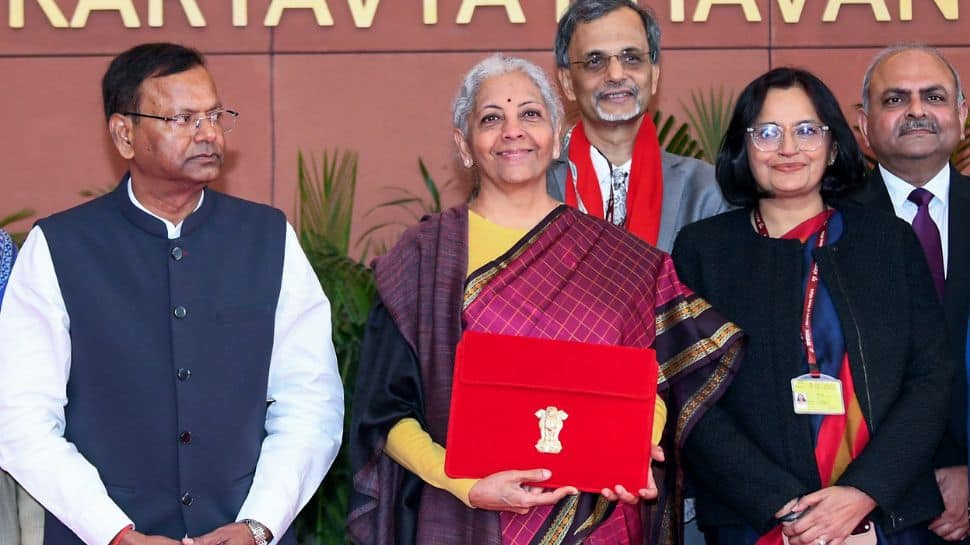
New Delhi: The Cabinet on Sunday approved the Union Budget 2026-27 during a meeting in Parliament chaired by Prime Minister Narendra Modi. A meeting of the Union Cabinet was held at Sansad Bhawan at 10 a.m., and after the Cabinet’s approval, Finance Minister Nirmala Sitharaman proceeded to Parliament to present the Budget.
Earlier, FM Sitharaman met President Droupadi Murmu and offered her a copy of the digital budget. The President also offered ‘dahi-cheeni’ (curd and sugar) to Sitharaman when she arrived at the Rashtrapati Bhavan. The Finance Minister was seen carrying her trademark ‘bahi-khata’, a tablet wrapped in a red-coloured cloth bearing a golden-coloured national emblem on it.
Minister of State for Finance Pankaj Chaudhary, Chief Economic Advisor Dr V. Anantha Nageswaran, Central Board of Direct Taxes (CBDT) Chairman Ravi Agrawal and other officials were seen accompanying the Finance Minister. Sitharaman was set to present her ninth consecutive Union Budget in the Lok Sabha. In 2021, she switched to using a digital tablet to carry the Budget papers, further promoting a modern and eco-friendly approach.
The ‘bahi-khata’ is a red pouch that holds the digital tablet containing the Budget documents. This year, Sitharaman opted for a deep maroon Kanjeevaram saree from Tamil Nadu. The saree featured a deep maroon base with a contrasting border and subtle gold detailing, paired with a yellow blouse.
The Budget is likely to strike a deft balance of sustaining growth momentum and maintaining fiscal consolidation. It also needs to address near-term challenges emanating from unprecedented geopolitical flux, said economists. According to economists, the budget is likely to focus more on capital expenditure, especially in sectors deemed to be strategically important owing to prevailing geopolitical compulsions.
While the FY26 Budget was more tilted towards stimulating middle-class consumption with tax reliefs, the FY27 Budget’s approach to stimulating consumption will be selective, they added.
Business
Education Budget 2026 Live Updates: What Will The Education Sector Get From FM Nirmala Sitharaman?
Union Education Budget 2026 Live Updates: Union Finance Minister Nirmala Sitharaman will present the Union Budget 2026–27 on February 1, with a strong focus expected on the Education Budget 2026, a key area of interest for students, teachers, and institutions across the country.
In the previous budget, the Bharatiya Janata Party government announced plans to add 75,000 medical seats over five years and strengthen infrastructure at IITs established after 2014. For 2025, the Centre had earmarked Rs 1,28,650.05 crore for education, a 6.65 percent rise compared to the previous year.
Meanwhile, the Economic Survey 2025–26, tabled in the Parliament of India, points to persistent challenges in school education. While enrolment at the school level is close to universal, this has not translated into consistent learning outcomes, especially beyond elementary classes. The net enrolment rate drops sharply at the secondary level, standing at just over 52 per cent.
The survey also flags concerns over student retention after Class 8, particularly in rural areas. It notes an uneven spread of schools, with a majority offering only foundational and preparatory education, while far fewer institutions provide secondary-level schooling. This gap, the survey suggests, is a key reason behind low enrolment in higher classes.
Stay tuned to this LIVE blog for all the latest updates on the Education Budget 2026 LIVE.

Budget 2026 Live Updates: TCS On Overseas Tour Packages Slashed To 2%; TDS On Education LRS Eased

Trump says India will buy oil from Venezuela, not Iran
Budget 2026: Cabinet gives green signal to Union Budget 2026–27

-
 Business1 week ago
Success Story: This IITian Failed 17 Times Before Building A ₹40,000 Crore Giant
-

 Fashion1 week ago
South Korea tilts sourcing towards China as apparel imports shift
-

 Sports1 week ago
Transfer rumors, news: Saudi league eyes Salah, Vinícius Jr. plus 50 more
-

 Sports5 days ago
PSL 11: Local players’ category renewals unveiled ahead of auction
-

 Entertainment1 week ago
Three dead after suicide blast targets peace committee leader’s home in DI Khan
-

 Sports1 week ago
Wanted Olympian-turned-fugitive Ryan Wedding in custody, sources say
-

 Tech1 week ago
Strap One of Our Favorite Action Cameras to Your Helmet or a Floaty
-

 Tech1 week ago
This Mega Snowstorm Will Be a Test for the US Supply Chain