

Politics
US Supreme Court lets Trump withhold $4 billion in food aid funding for now


WASHINGTON: The US Supreme Court on Friday allowed President Donald Trump’s administration to withhold for now about $4 billion needed to fully fund a food aid programme for 42 million low-income Americans this month amid the federal government shutdown.
The court’s order, known as an administrative stay, gives a lower court additional time to consider the administration’s formal request to only partially fund the Supplemental Nutrition Assistance Programme, known as SNAP or food stamps, for November. The administration had faced a judge-ordered Friday deadline to fully fund the programme.
Justice Ketanji Brown Jackson, who issued the stay, set it to expire two days after the Boston-based 1st US Circuit Court of Appeals rules on the administration’s request to halt a judge’s order that the US Department of Agriculture promptly pay the full amount of this month’s SNAP benefits, which cost $8.5 billion to $9 billion per month.
Jackson expects lower court to act quickly
The ruling by US District Judge John McConnell in Providence, Rhode Island, on Thursday came after the administration said it would provide $4.65 billion in emergency funding to partially cover SNAP benefits for November.
Jackson, the liberal justice assigned to review emergency appeals from a group of states that include Rhode Island, said the 1st Circuit was expected to rule on the administration’s request to block McConnell’s order “with dispatch.”
US Attorney General Pam Bondi noted the Supreme Court’s decision in a post on X, which paused a court ruling she deemed “judicial activism at its worst.”
Department of Justice lawyers told the Supreme Court that McConnell’s ruling, if allowed to stand, would “sow further shutdown chaos” by prompting “a run on the bank by way of judicial fiat.”
The administration originally planned to suspend SNAP benefits altogether in November, citing a lack of funding because of the shutdown.
But McConnell last week ordered the USDA to use emergency SNAP funding to cover part of this month’s cost. In Thursday’s ruling, he ordered the USDA to make up for the shortfall with money from a separate department programme with $23.35 billion in funding, derived from tariffs, that supports child nutrition.
McConnell, an appointee of Democratic President Barack Obama, accused the Republican Trump administration of withholding SNAP benefits for “political reasons.”
His ruling was a win for a coalition of legal challengers comprising cities, unions, and nonprofits represented by the liberal legal group Democracy Forward, and prompted the administration to ask the 1st Circuit on Friday to halt the order.
The plaintiffs told the 1st Circuit that the administration showed disregard for the harm that would befall nearly one in eight Americans if McConnell’s decision were paused and SNAP recipients were denied full benefits.
“The court should deny Defendants’ motion and not allow them to further delay getting vital food assistance to individuals and families who need it now,” the lawyers wrote.
Confusion over states’ funding
The 1st Circuit on Friday denied the Trump administration’s request to administratively stay McConnell’s ruling.
It has yet to issue a ruling on the administration’s formal request to halt the judge’s order, but the 1st Circuit panel, which consisted of three judges appointed by Democratic presidents, said it would do so “as quickly as possible.”
Skye Perryman, the head of Democracy Forward, told MSNBC that the courts hearing cases over the withholding of SNAP benefits “have been very clear, that this administration not only had the legal authority to make these payments but that the administration must make these payments.”
Hours before Friday’s Supreme Court order, the USDA informed states it was working to comply with McConnell’s order by making funds available to fully fund SNAP, even as the administration moved to appeal McConnell’s ruling, causing confusion.
After receiving the USDA memo, states including New York, New Jersey and Massachusetts said they had directed state agencies to issue SNAP benefits in full for November.
“President Trump should never have put the American people in this position,” Massachusetts Governor Maura Healey, a Democrat, said in a statement.
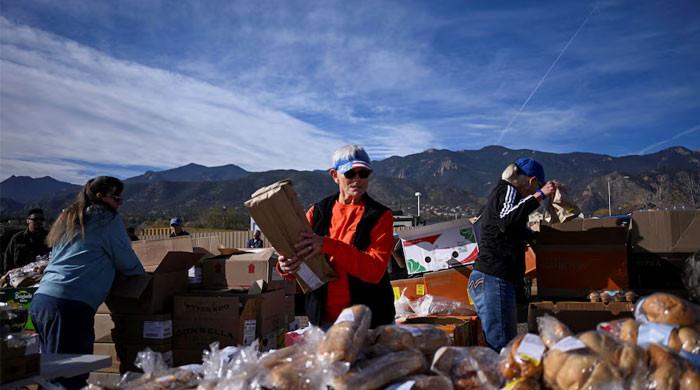
SNAP benefits lapsed at the start of the month for the first time in the programme’s 60-year history. Recipients have turned to already-strained food pantries and made sacrifices like forgoing medications to stretch tight budgets.
SNAP benefits are paid monthly to eligible Americans whose income is less than 130% of the federal poverty line. The maximum monthly benefit for the 2026 fiscal year is $298 for a one-person household and $546 for a two-person household.
- Trump claims Iran was about to strike first, contradicting Rubio.
- Conservatives criticise US involvement in Iran war.
- White House in damage control over conflicting war rationales.
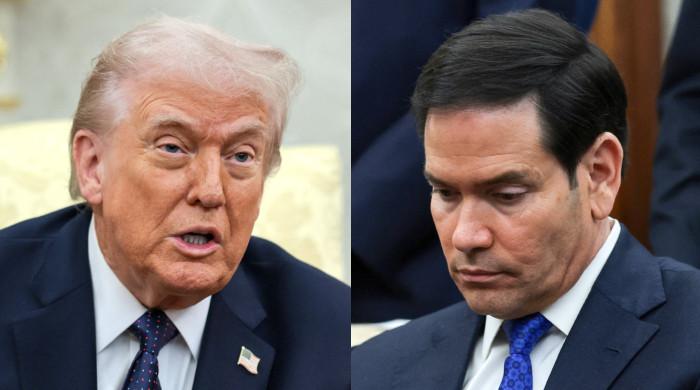
WASHINGTON: President Donald Trump said on Tuesday he ordered US forces to join Israel’s attack on Iran because he believed Iran was about to strike first, contradicting the rationale offered a day earlier by his secretary of state for how the war began.
Secretary of State Marco Rubio told reporters on Monday that the US launched the attack because of fears that Iran would retaliate in response to planned Israeli action against Tehran.
“We knew that there was going to be an Israeli action; we knew that that would precipitate an attack against American forces, and we knew that if we didn’t preemptively go after them before they launched those attacks, we would suffer higher casualties,” Rubio said.
Trump rejected suggestions that Israel pushed the US into the conflict, as his administration gave varying accounts and faced criticism from some supporters and Democrats who accused him of launching a “war of choice.”
“I might have forced their (Israel’s) hand,” Trump told reporters in the Oval Office as he met with German Chancellor Friedrich Merz. “We were having negotiations with these lunatics, and it was my opinion that they were going to attack first. If we didn’t do it, they were going to attack first. I felt strongly about that.”
Iran has said the US assault was unprovoked.
Several prominent conservative commentators ratcheted up their criticism of the Iran attacks, arguing Rubio’s comments indicated that Israel, not the Trump administration, was calling the shots.
“So he’s flat out telling us that we’re in a war with Iran because Israel forced our hand,” conservative podcaster Matt Walsh wrote of Rubio to his 4 million followers on X. “This is basically the worst possible thing he could have said.”
Megyn Kelly, a conservative podcaster, told her audience that she had doubts about Trump’s decision to strike Iran.
“Our government’s job is not to look out for Iran or for Israel. It’s to look out for us. And this feels very much to me like it is clearly Israel’s war,” Kelly said in remarks aired prior to Rubio’s comments.
The criticism from Trump’s right flank comes as his Republican Party is fighting to hold on to control of the US Congress in the November midterm elections.
Damage control
The debate over the run-up to the war has forced the White House into damage control.
Trump on Tuesday took questions from reporters in a public setting for the first time since the US-Israeli air war began three days earlier. He previously discussed the attacks in two videos, one-on-one interviews with select journalists and brief remarks on Monday at the White House.
The president said he believed Iran was on the brink of launching attacks, presenting no evidence to support his view, after US negotiations with Iran last Thursday in Geneva. Iran had described those talks as positive, with more planned in the days ahead.
“It’s something that had to be done,” said Trump, who did not make a detailed case for war against Iran before it began.
Rubio, pressed on Tuesday about his prior comment during a visit to Capitol Hill, told reporters: “The bottom line is this: The president determined we were not going to get hit first. It’s that simple, guys.”
Two senior Trump administration officials held a conference call on Tuesday with reporters to describe events leading up to military operations, in particular the Geneva talks with Iranian officials held by US envoys Steve Witkoff and Jared Kushner and mediated by Oman.
The two officials said Witkoff and Kushner repeatedly pressed Iran to give up uranium enrichment. Instead, Iran presented a plan that would allow the Iranians to enrich uranium at higher percentages at the Tehran Research Reactor in northern Iran, they said.
The US envoys felt the Iranians were engaging in delay tactics, according to the officials.
“They were unwilling to give up the building blocks of what they needed to preserve in order to get to a (nuclear) bomb,” one official said.
Iran denies seeking a nuclear weapon.
The envoys reported back to Trump, telling him it might have been possible to get a nuclear agreement similar to the one that former President Barack Obama’s team and world powers negotiated with Iran in 2015 but that it would take months.
Trump ordered US forces into action the next day, and the strikes began on Saturday.
- Study visas blocked for Afghanistan, Cameroon, Myanmar, Sudan.
- Britain will also halt work visas for Afghans.
- UK says legal asylum claims rose 470% between 2021 and 2025.
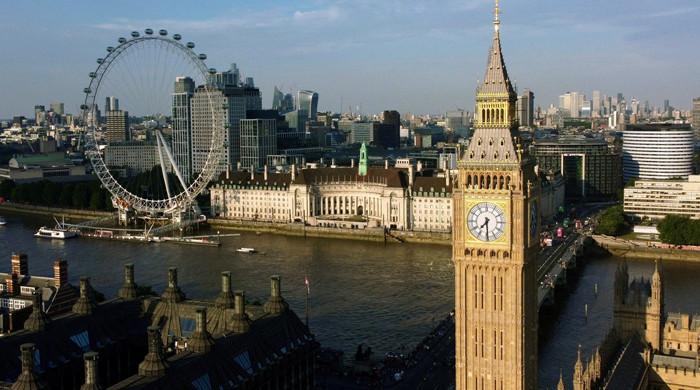
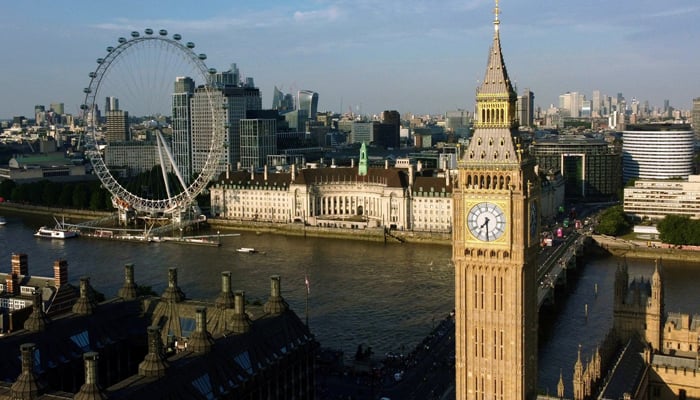
Britain said on Tuesday it would block study visas for nationals from four countries and halt work visas for Afghans, using what it called an “emergency brake” to curb rising asylum claims from people entering through legal routes.
Immigration remains one of Britain’s most politically sensitive issues, and Prime Minister Keir Starmer’s government has sought to show it is tightening the system as the populist Reform UK party gains ground in opinion polls.
The interior ministry, which is set to block study visas for nationals from Afghanistan, Cameroon, Myanmar and Sudan, said asylum applications by students from these countries had jumped more than fivefold between 2021 and 2025.
It also said claims by Afghans on work visas were now outstripping the number of visas issued.
“Britain will always provide refuge to people fleeing war and persecution, but our visa system must not be abused,” interior minister Shabana Mahmood said in a statement.
“That is why I am taking the unprecedented decision to refuse visas for those nationals seeking to exploit our generosity.”
Asylum claims trebling since 2021
According to the government, asylum claims made after entering on legal visas have more than trebled since 2021 and accounted for 39% of the 100,000 people who applied last year.
It said that nearly 16,000 nationals from the four listed countries were currently being supported at public expense, including more than 6,000 in hotels, adding to pressure over the cost of asylum accommodation, which it put at 4 billion pounds ($5.34 billion) a year.
The changes would take effect on March 26, the government said, adding that it intended to create new capped “safe and legal routes” once the asylum system stabilises.
Britain has granted sanctuary to more than 37,000 Afghans through resettlement schemes since 2021 and issued about 190,000 humanitarian visas last year.
It said it had secured cooperation from Angola, Namibia and the Democratic Republic of Congo on returns, after warning in November that their nationals risked losing access to UK visas.
Starmer has previously said that Britain’s asylum rules were more permissive compared with parts of Europe and acted as a “pull factor” for people seeking to reach the country.
His government announced plans in November to make refugee status temporary and speed up removals of people who arrive illegally.
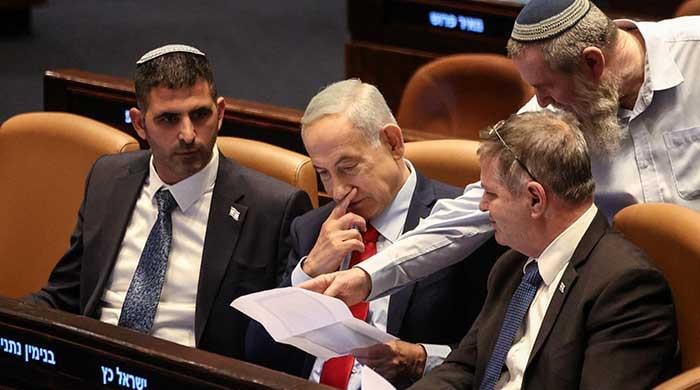
With elections approaching in Israel, the war with Iran has handed Prime Minister Benjamin Netanyahu an opportunity to restore an image deeply scarred by October 7, 2023 Gaza attack, experts say.
But any political dividend would depend on how the conflict unfolds and how long it lasts, they say.
A day after Iran’s supreme leader Ayatollah Ali Khamenei was martyred in a wave of US-Israeli strikes, Netanyahu said that his close ties with Washington had enabled Israel to “do what I have long aspired to do for 40 years: to strike the terrorist regime decisively”.
The Gaza war eroded Netanyahu’s popularity. Critics have accused him of seeking to evade responsibility for the authorities’ failure to prevent the deadliest day in Israel’s history.
At 76, the leader of the right-wing Likud party is Israel’s longest-serving prime minister, with more than 18 cumulative years in office across multiple stints.
Known for his political resilience, Netanyahu has been without a parliamentary majority since the summer, amid a crisis with his ultra-Orthodox religious allies.
He is also standing trial in a long-running corruption case and has sought a presidential pardon, with US President Donald Trump repeatedly pressuring President Isaac Herzog to grant one.
‘Total victory’
Elections must be held by October 27 at the latest.
Netanyahu will call early elections, says Emmanuel Navon, a political analyst at Tel Aviv University.
“It’s obvious. He won’t wait until October given the commemoration of the October 7 anniversary,” Navon said.
“If Netanyahu was at rock bottom after the Gaza attack, he has since gradually turned the tide,” he added.
A Likud party led by Netanyahu would emerge ahead in elections held today, opinion polls suggest.
That would likely see him tasked with forming the next government, though he would still lack a majority with his current allies.
A victory over Iran could change that calculus, experts say.
“This offensive undeniably reinforces the image Netanyahu seeks to cultivate, the one associated with his ‘total victory’ slogan,” independent geopolitical analyst Michael Horowitz told AFP.
“Netanyahu wants to show that this is not a campaign slogan but a reality. It is his national agenda and his electoral strategy,” he added.
‘Iran remains Iran’
Raviv Druker, a prominent journalist on Channel 13 television, argued that Netanyahu “will try to convince people that the victory is total even if that is an illusion,” noting that “Hamas still runs Gaza, and Iran remains Iran even after Saturday’s strike”.
On the popular news website Walla, journalist Ouriel Deskal went further, suggesting Netanyahu may have chosen the timing of the hostilities to automatically delay — under a state of emergency — the March 30 deadline for passing a budget for which he has struggled to secure a majority.
Without a budget, the government would fall on April 1 and elections would be called.
In that scenario, Netanyahu would enter the campaign from a position of weakness.
By contrast “if this war against Iran is a success for Israel, it will be a political victory for Netanyahu,” Navon said.
But should the war drag on, the picture could shift dramatically, Horowitz warned.
“Public tolerance for a long war with heavy casualties, combined with a high cost of living, remains extremely low,” he said.
During the war last June, Iranian missiles killed 30 people in Israel. Since Saturday, 10 people have been killed in Iran’s retaliatory strikes.
“Israel’s victories are primarily attributed to the army and to civilian resilience, which enabled the country to wage the longest war in its history,” Horowitz noted.
“The army’s popularity is rising, not necessarily Netanyahu’s.”


Barkbox Offers: Themed Dog Toys, All-Natural Treats, and Subscription Deals

Trump, Rubio offer conflicting reasons for US entry into Iran war

European Commission, Switzerland sign broad package of agreements

-

 Politics6 days ago
US arrests ex-Air Force pilot for ‘training’ Chinese military
-
 Business1 week ago
Households set for lower energy bills amid price cap shake-up
-

 Politics6 days ago
What are Iran’s ballistic missile capabilities?
-
 Business5 days ago
Attock Cement’s acquisition approved | The Express Tribune
-

 Fashion5 days ago
Policy easing drives Argentina’s garment import surge in 2025
-

 Sports1 week ago
Top 50 USMNT players of 2026, ranked by club form: USMNT Player Performance Index returns
-

 Sports6 days ago
Sri Lanka’s Shanaka says constant criticism has affected players’ mental health
-
 Business1 week ago
Lucid widely misses earnings expectations, forecasts continued EV growth in 2026