

Fashion
US waives sanctions on Iranian oil at sea for 30 days


The waiver will bring some 140 million barrels of oil to global markets and help relieve pressure on energy supply, US Treasury Secretary Scott Bessent posted on microblogging platform X.
The US recently waived sanctions on the purchase of Iranian oil at sea for 30 days to ease oil prices that have increased due to the Iran conflict.
The waiver will bring some 140 million barrels of oil to global markets and help relieve pressure on energy supply, US Treasury Secretary Scott Bessent said.
Asia, the top buyer of oil from the Middle East, is expected to gain from the decision.
This is the third time the US Treasury Department has temporarily waived sanctions on oil from US adversaries in a little more than two weeks.
Asia, the top buyer of oil from the Middle East, is expected to gain from the decision. Supplies could get to Asia within three or four days and hit the market after being refined over the coming month and a half, Energy Secretary Chris Wright said.
Iranian oil can be imported into the United States under the waiver when necessary to complete its sale or delivery.
Cuba, North Korea and Crimea are among geographies excluded from the US government license, which will be effective till April 19.
China, India, South Korea, Japan, Italy, Greece, Taiwan and Turkey were major buyers of Iranian crude before US sanctions were reimposed in 2018.
“In essence, we will be using the Iranian barrels against Tehran to keep the price down as we continue Operation Epic Fury,” Bessent said in his social media post.
“This temporary, short-term authorization is strictly limited to oil that is already in transit and does not allow new purchases or production. Further, Iran will have difficulty accessing any revenue generated and the United States will continue to maintain maximum pressure on Iran and its ability to access the international financial system,” he added.
Fibre2Fashion News Desk (DS)





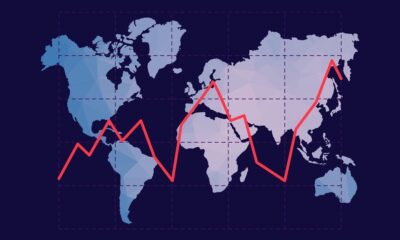




Over the six-month period from July 2025 to January 2026, the LEI fell by 1.3 per cent—an improvement from the 2.6 per cent contraction recorded in the previous six months, suggesting a slower pace of deterioration, The Conference Board said in a press release.
According to Justyna Zabinska-La Monica, senior manager, Business Cycle Indicators at The Conference Board, the January dip was primarily driven by weaker consumer expectations and a decline in building permits. However, underlying trends showed resilience, with 7 out of 10 components advancing over the November 2025-January 2026 period.
The US Leading Economic Index fell 0.1 per cent in January 2026 to 97.5, marking continued but moderating headwinds.
Its six-month decline slowed to 1.3 per cent.
Weak consumer expectations and fewer building permits weighed on the index, though most components improved.
The Coincident and Lagging Indexes rose, signalling current economic resilience, while GDP growth for 2026 is projected at 2 per cent.
Despite persistent pressures, the LEI has not triggered a recession signal since August, supported by stable six-month growth trends and a stronger diffusion index. Nonetheless, The Conference Board has revised its US GDP growth forecast for 2026 down by 0.1 percentage points to 2.0 per cent year-on-year (YoY), noting that the current data does not yet reflect potential impacts from geopolitical tensions in Iran.
Meanwhile, the Coincident Economic Index (CEI), which reflects current economic conditions, rose by 0.3 per cent in January to 115.3, following a 0.2 per cent increase in December. All four of its components—payroll employment, personal income, manufacturing and trade sales, and industrial production—improved during the month.
The Lagging Economic Index (LAG) also increased by 0.3 per cent to 120.0 in January, reversing a 0.2 per cent decline in December. Its six-month growth turned positive at 0.5 per cent for the first time since October 2025.
The LEI, which anticipates turning points in the business cycle by around seven months, continues to point towards a slowing but not contracting US economy, with mixed signals across forward-looking indicators.
Fibre2Fashion News Desk (SG)

A notable trend is the continued strengthening of North America as Thailand’s largest export destination. The region accounted for $*,***.*** million, or **.** per cent of total exports in ****, marking its third consecutive year of share expansion, according to *fashion.com/market-intelligence/texpro-textile-and-apparel/” target=”_blank”>sourcing intelligence tool TexPro. This compares with **.** per cent in **** and **.** per cent in ****, highlighting a clear shift in market orientation.
Asia-Pacific remained the second-largest market with exports valued at $***.*** million, though its share moderated to **.** per cent from **.** per cent in ****. Europe followed with $***.*** million, accounting for **.** per cent, broadly stable compared to the previous year. Smaller markets such as Central and South America, the Middle East, and Africa together contributed less than * per cent, though all registered incremental gains in value terms.
The economy grew by 5.6 per cent in Q4 2024 at constant prices.
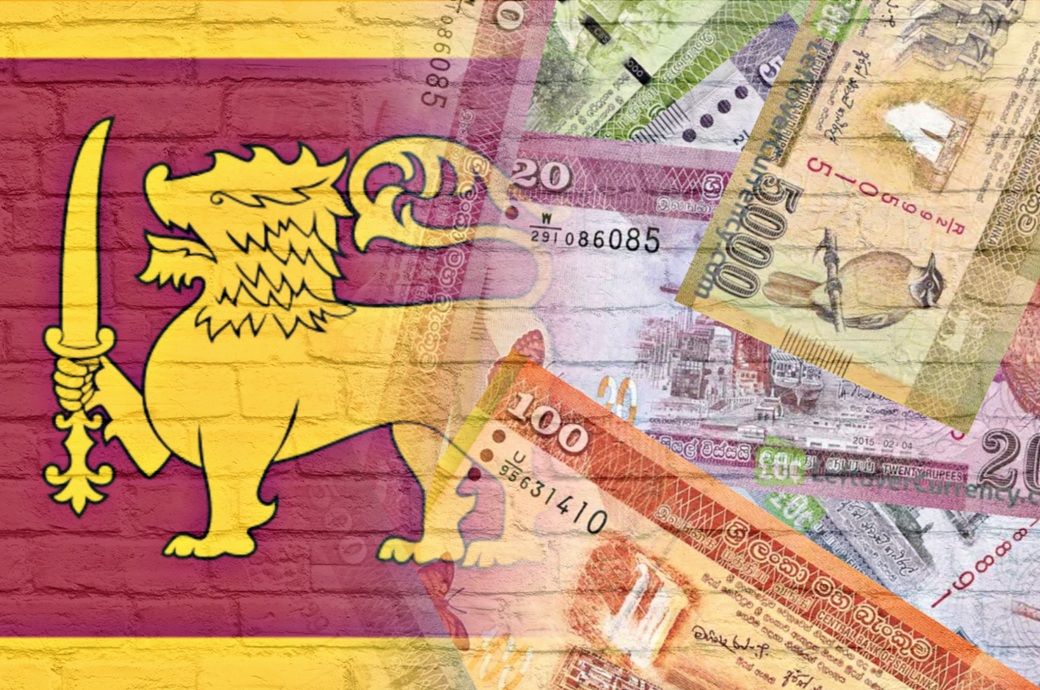
Sri Lanka’s economy grew by 4.8 per cent YoY in Q4 2025, with lower inflation and exchange rate stability leading to a full year growth of an estimated 5 per cent at constant prices, official statistics show.
The economy grew by 5.6 per cent in Q4 2024 at constant prices.
The industrial sector grew by 7.8 per cent YoY in Q4 2025 .
At current prices, the 2025 GDP grew by 8.8 per cent.
At current prices, GDP grew by 8.8 per cent last year.
“The economic climate surrounded in 2025 was favourable for a solid economic performance through few aspects; entrepreneur friendly inflation started to rise early in the third quarter of 2025 coupled with the mostly stabilize exchange rate amid continuously decreasing interest rate,” the department said in a release.
The industrial sector grew by 7.8 per cent YoY in Q4 2025.
Fibre2Fashion News Desk (DS)


FTSE 100 in 11% fall since Iran war started as stock markets tumble

US’ economic index dips 0.1% in January amid easing headwinds: TCB

What Happens When You Can’t Get a Death Certificate in Gaza

-

 Tech1 week ago
Tips and Advice for Buying Used or Refurbished Electronics
-
 Business1 week ago
UAE savings strategies 2026 explained: Best apps, tools, budget rules and smart money hacks to beat rising cost of living in emirates – The Times of India
-

 Sports1 week ago
Japan suffers shocking collapse to Venezuela in World Baseball Classic
-

 Entertainment1 week ago
Meet one of the last true paparazzi
-

 Entertainment1 week ago
Strategic oil stocks to be released ‘immediately’ in Asia and Oceania: IEA
-

 Entertainment1 week ago
Iran at war
-

 Sports1 week ago
College Basketball Invitational abruptly cancels 2026 tournament
-

 Sports1 week ago
Transfer rumors, news: Real Madrid open to Camavinga exit, as Premier League clubs circle