

Politics
US widens travel ban to more than 30 countries: official

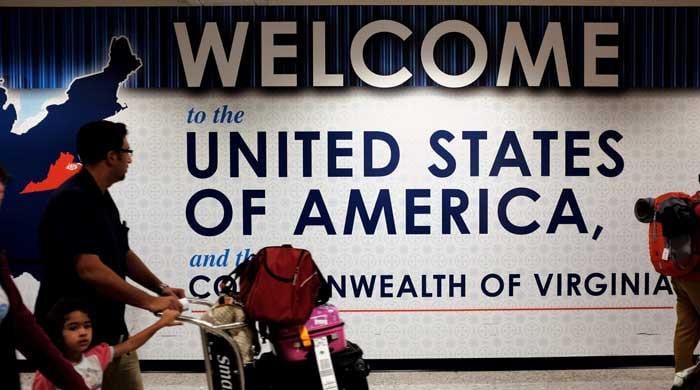
- President Trump continuing to evaluate countries: Kristi Noem.
- Homeland Security official cites unstable govts’ inability to vet.
- Expansion of list to mark further escalation of migration measures.
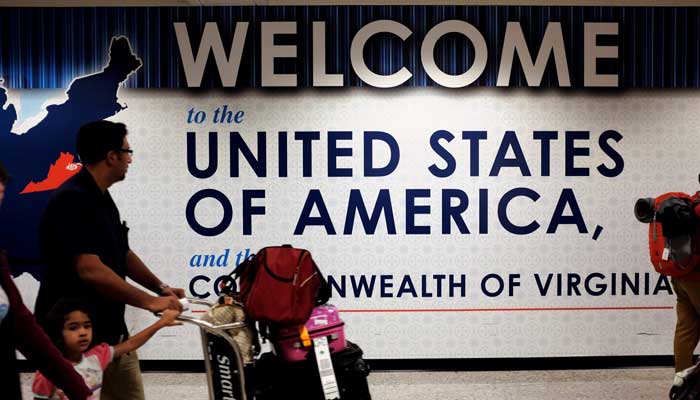
The US plans to expand the number of countries covered by its travel ban to more than 30, US Homeland Security Secretary Kristi Noem said on Thursday.
Noem, in an interview on Fox News‘ “The Ingraham Angle,” was asked to confirm whether the administration of President Donald Trump would be increasing the number of countries on the travel ban list to 32.
“I won’t be specific on the number, but it’s over 30, and the president is continuing to evaluate countries,” she said.
Trump signed a proclamation in June banning the citizens of 12 countries from entering the US and restricting those from seven others, saying it was needed to protect against “foreign terrorists” and other security threats. The bans apply to both immigrants and non-immigrants, such as tourists, students and business travellers.
Noem did not specify which countries would be added to the list.
“If they don’t have a stable government there, if they don’t have a country that can sustain itself and tell us who those individuals are and help us vet them, why should we allow people from that country to come here to the US?” said Noem.
Reuters previously reported that the Trump administration was considering banning citizens of 36 additional countries from entering the US, according to an internal State Department cable.
An expansion of the list would mark a further escalation of migration measures the administration has taken since the shooting of two National Guard members in Washington, DC, last week.
Investigators say the shooting was carried out by an Afghan national who entered the US in 2021 through a resettlement program under which Trump administration officials have argued there was insufficient vetting.
Days after the shooting, Trump vowed to “permanently pause” migration from all “Third World Countries,” although he did not identify any by name or define “third-world countries.”
Prior to that, officials from the Department of Homeland Security said Trump had ordered a widespread review of asylum cases approved under the administration of his predecessor, Democratic President Joe Biden and Green Cards issued to citizens of 19 countries.
Since returning to office in January, Trump has aggressively prioritised immigration enforcement, sending federal agents to major US cities and turning away asylum seekers at the US-Mexico border.
His administration has frequently highlighted the deportation push, but until now it has put less emphasis on efforts to reshape legal immigration.
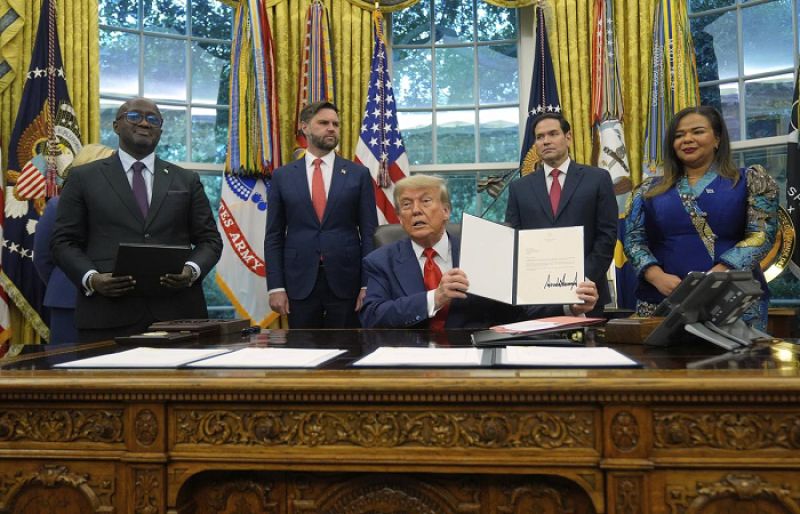

In a major diplomatic breakthrough, President Donald Trump on Thursday brokered a historic agreement between Rwanda and the Democratic Republic of Congo (DRC), effectively ending three decades of conflict between the neighboring nations.
The pact, officially named the Washington Accord, was signed at the Donald Trump Institute of Peace in Washington, where Rwandan President Paul Kagame and Congolese President Félix Tshisekedi declared that the long-standing hostilities between their countries had come to an end.
The signing followed high-level meetings at the White House, where Trump held separate and joint discussions with both leaders to finalize terms aimed at resolving tensions and fostering trust.
Under the accord, Rwanda has committed to ending support for armed groups operating inside Congo, while both nations pledged to refrain from any military action against each other.
The United States also announced plans to invest in mineral exploration and development projects across both countries, considered crucial for long-term regional stability.
“Today, the world has witnessed another major conflict resolved,” President Trump said at the ceremony. “This agreement opens the door to peace, prosperity, and opportunity for the people of Rwanda and Congo.”
Rwandan President Kagame described the deal as historic, noting that previous international efforts had failed to bridge the divide. “For 30 years, no one was able to end this conflict. Many nations tried to mediate but did not succeed,” he said. “President Donald Trump played a neutral and decisive role in helping us achieve peace. If this agreement fails, the responsibility will be ours — not his.”
Congo’s President Tshisekedi echoed the sentiment, emphasizing that the Washington Accord would bring lasting benefits to the entire Great Lakes region. “We have signed this peace agreement for the future of our people,” he said.
“I thank President Trump and his administration for their support. This accord will lead to greater stability and prosperity throughout the region.”
Leaders and senior officials from several African nations attended the ceremony and congratulated both countries on what they called a landmark step toward lasting peace.
- Putin’s visit aims to boost trade amid Western sanctions.
- India balances ties with Russia and US amid trade talks.
- Modi, Putin to discuss defence, oil, nuclear energy today.
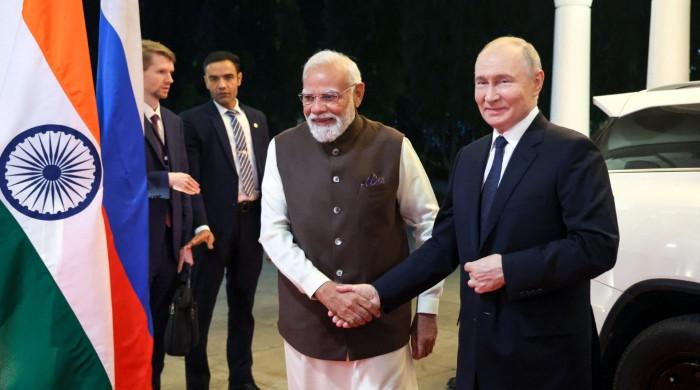
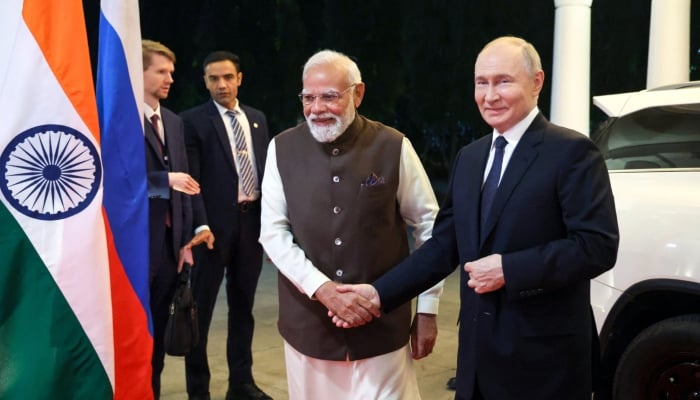
NEW DELHI: Russian President Vladimir Putin will hold summit talks with Prime Minister Narendra Modi in New Delhi on Friday, aiming to boost trade with the top buyer of Russia’s arms and seaborne oil as Western sanctions squeeze their decades-old ties.
Putin is on his first visit to India in four years at a time when New Delhi is engaged in talks with the US for a trade deal to cut punitive tariffs imposed by President Donald Trump on its goods over India’s Russian oil purchases.
Moscow has been India’s top arms supplier for decades and has said that it wants to import more Indian goods in an effort to grow trade to $100 billion by 2030 that so far has been skewed in its favour due to New Delhi’s energy imports.
Since European countries cut back their reliance on Russian energy after Russia invaded Ukraine nearly four years ago, India has ramped up its purchases of discounted Russian crude.
“India faces a conundrum; by taking steps to strengthen ties with Moscow or Washington, New Delhi risks setting back ties with the other,” Michael Kugelman, senior fellow at Washington’s Atlantic Council think tank, wrote in Foreign Policy magazine this week.
Modi and Putin are also expected to discuss other topics including labour and civil nuclear energy, with the sides expected to announce new agreements to showcase the resilience of their relations.
Hugs and handshakes
The Indian leader received Putin with a hug and handshake as he walked down the red carpet after arriving at an airport near New Delhi on Thursday for the two-day visit. Modi later hosted the Russian president for a private dinner at his residence.
A business and government delegation has accompanied Putin for the visit, including his defence minister, Andrei Belousov, who held talks with his Indian counterpart Rajnath Singh on Thursday.
Belousov “stated that the Russian defence industry is ready to support India towards becoming self-reliant in the field of defence production,” India’s defence ministry said after the talks.
Putin arrived in India a day after holding talks with Trump’s top envoys on a possible peace deal to end the war in Ukraine, but they did not reach a compromise.
India has resisted condemning Russia over the war and called for peace through dialogue and diplomacy, while saying that its ties with Moscow were being unfairly targeted by Western nations that continue to do business with Moscow when it is in their interest.
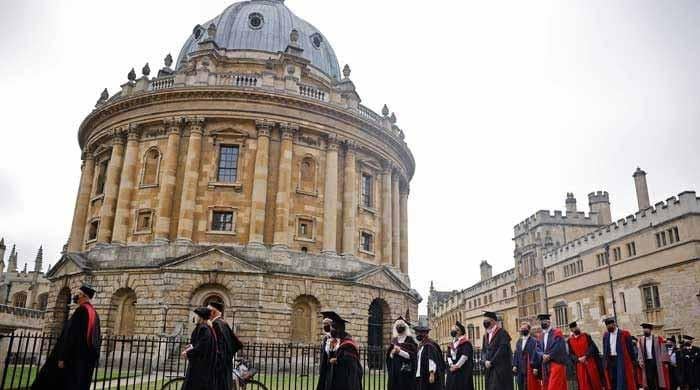
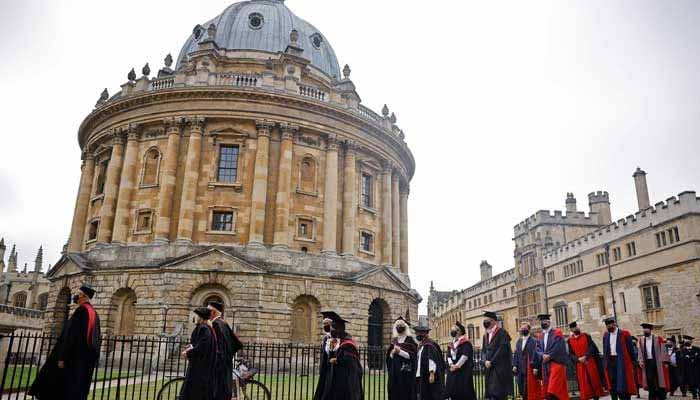
LONDON: UK universities are shutting out applicants from Pakistan and Bangladesh because of concerns over visa abuse and tougher Home Office rules, according to reports.
At least nine higher education institutions have restricted recruitment from “high risk” countries as they face increased pressure to ensure they are enrolling genuine students and not those who abuse the system.
It follows a surge of asylum claims from international students, prompting the border security minister Dame Angela Eagle to warn that the visa system “must not be used as a backdoor” to settling in Britain.
It was reported last month that Pakistan has topped the list of asylum-seeking countries, for the last year.
Among those that have made changes is the University of Chester, which suspended recruitment from Pakistan until autumn 2026, citing a “recent and unexpected rise in visa refusals.”
The University of Wolverhampton is not accepting undergraduate applicants from Pakistan and Bangladesh, while the University of East London is suspending recruitment from Pakistan, the Financial Times reported.
Other universities that have made changes include Sunderland and Coventry, which have both suspended recruitment from Pakistan and Bangladesh.
The University of Sunderland said it made “no apologies” for taking a firm approach “to protect the integrity” of the student visa system.
Earlier this year, the Home Office made changes to the three Basic Compliance Assessment (BCA) thresholds that UK institutions must meet to keep their student sponsor licence.
The overhaul is part of a wider reform of UK immigration rules intended to tackle abuse of the system and reduce net migration, which is at the lowest level in four years.
Under the changes, which came into effect in September, UK universities must ensure that no more than 5 per cent of their visa applications are rejected, reduced from 10 per cent.
The average refusal rate for Pakistan and Bangladesh student visa applications, excluding dependents, in the year to September 2025 was 18 and 22 per cent respectively — well above the new limit.
The two countries account for half of the 23,036 cases that were turned down by the Home Office in the same period.
Asylum claims from Pakistani and Bangladeshi nationals have also risen, most of whom entered Britain on a work or study visa.
Vincenzo Raimo, an international higher education consultant said the crackdown posed a “real dilemma” for lower-fee universities that rely heavily on international recruitment.
“Even small numbers of problematic cases can threaten universities’ compliance with Home Office thresholds,” he added.
Several other universities have made changes to their recruitment practices.
The University of Hertfordshire, which the Home Office has placed under an action plan that enforces stronger compliance checks, has suspended recruitment from Pakistan and Bangladesh until September 2026, blaming “long visa processing times”.
In a memo seen by the Financial Times, Glasgow Caledonian University, also subject to an action plan, told staff in July that it needed to make “temporary changes to international student intake”, warning that the “stringent” new metrics meant “doing nothing is not an option”.
It paused recruitment to a number of programmes for the September intake, but it has been reinstated for courses starting in January, a Glasgow Caledonian spokesperson said.
Oxford Brookes has paused recruitment from Pakistan and Bangladesh for undergraduate courses beginning in January 2026, citing “visa processing times”. It said it would resume application processing for September that year.
BPP University, a private institution, has temporarily paused student recruitment from Pakistan as part of a “risk mitigation” strategy, it said.
Over the summer, London Metropolitan University confirmed it had stopped recruiting from Bangladesh, adding that the country accounted for 60 per cent of its visa refusals.
Maryem Abbas, founder of Edvance Advisors, a Lahore-based education agency that helps Pakistanis study abroad, said these decisions were “heartbreaking” for genuine students left stranded when their applications were withdrawn at the final stage.
She accused UK universities of helping to create the very incentives that produce spurious applications and urged them to better scrutinise the overseas agencies they use to source enrolments.
“Hundreds of agencies in Pakistan honestly don’t really care about where the student goes,” she added, saying that her sector has become a “moneymaking business”.
According to official estimates published in May, 22 higher education institutions would fail at least one of the tightened BCA criteria.
While 17 of the institutions at risk could improve their compliance enough to keep sponsoring students, five would lose sponsorship rights for at least a year — cutting an estimated 12,000 international students.
Jamie Arrowsmith, director at Universities UK International, said some institutions would need to diversify their intakes and enhance their application processes and deposit policies to comply with the new rules.
While stricter rules “may be challenging” for many universities, they are necessary to maintain public confidence in the system, he added.
The Home Office said it “strongly values” international students.
“That’s why we’re tightening the rules to ensure those coming here are genuine students and education providers take their responsibilities seriously,” it added.

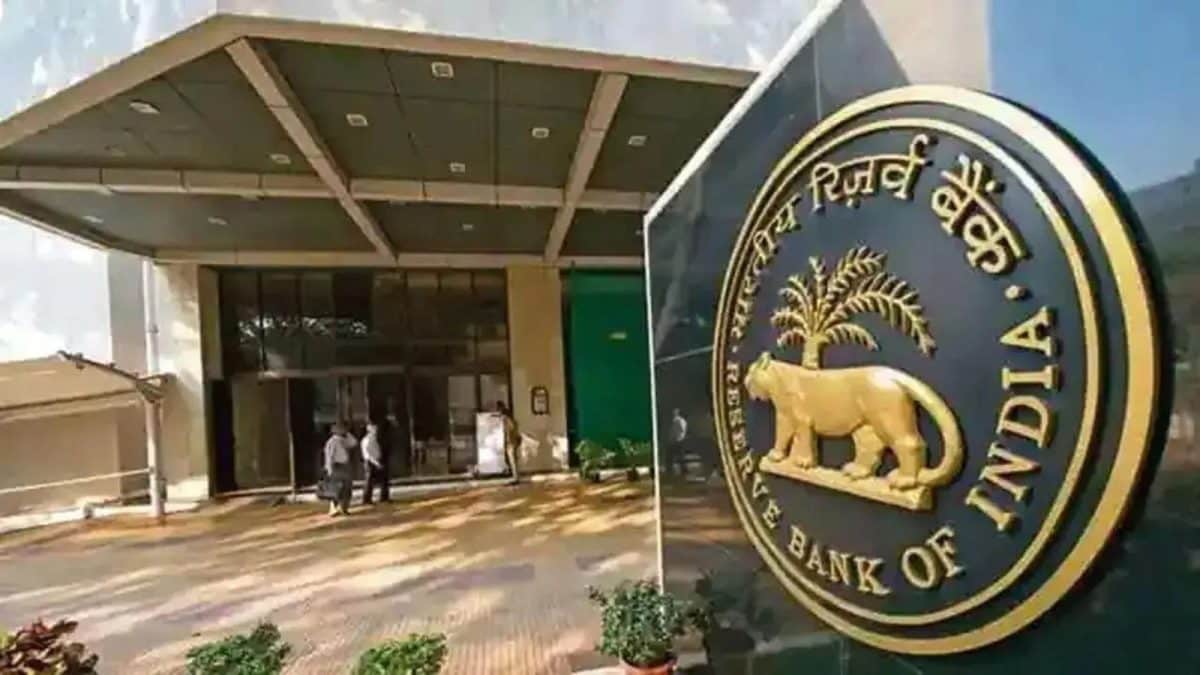
RBI MPC Meeting 2025 Live Updates: RBI Cuts Repo Rate By 25 Bps, To Conduct OMO Purchases Of Govt Securities Of Rs 1 Lakh Crore
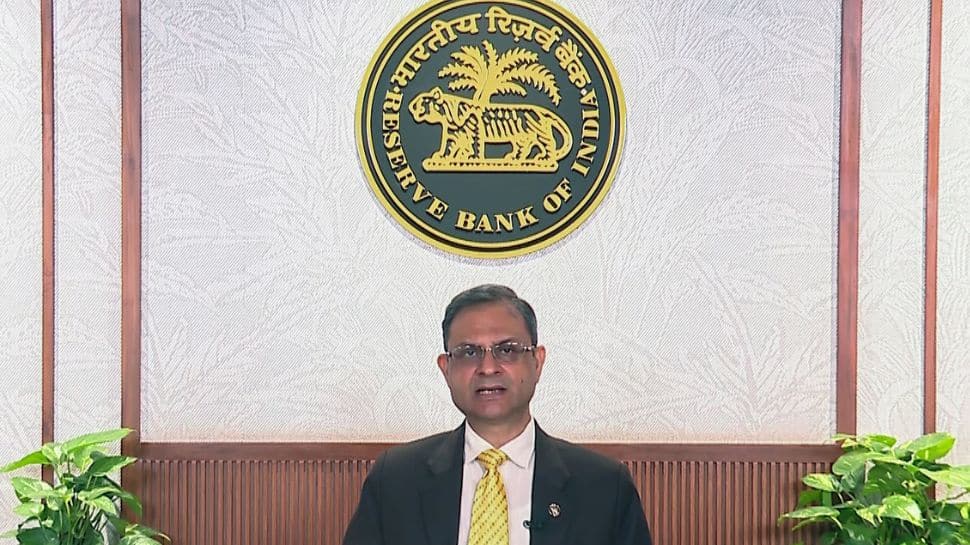
RBI MPC Meeting 2025: Repo Rate Cut By 25 bps, Now At 5.25%

Trump mediates landmark peace deal, Rwanda and Congo end 30-year conflict

-

 Tech5 days ago
Get Your Steps In From Your Home Office With This Walking Pad—On Sale This Week
-

 Entertainment4 days ago
Sadie Sink talks about the future of Max in ‘Stranger Things’
-

 Fashion4 days ago
Results are in: US Black Friday store visits down, e-visits up, apparel shines
-

 Sports4 days ago
India Triumphs Over South Africa in First ODI Thanks to Kohli’s Heroics – SUCH TV
-

 Tech4 days ago
Prague’s City Center Sparkles, Buzzes, and Burns at the Signal Festival
-

 Politics4 days ago
Elon Musk reveals partner’s half-Indian roots, son’s middle name ‘Sekhar’
-

 Sports4 days ago
Broncos secure thrilling OT victory over Commanders behind clutch performances
-
 Business4 days ago
Key Financial Deadlines That Have Been Extended For December 2025; Know The Last Date