

Business
Value is the key to McDonald’s growth plans, but it’s creating tensions with some franchisees


The restaurant sector has spent the past 18 months trying to figure out how to reach consumers in a hypercompetitive and uneven economy. McDonald’s has doubled down on value messaging to customers via Extra Value Meals and Snack Wraps, which boosted its sales in the fourth quarter.
On Wednesday the company reported better-than-expected sales and delivered beats on the top and bottom lines, driven by buzzy promotions and value offerings.
“By listening to customers and taking action, we have improved traffic and strengthened our value & affordability scores,” CEO Chris Kempczinski said in a statement.
But the focus on value has caused frustrations at times among parts of the chain’s operator base.
The company rolled out new franchise standards for McDonald’s operators on Jan. 1, including assessing locations on how their prices deliver value. McDonald’s said its owners are still able to set their own prices, but the standards nonetheless shape and define how franchisees — which operate 95% of McDonald’s restaurants — run their stores.
A cohort of operators is standing ground in their ability to continue to independently set prices.
The National Owners Association, an independent franchisee advocate group, adopted a Franchisee Bill of Rights in August and circulated it in an email to members last month as the standards took effect, according to a copy of the message viewed by CNBC.
The last of the bill’s rights is the “right to set prices without fear of recourse,” which says, “Franchisees, as independent Owner/Operators, have the right to set menu prices for their restaurants based on their own business judgment and market conditions. This right exists irrespective of the pricing decisions of any national, regional, or local co-op or franchisor initiative. Franchisees must be free to manage their pricing strategy without fear of intimidation, or diminished support from McDonald’s or its affiliated entities.”
It also lists the “right to renewal and transfer,” giving owners the “absolute right to a fair and reasonable opportunity to renew franchise agreements … subject only to objective, clearly stated standards of approval.”
In December, McDonald’s told operators it would begin value assessments as part of its updates to franchising standards. Continued noncompliance could result in penalties or even termination.
At the time, the company said its new standards would provide “greater clarity … to ensure every restaurant delivers consistent, reliable value across the full customer experience,” according to a memo reviewed by CNBC.
In a statement, McDonald’s told CNBC that the business model creates the opportunity for entrepreneurs to be in business “for themselves, but never by themselves,” adding, “As franchisor, we have a responsibility to protect the strength and integrity of the brand and ensure every Owner/Operator upholds the standards that make McDonald’s so successful, for the benefit of all. This includes showing up for customers with great value – a core expectation the majority of our franchisees understand and proudly deliver.”
Some operators bristled at the changes in recent Wall Street research. In a two-part survey of 20 McDonald’s operators released last month, Kalinowski Equity Research wrote that it asked franchisee contacts if they were in favor of the changes to national franchising standards. For context, McDonald’s said it has some 2,000 owner/operators in the U.S. franchise system.
“As it turns out, every single one of the franchisees who responded to this question said ‘No.’ This is the first time in the 20+ year history of our McDonald’s Franchisee Survey that all respondents to a Yes-or-No question have all provided the exact same answer,” Kalinowski wrote.
Kalinowski also had operators quantify their relationship with McDonald’s corporate arm on a scale of 1 to 5, with 1 being poor and 5 being excellent. The average response received was 1.37, a “pretty noticeable step down from the October 2025 average response of 1.71,” the survey said.
It’s not the first time some operators and McDonald’s have butted heads. Tensions have surfaced in recent years over a restaurant grading system that took effect and changes made to how restaurant agreements are renewed.
Still, McDonald’s stock was one of the better performers in an abysmal year for the restaurant sector in 2025, rising 5%.
Kalinowski’s respondents also rated their business outlook for the next six months on a scale of 1 to 5, with 1 being poor and 5, excellent. The average response was 2.58, the best in the 11 quarters. Last quarter, CEO Chris Kempczinski said full-year cash flow was set to be solid for operators at the same time value investments were being made.
“Throughout the quarter, McDonald’s seems to be doing a better general job of promoting value to quick-service consumers, or at least it’s doing so notably better than some other large, quick-service burger concepts are,” Kalinowski wrote.
Likewise, fellow firm BTIG recently upgraded the stock.
“We expect the change in value strategy and perception to lead to the most meaningful earnings growth for the company since 2023,” BTIG wrote.





Trump wrote: “Tuesday will be Power Plant Day, and Bridge Day, all wrapped up in one, in Iran. There will be nothing like it!!! Open the Fuckin’ Strait, you crazy bastards, or you’ll be living in Hell – JUST WATCH! Praise be to Allah. President DONALD J. TRUMP”.

Families on some benefits with three or more children will get an average rise of £4,100 a year.
Source link
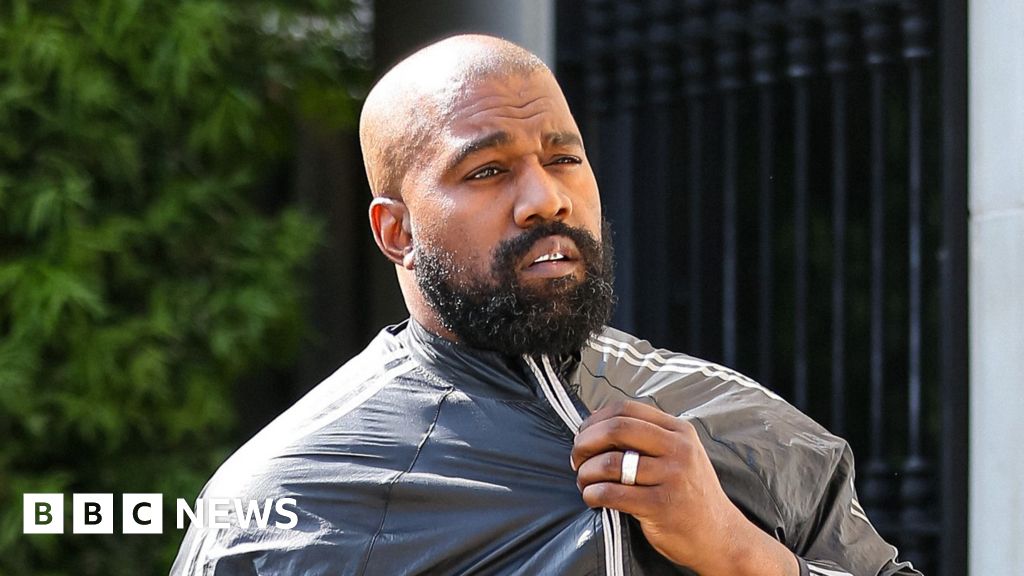
Sir Keir Starmer says it is “deeply concerning” the rapper is set to headline a festival after recent antisemitic comments.
Source link


Inside the origin story of ‘One Shining Moment’ — the highlight of March Madness
Oil back above $110 after expletive-laden Trump threat to Iran

Duke star Cam Boozer says he suffered fractures around eye

-

 Sports1 week ago
USMNT handed reality check by Doku, Belgium ahead of World Cup
-

 Sports1 week ago
2026 NCAA men’s hockey tournament: Schedule, results
-

 Fashion1 week ago
EU apparel imports slump 15.48% YoY in Jan; Bangladesh hardest hit
-
Uncategorized3 days ago
[CinePlex360] Please moderate: “Trump signals p
-

 Tech2 days ago
Our Favorite iPad Is $50 Off
-
Uncategorized7 days ago
[CinePlex360] Please moderate: “Further tariff
-

 Entertainment1 week ago
The Avett Brothers’ bassist explains why he wrote a book about John Quincy Adams
-

 Sports1 week ago
Man City show why they are worthy WSL title winners as tired United wilt