

Politics
Venezuela’s Machado ‘will not receive Nobel Peace Prize in person’

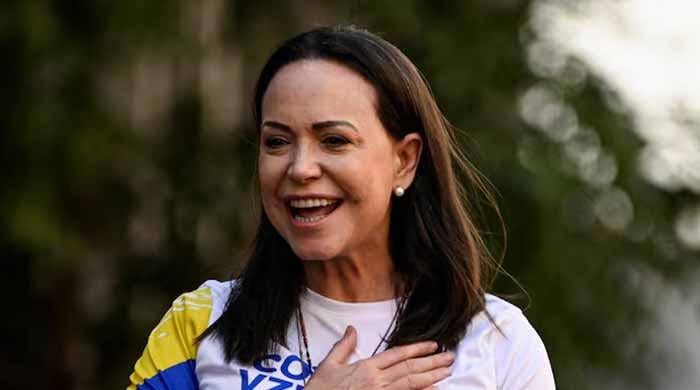
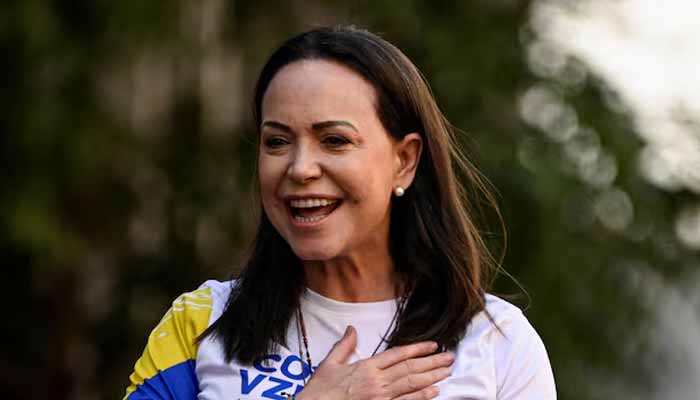
- Opposition leader Maria Corina Machado named winner in October.
- Machado dedicated honour in part to US President Donald Trump.
- Maduro says Trump aims to oust him to seize Venezuela’s oil.
Venezuelan opposition leader Maria Corina Machado will not receive the Nobel Peace Prize in person at Wednesday’s award ceremony in Oslo, the director of the Norwegian Nobel Institute said on Wednesday, with her current whereabouts unknown.
Machado, 58, was due to receive the award at a ceremony at Oslo City Hall in the presence of King Harald, Queen Sonja and Latin American leaders, including Argentine President Javier Milei and Ecuadorean President Daniel Noboa.
The ceremony starts at 1 pm (1200 GMT).
Machado was due to receive the award in defiance of a decade-long travel ban imposed by authorities in her home country and after spending more than a year in hiding.
“She is unfortunately not in Norway and will not stand on stage at Oslo City Hall at 1 pm when the ceremony starts,” Kristian Berg Harpviken, the director of the institute and the permanent secretary of the award body, told broadcaster NRK.
Asked where she was, Harpviken said: “I don’t know.”
Dedicated to Trump
The ceremony will still go ahead. When a laureate is unable to attend, a close family member usually steps in to receive the prize and deliver the Nobel lecture in place of the laureate.
In this case, it will be Machado’s daughter, Ana Corina Sosa Machado, Harpviken said.
When she won the prize in October, Machado dedicated it in part to US President Donald Trump, who has said he himself deserved the honour.
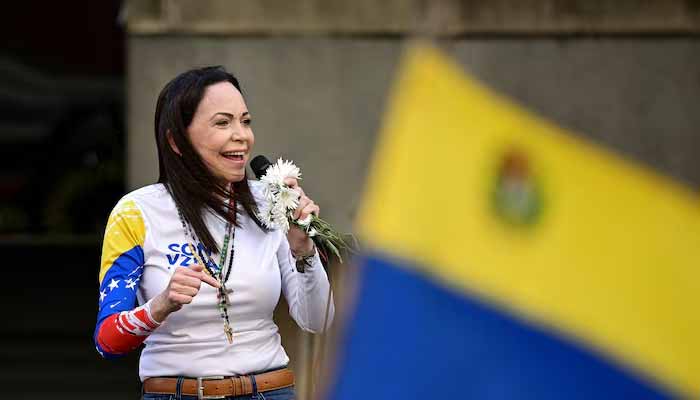
President Nicolas Maduro, in power since 2013, says Trump is trying to overthrow him to gain access to Venezuela’s vast oil reserves and that Venezuelan citizens and armed forces will resist any such attempt.
The Nobel Institute did not immediately reply to a request for further comment.
US military strikes
Machado has aligned herself with hawks close to Trump who argue that Maduro has links to criminal gangs that pose a direct threat to US national security, despite doubts raised by the US intelligence community.
The Trump administration has ordered more than 20 military strikes in recent months against alleged drug-trafficking vessels in the Caribbean and off Latin America’s Pacific coast.
Human rights groups, some Democrats and several Latin American countries have condemned the attacks as unlawful extrajudicial killings of civilians.
Venezuela’s armed forces are planning to mount a guerrilla-style resistance or sow chaos in the event of a US air or ground attack, according to sources with knowledge of the efforts and planning documents seen by Reuters.
In 2024, Machado was barred from running in the presidential election despite having won the opposition’s primary by a landslide. She went into hiding in August 2024 after authorities expanded arrests of opposition figures following the disputed vote.
The electoral authority and top court declared Maduro the winner, but international observers and the opposition say their candidate handily won, and the opposition has published ballot box-level tallies as evidence of its victory.
Christopher Sabatini, a senior fellow for Latin America at Chatham House, said the Nobel prize had given “a strong signal of international validation … (of) the democratic results that had been forgotten”.
He told Reuters it had also elevated Machado to “a person that … the international community and the world can hang their hopes on,” he said.
“Oftentimes, democratic movements need a face. They need a story.”
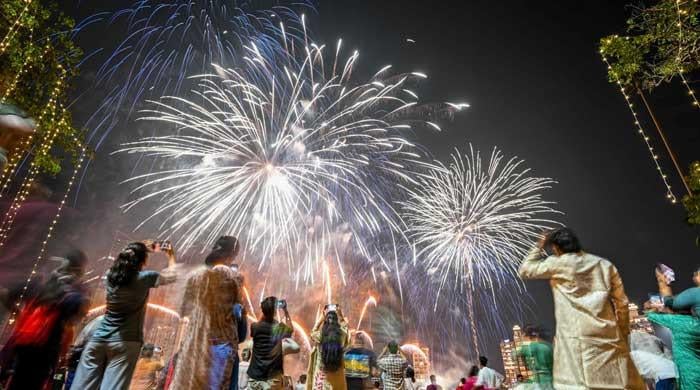
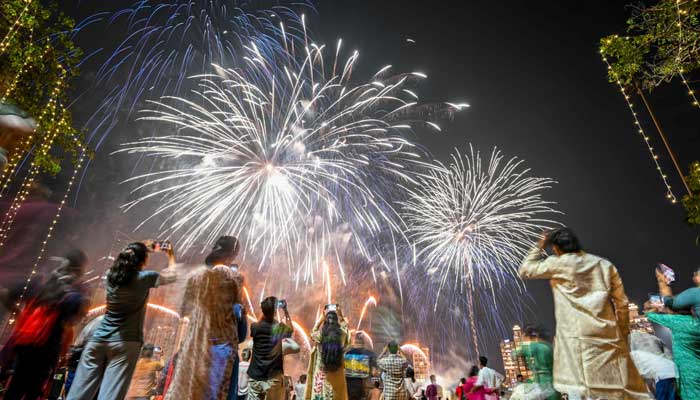
NEW DELHI: India’s festival of lights, Diwali, was on Wednesday announced as an addition to United Nations Educational, Scientific and Cultural Organisation’s (Unesco) intangible cultural heritage list, sparking celebrations.
The UN cultural agency, meeting in the Indian capital New Delhi from Tuesday to Thursday, is examining dozens of nominations from as many as 78 countries.
The new announcements will join Uesco’s list of cultural heritage, whose purpose is to “raise awareness of the diversity of these traditions” and protect them in future.
Indian Prime Minister Narendra Modi welcomed the announcement, saying the festival was “very closely linked to our culture and ethos”.
“It is the soul of our civilisation. It personifies illumination and righteousness,” he said in a statement on social media, adding the move “will contribute to the festival’s global popularity even further”.
The Delhi government is organising several events, including special illumination of buildings and decoration across major roads, along with a massive lamp-lighting ceremony.
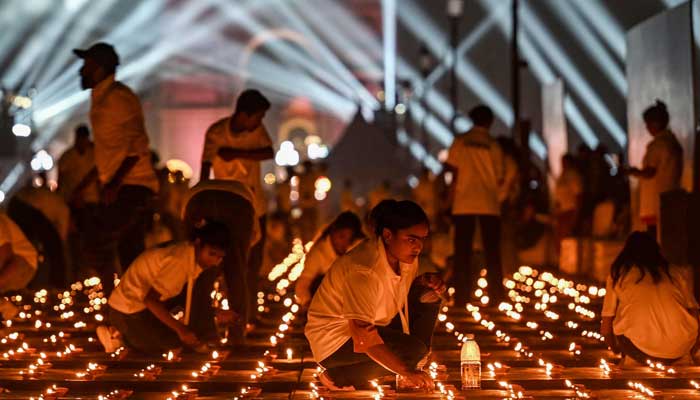
As one of Hinduism’s most significant festivals, millions of Indians celebrate Diwali, also known as Deepavali, not just in India but globally.
Many people, including those from the Sikh and Jain religious communities, observe it as a five-day festival which symbolises the triumph of good over evil.
Celebrations, which happen on the new moon day in either late October or November, usually see lighting of lamps and bursting of firecrackers.
In much of north India, Diwali marks the return of Hindu Lord Rama to Ayodhya after defeating the demon king Ravana.
The festival is also strongly associated with worship of Lakshmi, the goddess of wealth and prosperity.
India’s foreign ministry said Diwali’s addition to the UNESCO list was a “joyous moment” for the country.
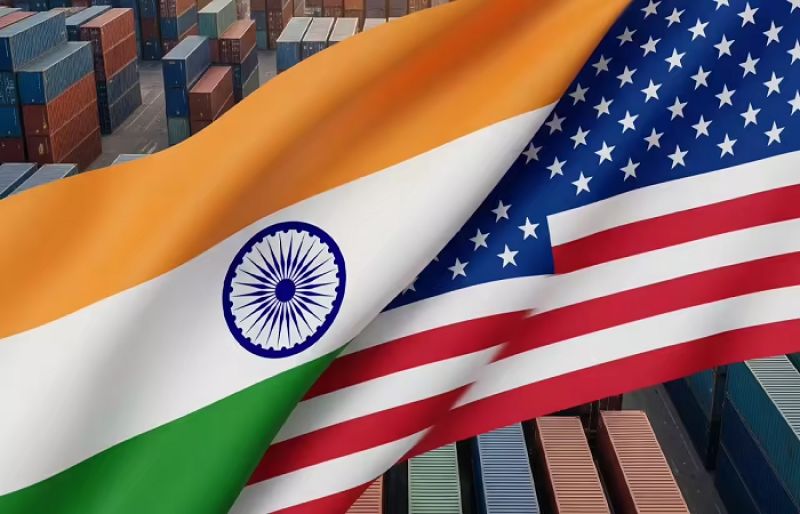

US and Indian trade negotiators opened two days of discussions on Wednesday as both sides seek progress toward a long-delayed agreement, despite heightened geopolitical strains following Washington’s imposition of steep tariffs on New Delhi over its purchases of Russian oil.
The United States introduced 50% duties on most Indian goods in August, arguing that India’s import of discounted Russian crude was helping fund Moscow’s war in Ukraine.
Deputy US Trade Representative Rick Switzer’s visit comes just a week after Indian Prime Minister Narendra Modi hosted Russian President Vladimir Putin in New Delhi. India’s foreign ministry, however, described Switzer’s trip as “familiarisation meetings.”
India was among the early countries to begin trade negotiations after former US President Donald Trump rolled out sweeping global tariffs, but it remains one of the few major economies yet to reach a deal—raising risks for jobs, exports and overall economic growth.
What’s at stake
India, the world’s fastest-growing major economy, recorded a $45.8 billion goods trade deficit with the United States in 2024.
Although key export sectors like smartphones and generic pharmaceuticals are exempt from US tariffs, labour-intensive industries—including textiles, seafood, and gems & jewellery—are facing severe pressure.
Exports to the US plunged nearly 12% year-on-year in October, with some categories seeing declines of 37–60% between May and September, according to the Global Trade Research Initiative (GTRI).
The fallout is rippling through financial markets as well: foreign investors have pulled out over $16 billion from Indian equities this year, contributing to the rupee sliding past 90 per dollar to a record low.
The International Monetary Fund has also trimmed India’s 2026–27 growth forecast from 6.4% to 6.2%, assuming the US tariffs remain in place.
GTRI estimates that India’s total exports could fall to $49.6 billion this fiscal year from $86.5 billion last year, potentially shaving up to 80 basis points off GDP growth.
The role of Russian oil
India enthusiastically bought discounted Russian crude after the 2022 invasion of Ukraine as Moscow was hammered with severe sanctions including on its sale of oil.
But Trump’s decision to link trade policy to geopolitics upended US-India relations in August, with roughly half of the tariff burden stemming from Washington’s attempt to penalise those purchases.
The US president has repeatedly claimed India either plans to stop, or has already mostly stopped, buying Russian oil — a claim New Delhi has neither confirmed nor denied.
But when in the Indian capital, Putin offered to “continue uninterrupted shipments of fuel”. Modi did not comment directly on oil flows.
However, top buyer Reliance Industries said in November it stopped importing Russian oil for its export-focused refinery, while smaller refiners like HPCL-Mittal Energy have said they have stopped entirely.
Analysts at trade intelligence platform Kpler expect a “notable dip” in India’s December–January imports.
Whether that decline will sway Washington is unclear.
Other issues
Talks also stalled over agriculture, with India resisting pressure to cut tariffs on staples like rice and wheat — wary of angering its farmers, a politically powerful constituency.
A senior Indian commerce ministry official told AFP that these issues are “largely resolved”, although Trump on Monday also criticised the country for “dumping” rice into the United States.
Negotiating a trade pact is complicated by the need to address Trump’s so-called reciprocal tariffs, though both tracks are linked, officials say.
“These are two separate, parallel negotiations that are going on, but one will feed into another,” Commerce Secretary Rajesh Agrawal told an industry event last week.
Is a breakthrough likely?
Relations have improved since August, with several smaller deals advancing.
That includes US approval in November for two arms sales worth nearly $93 million, and New Delhi’s “significant” deal for the United States to supply nearly 10 percent of its liquefied petroleum gas (LPG) imports.
Energy commitments have anchored past US trade deals, and experts say the LPG contract may help convince Washington that India is reducing its reliance on Russia.
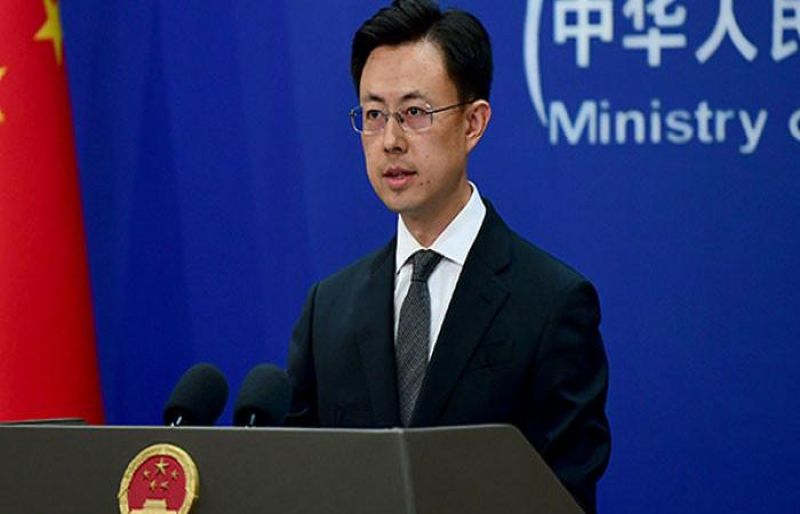

A Chinese Foreign Ministry spokesperson on Tuesday urged Pakistan and Afghanistan to resolve their differences through dialogue and consultation, promote de-escalation, and work together to maintain regional peace and stability.
Responding to a question about the Dec. 5 exchange of fire between Afghan and Pakistani forces, Guo Jiakun emphasized that both countries are long-standing friendly neighbors of China and cannot separate from each other.
China is willing to work with the international community to continue playing a constructive role in improving and developing relations between Pakistan and Afghanistan, Guo said.

Sensex, Nifty Slip Ahead Of US Fed Decision; Sensex Falls 275 Points

Fibre, fabric demand lifts Malaysia’s textile imports in Jan-Aug 2025

CVC plans sale of Japan’s FineToday after scrapped IPO, sources say

-
 Business1 week ago
Credit Card Spends Ease In October As Point‑Of‑Sale Transactions Grow 22%
-

 Tech1 week ago
How to build a data dream team | Computer Weekly
-
 Tech1 week ago
I Test Amazon Devices for a Living. Here’s What to Buy This Cyber Monday Weekend
-

 Tech1 week ago
The 171 Very Best Cyber Monday Deals on Gear We Loved Testing
-
 Business1 week ago
IndiGo Receives Rs 117.52 Crore Penalty Over Input Tax Credit Denial
-

 Fashion1 week ago
Eastpak appoints Marie Gras as vice president, global brand
-
 Business1 week ago
Gold And Silver Prices Today, December 2: Check 24 & 22 Carat Rates In Delhi, Mumbai And Other Cities
-
 Fashion1 week ago
North India cotton yarn prices steady on average demand