

Fashion
Vietnam manufacturing grows in March as inflation pressures rise

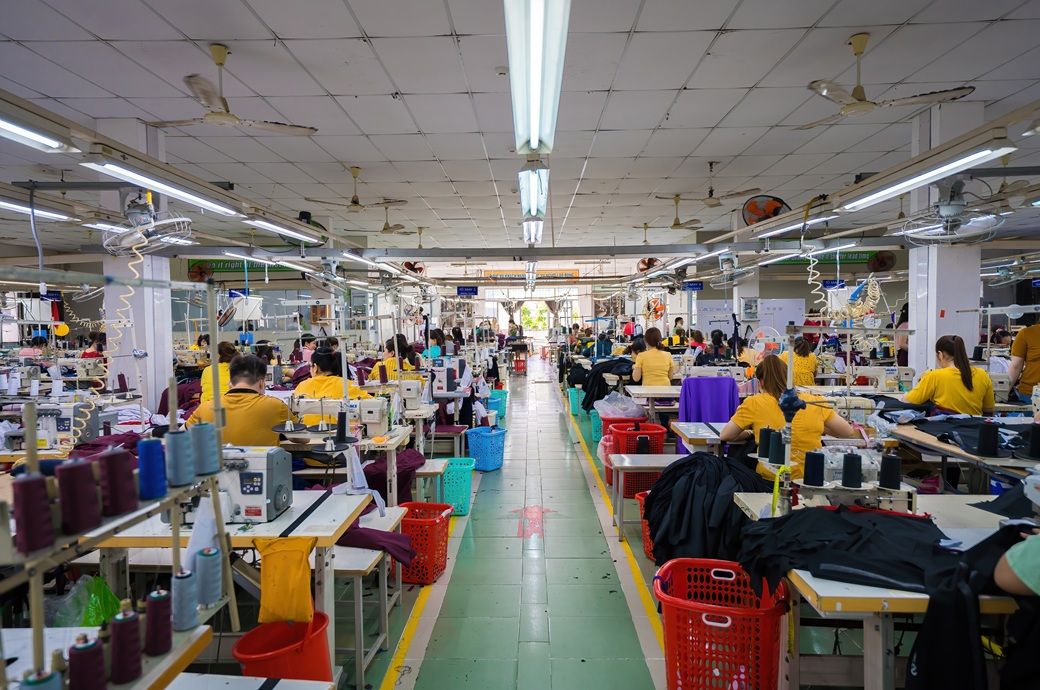
A key feature of the month was a sharp surge in inflation. Rising oil prices pushed up freight and transportation costs, leading to the fastest increase in input costs since April 2022. In response, manufacturers raised selling prices at the steepest pace in nearly 15 years, S&P Global said in a press release.
The surge in prices began to weigh on demand. While total new orders continued to rise, growth slowed significantly, partly supported by advance purchasing by clients seeking to avoid further price increases. Export orders, however, declined markedly after stabilising in February.
Vietnam’s manufacturing sector expanded for a ninth month in March 2026, with PMI at 51.2, though growth slowed amid surging inflation.
Rising oil prices drove input costs to a two-year high, prompting the steepest rise in selling prices in nearly 15 years.
Demand weakened, exports declined, and firms cut hiring.
Supply delays worsened, while business confidence fell to a six-month low.
Production growth also moderated, recording its weakest expansion since June 2025, even as output continued to rise for the eleventh consecutive month. Firms responded to rising costs and softer demand by cutting back on purchasing activity, ending an eight-month expansion phase, and reducing employment for the first time in six months.
Supply chain pressures intensified, with suppliers’ delivery times lengthening to the greatest extent in four years, largely due to higher fuel costs and transportation delays. Backlogs of work increased slightly as firms struggled with labour shortages and material constraints.
Andrew Harker, economics director at S&P Global Market Intelligence, said: “Given the country’s reliance on oil imported from the affected region, the impact on prices and supply chains would have been expected to some extent. The rate at which input cost inflation accelerated though, and the subsequent increase in selling prices shows the immediate and marked effects that firms are experiencing.”
“Output and new orders remained in expansion territory in March, but rates of increase were well down on February and at least some of the growth seen was due to customers placing advanced orders to try to get ahead of price rises. The near-term outlook therefore appears bleak, unless a speedy resolution to the war and the disruption through the Strait of Hormuz can be achieved,” added Harker.
Business confidence fell to a six-month low amid concerns over inflation, supply disruptions and weakening global demand, although firms continued to expect output growth over the coming year, supported by underlying demand trends.
Fibre2Fashion News Desk (SG)













The expansion builds on a steady upward trend, with exports at $**.*** billion in **** and $**.*** billion in ****, indicating consistent, if moderate, growth despite global demand volatility, according to *fashion.com/market-intelligence/texpro-textile-and-apparel/” target=”_blank”>sourcing intelligence tool TexPro.
Spain remained the largest export destination, importing apparel worth $*.*** billion and accounting for **.** per cent of total shipments in the last year. The United States followed at $*.*** billion (**.** per cent), while France ($*.*** billion, **.** per cent), Germany ($*.*** billion, *.** per cent), and Italy ($***.** million, *.** per cent) completed the top five. Collectively, these five markets absorbed nearly ** per cent of Africa’s total apparel exports, as per *fashion.com/market-intelligence/texpro-textile-and-apparel/” target=”_blank”>TexPro.
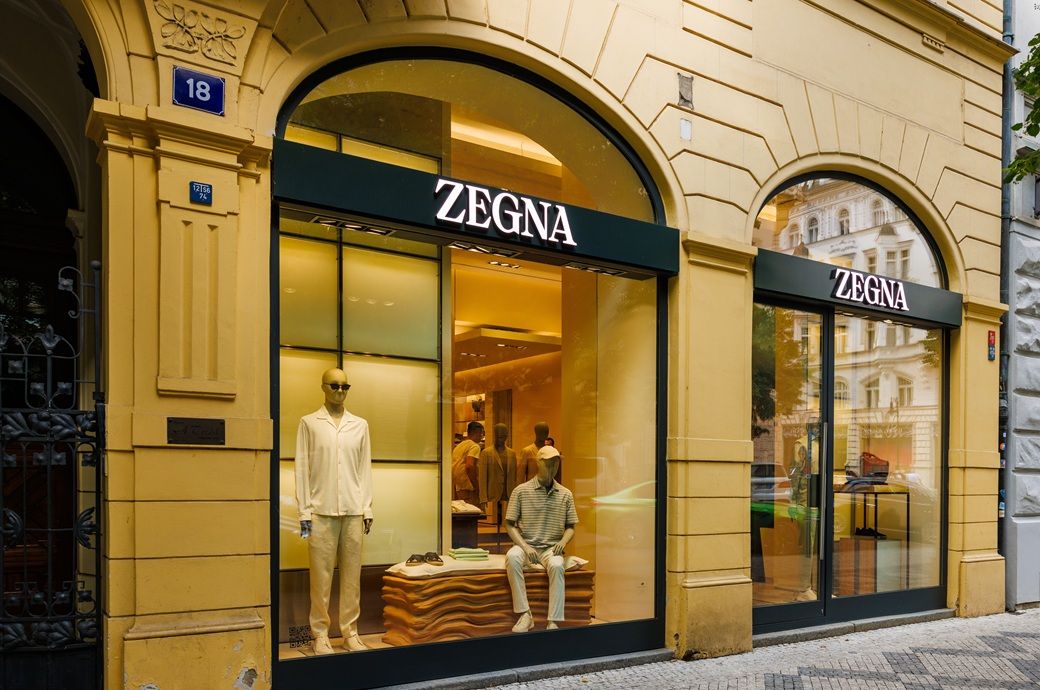
The gross profit remained broadly stable at €1.2940 billion versus €1.2966 billion a year earlier, but the gross profit margin improved by 90 basis points to 67.5 per cent from 66.6 per cent. This was mainly supported by a more favourable channel mix, with direct-to-consumer sales rising to 82 per cent of total branded product revenues in FY25, compared to 78 per cent in FY24.
Ermenegildo Zegna Group reported a 20 per cent YoY rise in FY25 profit to €109.5 million (~$125.9 million), despite a 1.5 per cent dip in revenue to €1.9169 billion (~$2.204 billion).
Organic growth stood at 1.1 per cent.
Margins improved on a stronger DTC mix, while operating profit declined.
Zegna remained resilient, but Thom Browne lagged.
The operating profit, however, declined to €139.5 million from €166.9 million, reflecting higher overheads, continued investments in retail, personnel and IT, as well as negative operating leverage, especially at Thom Browne, the Zegna group said in a press release.
Adjusted EBIT stood at €163 million in FY25, down from €184 million in FY24. Excluding a €10 million provision for expected losses on trade receivables related to Saks Global following its Chapter 11 filing, adjusted EBIT would have been €173 million.
The adjusted EBIT margin narrowed to 8.5 per cent from 9.5 per cent a year earlier. Selling, general and administrative expenses rose to €1.0339 billion, or 53.9 per cent of revenues, from €1.0083 billion, or 51.8 per cent, in FY24. Marketing expenses were broadly flat at €120.7 million.
Ermenegildo Gildo Zegna, executive chairman of the group, said: “In 2025 our Group delivered solid revenue and net profit growth despite a continued challenging environment for the sector. Group revenues reached €1.9 billion, +1.1 per cent organic, which translated to a Profit of €109 million, up 20 per cent compared to last year. We also closed the year with a cash surplus of €52 million, further strengthening our Group’s financial flexibility.”
“Looking ahead, recent developments in the Middle East have introduced additional uncertainty across the sector. In this more complex environment, our priorities remain clear: disciplined growth, strong cash generation, and rigorous execution to deliver on our targets. While we remain vigilant to potential risks, our ambitions are unchanged—and so is our determination to deliver on them, together,” added Zegna.
Zegna segment, which includes the Zegna brand, textile and other, generated revenues of €1.3632 billion, up 1.1 per cent YoY and 3.7 per cent on an organic basis. Its adjusted EBIT rose 4.9 per cent to €196.7 million, with margin improving to 14.4 per cent from 13.9 per cent, helped by a favourable channel mix, steady revenue growth and cost control. At the brand level, Zegna revenues increased 1.5 per cent to €1.1816 billion, or 4.7 per cent organically.
Performance was weaker at Thom Browne, where revenues fell 14.6 per cent to €268.9 million, or 12.1 per cent on an organic basis, as the brand continued to streamline its wholesale channel. Adjusted EBIT plunged to just €952 thousand from €27.3 million in FY24, while the adjusted EBIT margin dropped sharply to 0.4 per cent from 8.7 per cent. The group said the decline was driven by a 40 per cent fall in wholesale revenues and investments linked to selected store openings as it shifts further towards direct retail control.
Tom Ford Fashion posted a modest 0.8 per cent rise in revenues to €317.1 million, with organic growth of 3.1 per cent. However, the business remained loss-making at the adjusted EBIT level, reporting a negative €15.5 million compared to a negative €10.1 million in FY24. The weaker profitability reflected ongoing investments in personnel, IT systems and the direct-to-consumer network to support the brand’s development.
Capital expenditure declined to €102.9 million from €125.5 million, with around 60 per cent directed towards the store network, alongside spending on a new footwear production plant in Parma and IT projects. The group ended 2025 with a cash surplus of €52.1 million, compared to net financial indebtedness of €94.2 million a year earlier.
Looking ahead, the group said geopolitical tensions, particularly recent developments in the Middle East, have reduced visibility on luxury demand in 2026. Even so, management said it remains focused on delivering its 2027 targets, while closely monitoring risks linked to the duration of the conflict and its potential impact on global growth and consumer spending.
Fibre2Fashion News Desk (SG)
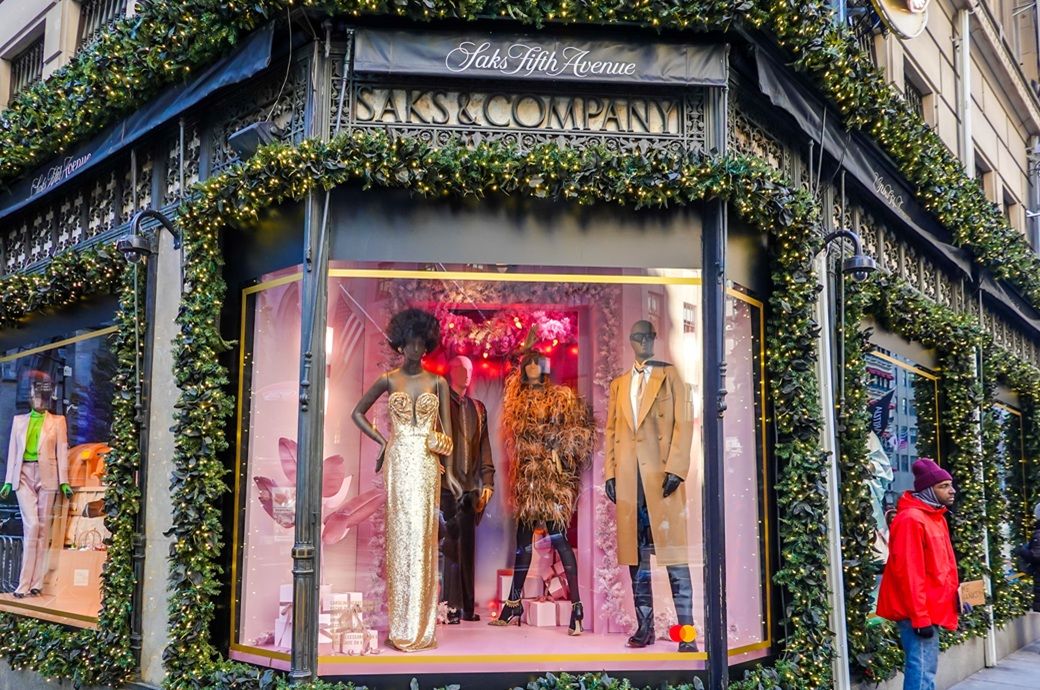
The company’s business plan, centred on growth and profitability supported by a strong liquidity position, will form part of its reorganisation strategy. Saks Global expects to file this plan with the US Bankruptcy Court for the Southern District of Texas in the coming weeks, Saks Global said in a press release.
Saks Global has secured an additional $300 million, completing its $1.75 billion pre-emergence financing to support operations and transformation.
The company is strengthening liquidity, improving inventory flow, and optimising stores and supply chains.
Nearly 600 brands have resumed shipments, boosting receipts.
Its reorganisation plan will be filed soon, as it focuses on long-term profitable growth.
“We have made significant progress over the past two months as we work to position Saks Global for the future, quickly stabilising our business, improving inventory flow and investing in our transformation,” said Geoffroy van Raemdonck, CEO of Saks Global. “With continued strong support from our capital partners, we are laying the path to realise the combined full potential of our three banners, achieve double-digit adjusted EBITDA margin and drive profitable and sustainable growth. As we continue to secure a bright future for Saks Global, guided by our relentless devotion to the luxury customer, we are focused on delivering an expertly curated assortment and personalised service across Saks Fifth Avenue, Neiman Marcus and Bergdorf Goodman.”
Since mid-January, the company has undertaken several strategic initiatives to strengthen its operations. These include rebuilding brand partner relationships, which has led to the resumption of shipments by nearly 600 brands and unlocked $1.4 billion in retail receipts. As a result, merchandise receipts have risen by nearly 60 per cent month-to-date in March compared to the same period last year.
Saks Global has also progressed with optimising its Saks Fifth Avenue and Neiman Marcus store network, focusing on high-performing locations in key luxury markets. Additionally, it has streamlined its off-price business to 12 locations, positioning them as channels for residual inventory from its core luxury banners.
Supply chain efficiencies remain a key focus, with the company prioritising three major distribution and service centres in Texas, Pennsylvania and California to enhance delivery speed, improve customer experience and reduce costs.
“This is tremendous progress in a very short period of time,” added van Raemdonck. “I am incredibly proud of our entire leadership team and colleagues across the organisation whose collective strength and focus have enabled us to continue to serve our customers and brand partners as we take decisive steps to build a stronger Saks Global. We remain focused on building on this momentum as we work towards emerging later this year.”
Fibre2Fashion News Desk (SG)


Africa’s apparel exports rise to $13.27 bn in 2025

MLB 2026: Inside 2016 Cubs World Series win rarity

Vietnam manufacturing grows in March as inflation pressures rise

-

 Entertainment1 week ago
Lee Sang-bo dies at 45: Funeral details revealed
-

 Sports1 week ago
Illinois defense gets tough, ousts Houston to reach Elite Eight
-

 Sports6 days ago
USMNT handed reality check by Doku, Belgium ahead of World Cup
-

 Sports6 days ago
2026 NCAA men’s hockey tournament: Schedule, results
-

 Fashion1 week ago
China rolls out tariff cuts on Congo imports from April 1
-

 Fashion6 days ago
EU apparel imports slump 15.48% YoY in Jan; Bangladesh hardest hit
-
 Business1 week ago
How do you spot a fake online review?
-

 Sports6 days ago
Man City show why they are worthy WSL title winners as tired United wilt