

Tech
We Strapped on Exoskeletons and Raced. There’s One Clear Winner


Personal exoskeletons were everywhere at CES 2026. There were ambitious designs from newcomers WiRobotics, Sumbu, Ascentiz, and Dephy, while Skip Mo/Go was back promoting its long-overdue tech trousers. Dnsys (pronounced Deen-sis), a comparatively well established name, had some new launches to tease, Hypershell was back with its top model, and Ascentiz had us sprinting across the show floor.
An exoskeleton is a relatively new class of wearable device designed to enhance, support, or assist human movement, strength, posture, or even physical activity. The main piece goes around your waist like a belt, and from it, a pair of hinged, mechanized splints extend down over the hips to strap onto each thigh, where they provide some robotic assistance to normal movements like walking, running, or squatting.
Once only used in medical rehabilitation and in factory settings, exoskeletons are now being sold as mainstream consumer devices. It’s a rapidly emerging market, too, with reports suggesting growth from more than half a billion dollars in 2025 to more than $2 billion by 2030.
As of today, only Hypershell and Dnsys (both Chinese companies founded in 2021) have consumer exoskeletons you can buy. And, as promised, when we first reviewed the pre-launch prototype of the Dnsys X1 (5/10, WIRED Review), as soon as we could, we would race them. So, with the launch of the Hypershell X Ultra, that day has finally arrived.
Through a series of “athletic” pursuits at London’s Lea Valley Athletics Center, we went head-to-head with the $1,999 Hypershell X Ultra and the $1,899 Dnsys X1 Carbon Pro. Both are flagship products, both are commercially available, and both caused people to stop and stare, although that could have just been our astounding athleticism.
A Leg Up
Dnsys and Hypershell spend a lot of marketing budget promoting the physical benefits of their exoskeletons. Hypershell, for instance, claims its devices can lead to a 42 percent lower heart rate, 20 percent less exertion when walking, and a 63 percent increase in hip flexor endurance. Dnsys suggests wearing their devices will “decrease power demand by up to 50 percent.”
As we discovered with testing the Hypershell Pro X (6/10, WIRED Review), corroborating or refuting these claims is difficult at best, especially when the tech (and human) doesn’t always play along. Despite tracking heart rate, pace, and distance using a smartwatch, some of our efforts suggested we used more energy with the exoskeleton than without.


But there’s no denying that the exoskeletons work. They put a robotic spring in your step and positively propel you along. How much tangible benefit you get from the assistance will greatly depend on you as an individual. Chris Haslam, one of WIRED’s crack product reviewers enlisted for this test, has a 76-year-old father with one titanium hip. Chris’s dad was able to use an exoskeleton to climb a hill without his usual breather at the halfway point. Chris, however—a healthy, active 48-year-old—found them more of a hindrance than a help.
Having two different exoskeletons allowed us to compare performance and discuss perceived effort. Yes, some of the sprint races were a little tongue-in-cheek, but the more time we spent wearing each device, the clearer picture we got as to what the exoskeleton is actually doing and how it felt while it’s doing it.
The Tests

Slow and Steady: We completed an unaided, exoskeleton-free baseline run of 400 meters before repeating the same tests in each exoskeleton. Pace and distance were kept the same, so the difference in exertion could be seen clearly through a drop in heart rate.













Yesterday’s discount on the Sonos Ace over-ear headphones wasn’t the only sale you can find on new additions to your Sonos setup. You can also nab the Sonos Roam 2 for just $139 as part of the Amazon Spring Sale. This Bluetooth speaker has excellent sound despite its relatively compact size, and of course it plays nicely with your other Sonos speakers.
.png)
Unlike older Sonos products, the Roam 2 now has Bluetooth in addition to Wi-Fi. When you’re home, the speaker joins your network and acts just like any other Sonos speaker in your setup. Take it on the go, and you can easily connect your phone and keep the tunes rolling. The Sonos app isn’t always the best at finding new speakers, but in this case it fired right up and connected to the Roam 2, good news for the easily frustrated. It has a fun sound profile that’s great for picnics or backyard hangs, with solid bass and balanced mid and upper ranges. Some other Bluetooth speakers might get louder, but the Roam 2 makes up for it by joining a chorus of other speakers around your home.
While the first-generation Roam suffered from some long-term battery health issues, Sonos has assured us that the Roam 2 more than fixes the problem, and at least in the short time our reviewer Parker Hall spent with it, it wasn’t an issue anymore. The outside is also slightly prone to smudges and scuffs, something to keep in mind if you prefer your equipment looking pristine. It’s waterproof, though, and quite sturdy, so just know that any marks you see on the housing are just surface level.
I spotted the discount in both black and white, but they’re both marked as “Limited Time Deals” so you’ll want to move fast if you’re interested. For anyone wondering what else is out there, or for non-Sonos users, make sure to check out our guide to the best Bluetooth speakers, or swing by our roundup of the best deals on hand-tested and approved products in the Amazon Spring Sale to see what else sparks your fancy.

As immigration became one of the defining focuses of Donald Trump’s second administration, the Department of Homeland Security (DHS) has taken center stage. Under the 2025 One Big Beautiful Bill Act, DHS, which oversees Immigration and Customs Enforcement (ICE), Customs and Border Protection (CBP), US Citizenship and Immigration Services (USCIS), and several other agencies, received more than $80 billion in additional funding, and in January the agency announced that it had hired more than 12,000 new agents.
Even as cities like Los Angeles and Minneapolis have seen a surge of immigration officers descend upon them, DHS has maintained a high level of opacity around its operations. Officers carrying out raids and arrests are often masked and driving in unmarked cars. As enforcement has pulled in federal law enforcement personnel from across the government, it has become difficult to tell what agency a given officer works for, let alone who they actually are. Though DHS has been combative with the media, ICE agents themselves have been mostly quiet, even if some have mixed feelings about their work and where the agency is headed.
Karl Loftus, an independent journalist who runs the Instagram account @deadcrab_films, started a new project following the immigration surge in Minneapolis called Confessions of an ICE Agent. There, he publishes interviews with people who work in immigration enforcement across DHS. This includes agents and officers with the two main divisions of ICE—Homeland Security Investigations and Enforcement and Removal Operations—as well as CBP officers. He offers them anonymity and a place to speak their minds outside the structures of traditional media, and in return gets a glimpse of what the people inside the agency are experiencing, creating an archive of this moment in its history.
In one post, a biracial agent speaking shortly after Trump announced that he would be replacing DHS Secretary Kristi Noem told Loftus he believed Noem was a “DEI” hire. In another, an HSI agent called the people leading the US government “imbeciles,” saying they were “disgusted by nearly all of them.” Another HSI agent expressed concerns about DHS colleagues violating the law, and complained of having to pause investigation into child sexual abuse cases to focus on immigration work. “If they gave child exploitation cases a fraction of the attention, funding, resources, personnel, analytical support, etc. that they’re now giving immigration enforcement, we could do so much good,” they said.
WIRED spoke to Loftus about the public response to a polarizing topic, how he vets his sources, and the pressure to pick a side. A DHS spokesperson responded to WIRED’s request for comment saying that they cannot verify anonymous interviews but that DHS and its Homeland Security Investigations unit “is not slowing down and remains committed to all aspects of its mission, leveraging a whole-of-government approach to address threats to public safety and national security.”
This conversation has been edited for length and clarity.
WIRED: Before this project, your account mostly focused on things like disaster recovery after Hurricane Helene and similar topics. How did you start working on ICE?
Karl Loftus: In 2018 I was a volunteer in North Carolina during Hurricane Florence. I was there during the hurricane for four days doing search and rescue. That kind of started my passion for disaster response. I had been in Jamaica for seven weeks responding to Hurricane Melissa, working with a handful of different NGOs. I worked with Global Empowerment Mission repairing roofs of hospitals and medical centers to try to get the medical infrastructure back on track. I worked with World Central Kitchen. I was there documenting. I had planned to go to Wisconsin for the holidays, which is where I’m from, to visit some family, but I ended up staying in Jamaica. In early January, I finally made it up to the Midwest to see some family, and that’s when the Renee Good shooting happened. I was like, “Man, I know shit’s about to go insane the following day, and there’s going to be protests and riots and all this stuff.” So I decided to make the trip to Minneapolis.
Tech
US lawmakers quiz Meta over ‘dangerous’ facial-recognition plans for smart glasses | Computer Weekly
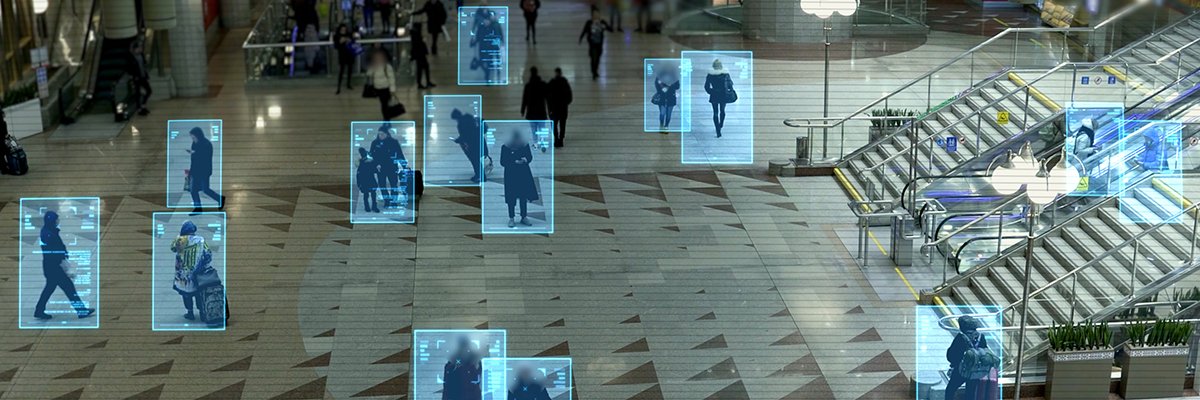
US lawmakers have written to the social media company Meta demanding answers over proposals to introduce facial-recognition technology to its smart glasses, which the lawmakers say puts the privacy and civil liberties of citizens at risk.
Democratic senators have written to Meta’s chairman and CEO Mark Zuckerberg, warning that the “uniquely dangerous” plans could accelerate the “normalisation” of mass surveillance.
They warn that smart glasses could be used to capture images of thousands of people without their knowledge and instantly link them to names, workplaces or personal profiles, putting people at risk of stalking, harassment and targeted intimidation.
Meta’s plans, which were first disclosed by the New York Times, have raise particular concerns following the use of facial-recognition tools by US federal agencies to identify people involved in lawful protest, which is protected under the First Amendment.
“This abuse of facial-recognition tools demonstrates how easily real-time identification technologies can be repurposed to discourage political expression, target vulnerable communities and chill lawful dissent,” the letter stated.
Meta’s record over privacy questioned
Democratic senators Ed Markey for Massachusetts and Ron Wyden and Jeff Merkley for Oregan point to Meta’s poor record of protecting the privacy of its users, which – as Computer Weekly has previously reported – has frequently led to the company facing criticism.
According to the leaked memo, reported by the New York Times, Meta was advised to release the product “during a dynamic political environment where many civil society groups that would expect to attack us would have their resources focused on other concerns”.
The senators said that the disclosures suggested that Meta recognised the serious civil-liberties risks of facial recognition, and was planning to limit scrutiny by launching the technology when “the world is distracted by the Trump administration’s daily chaos”.
The senators point out that Meta abandoned facial recognition on its Facebook platform in 2011, citing wider ethical concerns about the use of facial-recognition technology. The technology was used to automatically tag people in pictures and videos when they opted in to the service. The company held internal discussions on introducing facial recognition on its smart glasses in the same year but decided not to go ahead.
“Five years later, Meta appears less worried about those societal concerns,” the senators wrote, “and is reportedly planning to deploy facial-recognition technology in one of the most dangerous possible settings: smart glasses.”
Concerns about linking facial recognition to profiles
The senators said they are particularly concerned that the integration of facial recognition with social media profiles would allow users to instantly access an individual’s name or social media profile.
“Such real-time identification would dramatically lower the barrier to doxxing and persistent tracking, enabling bad actors to connect a face in a workplace, name or online presence in seconds,” they said.
They warn that allowing strangers “frictionless access” to details about people’s identity raises serious risks of “stalking, harassment and targeted intimidation, particularly for women, LGBTQ+ individuals and other vulnerable communities.”
The senators are seeking answers from Meta over how the company would obtain proper consent from people who are captured by smart glasses, how long their biometric data would be stored and whether the data captured would be used to train machine learning or facial-recognition algorithms.
They are also seeking assurances from Meta about whether it plans to upload images of known individuals to create personalised databases for facial recognition, whether it plans to match images captured by smart glasses to profiles on Instagram and Facebook, and whether users of those platforms will have the option to opt out of having their data used in facial recognition.
The senators asked Meta to disclose what steps it intends to take to ensure facial-recognition systems do not disproportionately harm people of colour, immigrants, religious minorities, LGBTQ+ individuals or other vulnerable populations, and whether it intends to share information gathered by smart glasses with law enforcement agencies, including the Department of Homeland Security.


March Madness 101: NCAA tournament format, history, facts

EU raises alarm over Russian tanker in Mediterranean

Val Kilmer revived 1 year after death through AI

Stock market crash today (March 12, 2026): Nifty50 opens below 23,600; BSE Sensex down over 900 points on continuing US-Iran war – The Times of India

Intertextile Shanghai 2026: Fringe events spotlight market trends

UK’s Topshop unveils Tolu Coker capsule collection

-
Business7 days ago
Stock market crash today (March 12, 2026): Nifty50 opens below 23,600; BSE Sensex down over 900 points on continuing US-Iran war – The Times of India
-
 Fashion1 week ago
Intertextile Shanghai 2026: Fringe events spotlight market trends
-
 Fashion1 week ago
UK’s Topshop unveils Tolu Coker capsule collection
-

 Entertainment1 week ago
What time will NASA’s 600 kg satellite crash to Earth today— 14 years after launch?
-

 Fashion1 week ago
German brand Adidas posts 13% revenue growth in 2025
-

 Fashion1 week ago
India’s textile recycling market may reach $3.5 bn by 2030: Report
-

 Tech1 week ago
Meta Developed 4 New Chips to Power Its AI and Recommendation Systems
-
 Business1 week ago
US ignites Iran war, but Gulf Arab states pay the price | The Express Tribune