

Business
Western Alliance CEO says alleged loan fraud is ‘incredibly frustrating’ but isolated issue


Sopa Images | Lightrocket | Getty Images
Western Alliance, one of the regional banks at the center of concerns over loans made to non-bank financial players, said Wednesday it believes the loan that sparked last week’s selloff is an isolated case.
The bank reported third-quarter earnings Tuesday afternoon and noted it had set aside $30 million in reserves for possible losses on a $98 million loan made to the Cantor Group. Last week, Western Alliance disclosed that it had sued the borrowers behind the Cantor Group for alleged fraud related to the collateral for the loans.
“While incredibly frustrating, we believe this is a one-off issue in our note finance business and have adjusted our onboarding and ongoing portfolio monitoring practices,” Western Alliance CEO Kenneth Vecchione told analysts on Wednesday.
Shares of Western Alliance rose almost 2% in midday trading.
Regional banks are getting a reprieve this week after Western Alliance and Zions, which also had exposure to the alleged loan fraud, reported results that didn’t include any new loan meltdowns. Each of the banks posted rising hauls from net interest income on lower funding costs, while some of their metrics around credit quality actually improved from previous quarters.
The Cantor Group episode forced Western Alliance to review other loans in its note finance portfolio, Vecchione said Wednesday.
“Today we have reverified titles and liens for all notes greater than $10 million and have found no irregularities,” he said.
Analysts grilled Vecchione during the Wednesday call for more details around the bank’s loan collateral and lending to non-depository financial institutions, or NDFIs.
“What are you doing to validate your collateral and safeguard against future frauds?” Autonomous Research analyst Casey Haire asked. “It just seems like as long as you’re not afraid to go to jail, it seems easy to double pledge collateral.”
Besides the recent review, Western Alliance periodically checks collateral to make sure the bank is still in a position to collect if the loan sours, executives said. Much of the bank’s NDFI book is tied to residential mortgages, which Western Alliance considers low-risk, they added.
‘Can’t unsee’
Western Alliance is also exposed to another recent blowup, the bankruptcy of the auto parts maker First Brands.
But in this case, a loan facility made to a fund managed by a subsidiary of the investment bank Jefferies “remains current, and we continue to receive principal and interest payments as modeled,” said Vecchione.
While this week’s reassurances have calmed markets for now, the sharp selloff in regionals last week is leaving a lasting mark on the industry. Shares of both Western Alliance and Zions plunged on Thursday after the banks disclosed problems with the Cantor Group.
Investors are ready to hit “sell” on any signs that the losses aren’t isolated, and share gains for the group will be capped for the foreseeable future because of these worries, said Timur Braziler, who covers mid-cap banks for Wells Fargo. He cut his recommendation on Western Alliance to “sell” on September 29.
“You can’t unsee these events,” Braziler said in an interview. “The timer for any kind of sustainable outperformance within the regional group has gotten reset once again.”



Scotland’s First Minister is “very concerned” by reports that oil giant BP is considering leaving the North Sea.
Bloomberg reported the firm had begun an internal review of its North Sea operations, though no final decision had been made.
Speaking to the Press Association on Saturday during a campaign stop in Glasgow, John Swinney put the blame squarely on the UK Government and its windfall tax on oil and gas.
“I’ve seen the reports and I’d obviously be very concerned about that,” the First Minister said.
“What will be driving this is the hostile taxation approach of the United Kingdom Government through the energy profits levy, and I’ve told the Prime Minister to his face that the energy profits levy is causing significant economic damage to Scotland and the North Sea oil and gas sector.
“It’s accelerating the decline of the sector and I made it clear to the Prime Minister he should remove that energy profits levy, and the speculation about BP I think should prompt early action from the UK Government.”
But Sir Keir Starmer, the First Minister claimed, was distracted by pressure on his position as a result of the scandal surrounding the hiring and firing of former US ambassador Lord Peter Mandelson.
“But, as with so many questions of the challenges that we face, the Prime Minister is distracted by his own failures and can’t take the proper actions to protect jobs and employment within Scotland, and that’s an example of the weakness and the failure of a Labour Government,” Mr Swinney said.
The reports come after UK Energy Secretary Ed Miliband described BP’s profits – which tripled in the first quarter of this year – in a now deleted post on social media as “morally and economically wrong”.
The UK Government has been contacted for comment.
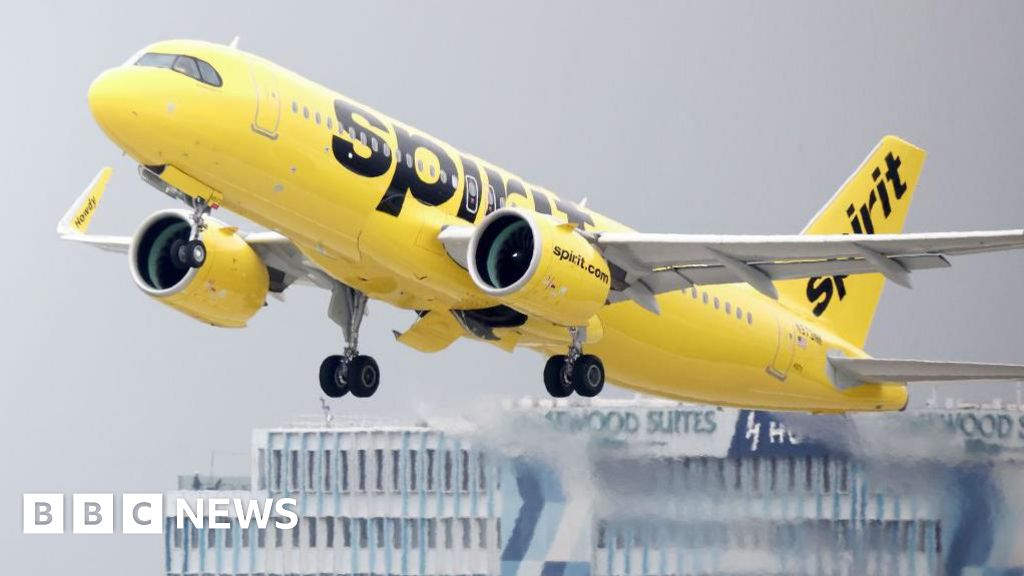
The earlier plan, which would have seen the US government take effective ownership of as much as 90% of the airline, faced stiff opposition from Wall Street, Capitol Hill and even a member of Trump’s own cabinet. Transportation Secretary Sean Duffy told Reuters a rescue would amount to tossing “good money after bad”.

Spirit Airlines check-in Kiosks sit idle at Oakland International Airport on August 13, 2025 in Oakland, California.
Justin Sullivan | Getty Images
Spirit Airlines could shut down as early as 3 a.m. ET Saturday, according to people familiar with the matter. The carrier has failed to secure a financial lifeline to continue operating, though it hasn’t commented on the potential shutdown or its plans.
About 290 Spirit flights are scheduled for Saturday, according to aviation site Flightradar24. Another 381 are scheduled for Sunday.
Travelers with Spirit tickets could be understandably rattled. While there have been some U.S. airlines to shut down in recent years, the budget carrier is larger than most recent airline failures and links major cities like New York, Miami, Detroit and Los Angles — and many others in between — with its Airbus jets.
Here’s what travelers need to know:
You have a Spirit ticket. What should you do?
Immediately? Nothing.
Travelers who are booked on a Spirit flight, like this CNBC reporter is for later this month, are likely to receive a refund if they purchased tickets with a credit card.
If the ticket was bought with a debit card or with loyalty points, however, the chances of recovering funds are slim to none, said Henry Harteveldt, founder of Atmosphere Research Group, a travel consulting firm.
“If you’re holding a reservation for a flight on Spirit don’t proactively cancel it. Wait for the airline to announce it is shutting down,” he said.
Would Spirit be able to help you at the airport?
Don’t count on it.
Spirit has declined to comment on a potential shutdown. If it confirms an end to operations, the carrier will most likely have information on its website about travelers’ next steps.
Harteveldt said travelers shouldn’t go to the airport expecting to find Spirit staff in the event the airline ceases operations. Call centers are likely to be overwhelmed if they are still staffed.
That could leave passengers with fewer answers than they’d like, but other airlines are likely to help assist affected customers.
Airlines that offer last-minute fares, likely with some discounts, will be available to travelers at airport ticket counters.
How can another airline help?
United Airlines, JetBlue Airways, Frontier Airlines and American Airlines are among the carriers that have said they are ready to assist Spirit customers and crews if the carrier shuts down.
That could mean scheduling additional flights to carry the stranded passengers, similar to what they do during a hurricane or other natural disaster.
Why could Spirit shut down?
Spirit, known for bright yellow planes, low fares and fees for everything else, had been successful for years, but this week it’s been on the brink of liquidation after failing to reach a deal with bondholders for a $500 million government bailout from the Trump administration.
Last year Spirit filed for its second bankruptcy in less than a year, though it’s had a host of problems even before then.
A plan to be acquired by JetBlue was blocked. Rising costs upended its business model. An engine defect grounded dozens of its planes. And, more broadly, upscale travel became more popular with consumers, driving airline profits.
At the same time, big, legacy airlines were selling their own basic economy fares that were similar to what Spirit was offering, but with bigger networks.
What does this mean for travel going forward?
Airlines have been adding flights since Spirit’s bankruptcy filing last year on some of its routes and at major airports. They’re likely to keep doing so.
Experts have said they expect fares to rise, at least in some markets, if the discounter goes away, even though the carrier has shrunk substantially.


Andy Serkis on making the animated version of "Animal Farm"

The Tovala Oven and Meal Kit Is Like a Robot Chef of Future Past

Harry Styles, Zoe Kravitz in major wedding planning mode after big step

-

 Tech5 days ago
A Brain Implant for Depression Is About to Be Tested in Humans
-

 Tech1 week ago
They Wanted to Join Raya. They’ve Been on the Waiting List for Years
-

 Tech1 week ago
Why Do I Like Dyson’s PencilVac So Much?
-

 Tech5 days ago
Almost 90% of women leave tech industry within 10 years | Computer Weekly
-

 Fashion1 week ago
North India cotton yarn steady despite continued push by spinners
-

 Entertainment1 week ago
Anne Hathaway makes shocking confession about Taylor Swift’s music
-

 Entertainment5 days ago
Norway joins Type 26 Frigate Programme to boost NATO naval power
-

 Sports1 week ago
US says Iran can play in Fifa World Cup but IRGC-linked individuals won’t be allowed