

Business
Why you won’t find Kentucky Derby bets on prediction platforms


The biggest horse race in the country, the Kentucky Derby, takes place Saturday in Louisville. If you’re looking to make a wager on Kalshi, Polymarket or another prediction platform around the event — you’re out of luck.
There are no Kentucky Derby event contracts offered on the major prediction platforms, which host contracts on everything from sports outcomes to geopolitical events to reality TV show moments, but not horse racing.
Bill Carstanjen, CEO of Churchill Downs, which owns the Kentucky Derby and the racetrack where it’s held, told CNBC it’s unlikely that horse racing will ever show up on prediction markets because the race track owners don’t want it.
“You need to actually go to us, those who own the race tracks, to cut a deal,” Carstanjen said in an interview this week. “And from our perspective, that’s not something we’re interested in doing.”

Horse racing has long been something of its own little fiefdom. Betting on the races, America’s original form of sports betting dating back to the colonial era, enjoyed special status even before the Supreme Court in 2018 struck down a law that prevented states other than Nevada from offering sports betting.
By law, under the Interstate Horseracing Act of 1978, offering wagers on horses requires explicit permission from the host race track, the horsemen’s group made up of owners and trainers and the state racing commission where the race is held.
That’s left the burgeoning prediction markets industry on the outs.
“Prediction markets are not something that that would be good for horse racing, or the economic paradigm under which our industry works, which involves funding purses for the winners of the horse race,” Carstanjen said.
Kalshi declined to comment on the absence of horseracing on its platform. Polymarket didn’t respond to a request for comment. And representatives for the Commodity Futures Trading Commission, which regulates event contracts, likewise didn’t respond to a request for comment.
The tension raises an interesting question of when — and in what context — permission is needed for prediction market platforms to offer contracts on a given event.
U.S. states have argued companies like Kalshi and Polymarket need their permission (via a license) to offer wagers on sports. Prediction platforms have maintained they don’t need licenses because their platforms offer investing and trading activity, not gambling, and because they’re regulated by the CFTC.
The CFTC has filed multiple lawsuits against states seeking to prevent them from taking action against prediction platforms.
Kentucky, for its part, has taken a tough stance on predictions. Lawmakers in the state have proposed legislation that would ban any of its gambling licensees from offering predictions. It’s also proposed a 17.5% tax on prediction market fees.
Meanwhile, there’s still old-fashioned gambling set for Saturday’s Derby. Churchill Downs said it’s seeing increased betting during Derby Week leading up to the big race.
Caesars, too, said the amount of money wagered on the Kentucky Derby is pacing ahead of expectations.
— CNBC’s Jessica Golden contributed to this report.
Disclosure: Kalshi and CNBC have a commercial relationship which includes a minority investment.



Spirit Airlines check-in Kiosks sit idle at Oakland International Airport on August 13, 2025 in Oakland, California.
Justin Sullivan | Getty Images
Spirit Airlines could shut down as early as 3 a.m. ET Saturday, according to people familiar with the matter. The carrier has failed to secure a financial lifeline to continue operating, though it hasn’t commented on the potential shutdown or its plans.
About 290 Spirit flights are scheduled for Saturday, according to aviation site Flightradar24. Another 381 are scheduled for Sunday.
Travelers with Spirit tickets could be understandably rattled. While there have been some U.S. airlines to shut down in recent years, the budget carrier is larger than most recent airline failures and links major cities like New York, Miami, Detroit and Los Angles — and many others in between — with its Airbus jets.
Here’s what travelers need to know:
You have a Spirit ticket. What should you do?
Immediately? Nothing.
Travelers who are booked on a Spirit flight, like this CNBC reporter is for later this month, are likely to receive a refund if they purchased tickets with a credit card.
If the ticket was bought with a debit card or with loyalty points, however, the chances of recovering funds are slim to none, said Henry Harteveldt, founder of Atmosphere Research Group, a travel consulting firm.
“If you’re holding a reservation for a flight on Spirit don’t proactively cancel it. Wait for the airline to announce it is shutting down,” he said.
Would Spirit be able to help you at the airport?
Don’t count on it.
Spirit has declined to comment on a potential shutdown. If it confirms an end to operations, the carrier will most likely have information on its website about travelers’ next steps.
Harteveldt said travelers shouldn’t go to the airport expecting to find Spirit staff in the event the airline ceases operations. Call centers are likely to be overwhelmed if they are still staffed.
That could leave passengers with fewer answers than they’d like, but other airlines are likely to help assist affected customers.
Airlines that offer last-minute fares, likely with some discounts, will be available to travelers at airport ticket counters.
How can another airline help?
United Airlines, JetBlue Airways, Frontier Airlines and American Airlines are among the carriers that have said they are ready to assist Spirit customers and crews if the carrier shuts down.
That could mean scheduling additional flights to carry the stranded passengers, similar to what they do during a hurricane or other natural disaster.
Why could Spirit shut down?
Spirit, known for bright yellow planes, low fares and fees for everything else, had been successful for years, but this week it’s been on the brink of liquidation after failing to reach a deal with bondholders for a $500 million government bailout from the Trump administration.
Last year Spirit filed for its second bankruptcy in less than a year, though it’s had a host of problems even before then.
A plan to be acquired by JetBlue was blocked. Rising costs upended its business model. An engine defect grounded dozens of its planes. And, more broadly, upscale travel became more popular with consumers, driving airline profits.
At the same time, big, legacy airlines were selling their own basic economy fares that were similar to what Spirit was offering, but with bigger networks.
What does this mean for travel going forward?
Airlines have been adding flights since Spirit’s bankruptcy filing last year on some of its routes and at major airports. They’re likely to keep doing so.
Experts have said they expect fares to rise, at least in some markets, if the discounter goes away, even though the carrier has shrunk substantially.
Business
Middle East crisis: Air India to make food optional, help cut price of tickets – The Times of India
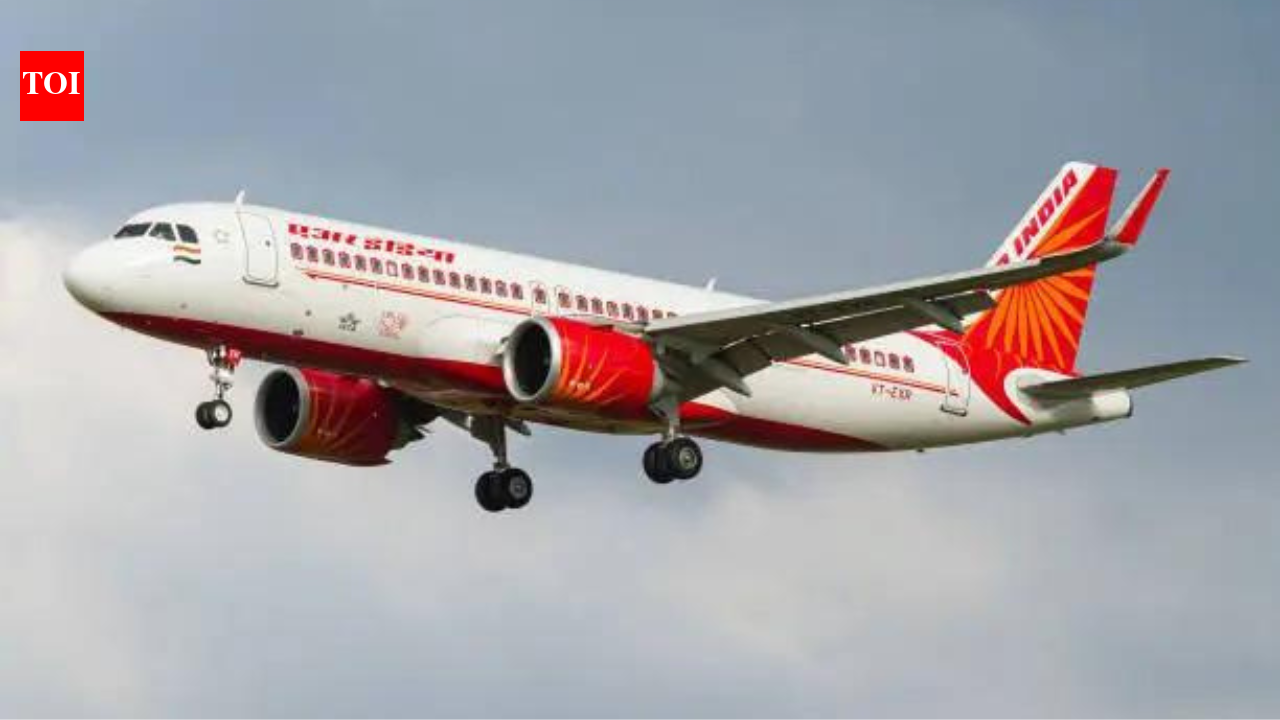
NEW DELHI: Desperate times call for desperate measures. Full service Air India is planning to make meals optional on its domestic and short international (under two hour) flights. Once this “unbundling” rolls out in the next month or two, passengers opting out of meals could have upwards of Rs 250 shaved off their ticket price. While this move, say people in the know, is “on the anvil,” the airline is looking at several other unprecedented measures to fly through the severe cost-revenue turbulence caused by the unending West Asia war.While not opting for meals could lead to slightly cheaper economy tickets, AI is looking at unbundling lounge access for business class passengers because those opting out of this, could get their tickets cheaper. On an average, lounge operators charge Rs 1,100-1,400 per user at metro airports and Rs 600-700 at non metros.The average spend is about Rs 1,000 per lounge. Many business class flyers are frequent travellers who just make it to airports in time for their flight and do not head to the lounge. If unbundled, this could be a saving in their ticket cost. Banks have been reducing lounge access for credit card users for the same reason to cut their costs.“From Day One, Air India has had meals bundled in its ticket price. Now the way aviation turbine fuel (ATF) price is rising and the rupee crashing since Feb 28, ticket prices are going up. India is a price-sensitive market and raising fares beyond a point leads to a fall in traffic with many opting to travel by train or road. This has led to the rethinking to unbundle meals on some flights. Other steps are also being considered,” said people in the know.Several airlines globally have over the past few years unbundled their onboard offerings. Many international full service airlines offer a basic meal in economy while giving the option of buying gourmet meals at an additional cost. Ditto for alcoholic beverages, with cheaper beer and wines being given at no extra cost while the others being charged for. “For passengers, the distinction between full service and low cost airlines is blurring very fast,” said an industry old-timer.

President Donald Trump said he would increase tariffs charged to the European Union for cars and trucks to 25%, without saying what authority he would use to raise the levies.
“Based on the fact the European Union is not complying with our fully agreed to Trade Deal, next week I will be increasing Tariffs charged to the European Union for Cars and Trucks coming into the United States,” he wrote on Truth Social on Friday. “The Tariff will be increased to 25%. It is fully understood and agreed that, if they produce Cars and Trucks in U.S.A. Plants, there will be NO TARIFF.”
The Supreme Court ruled in February that a large part of Trump’s tariff agenda was illegal. The president’s “reciprocal” tariffs were invoked using a novel reading of the International Emergency Economic Powers Act, or IEEPA, but the high court said in a 6-3 majority that the law that undergirds those import duties “does not authorize the President to impose tariffs.”
Shortly after the Supreme Court ruling, Trump said he signed an executive order imposing a new 10% “global tariff” rate to effectively replace the IEEPA duties, though those tariffs came with a 150-day time limit under Section 122 of the Trade Act of 1974. He then said he would increase the global rate to 15%.
The EU in February had warned that its trade deal with the U.S. could be in jeopardy after the new tariff rate was announced and postponed its planned vote on the agreement.
The European Union said it is following standard legislative practice and keeping the U.S. administration up to date.
“We maintain close contact with our counterparts, including as we also seek clarity on US commitments,” a a European Commission spokesperson said. “We remain fully committed to a predictable, mutually beneficial transatlantic relationship. Should the US take measures inconsistent with the Joint Statement, we will keep our options open to protect EU interests.”
A White House official said in a statement Friday that the EU has “failed to make substantial progress on their agreed-upon commitments” under a trade agreement between the countries.
“The White House has always been clear that the President reserves the right to adjust tariff rates if our trade deal partners fail to abide by their commitments,” the official said.
The Trump administration last year broadly implemented 25% tariffs on vehicles and certain auto parts imported into the U.S., citing national security risks under Section 232. Those levies are still in place, and the White House said Trump would increase the EU’s levies under Section 232.
The European automakers that could most be impacted by a change in tariff rate would be Mercedes, BMW and Volkswagen, which import a large percentage of the vehicles they sell in the U.S. from their plants in Europe.


US’ J.Jill, Inc. appoints Kimberly Wallengren as CMO

Meryl Streep calls Marvel ‘boring’

Are Bella Hadid and ex Adan Banuelos getting back together?

-

 Entertainment1 week ago
Mike Vrabel to miss Patriots’ final NFL draft day —here’s why
-
 Fashion1 week ago
Canada forms new advisory committee to strengthen US trade relations
-
 Business1 week ago
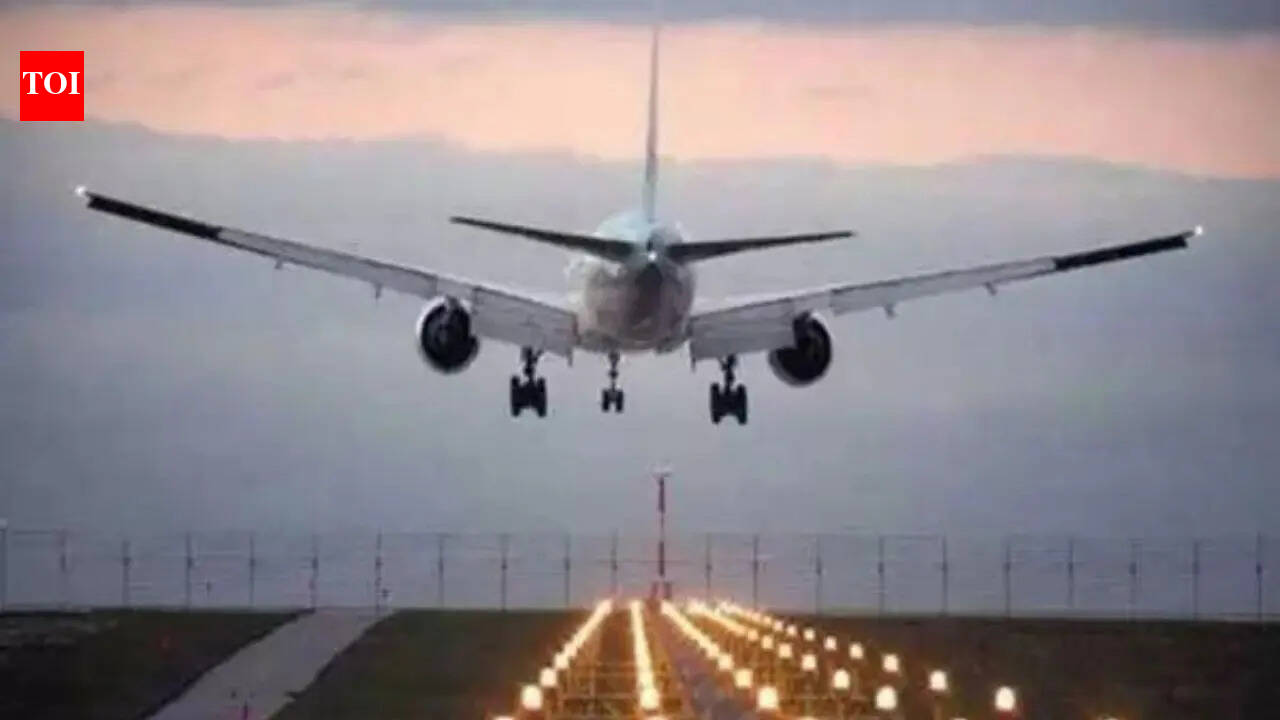
France Ends Airport Transit Visa Requirement for Indian Travellers | Business – The Times of India
-
 Business1 week ago
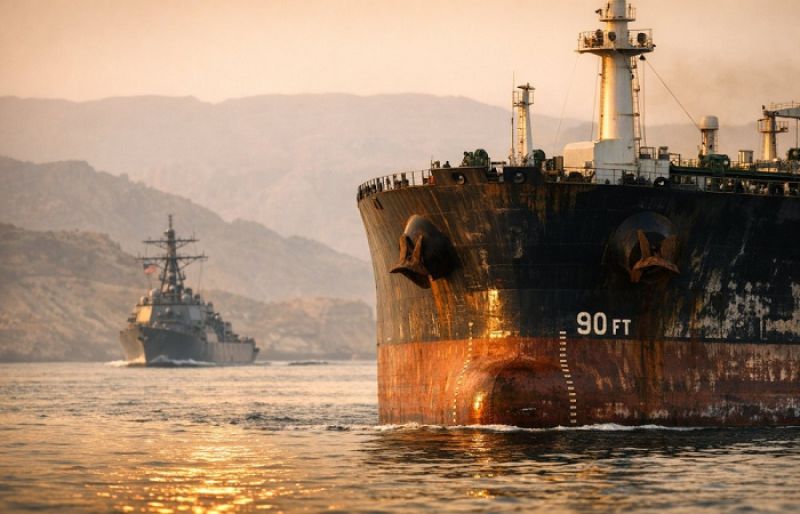
Oil surges past 4% as Iran keeps Hormuz locked – SUCH TV
-

 Fashion1 week ago
Bangladesh revises gas policy to improve service amid rising demand
-

 Tech4 days ago
A Brain Implant for Depression Is About to Be Tested in Humans
-

 Entertainment1 week ago
Anne Hathaway makes shocking confession about Taylor Swift’s music
-

 Tech1 week ago
They Wanted to Join Raya. They’ve Been on the Waiting List for Years