

Tech
Western coalition supplying tech to Ukraine prepared for long war | Computer Weekly


A coalition of countries has provided Ukraine with more than €1.3bn of telecommunications, information technology and other high-tech equipment since Russia began the deadliest conflict in Europe since the Second World War.
Although €1.3bn may be small compared with Ukraine’s military budget, the equipment – provided with the support of Western governments and companies – has been critical to allow Ukraine’s government and institutions to continue functioning under Russian attack.
Heli Tiirmaa-Klaar, chair of the IT Coalition Steering Group, told Computer Weekly that with peace talks floundering in Moscow, the group is prepared for a long game, and is ready to support Ukraine’s technology infrastructure for the next five or, if necessary, 10 years.
Russia’s attempts to use “well crafted” cyber attacks to destabilise Ukraine just before troops crossed the border were largely unsuccessful, she told Computer Weekly.
Speaking ahead of a talk at the SANS CyberThreat Summit in London, Tiirmaa-Klaar said that Russian attacks included a widely reported attempt to deploy wiper software to destroy data on Ukraine’s critical computer systems.
Ukraine had the support networks in place to patch the zero-day vulnerabilities used in the attack in a matter of hours.
An attack by Russia on Ukraine’s train network the day before Russian troops crossed the boarder also failed, said Tiirmaa-Klaar. “By the time the invasion happened, and you needed to evacuate, the trains were running again,” she said. The defence was good enough and resilient enough, and that is why we could not see major cyber disruptions during the invasion.
“The Ukrainians were quite successful, especially in the early days of the conflict, keeping the lights on, keeping the phones working, the trains running and other critical services running despite major cyber attacks,” said Tiirmaa-Klaar.
Ukraine was able to prepare in advance by moving government data to cloud systems run by the major hyperscalers. It meant that even if data was destroyed during the war, there were backups available.
Russia behind ‘hybrid attacks’
Since Russia launched its military action, cyber attacks are no longer a Russian priority in Ukraine. Tiirmaa-Klaar added: “The Russian rationale would be, ‘Why do we need to cyber bomb if we can actually bomb?’
“Their main goal is political, and the main means for them is still the military – troops on the ground and tanks rolling over the border,” she said. “They don’t see hybrid warfare and cyber as key capabilities once they have decided to invade.”
Moscow is widely believed to be behind drones and balloon incursions that have disrupted airports in Europe, and the sabotage of undersea communications cables.
“I think this is the old tactic of creating disruptions, testing the response and trying to influence public opinion … to show that [Russia] can bring the war closer to you if you continue to support Ukraine,” said Tiirmaa-Klaar.
Information wars
Tiirmaa-Klaar said the media has also played a part in amplifying Russia’s disruption tactics, by over-publicising the disruption caused by suspected Russian drones in some Western countries.
“The way the journalists responded was a dream for Russian operatives because they just spread chaos,” she said.
The tactic is called “reflexive control” – setting up the conditions so that an enemy responds the way Russia intended. “You create the decision-making ground,” explained Tiirmaa-Klaar. “You can anticipate their next steps because you know how your actions are going to influence them.”
Fighting hybrid warfare poses a tougher challenge than fighting cyber attacks, she added. It will need government agencies, the military and civilians to collaborate in new ways.
Tiirmaa-Klaar pointed to Finland’s response to a Russian ship suspected of cutting critical cable links between Estonia and Finland last year as an example of the type of response needed.
Finland boarded the ship and arrested the crew, and it sent an important political message, she said: “You mess with us, and we mess with you. If we respond properly, if we get our act together, then we diminish the probability that we will be influenced by these hybrid operations.”
The IT Coalition Steering Group Tiirmaa-Klaar chairs was established during the first few weeks of Russia’s second invasion against Ukraine, in February 2022.
A US initiative led to the Ramstein Coalition, which today brings together 56 countries – including European Union and Nato members – to provide military support to Ukraine.
Some 10 subgroups provide support in areas ranging from maritime equipment, to artillery, drones and de-mining. Tiirmaa-Klaar chairs the IT coalition, a group of 18 countries which provides Ukraine with hardware, software, tactical communications cyber defences and IT hardware.
Military procurement is notoriously slow, so the IT coalition focuses on dual-use devices, such as laptops, tactical radio communications equipment and satellite communications technology.
Ukraine has “a very long list” of equipment that it needs, which is constantly updated. Every time there is a battle, essential equipment including radios and computer equipment is lost and will need replacing.
There are also logistical challenges ensuring that equipment reaches the front line, which might be more than 2,000km away.
Old phone masts could help Ukraine
A priority is to source decommissioned mobile phone masts that could be used to provide Ukraine with military communications. The group is also supplying equipment for the Ukrainian military to build datacentres and private clouds.
Tiirmaa-Klaar is far from optimistic that the current peace talks brokered by the US will bring a quick end to the conflict. “Putin has no interest, as far as I can see, in ending the war,” she said.
The IT coalition is prepared, with a three-year plan, a five-year plan, and – if necessary – a 10-year plan.
“We will go on even after peace is signed, because if peace is signed, we do not know how long it will hold,” said Tiirmaa-Klaar. “And the Ukrainian armed forces still need to build up capabilities, even in peace time, because they need to have credible deterrence.”

Google DeepMind’s AlphaFold has already revolutionized scientists’ understanding of proteins. Now, the ability of the platform to design safe and effective drugs is about to be put to the test.
Isomorphic Labs, the UK-based biotech spinoff of Google DeepMind, will soon begin human trials of drugs designed by its Nobel Prize–winning AI technology. “We’re gearing up to go into the clinic,” Isomorphic Labs president Max Jaderberg said on April 16 at WIRED Health in London. “It’s going to be a very exciting moment as we go into clinical trials and start seeing the efficacy of these molecules.”
Jaderberg did not elaborate on the timeline, but it’s later than the company had planned to initiate human studies. Last year, CEO Demis Hassabis said it would have AI-designed drugs in clinical trials by the end of 2025.
Isomorphic Labs was founded in 2021 as a spinoff from Alphabet’s AI research subsidiary, Google DeepMind. The company uses DeepMind’s AlphaFold, a groundbreaking AI platform that predicts protein structures, for drug discovery.
Built from 20 different amino acids, proteins are essential for all living organisms. Long strings of amino acids link together and fold up to make a protein’s three-dimensional structure, which dictates the protein’s function. Researchers had tried to predict protein structures since the 1970s, but this was a painstaking process given the astronomically high number of possible shapes a protein chain can take.
That changed in 2020, when DeepMind’s Hassabis and John Jumper presented stunning results from AlphaFold 2, which uses deep-learning techniques. A year later, the company released an open-source version of AlphaFold available to anyone.
In 2024, DeepMind and Isomorphic Labs released AlphaFold 3, which advanced scientists’ understanding of proteins even further. It moved beyond modeling proteins in isolation to predicting other important molecules, such as DNA and RNA, and their interactions with proteins.
“This is exactly what you need for drug discovery: You need to see how a small molecule is going to bind to a drug, how strongly, and also what else it might bind to,” Hassabis told WIRED at the time.
Since its release, the AlphaFold platform has been able to predict the structure of virtually all the 200 million proteins known to researchers and has been used by more than 2 million people from 190 countries. The breakthrough earned Hassabis and Jumper the Nobel Prize for chemistry in 2024, with the Nobel committee noting that AlphaFold has enabled a number of scientific applications, including a better understanding of antibiotic resistance and the creation of images of enzymes that can decompose plastic.
Earlier this year, Isomorphic Labs announced an even more powerful tool, what it calls IsoDDE, its proprietary drug-design engine. In a technical paper, the company touts that the platform more than doubles the accuracy of AlphaFold 3.
The startup has formed partnerships with Eli Lilly and Novartis to work together on AI drug discovery and is also advancing its own “broad and exciting pipeline of new medicines” in oncology and immunology, Jaderberg said.
“The exciting thing about the molecules that we’re designing is because we have so much more of an understanding about how these molecules work, we’ve engineered them to be very, very potent,” Jaderberg told the audience at WIRED Health. “You can take them at a much lower dose, and they’ll have lower side effects, off target effects.”
Last year, Isomorphic appointed a chief medical officer and announced it had raised $600 million in its first funding round to gear up for clinical trials. Meanwhile, the company has been building a clinical development team. Its mission is to “solve all disease.”
“It’s a crazy mission,” Jaderberg said. “But we really mean it. We say it with a straight face, because we believe this should be possible.”

With huge crowds set to descend on London for the city’s iconic marathon this weekend, IT services provider Tata Consultancy Services (TCS), in partnership with Neurun, has launched a map-based tool powered by artificial intelligence (AI) to help participants and spectators navigate the event.
TCS RunConcierge is said to act as a “digital brain” for the London Marathon, bringing together official guidance, route support and course information in real time – a useful tool for this mass participation event, which saw more than 56,000 runners cross the finish line in 2025 and hundreds of thousands of spectators lining the 26.2-mile route.
Powered by Google Gemini, the platform is designed to deliver instant and reliable guidance for users, whether that be runners seeking information about start line logistics or the location of drinks stops – which will be very much needed with wall-to-wall sunshine forecast on the day – or supporters wishing to locate the best spot from which to cheer on participants or travel as quickly as possible between viewing points.
Users can see their current location on the map, ask for directions to key event destinations and access pre-loaded routes with direct links to Google Maps navigation. The tool also suggests personalised follow-up questions and features voice activation to enable hands-free use on the move. And with 60 languages supported, visitors from all over the world will be able to benefit from the event guidance.
For runners specifically, the immersive 3D map includes an elevation tracker, which could help them plan their strategy.
The partnership between TCS and Neurun is said to be built on a foundation of continuous innovation. New back-end capabilities include a self-serve admin portal that allows event organisers to manage RunConcierge independently, as well as a unique internal AI agent that tests the platform to help maintain content quality and identify improvements
Vinay Singhvi, head of UK and Ireland at Tata Consultancy Services, described the London Marathon as a monumental event, for which its goal is to use technology to make the experience as seamless and enjoyable as possible.
“Our partnership with Neurun allows us to innovate at pace, and the enhanced TCS RunConcierge is a prime example of how we are using AI to solve complex logistical challenges, providing runners and spectators with a trusted companion for the moments that matter most,” he said.
Neurun founder Cade Netscher said its partnership with TCS had been instrumental in developing the RunConcierge tool for the world’s most prestigious marathons, with previous successful deployments at the Sydney and New York City events.
“For London, we’ve integrated the latest AI advancements to create our most powerful and user-friendly version yet. We are excited to see how it helps thousands of people enjoy a more connected and stress-free marathon weekend,” he said.
Separately, in a demonstration of digital healthcare technology in action, TCS has created a digital twin of a para-athlete’s heart, which uses sensors and AI to monitor her heart during training sessions.
The para-athlete, Milly Pickles, is aiming to complete the London Marathon in under four-and-a-half hours next year, and is harnessing digital healthtech to reach her goal.
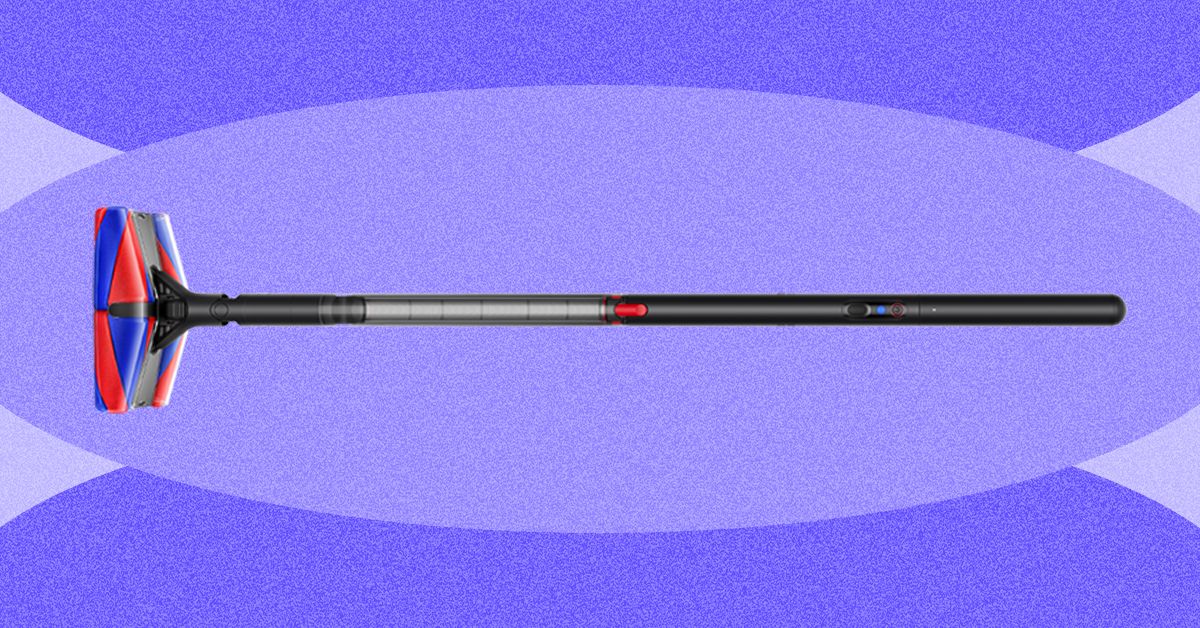
The vacuum connects to Dyson’s app, where you’ll find resources such as how to empty the dustbin and wash the filter, but not much else. It can tell you how long your last vacuuming session was, but no other details, so it’s not as interesting or as informative as the data you’d get from a robot vacuum.
Fluffy Face
Photograph: Nena Farrell

Photograph: Nena Farrell
This vacuum’s full name is the Dyson PencilVac Fluffycones, aptly named for the four fluffy cones inside the vacuum head. Dyson’s previous recent stick vacuums all have the Fluffy Optic cleaner head for vacuuming hard floors. While both have a fluffy roller bar, the Fluffycones have a conical shape that Dyson says will detangle and remove hair rather than the hair getting stuck all around it. It did detangle hair for me, but when I vacuumed up larger portions of hair from my bathroom floor (a place where many a stray hair comes to die at the hands of my hairbrush, comb, and towel), it actually bunched up the hair into a ball and spat it back out a few times before finally sucking it up into the dustbin.
Video: Nena Farrell
While the hair results weren’t great, I did love this vacuum for sucking up the cat litter that constantly plagues my home. It did a great job with flour on my hard floors and a solid job with dry oats, but it occasionally just bumped the oats around instead of immediately sucking them up. I was even able to quickly run it over the top of my carpet, but rolling back and forth on the carpet a bunch did stop the cones.
The head is designed to move in just about any direction. The cones make it easy to swivel around, and the green illuminating lights on the front and back help you spot any debris you might otherwise miss. With its compact size that fits in tricky corners, the PencilVac finally lets me vacuum up all the litter around the base of my toilet and pedestal sink. It’s part of what makes me reach for this vacuum over and over, even after my robot vacuum cleaned the day before.
Forward Momentum

Photograph: Nena Farrell
Do I think this vacuum replaces Dyson’s existing cordless options? No. But Dyson has other new vacuums planned that could do that. This vacuum has a specific design for a specific use: smaller homes with entirely hard floors. There’s an accessibility opportunity here, too. This lightweight vacuum can be much easier to use for folks with mobility and strength restrictions. The magnetic charging base also makes it easy to store and access for a variety of people, whether they struggle with fine motor skills or can’t bend over and grab the vacuum.


AI-Designed Drugs by a DeepMind Spinoff Are Headed to Human Trials

US justice department drops probe into Fed chairman Jerome Powell

Offset teases new album plans after recent shooting accident

-

 Fashion1 week ago
France’s LVMH Q1 revenue falls 6%, shows resilience amid Iran war
-

 Tech1 week ago
CYBERUK ’26: UK lagging on legal protections for cyber pros | Computer Weekly
-

 Sports5 days ago
WWE WrestleMania 42 Night 2: Live match results and analysis
-

 Sports5 days ago
NCAA men’s gymnastics championship: All-time winners list
-
 Business1 week ago
PepsiCo earnings beat estimates as North American food business improves
-

 Sports1 week ago
Faheem Ashraf backs Islamabad United’s push, calls league a ‘career-changing platform’
-

 Tech1 week ago
Anthropic Plots Major London Expansion
-
 Business1 week ago
Oil prices fall again amid Middle East ceasefire hopes