

Tech
Western coalition supplying tech to Ukraine prepared for long war | Computer Weekly


A coalition of countries has provided Ukraine with more than €1.3bn of telecommunications, information technology and other high-tech equipment since Russia began the deadliest conflict in Europe since the Second World War.
Although €1.3bn may be small compared with Ukraine’s military budget, the equipment – provided with the support of Western governments and companies – has been critical to allow Ukraine’s government and institutions to continue functioning under Russian attack.
Heli Tiirmaa-Klaar, chair of the IT Coalition Steering Group, told Computer Weekly that with peace talks floundering in Moscow, the group is prepared for a long game, and is ready to support Ukraine’s technology infrastructure for the next five or, if necessary, 10 years.
Russia’s attempts to use “well crafted” cyber attacks to destabilise Ukraine just before troops crossed the border were largely unsuccessful, she told Computer Weekly.
Speaking ahead of a talk at the SANS CyberThreat Summit in London, Tiirmaa-Klaar said that Russian attacks included a widely reported attempt to deploy wiper software to destroy data on Ukraine’s critical computer systems.
Ukraine had the support networks in place to patch the zero-day vulnerabilities used in the attack in a matter of hours.
An attack by Russia on Ukraine’s train network the day before Russian troops crossed the boarder also failed, said Tiirmaa-Klaar. “By the time the invasion happened, and you needed to evacuate, the trains were running again,” she said. The defence was good enough and resilient enough, and that is why we could not see major cyber disruptions during the invasion.
“The Ukrainians were quite successful, especially in the early days of the conflict, keeping the lights on, keeping the phones working, the trains running and other critical services running despite major cyber attacks,” said Tiirmaa-Klaar.
Ukraine was able to prepare in advance by moving government data to cloud systems run by the major hyperscalers. It meant that even if data was destroyed during the war, there were backups available.
Russia behind ‘hybrid attacks’
Since Russia launched its military action, cyber attacks are no longer a Russian priority in Ukraine. Tiirmaa-Klaar added: “The Russian rationale would be, ‘Why do we need to cyber bomb if we can actually bomb?’
“Their main goal is political, and the main means for them is still the military – troops on the ground and tanks rolling over the border,” she said. “They don’t see hybrid warfare and cyber as key capabilities once they have decided to invade.”
Moscow is widely believed to be behind drones and balloon incursions that have disrupted airports in Europe, and the sabotage of undersea communications cables.
“I think this is the old tactic of creating disruptions, testing the response and trying to influence public opinion … to show that [Russia] can bring the war closer to you if you continue to support Ukraine,” said Tiirmaa-Klaar.
Information wars
Tiirmaa-Klaar said the media has also played a part in amplifying Russia’s disruption tactics, by over-publicising the disruption caused by suspected Russian drones in some Western countries.
“The way the journalists responded was a dream for Russian operatives because they just spread chaos,” she said.
The tactic is called “reflexive control” – setting up the conditions so that an enemy responds the way Russia intended. “You create the decision-making ground,” explained Tiirmaa-Klaar. “You can anticipate their next steps because you know how your actions are going to influence them.”
Fighting hybrid warfare poses a tougher challenge than fighting cyber attacks, she added. It will need government agencies, the military and civilians to collaborate in new ways.
Tiirmaa-Klaar pointed to Finland’s response to a Russian ship suspected of cutting critical cable links between Estonia and Finland last year as an example of the type of response needed.
Finland boarded the ship and arrested the crew, and it sent an important political message, she said: “You mess with us, and we mess with you. If we respond properly, if we get our act together, then we diminish the probability that we will be influenced by these hybrid operations.”
The IT Coalition Steering Group Tiirmaa-Klaar chairs was established during the first few weeks of Russia’s second invasion against Ukraine, in February 2022.
A US initiative led to the Ramstein Coalition, which today brings together 56 countries – including European Union and Nato members – to provide military support to Ukraine.
Some 10 subgroups provide support in areas ranging from maritime equipment, to artillery, drones and de-mining. Tiirmaa-Klaar chairs the IT coalition, a group of 18 countries which provides Ukraine with hardware, software, tactical communications cyber defences and IT hardware.
Military procurement is notoriously slow, so the IT coalition focuses on dual-use devices, such as laptops, tactical radio communications equipment and satellite communications technology.
Ukraine has “a very long list” of equipment that it needs, which is constantly updated. Every time there is a battle, essential equipment including radios and computer equipment is lost and will need replacing.
There are also logistical challenges ensuring that equipment reaches the front line, which might be more than 2,000km away.
Old phone masts could help Ukraine
A priority is to source decommissioned mobile phone masts that could be used to provide Ukraine with military communications. The group is also supplying equipment for the Ukrainian military to build datacentres and private clouds.
Tiirmaa-Klaar is far from optimistic that the current peace talks brokered by the US will bring a quick end to the conflict. “Putin has no interest, as far as I can see, in ending the war,” she said.
The IT coalition is prepared, with a three-year plan, a five-year plan, and – if necessary – a 10-year plan.
“We will go on even after peace is signed, because if peace is signed, we do not know how long it will hold,” said Tiirmaa-Klaar. “And the Ukrainian armed forces still need to build up capabilities, even in peace time, because they need to have credible deterrence.”
Tech
‘STAGED’: Conspiracy Theories Are Everywhere Following White House Correspondents’ Dinner Shooting

In the immediate aftermath of the attack on the White House Correspondents’ Dinner on Saturday night, influencers, pundits, and random posters lit up social media platforms like X, Bluesky, and Instagram with conspiracy theories about the attack and the alleged shooter.
Both left and right-wing accounts claimed, without evidence, that the attack was staged.
President Donald Trump, Vice President JD Vance, and dozens of other high-profile administration officials and journalists were attending the dinner at the Hilton hotel in Washington, DC, when a suspect, later identified by media reports as Cole Tomas Allen from California, allegedly ran past security towards the event. He was detained by law enforcement while the president and vice president were evacuated. Police said that they believe Cole acted alone, but did not expand on who his intended target was or what his motive may have been. “We believe the suspect was targeting administration officials,” acting attorney general Todd Blanche told NBC’s Meet the Press on Sunday morning.
On Bluesky, which has a predominantly left-leaning user base, many people simply wrote the word “STAGED” over and over again, echoing the response to the Trump assassination attempt in Butler, Pennsylvania in 2024.
On X, many claimed the shooting was staged as a way to bolster support for Trump’s plan to build a new ballroom in the White House. The president referenced the ballroom in a press conference after the incident and a Truth Social post on Sunday morning. Many prominent online Trump boosters echoed the need for the ballroom, including far-right podcaster Jack Posobiec, Libs of TikTok creator Chaya Raichik, and Tom Fitton, the right-wing activist who runs Judicial Watch.
Their quick response, conspiracy theorists claimed, was evidence of a coordinated campaign following the shooting. “Is this another staged event,” one X user asked in a post that has been viewed more than 5 million times.
Other social media users who claimed the incident was staged pointed to a Fox News clip that featured the station’s White House correspondent Aishah Hasnie speaking from the Hilton hotel. Hasnie told viewers that prior to the shooting, press secretary Karoline Leavitt’s husband allegedly told her “you need to be very safe,” before the call was cut off.
“Fox News just cut one of their reporters off as they seemed to indicate the shooting was a pre-planned false flag,” one X user wrote in a post that has been viewed more than 2 million times. Hasnie later clarified in an X post that her cell service had cut out in a location with notoriously bad service, adding: “He was telling me to be careful with my own safety because the world is crazy. He was expressing his concern for my safety.”
“I don’t want to be fomenting conspiracies,” wrote Angelo Carusone, the chair and president of Media Matters, on Bluesky about the Fox News interview. “But I mean…this was super weird. Super weird.”
Leavitt herself was also the focus of conspiracy theories after she said “shots will be fired” in an interview ahead of the dinner, referring to the jokes Trump was scheduled to deliver. Following the attack, X users claimed the comment was “strange,” “sus,” or a “curious choice of words,” while sharing memes that suggested the shooting was staged. At least one mainstream outlet appeared to amplify the conspiracy theory as well, describing Leavitt’s comment as “eerie” and “bizarre.”

Kindle Holders
Hate holding up your Kindle? Or struggle with chronic pain that makes holding it feel terrible? These holders will literally take the weight out of your hands.
A Freestanding Charger
Looking to keep your Kindle charged without adding another cord to the floor of your desk or bedside table? Same. Here’s a more stylish solution if you have one of the Signature editions.

Anker
Wireless Charging Dock for Kindle
This wireless charging dock is made by Anker for Kindles, specifically for Kindle Paperwhite and Colorsoft’s seven-inch Signature editions. Those versions have wireless charging capabilities, and this stand takes advantage of that with charging coils that line up with the back of the Kindle, where the wireless charging is. You’ll want to take off any MagSafe cases; leaving mine on made the little light on the charging dock flash until I took it off.
A Kindle Page Turner
The hottest new item to get as a Kindle lover is a page turner. They’re especially handy for holders like the ones above, where your hands aren’t already on the device, and can make for a great accessibility accessory for readers with different needs.
My biggest irritation with these devices so far is that you have to charge them both individually, and if one runs out of battery, the whole thing is useless. I also don’t love that the turner does tend to block at least one letter while I read, and you can’t place it on the lower or upper margins since it’ll activate the menus instead of turning the page. Still, it makes reading ultra comfortable, especially for my strained wrists.
Here’s my favorite one so far, that’s been solid at holding a charge, and next I’m testing this remote ($15) with a wearable ring clicker instead of a remote.
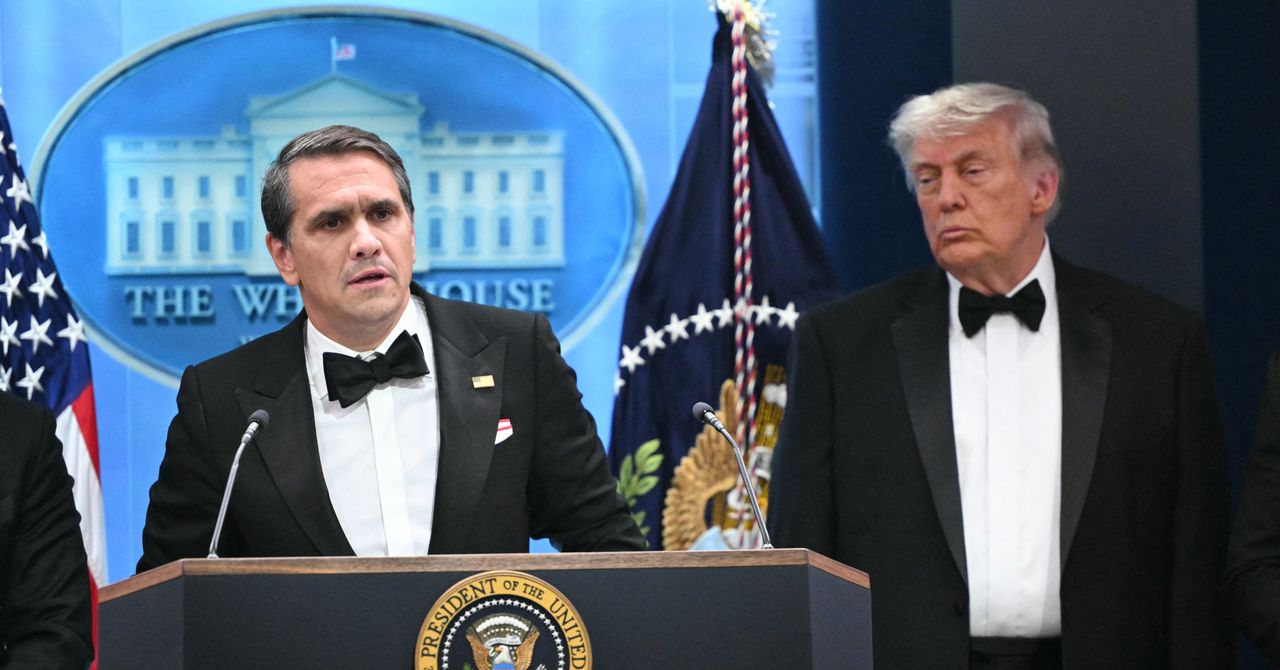
A 31-year-old engineer and computer scientist was identified by media reports and President Donald Trump as the suspected shooter at the White House Correspondents Dinner on Saturday night.
Cole Tomas Allen, of Torrance, California, was apprehended following the firing of shots at the Washington Hilton, where Trump was scheduled to deliver remarks to a ballroom full of journalists, cabinet officials, and Hilton staff. Allen’s name surfaced in media reports shortly before Trump posted two photos of a suspect following his apprehension. The person in the photos Trump posted matches photos of Allen.
In dramatic scenes, several shots were heard outside the ballroom, after which Trump and Vice President JD Vance were immediately rushed off the stage by the United States Secret Service. In the immediate aftermath of the shooting incident, it briefly appeared as if the event would proceed—Trump posted “LET THE SHOW GO ON” on Truth Social—but the event was eventually shut down.
According to the Metropolitan Police Department, the suspect “charged” a Secret Service checkpoint at the Hilton hotel, and was intercepted by agents. MPD interim chief Jeffery Carroll said the suspect was carrying a “shotgun, handgun, and multiple knives.”
At a White House press conference following the shooting, Trump said one United States Secret Service agent was shot but saved from serious injury by his bulletproof vest. Trump said the agent, who was not named, is “doing great” and in “great shape.” No other injuries were immediately reported.
The suspect was later transported to a local hospital “to be evaluated,” according to Carroll, who said he appears to be a “lone actor.”
Around the time Trump’s press conference began on Saturday night, he posted a picture on his Truth Social account appearing to show the suspected shooter on the ground, with his hands restrained behind his back, and a foil warming blanket covering the lower half of his body.
A WIRED review of public databases shows a seemingly minimal online presence associated with Allen’s name. According to his LinkedIn profile, he graduated from Caltech in 2017 with a bachelor’s in mechanical engineering and from California State University Dominguez Hills in 2025 with a master’s in computer science. An apparent photo of Allen that appears on Caltech’s website identifies him as a member of the school’s Mechanical Engineering 72 class, described by the school as a “two-term engineering design lab” for building robots and autonomous vehicles. His name is also listed in a 2025 Dominguez Hills graduation program. A search in a public facial recognition database returns only two images, both apparently of him as an undergraduate.
According to the alleged shooter’s LinkedIn profile, he has been employed part-time since March 2020 at C2 Education, a private company that helps students prepare for the SAT and ACT exams. In December 2024, C2 Education said in posts on LinkedIn and Facebook that he was the company’s “December Teacher of the Month.”
Since 2018, the suspected shooter has self-identified on his LinkedIn profile as a “self-employed” indie game developer. He appears to have released an “atomic fighting game” called Bohrdom on Steam in 2018. The game was advertised using accounts on YouTube and X that appeared to have little to no following. The caption for a trailer of the game describes it as a “non-violent, skill-based, asymmetrical fighting game loosely based on a chemistry model that is itself loosely based on reality.”
C2 Education and did not immediately respond to requests for comment. When reached for comment, the Metropolitan Police Department referred WIRED to a video of its public press conference.


Strait of Hormuz disruption ‘systemic shock’ threatening SE Asia: ERIA

Anta: The Chinese sports brand taking on Nike and Adidas

Prince Harry stirs new debate at Palace with bold move: ‘walking liability’

-

 Sports1 week ago
WWE WrestleMania 42 Night 2: Live match results and analysis
-

 Sports1 week ago
NCAA men’s gymnastics championship: All-time winners list
-

 Fashion1 week ago
UK’s Sosandar returns to profitability amid robust FY26 performance
-

 Politics6 days ago
UK’s Starmer seeks to deflect blame over Mandelson appointment
-

 Entertainment7 days ago
Lee Anderson, Zarah Sultana kicked out of UK Parliament for calling PM ‘liar’
-

 Entertainment1 week ago
Ruby Rose old essay resurfaces detailing night of alleged Katy Perry assault
-

 Entertainment1 week ago
Nathalie Baye, low-key legend of French cinema, dies aged 77
-
 Business1 week ago
No fuel shortage: Govt assures 100% domestic LPG, PNG, CNG supply amid Hormuz energy crunch – The Times of India