

Business
What are tariffs, how do they work and why is Trump using them?

 Getty Images
US President Donald Trump has threatened to impose further tariffs on eight European allies who oppose his demands for control of Greenland.
In 2025, he placed a number of taxes on goods reaching the US from countries around the world, arguing that the move would boost American manufacturing and create jobs.
Critics warned of higher prices and damage to the global economy, and the US Supreme Court is considering the legality of the tariffs Trump has brought in.
What are tariffs and how do they work?
Tariffs are taxes on imported goods.
Typically, the charge is a percentage of a good’s value.
For example, a 10% tariff on a $10 product would mean a $1 tax on top – taking the total cost to $11 (£8.17).
The tax is paid to the government by companies bringing in the foreign products.
These firms may pass some or all of the extra cost on to their customers, which in this case means ordinary Americans and other US businesses.
They may also decide to import fewer goods.
Why is Trump using tariffs?
Trump says tariffs increase the amount of tax raised by the government, encourage consumers to buy more American-made goods and boost investment in the US.
He wants to reduce the US trade deficit – the gap between the value of goods it buys from other countries and those it sells to them.
The president argues that the US has been exploited by “cheaters” and “pillaged” by foreigners.
He said that China, Mexico and Canada must do more to stop migrants and the illegal drug fentanyl reaching the US.
Trump has also used the threat of tariffs to encourage other countries to support the US on issues unrelated to trade – Russia’s invasion of Ukraine and Iran’s suppression of protests, as well as his demands on Greenland.
Many tariffs have been amended or delayed after being announced.
How will the new tariffs on eight European countries work?
On 17 January, Trump threatened to impose a further 10% tariff on eight European countries who have rejected his Greenland plans.
He said the rate would apply to goods from Denmark, Norway, Sweden, France, Germany, the UK, the Netherlands and Finland from 1 February, but could later rise to 25% – and would last until a deal was reached.
The move was widely condemned by European leaders, including UK Prime Minister Sir Keir Starmer and French President Emmanuel Macron, who said the EU could consider a series of retaliatory options including a so-called “trade bazooka”.
Officially known as the Anti-Coercion Instrument (ACI), this is a law that allows the EU to respond to economic blackmail from non-EU countries. It threatens very severe consequences.
In July 2025, European Commission President Ursula von der Leyen agreed the EU would pay 15% tariffs on its US exports.
After the agreement, Brussels suspended the tariffs it had planned to introduce on €93bn (£81bn; $109bn) worth of US goods sold to the EU, from livestock and aircraft parts to whiskey.
The European Parliament had been due to ratify the 15% deal shortly, but is now expected to suspend the agreement, sparking fears of a new trade war.
What are Trump’s tariffs on individual countries?
Negotiations continue with a number of countries, including America’s top three trading partners, China, Canada and Mexico, who have been threatened with particularly high tariffs:
What is the UK tariff deal?

 Reuters
Which goods are affected by Trump’s tariffs?
Some taxes announced by Trump are on particular products, wherever they are made.
These include:
 Reuters
In addition, Trump ended an exemption for imports valued at $800 (£592) or less.
It means low-cost goods are no longer duty-free – a move affecting millions of packages sent every day, including those from online retailers like Shein and Temu.
The companies shipping the parcels now have to pay duties based on the tariff rate which applies to the country the goods were sent from. Otherwise, for six months, they can choose to pay a fixed fee of between $80 and $200 per package.
On 2 January, the White House confirmed it had slashed proposed tariffs of almost 92% on some imported pasta after what it called constructive engagement from firms.
In November, Trump had signed an executive order exempting a range of other food products from tariffs, including avocados, bananas, beef and coffee because of domestic shortages.
Why has the Supreme Court been considering the legality of Trump’s tariffs?
Trump’s tariffs have faced numerous legal challenges.
The Trump administration brough in certain tariffs using the 1977 International Emergency Economic Powers Act. Declaring an emergency under the law meant Trump could bypass Congress.
In August 2025, a US appeals court ruled that most of the tariffs were illegal, but left them in place.
The White House asked the US Supreme Court to overturn that decision. A ruling is expected soon.
Trump posted on social media that it would be a “complete mess” if the Supreme Court struck down his tariffs, and warned of difficulties if businesses were told they could claim refunds.
“It would take many years to figure out what number we are talking about and even, who, when, and where, to pay,” he said.
Have prices gone up for US consumers?
Some products have become more expensive – including toys, appliances and furniture as well as certain foodstuffs.
US inflation was 2.7% in the 12 months to December, down from 3% in September, but up from 2.4% in April, before most tariffs started.
Many firms say they are passing on the cost of tariffs to US customers, including Target, Walmart and Adidas.
The cost of goods manufactured in the US using imported components is also expected to rise.
For example, car parts typically cross the US, Mexican and Canadian borders multiple times before a vehicle is completely assembled.
How are tariffs affecting the US and global economies?
Trump was accused of throwing the global economy into turmoil when he announced the first tariffs of his second presidential term.
Although financial markets have since largely recovered, in October 2025 the International Monetary Fund (IMF) said the overall picture remained volatile, and that US tariffs were having a negative effect.
It forecast global growth of 3.2% for 2025, and 3.1% in 2026. That was a slight increase from its July predictions, but still below the 3.3% it had projected for both years before Trump’s measures were announced.
It thinks the US economy will grow by 2% in 2025, and 2.1% in 2026. That’s down from the 2.8% growth recorded in 2024, but still the fastest among the world’s most advanced economies.
The most recent US figures show the economy picked up speed over the three months to September 2025, as consumer spending jumped and exports increased.
The economy grew at an annual rate of 4.3%, up from 3.8% in the previous quarter. That was better than expected, and marked the strongest growth in two years.
Imports – which count against growth – continued to decline during the period.
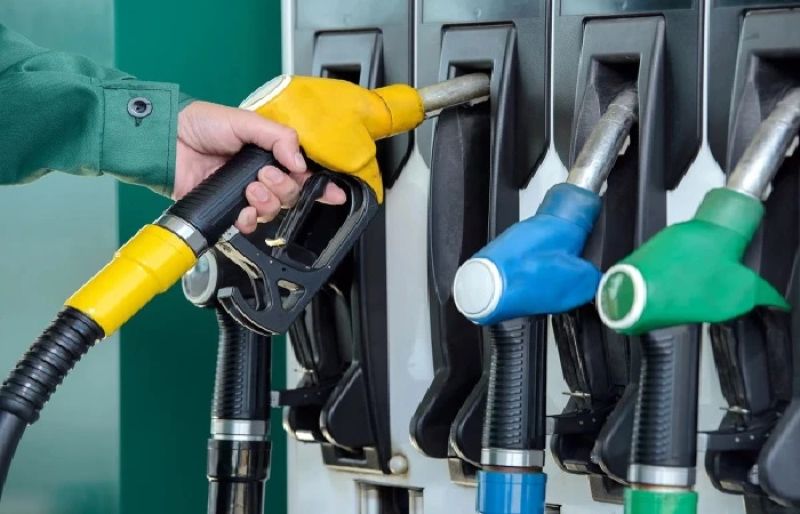
The federal government announced a Rs26.77 per litre hike in the price of petrol and high-speed diesel each on Friday, according to a notification issued by the Petroleum Division.
The new prices will be effective from April 25, 2026 for a week, the notification stated.
Following the increase, the price of HSD has jumped from Rs353.42 to Rs380.19, while the petrol price now stands at Rs393.35.
The government has been reviewing petroleum prices every Friday night following the now-paused US-Israel war on Iran, which began on February 28.
In the previous weekly review, the prime minister announced a reduction of Rs32.12 per litre in the price of high-speed diesel, while the petrol price remained unchanged.
The government jacked up petrol and diesel prices despite oil prices falling globally on Friday after it appeared a second round of Middle East talks was back on, bolstering prospects for an end to a war that has crippled energy shipments from the Gulf.
Oil prices had been climbing earlier as investors worried about a lack of progress in ending the Middle East crisis, with Tehran keeping the Strait of Hormuz closed and the US maintaining a blockade of Iranian ports.
But they dropped on reports that Iran’s Foreign Minister Abbas Araghchi was to arrive in Islamabad on Friday night.
Brent crude, the international benchmark contract, fell back below $100 a barrel.
facebook twitter
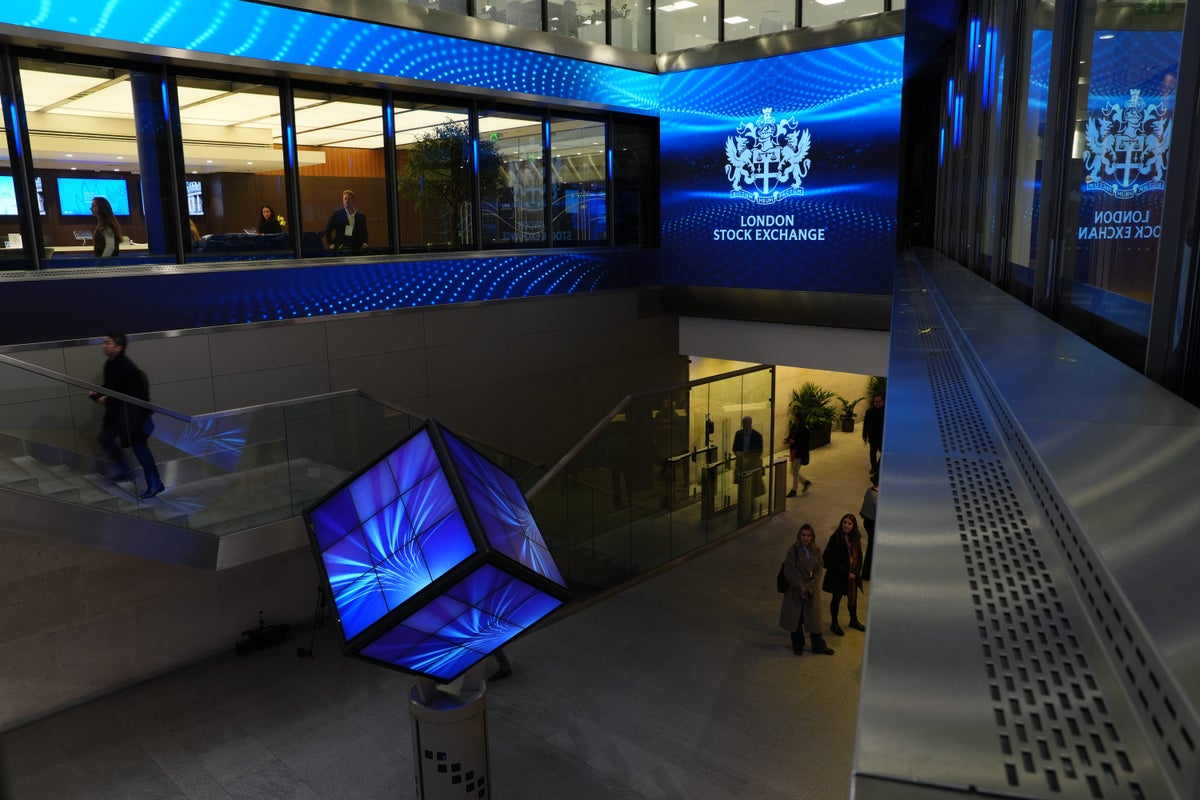
The FTSE 100 ended the week on the back foot as the crisis in the Middle East remained deadlocked.
The FTSE 100 closed down 77.93 points, 0.8%, at 10,379.08. The FTSE 250 ended down 181.71 points, 0.8%, at 22,582.81, while the AIM All-Share fell 5.73 points, 0.7%, to 796.40.
For the week, the FTSE 100 fell 2.7%, the FTSE 250 also declined 2.7% and the AIM All-Share dipped 1.7%.
The oil price continued to tick higher amid few signs of a breakthrough in the Middle East crisis.
AFP reported that Iranian foreign minister Abbas Araghchi is expected to arrive in Islamabad on Friday night, citing an official source in Pakistan, without providing details about who he was likely to meet.
The Pakistan capital has been gearing up for an anticipated second round of talks between the US and Iran, but it was not clear whether Mr Araghchi and the delegation accompanying him would meet any US officials to discuss the Middle East war.
The BBC reported that the suggestion coming from Iran is that these are bilateral talks with Pakistan, not meeting the US.
Writing on X, Mr Araghchi said his trip to Islamabad is to “closely co-ordinate with our partners on bilateral matters and consult on regional developments”.
US defence secretary Pete Hegseth said Iran has a chance to “make a good, wise deal”, adding that the US naval blockade of Iranian ports “is growing and going global”.
Mr Hegseth said the US is not “anxious” to make a deal, and “the ball is in [Iran’s] court”.
Brent oil traded at 105.78 dollars a barrel on Friday afternoon, compared with 103.25 dollars at the time of the equities close in London on Thursday.
In European equities on Friday, the CAC 40 in Paris ended down 0.8%, and the DAX 40 in Frankfurt ended 0.1% lower.
The mood was brighter in the US. In New York, the Dow Jones Industrial Average was down 0.4%, but the S&P 500 was 0.5% higher and the Nasdaq Composite 1.2% to the good.
David Morrison, senior market analyst at Trade Nation, explained the war in the Gulf is hitting Europe and the UK harder than the US.
“The former are reliant on imported energy in a way the US isn’t. While the US still must deal with higher crude oil prices, it has few worries over supplies drying up,” he pointed out.
On Wall Street, Intel was the star of the show soaring 23% after better-than-expected first quarter results and guidance, reporting “unprecedented” demand for its chips.
The yield on the US 10-year Treasury stretched to 4.32% on Friday from 4.29% on Thursday. The yield on the US 30-year Treasury widened to 4.92% from 4.89%.
The pound eased to 1.3497 dollars on Friday afternoon from 1.3500 dollars on Thursday. Against the euro, sterling fell to 1.1532 euros from 1.1551 euros.
In the UK, retail sales increased faster than expected in March as fuel sales soared 6.1% amid surging oil prices.
According to the Office for National Statistics, the volume of retail sales rose by 0.7% in March, against market consensus for no growth.
Total retail sales, excluding automotive fuel, rose by 0.2% on-month, in line with FXStreet-cited expectations.
Danni Hewson, AJ Bell head of financial analysis, explained the figures show rising petrol and diesel prices are “eating into household budgets”.
“People can only spend a pound once and if they’re choosing to shell out more than normal on fuel, they’ll have less to spend on other purchases,” she explained.
A separate report showed UK firms think food inflation could jump as high as 7% this year.
According to a Bank of England survey the Middle East conflict has “eroded” confidence that the UK economy will improve later this year.
The Decision Maker Panel survey showed that firms expected to increase their prices by 3.8% over the next 12 months, according to data for the three months to April.
This is 0.3 percentage points higher than predicted over the three months to March.
Meanwhile, the Bank of England’s deputy governor, Sarah Breeden, told the BBC on Friday the the UK central bank expects stock markets around the world to fall as share prices do not reflect the many risks facing the global economy.
Ms Breeden, who is also the Bank’s head of financial stability, said: “There’s a lot of risk out there and yet asset prices are at all-time highs. We expect there will be an adjustment at some point.”
The euro traded lower against the greenback, falling to 1.1703 dollars on Friday from 1.1708 dollars on Thursday. Against the yen, the dollar was trading at 159.55 yen, from 159.50 yen.
On the FTSE 100, packaging firm Mondi slumped 11% as it missed profit forecasts in the first quarter.
The Weybridge-based packaging firm on Friday said underlying earnings before interest, taxes, depreciation and amortisation, including forestry fair value, fell 27% to 212 million euros for the first quarter that ended March 31, from 290 million euros a year earlier.
JD Sports Fashion fell 1.9% as the Financial Times said a boardroom rift sparked the departure of chairman Andrew Higginson this week.
The FT reported that Mr Higginson quit as chairman of JD Sports after pushing for chief executive Regis Schultz to be ousted and failing to win unanimous backing for the move.
But JD Sports told Alliance News that Mr Schultz has the “continued support” of its board.
A JD Group spokesperson said: “It was mutually agreed between Andy and the board that this is the right time for a change of chair; there has been no disagreement about the board’s continued support for the CEO. The board is grateful for the valuable role that Andy has played during his tenure at the business.”
Airlines headed south amid the higher oil price and fears over jet fuel supplies.
Wizz Air fell 6.0%, easyJet 2.3% and British Airways owner IAG 1.4%.
Gold traded at 4,718.34 dollars an ounce on Friday, down from 4,731.39 dollars at the same time on Thursday.
The biggest risers on the FTSE 100 were British American Tobacco, up 96.00p at 4,302.00p, Intercontinental Hotels Group, up 3.10p at 146.00p, London Stock Exchange Group, up 180.00p at 9,992.00p, Sage Group, up 14.60p at 902.80p and Marks & Spencer, up 5.35p at 347.00p.
The biggest fallers on the FTSE 100 were Mondi, down 93.60p at 748.20p, Babcock International, down 54.50p at 1,131.50p, Antofagasta, down 145.00p at 3,686.00p, AstraZeneca, down 536.00p at 13,956.00p and JD Sports Fashion, down 2.12p at 69.94p.
Monday’s global economic calendar has German consumer confidence data. Later in the week, interest rate decisions are due in the US, Europe, UK and Japan. Inflation prints will be released in Australia and for the euro area.
Next week’s local corporate calendar sees first quarter results from oil majors BP and Shell, pharmaceutical firms GSK and AstraZeneca and banks Barclays, NatWest and Lloyds.
Contributed by Alliance News
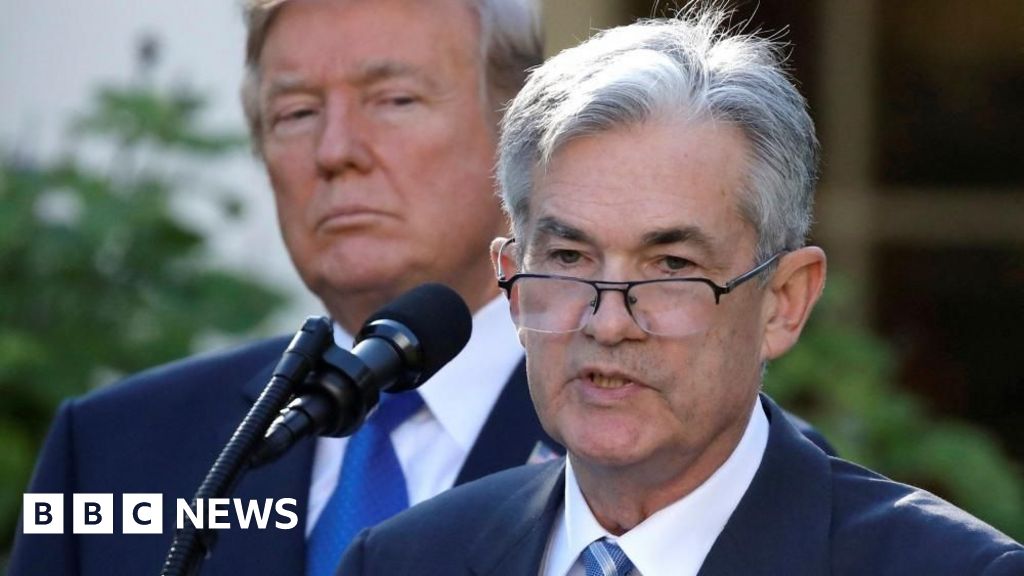
Powell’s term is nearing its end and the US Senate is considering Trump’s nominee for his replacement, Kevin Warsh. A key Republican, Thom Tillis, has withheld his support for Warsh unless the Trump administration would drop its investigation into Powell.


NASCAR makes major change in front office, including new CEO in unprecedented move: report

Extended interview: Don Cheadle – CBS News

Charlie Sheen updates on relationship with old pal Jon Cryer

-

 Fashion1 week ago
France’s LVMH Q1 revenue falls 6%, shows resilience amid Iran war
-

 Tech1 week ago
CYBERUK ’26: UK lagging on legal protections for cyber pros | Computer Weekly
-

 Sports5 days ago
WWE WrestleMania 42 Night 2: Live match results and analysis
-

 Sports1 week ago
Faheem Ashraf backs Islamabad United’s push, calls league a ‘career-changing platform’
-

 Sports5 days ago
NCAA men’s gymnastics championship: All-time winners list
-
 Business1 week ago
PepsiCo earnings beat estimates as North American food business improves
-

 Tech1 week ago
Anthropic Plots Major London Expansion
-
 Entertainment4 days ago
Lee Anderson, Zarah Sultana kicked out of UK Parliament for calling PM ‘liar’