

Business
What Budget rumours are doing to the FTSE 100

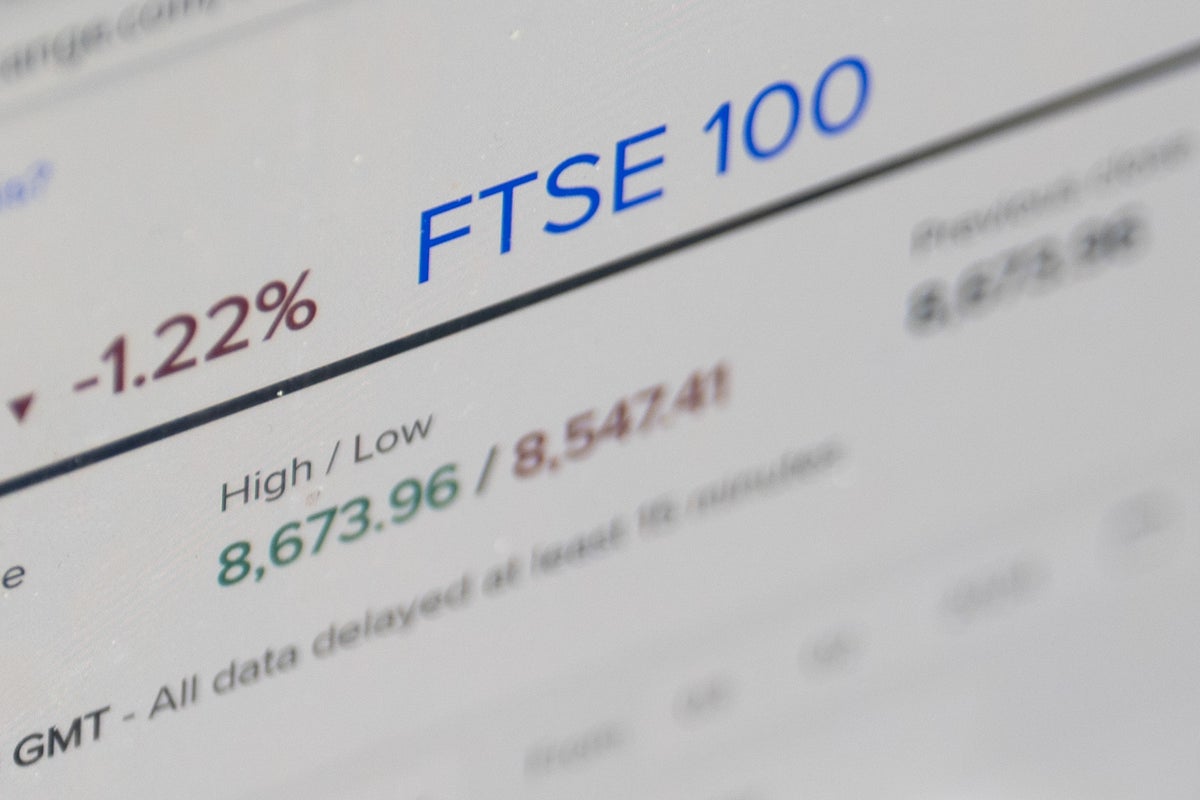
Banking stocks gave the FTSE 100 a lift on Tuesday amid rumours that the sector will be spared a tax hit in Chancellor Rachel Reeves’ budget.
The FTSE 100 index closed up 74.62 points, 0.8 per cent, at 9,609.53.
The FTSE 250 ended up 205.83 points, 1.0 per cent, at 21,617.41, and the AIM All-Share closed up 4.93 points, 0.7 per cent, at 742.09.
High street lenders Lloyds Banking Group rose 3.8 per cent, NatWest Group climbed 3.7 per cent and Barclays advanced 2.4 per cent.
It came as the Financial Times said that Ms Reeves is unlikely to impose further tax hikes on UK banks, calming fears that they could be hit.
The chancellor will deliver the budget statement to Parliament around 12.30pm on Wednesday, after Prime Minister’s Questions.
It is likely to contain further hefty tax increases as Ms Reeves looks to cover the expected fiscal deficit and seek a higher buffer against future economic shocks.
An extension to the freeze on personal tax allowances, a mansion tax, increases in betting duties, and changes to salary sacrifice schemes are all likely to form part of a smorgasbord approach to tax policy.
But economists are less sure that this scatter-gun approach is the right path to follow.
Citi’s Callum McLaren-Stewart called the smorgasbord approach “politically palatable, but economically problematic”.
Kallum Pickering at Peel Hunt said a “haphazard patchwork of smaller anti-growth tax increases” would be a “bad outcome”.
Ahead of the budget, the pound was quoted higher at US$1.3183 at the time of the London equities close on Tuesday, compared to $1.3104 on Monday.
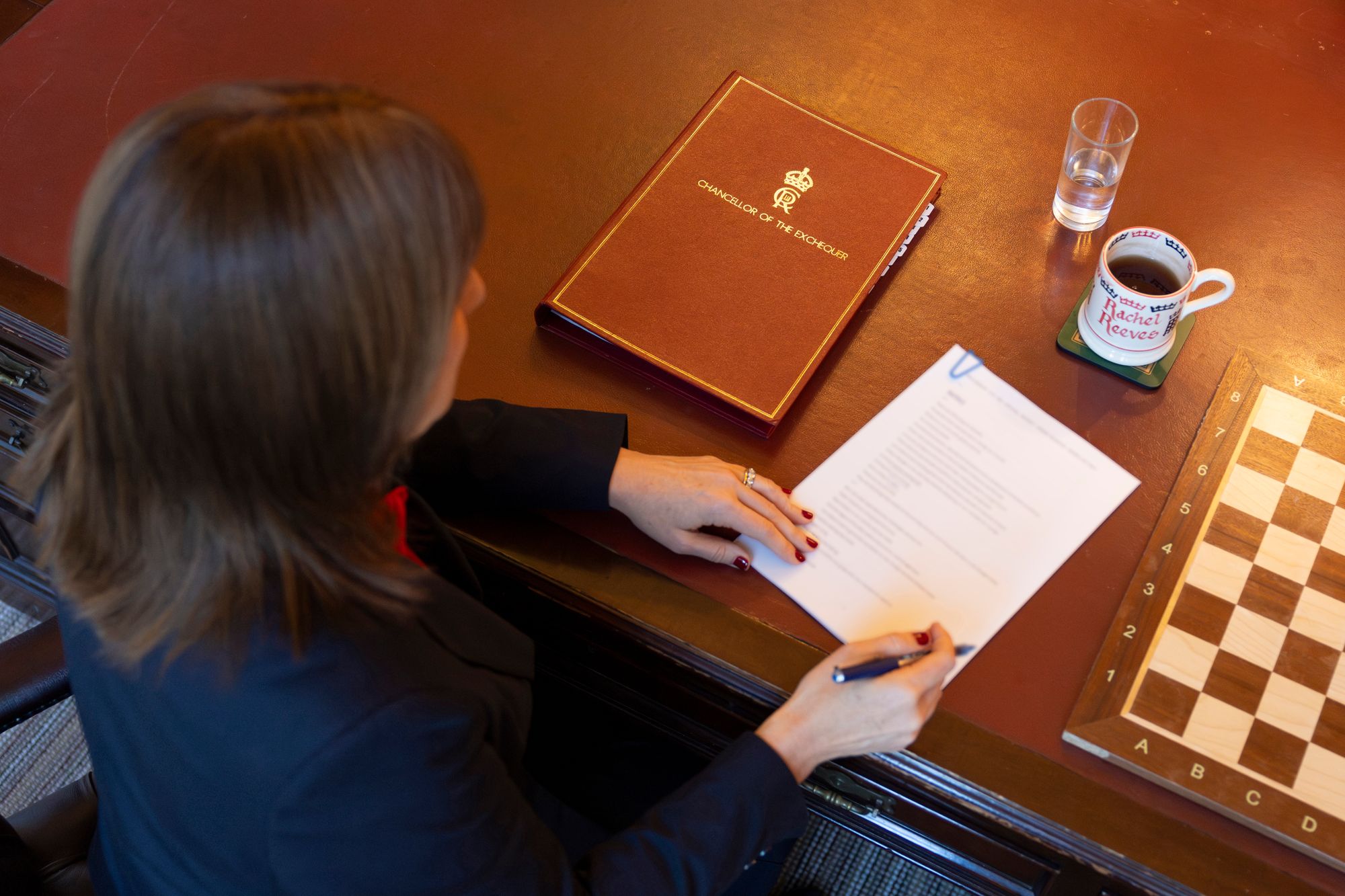
The yield on the UK 10-year gilt was down by 5 basis points at 4.49 per cent.
Reports also suggest that the chancellor may announce a stamp duty holiday for new listings on the London Stock Exchange.
Hargreaves Lansdown’s Emma Wall said this would be a “welcome boost” for the UK stock market which has been “losing out” to New York for initial public offers in recent years.
Currently, investors have to pay 0.5 per cent stamp duty tax when they buy shares, but this is expected to be waived for new listings for up to three years.
In European equities on Tuesday, the CAC 40 in Paris closed up 0.8 per cent, while the DAX 40 in Frankfurt ended 1.0 per cent to the good.
Stocks in New York were mixed after Monday’s stellar gains.
The Dow Jones Industrial Average was up 0.7 per cent, the S&P 500 index was up 0.2 per cent, but the Nasdaq Composite fell 0.2 per cent.

The yield on the US 10-year Treasury was quoted at 4.01 per cent, narrowed from 4.05 per cent. The yield on the US 30-year Treasury was quoted at 4.65 per cent, trimmed from 4.69 per cent.
After the data vacuum caused by the American government shutdown, investors weighed a hefty batch of new figures on the health of the US economy.
Reports were mixed with US producer price growth steady year-on-year in September, while a retail sales rise was tamer than forecast on-month.
According to the Bureau of Labor Statistics, producer prices rose 2.7 per cent on-year in September, in line with August’s rise and meeting the FXStreet-cited consensus estimate.
Separately, the Census Bureau reported US retail sales rose 0.2 per cent in September from August, shy of the FXStreet-cited forecast of a 0.4 per cent rise. In August, sales rose 0.6 per cent from July.
In addition, a report from the Conference Board showed consumer confidence in the US weakened in November, hitting its second-lowest level since April.
The CME FedWatch tool now places an 83 per cent chance of a quarter-point cut at December’s Federal Reserve meeting.
The data weighed on the dollar. The euro stood higher at $1.1569 on Tuesday, against $1.1525 on Monday. Against the yen, the dollar was trading lower at 156.13 yen compared to 156.91 yen.
Back in London, Beazley fell 9.2 per cent as analysts said a planned US$500 million investment to build out a new Bermuda platform will mean a “material” step down in share buyback expectations.
The Lloyds of London insurer announced the news alongside mixed trading results in the first nine months of 2025.
But RBC Capital Markets said the “key new news” was the $500 million capital to be set aside to set up in Bermuda.
Beazley said the investment supports growth from 2026 onward and “supports our expansion into the alternative risk transfer market”.
But UBS thinks this puts a share buyback at the year-end “at risk”, and if there still is one, it could be of a lesser amount than the broker’s US$700 million estimate.
Faring better, Kingfisher rose 6.0 per cent after raising profit guidance for the second time in three months.
The DIY retailer, which owns the B&Q, Screwfix, Castorama and Brico Depot brands, now expects full-year adjusted pretax profit between £540 million to £570 million.
In September, Kingfisher upgraded its profit outlook to the “upper end” of the previously guided range of £480 million to £540 million.
On the FTSE 250, AO World jumped 1.5 per cent as it raised its profit forecast after reporting “continued positive trading”.
The Bolton, England-based consumer electronics seller in September upped its profit view to a £45 million to £50 million range.
Since then, AO World said it has seen “continued positive trading”, and it now expects pre-tax profit “around the top” of the outlook range.
But Baltic Classifieds slid 2.2 per cent as JPMorgan double-downgraded it to “underweight” from “overweight”.
The broker thinks online classifieds players will have to “materially” increase their efforts to maintain their gatekeeper position by delivering “undisputable, top-notch, now AI-driven search experiences and relevant information to compete with GenAI agents and new aggregators”.
Brent oil was quoted at 61.71 dollars a barrel at the time of the London equities close on Tuesday, down from $62.90 late on Monday.
The oil price fell amid reports that Ukraine has agreed to the terms of a peace deal with US representatives, although additional reports suggested Russia may block any modified plan.
Gold was quoted at 4,132.40 dollars an ounce, up against $4,097.64.
The biggest risers on the FTSE 100 were Airtel Africa, up 19.2p at 314.80p, Kingfisher, up 17.5p at 309.9p, Burberry, up 52.5p at 1,168.5p, Barratt Redrow, up 15.5p at 393.9p and Lloyds Banking Group, up 3.3p at 90.6p.
The biggest fallers on the FTSE 100 were Beazley, down 79p at 781p, Intertek, down 278p at 4,592, Pearson, down 21.8p at 985.2p, BAE Systems, down 31p at 1,621p and Compass, down 41p at 2,408p.
Wednesday’s economic calendar has the UK budget, the Beige Book in the US and an interest rate call in New Zealand overnight.
Wednesday’s UK corporate calendar has half-year results from property developer Helical, equipment hire firm Speedy Hire, and celebration cakes retailer Cake Box.

One petrol retailer says he is experiencing about five drive-offs a week at each forecourt, costing him thousands.
Source link
Business
Billions to be paid! US starts refund process for Trump tariffs: Can Indian exporters claim? – The Times of India
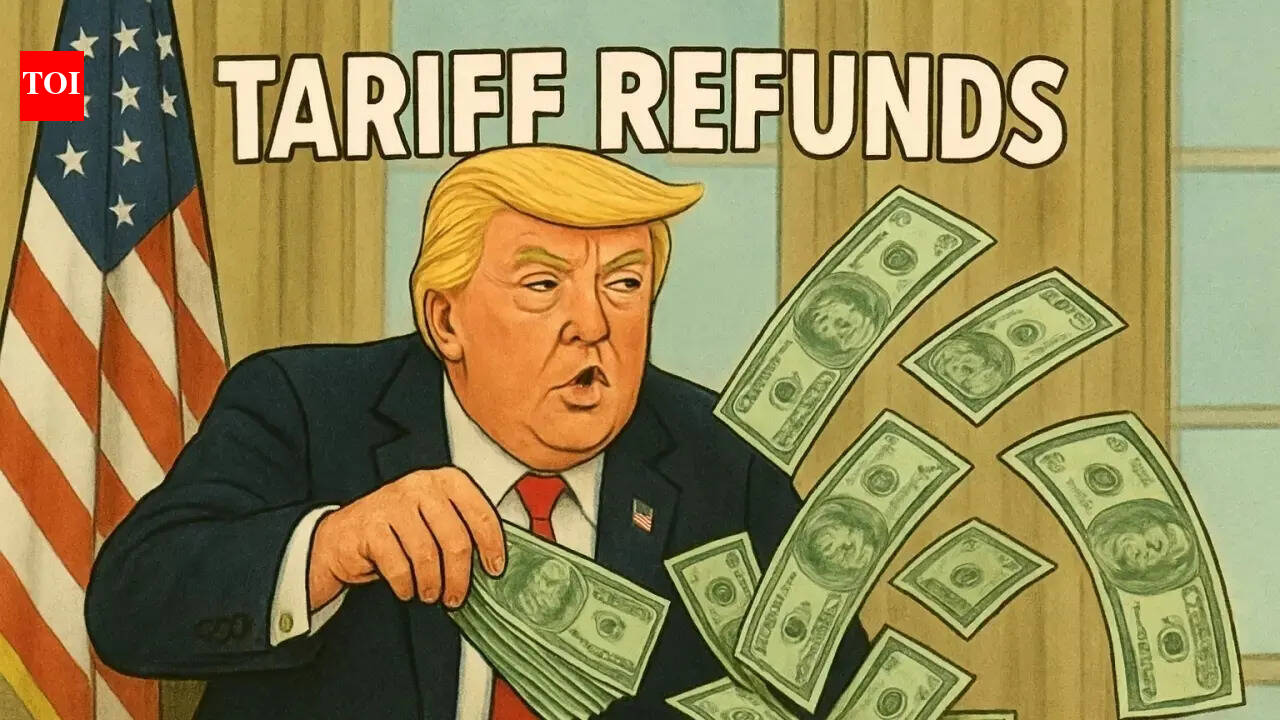
The US government has rolled out a system to facilitate refunds of over $166 billion from tariffs introduced by Donald Trump and later invalidated by the US Supreme Court. In February, the court struck down a broad set of reciprocal tariffs, delivering a significant setback to a central pillar of Trump’s economic agenda and paving the way for repayments.On Monday, US Customs and Border Protection announced that the first phase of its refund-processing platform is now operational, allowing importers and customs brokers to begin filing claims to recover the duties they had paid.The agency had earlier estimated in March that more than 330,000 importers may qualify for reimbursements on duties or deposits linked to over 53 million shipments. In its initial rollout, the platform covers about $127 billion in duty payments eligible for electronic refunds.
Tariff refunds What US Customs and Border Protection has said
The process to return reciprocal tariff payments starts on April 20 through a newly launched online platform, CAPE (Consolidated Administration and Processing of Entries), operated by US Customs and Border Protection.This move follows a February 20, 2026 judgment by the US Supreme Court, which ruled that tariffs introduced by Donald Trump were unlawful. The court found that these duties had been imposed under the International Emergency Economic Powers Act without adequate legal backing.Also Read | Iran has closed Strait of Hormuz completely: What does this mean for India’s crude oil, LPG, LNG supplies?The tariffs impacted a wide range of exports from countries including India. To receive repayments, importers in the US are required to submit claims which include shipment details, applicable tariff classifications and proof of payment. Once approved, these refunds along with interest are expected to be processed within 60 to 90 days. Eligibility is limited to those who originally paid the tariffs, primarily US importers and businesses.The total amount to be refunded is estimated at around $166 billion, with nearly $12 billion tied to Indian goods.The tariff structure began at 10% on April 2, 2025, before escalating quickly. Duties on Indian goods increased to 25% by August 7, 2025, and further to 50% by August 28, remaining at that level until early February 2026. On February 6, 2026, rates were lowered to 18% following negotiations. However, the Supreme Court’s ruling later that month nullified the entire regime, effectively rendering the tariffs void and paving the way for refunds.
What it means for India
Exporters and end consumers are not permitted to file claims directly, although some companies, such as FedEx, may opt to pass on the refunded amounts at their discretion.According to Global Trade Research Initiative (GTRI), around 53% of India’s shipments to the US, which largely comprises textiles and apparel, were subject to higher tariffs. This makes them the largest contributors to the refund pool. Of the nearly $12 billion tied to Indian exports, textiles and apparel are estimated to account for around $4 billion, followed by engineering goods with a similar share and chemicals contributing about $2 billion, while other sectors make up the remainder.However, what is important to understand is that these refunds will not flow directly to Indian exporters. The payments are meant only for US importers who bore the tariff burden.Also Read | Explained: On way to 4th largest, how India slipped to 6th rank & what it means for 3rd largest economy dream“Payments go only to US importers, and exporters have no legal right to claim them. Indian exporters, therefore, have no direct legal route to claim refunds,” explains Ajay Srivastava, founder of GTRI.Hence, any potential recovery of these refunds will depend on commercial discussions. Exporters will need to actively engage with their US counterparts to negotiate a share of the refunded duties, particularly in cases where earlier pricing factored in tariff costs. GTRI explains that this can be done by reopening contracts, adding rebate-sharing clauses, asking for price revisions or credit notes, and using invoices and tariff data to show how costs were absorbed. “Exporters with stronger bargaining power, especially in textiles and engineering goods, may secure better terms in future orders,” the think tank says.Industry bodies such as the Apparel Export Promotion Council, Engineering Export Promotion Council of India and Chemexcil can also assist exporters with guidance on contract renegotiation and sector-specific approaches, it adds.

John Ternus will take over running the technology giant as Cook steps up to become executive chairman.
Source link


Global energy growth slows to 1.3% in 2025: Report

UK’s Starmer seeks to deflect blame over Mandelson appointment

How to Watch the Lyrids Meteor Shower at Its Peak

-

 Fashion5 days ago
France’s LVMH Q1 revenue falls 6%, shows resilience amid Iran war
-

 Sports1 week ago
The case for Man United’s Fernandes as Premier League’s best
-

 Entertainment1 week ago
Palace left in shock as Prince William cancels grand ceremony
-
 Business1 week ago
UK could adopt EU single market rules under new legislation
-

 Entertainment6 days ago
Is Claude down? Here’s why users are seeing errors
-

 Fashion1 week ago
Energy emerges as biggest cost driver in textile margins
-
 Business1 week ago
Delta Air Lines unveils first new Delta One suite in premium cabin arms race
-

 Tech1 week ago
A Lot of Shops Won’t Fix Electric Bikes. Here’s Why