

Politics
What would wider recognition of Palestine mean for Palestinians and Israel?

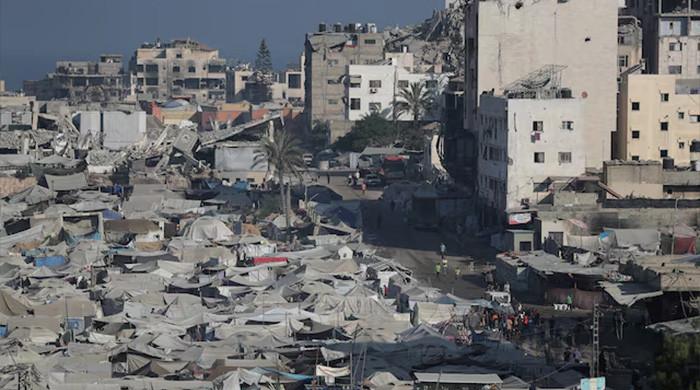
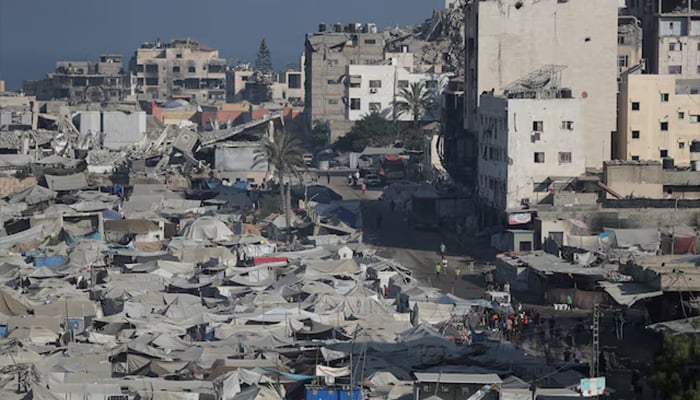
Major European powers have said they could recognise an independent Palestinian state in coming weeks. What would that mean for the Palestinians and Israel?
What is the status of Palestinian statehood now?
The Palestine Liberation Organization declared the independence of a Palestinian state in 1988, and most countries in the global South quickly recognised it. Today, 147 of the 193 member states of the United Nations have recognised a Palestinian state, most recently Mexico in January 2025.
Israel’s main ally the United States has long said it intends to recognise a Palestinian state eventually, but only at the end of negotiations between the Palestinians and Israel on an agreed “two-state solution”. Until recent weeks, this was also the position of the major European powers. Israel and the Palestinians have held no such negotiations since 2014.
A delegation officially representing the State of Palestine has permanent observer status but no voting rights at the United Nations. No matter how many individual countries recognise Palestinian independence, full UN membership would require approval of the Security Council, where Washington has a veto.
Palestinian diplomatic missions worldwide, including the mission to the UN, are controlled by the Palestinian Authority, which is recognised internationally as representing the Palestinian people.
The PA, led by President Mahmoud Abbas, exercises limited self rule in parts of the Israeli-occupied West Bank under agreements with Israel. It issues Palestinian passports and runs the Palestinian health and education systems.
In the Gaza Strip, administration has been under the control of the Hamas group since 2007, when it drove out Abbas’s Fatah movement, although the PA still funds many salaries.
Who is promising to recognise Palestine and why?
Britain, France, Canada, Australia and Belgium have all said they will recognise a Palestinian state at the United Nations General Assembly later this month, although London said it could hold back if Israel were to take steps to ease the humanitarian crisis in Gaza and commit to a long-term peace process.
The countries say these moves are intended to put pressure on Israel to end its assault on Gaza, curtail the building of new Jewish settlements in the occupied West Bank and recommit to a peace process with Palestinians.
French President Emmanuel Macron, the first leader of a major Western power to endorse recognition, has said the move would be accompanied by a commitment by the PA to enact reforms, which would improve Palestinian governance and make the PA a more credible partner for the post-war administration of Gaza.
What has recognition meant in practice?
Those who see recognition as a largely symbolic gesture point to the negligible presence on the ground and limited influence in the conflict of countries such as China, India, Russia and many Arab states that have recognised Palestinian independence for decades.
Without a full seat at the United Nations or control of its own borders, the Palestinian Authority has only limited ability to conduct bilateral relations. There are no missions with the status of embassies in Palestinian territory, and countries cannot freely send diplomats there.
Israel restricts access for trade, investment and educational or cultural exchanges. There are no Palestinian airports. The landlocked West Bank can be reached only through Israel or through the Israeli-controlled border with Jordan, and Israel controls all access to the Gaza Strip.
Still, countries planning recognition and the PA itself say it would be more than an empty gesture.
While Western countries considering recognition have not made explicit commitments to provide additional funding to the PA, the Palestinian ambassador to the United Kingdom, Husam Zomlot, said recognition could lead to strategic partnerships.
“We will stand at equal footing,” he told Reuters, adding that every avenue will be pursued “to bring an end to the insanity and to the mistakes of the past”.
Recognising Palestinian independence could also require countries to review aspects of their relationships with Israel, said Vincent Fean, a former British consul general to Jerusalem.
In Britain’s case, this could result in steps such as banning products from Israeli settlements in occupied Palestinian territories, he said, although such moves could also be seen as “symbolic in that sense that those goods are a pinprick in the overall size of the Israeli economy”.
How have Israel and the United States reacted?
Israel, facing a global outcry over its conduct in the Gaza war against Hamas, has reacted angrily to recognition gestures, which it says would reward the Palestinian resistance group for the October 2023 attacks that precipitated the war.
After decades during which Israel was formally committed to a peace process ending in Palestinian independence, Israel is now run by the most far-right government in its history, including parties who say their mission is to make it impossible for the Palestinians ever to gain a state.
Prime Minister Benjamin Netanyahu says Israel will never give up ultimate security control of Gaza or the West Bank.
The United States strongly opposes any move by its European allies to recognise Palestinian independence. It has responded by imposing sanctions on Palestinian officials, including denying and revoking visas which will block Abbas and other PA figures from attending the UN General Assembly in New York.
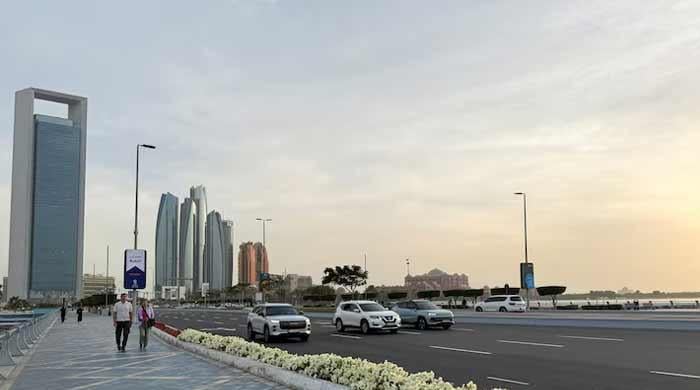
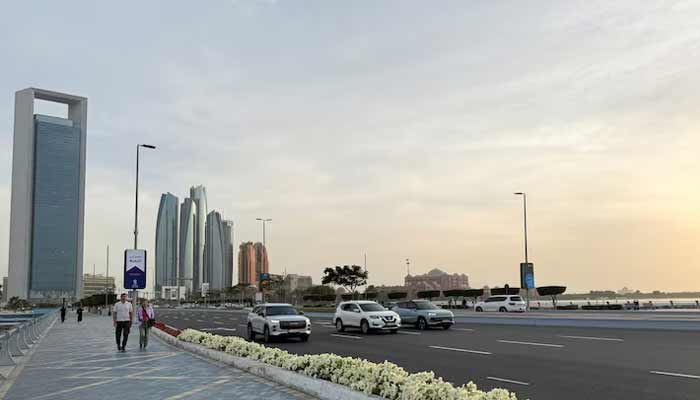
DUBAI: Dubai has announced the implementation of a new public safety law introducing stricter regulations for public spaces and events, with fines ranging from AED500 ($136) to AED1 million ($272,000), authorities said.
Under the legislation, repeat violations within one year could result in fines of up to AED2 million, officials added.
The new law, which takes effect across the emirate on June 1, sets out enhanced safety requirements for public venues and gatherings.
The rules were issued by Dubai’s Ruler, Vice President and Prime Minister of the UAE, Sheikh Mohammed bin Rashid Al Maktoum.
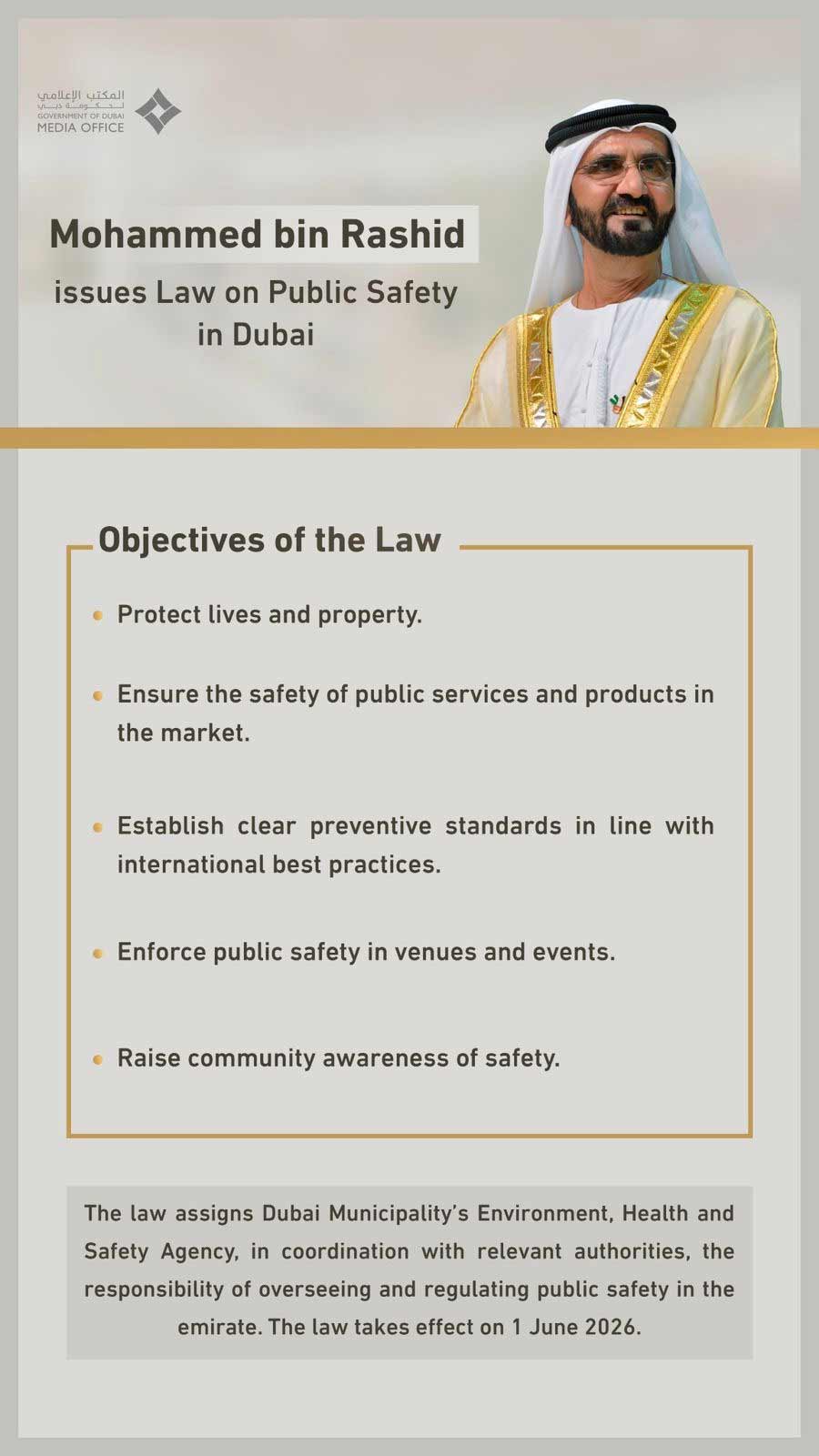
According to the regulations, public venues and events must ensure safe entry and exit routes, adequate lighting, and capacity limits to prevent overcrowding.
Event organisers will be required to provide firefighting equipment, emergency evacuation plans, first aid facilities, and trained security personnel.
Compliance with safety instructions at public venues has been made mandatory.
The law also requires adherence to designated swimming times at beaches and prohibits access to restricted areas.
Possession of explosives or fireworks without a permit is banned, as is the use and transport of hazardous or flammable materials.
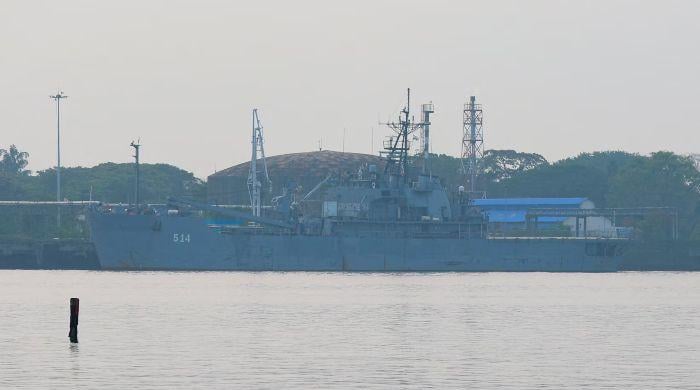
India has allowed an Iranian warship to dock as a humanitarian gesture, Foreign Minister Subrahmanyam Jaishankar said on Saturday, after the US sank another Iranian navy vessel off neighbouring Sri Lanka.
The Lavan docked at India’s southern port of Kochi on Wednesday, the same day the US submarine struck Iranian navy frigate Dena, after an urgent request from Tehran, an Indian government source told Reuters.
US President Donald Trump has said destroying the Iranian navy is one aim of the war he and Israel launched against the Islamic Republic a week ago.
The Lavan – an amphibious landing vessel, according to the US Naval Institute’s online news site – and two other ships “were coming in for a fleet review and then they got, in a way, caught on the wrong side of the events,” Jaishankar told the annual Raisina Dialogue event.
“I think we really approached it from the point of view of humanity, of other than whatever the legal issues were,” he said. “I think we did the right thing.”
At least 87 people were killed in the US attack on the Dena in Sri Lanka’s exclusive economic zone, 19 nautical miles off the coast, outside its maritime boundaries.
India received the docking request for the Lavan on February 28, the day the Iran war started, the source said late on Friday, adding that the request “was urgent as the vessel had developed technical issues”.
Its 183 crew members have been accommodated at naval facilities in Kochi, said the source, who asked not to be identified citing confidentiality.
The Dena was on its way back from a naval exercise organised by India, according to the drill’s website and Sri Lankan officials.
Sri Lankan authorities said on Friday that they were escorting the Iranian naval ship Booshehr to a harbour on the eastern coast and moving most of its crew to a navy camp near Colombo.
- Iran to suspend strikes on neighbours unless attacks from them.
- Putin calls for immediate halt to Iran conflict.
- Iran envoy says 1,332 Iranian civilians killed in war.
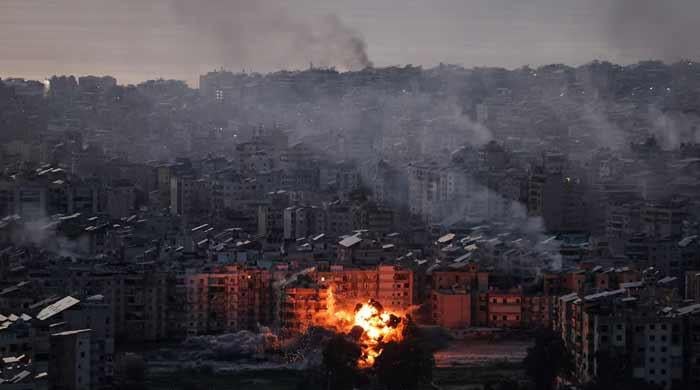
Israel and Iran traded attacks on Saturday as the war entered a second week, while the Islamic Republic made an unusual apology to neighbouring states for its “actions”, apparently seeking to calm regional anger at Iranian strikes on Gulf civilian targets.
“I personally apologise to neighbouring countries that were affected by Iran’s actions,” Iranian President Masoud Pezeshkian said, urging them not to join US-Israeli attacks on Iran.
He said Iran’s temporary leadership council had agreed to suspend attacks on nearby states unless strikes on Iran originated from their territory.
Hours later, Iran’s Revolutionary Guards said their drones struck a US air combat centre at Al Dhafra Air Base, near Abu Dhabi, capital of the United Arab Emirates. Reuters could not independently verify that report.
Huge explosions were heard in several parts of the Iranian capital, state media reported.
Gulf states hit by drones and missiles
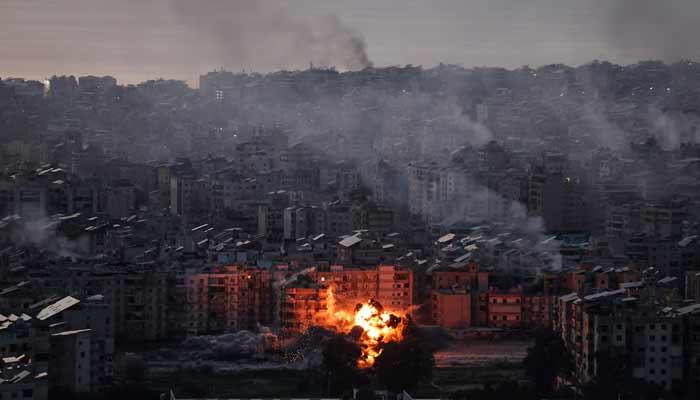
The US-Israeli war on Iran has already spilled beyond Iran’s borders, as Tehran has responded by hitting Israel and Gulf Arab states hosting US military installations and Israel has launched fresh attacks in Lebanon.
The UAE, Kuwait, Qatar, Bahrain and Saudi Arabia have all reported drone and missile attacks over the past week.
Gulf states voiced immediate outrage that their civilian infrastructure — hotels, ports and oil facilities — were struck despite their having had no part in the US-Israeli attacks.
How far Pezeshkian’s statement reflects a decision to back off by Iran, or if it should be read as a warning that Tehran remains ready to strike across the region, is not yet clear, with some strikes still reportedly directed at Gulf states on Saturday morning.
Iran had mended fences with its Gulf neighbours in recent years, including with former regional arch-rival Saudi Arabia — a diplomatic campaign that imploded as the Revolutionary Guards launched a blitz of drones and missiles over the past week.
No deal without surrender, says Trump
While Gulf states host US military bases, they had told Washington they would not allow these to be used for any attacks on Iran.
Iran’s apparent strategy of maximum chaos has driven up the costs of the conflict by raising energy prices, hurting global business and logistics links and shaking trust in the stability of a critical region for the world’s economy.
Pezeshkian’s remarks come as diplomatic prospects for an end to hostilities appear bleak, with US President Donald Trump demanding Tehran’s “unconditional surrender”.
“There will be no deal with Iran except UNCONDITIONAL SURRENDER!” Trump wrote on his Truth Social platform on Friday.
“After that, and the selection of a GREAT & ACCEPTABLE Leader(s), we, and many of our wonderful and very brave allies and partners, will work tirelessly to bring Iran back from the brink of destruction, making it economically bigger, better, and stronger than ever before,” he added.
The US-Israeli attacks have killed at least 1,332 Iranian civilians and wounded thousands, according to Iran’s UN ambassador, Amir Saeid Iravani.
Iranian attacks have killed 11 people in Israel, and at least six US service members have been killed.
Russian President Vladimir Putin expressed his condolences to Pezeshkian over the numerous civilian casualties resulting from “the armed Israeli-American aggression against Iran” and called for an immediate halt to hostilities, the Kremlin said.


Timothee Chalamet’s ‘insensitive’ joke sparks response from Met Opera

UAE president says country is well and ‘no easy prey’ in first public comments since Iran strikes

Go Digit General Insurance gets GST demand notice of Rs 170 cr – The Times of India

Attock Cement’s acquisition approved | The Express Tribune

Policy easing drives Argentina’s garment import surge in 2025

India Us Trade Deal: Fresh look at India-US trade deal? May be ‘rebalanced’ if circumstances change, says Piyush Goyal – The Times of India

-
Business1 week ago
Attock Cement’s acquisition approved | The Express Tribune
-
 Fashion1 week ago
Policy easing drives Argentina’s garment import surge in 2025
-
Business1 week ago
India Us Trade Deal: Fresh look at India-US trade deal? May be ‘rebalanced’ if circumstances change, says Piyush Goyal – The Times of India
-

 Sports1 week ago
LPGA legend shares her feelings about US women’s Olympic wins: ‘Gets me really emotional’
-

 Fashion1 week ago
South Korea’s Misto Holdings completes planned leadership transition
-

 Entertainment1 week ago
Bobby J. Brown, “The Wire” and “Law & Order: SUV” actor, dies of smoke inhalation after reported fire
-

 Fashion1 week ago
Texwin Spinning showcasing premium cotton yarn range at VIATT 2026
-

 Entertainment1 week ago
Pakistan’s semi-final qualification scenario after England defeat New Zealand