

Sports
What’s new in the Premier League: War on holding, new goalkeeper rule, RefCam, more

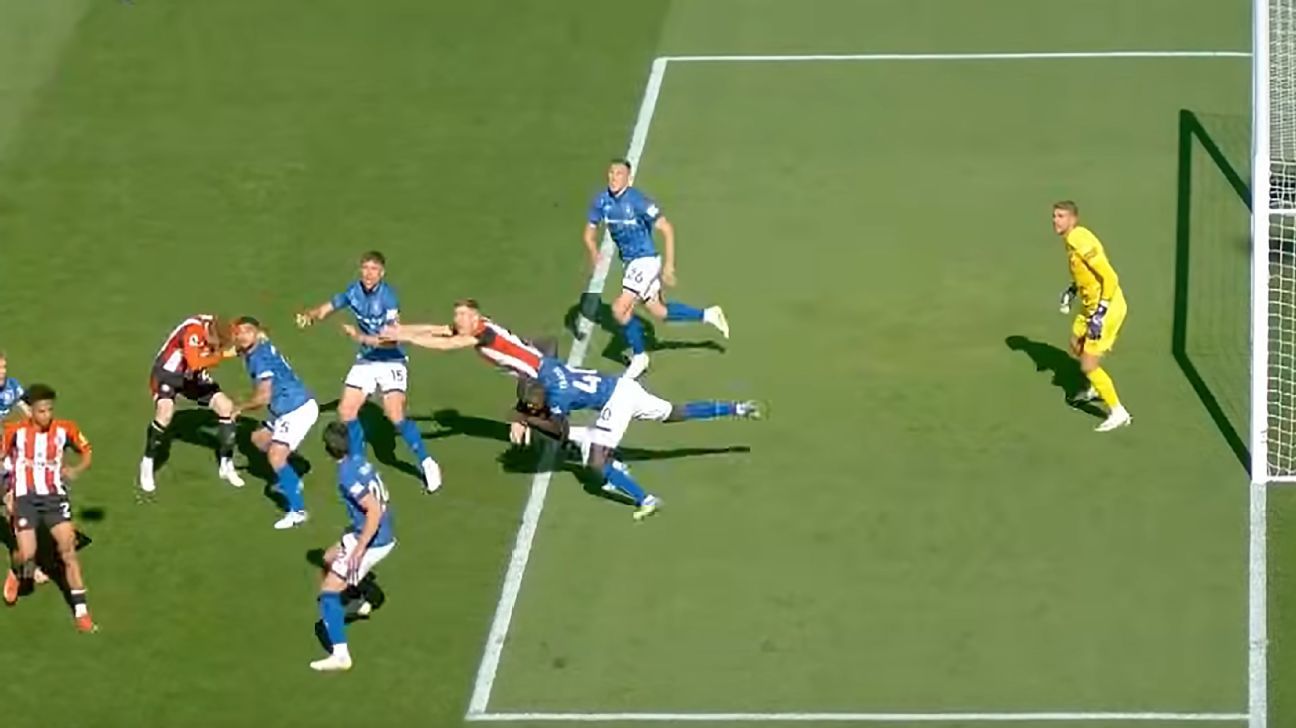
The 2025-26 Premier League season kicks off on Friday when champions Liverpool host AFC Bournemouth.
As ever, the new campaign comes with some law changes and a series of initiatives. Here’s what you need to look out for.
The war on holding on corners and set pieces
Throughout the second half of last season, players holding an opponent inside the penalty area seemed to be on the increase — and now it will be an area of focus for referees in 2025-26.
The question, of course, is whether this will be clamped down on for a few weeks and then forgotten about.
Whenever an initiative like this comes around, there can tend to be accusation that referees are being over-zealous. It then gets scaled back, and we end up back where we started.
But there’s an admission that referees have too often allowed extreme holding, and a line needs to be drawn.
Referees are also going to be encouraged not to offer repeated warnings, and instead penalise the offence. That means we should not keep seeing corners delayed while a referee speaks to players (though this would happen initially), as they have been told to run the play and give the penalty.
What will the referee and the VAR be looking for? It’s contact which impedes an opponent’s movement, as simply holding of a shirt isn’t an offence — there must be an impact.
The considerations:
– Sustained holding. If the holding is fleeting, there may be no impact on the opponent
– Impact on an opponent’s ability to play or challenge for the ball
– A clear non-footballing action where the offending player has no interest in playing the ball
– Mutual holding by both players usually will not be penalised
There’s also going to be a focus on simulation, so we may see more cautions for this across the season. And that includes when, foe example, a player who is pushed in the chest goes down holding their face
Players with head injuries will now not be asked if they want treatment, in an attempt to tackle this kind of time-wasting but also for player welfare. The physio will automatically be called on, and the player must leave the field for a minimum of 30 seconds.
Goalkeeper holding the ball for too long = corner
We know the situation. A shot comes in or a corner is floated over, and the goalkeeper first flops on the ground for 10 seconds, or longer. Then he stands up, surveys his options, and looks around. Maybe then he’ll release the ball, only after some 30 seconds have been lost. Spread that across a game, and it can have a real effect on a match.
It’s been a bugbear of supporters for quite a while. Most often used by away teams trying to protect a lead in a difficult match, it has evolved somewhat to become part of a team’s tactics simply to frustrate the opposition.
– Premier League 2025-26 mega-preview
– Kit ranking: Every new jersey released so far
The old law, which said a keeper should release within six seconds or be penalised with a free kick, hadn’t been applied for many years. Now the keeper will get eight seconds, but with a clear punishment process thereafter.
Once a goalkeeper has control of the ball, they will have those eight seconds to release the ball once they are in a position to do so unhindered. The referee will raise his arm to indicate there are five seconds left, and then bringing it down on each second so the countdown is clear. If the ball hasn’t been released, a corner will be awarded.
If an opponent deliberately gets in the way of the goalkeeper, the count will stop and a free kick will be awarded.
The intention isn’t to try to catch a goalkeeper out, or to be unnecessarily strict. There will still be a little leeway for them to settle themselves, but referees are expected to clamp down if a line is crossed. And that will especially be the case when a goalkeeper lands on the ball and doesn’t get up quickly.
Fans will be skeptical it won’t just go the same way as the old law, the difference being there is now the hand signal which the referee is bound to. Let’s see if supporters start a five-second countdown when the referee raises his arm.
Trials were held throughout the 2024-25 season in Premier League 2 (academies) and in Maltese and Italian football. Across over 400 games only three corners were awarded — 3 in England and 0 in Malta. In Italy, a different trial was held which led to the award of a throw, which was penalized once.
After the IFAB then approved the change to the law earlier this year, it’s was adopted in the professional game in South America, in the CONMEBOL Libertadores and CONMEBOL Sudamericana — its version of the UEFA Champions League and UEFA Europa League. In the first 160 fixtures, only two corners were awarded.
It then featured at the Club World Cup in the summer, with two corners given against the goalkeeper over the 62 matches. Al Hilal goalkeeper Yassine Bounou was the first to be penalised in injury time of a 1-1 draw against Real Madrid, holding onto the ball for too long after saving a header from Gonzalo García.
Pierluigi Collina, FIFA’s head of referees, said after the Club World Cup: “It was very successful; the tempo of the match was improved. We had no time lost by goalkeepers keeping the ball between their hands for a very long time — as happened quite often in matches before.
“The purpose was not to give corner kicks, but to prevent the eight seconds rule from being ignored. The purpose was 100% achieved.”
What about VAR?
The Premier League will continue to apply a high threshold on VAR interventions, underpinned by “referee’s call,” with 83% in support of it in the Premier League’s football stakeholder survey of coaches, captains, ex-players and supporters.
VAR errors last season fell to 18 (from 31 in 2023-24) though fan perception probably doesn’t match that.
Semi-automated offside technology (SAOT) will be in place from round one, which should help to reduce delays. Last season, the average VAR delay per match fell from 64 seconds to 39 seconds.
The SAOT replays will now be showed on the big screens inside grounds, along with disallowed goals.
Last season Nottingham Forest striker Taiwo Awoniyi suffered an injury when an offside flag was delayed. But we won’t see any automated offside flags, which FIFA brought in for the Club World Cup when the technology calculated a player was more than 10cm offside.
The Premier League will discuss with FIFA how successful it was, but for now we will still see some instances of a player being well offside but the flag staying down until the end of the move.
Handball penalties
Last season the Premier League only saw nine penalties awarded for handball — by far the lowest number across the top leagues in Europe.
The stakeholder survey found 78% in favour of this approach, with only 3% saying there should be a stricter application in England. So referees will continue to apply the same philosophy.
Key points:
– A justifiable position of the arm of a player’s action
– If the arm is being used to support the body when falling
– If the player kicks or heads the ball and it hits their own arm
– If the ball deflects off a player and there is a clear change of trajectory
– Kicked against the player by a teammate
– Proximity
The double-touch penalty
Julián Álvarez was “incredulous” after his penalty kick was disallowed in Atlético Madrid‘s Champions League round-of-16 defeat to Real Madrid in March. The Argentina international had accidentally touched the ball twice when taking the kick, with the VAR stepping in to cancel the goal. Atlético boss Diego Simeone still hasn’t got over it. In June, the IFAB announced a “clarification” to law, after it had been lobbied by UEFA. As is often the case, it takes a high-profile incident to force change. After all, no one remembers Aleksandar Mitrovic‘s disallowed penalty for Fulham against Newcastle United in January 2023, do they? The circumstances were the same, with the Serbia international scoring a penalty via touching the ball twice after slipping in his run-up. Yet within weeks of the controversial Álvarez incident, the law has been rewritten. Referees the world over have also treated any double touch on a penalty as an offence, even if accidental. Now the IFAB says that’s never really been the true intention, and it should only apply to a deliberate second touch, like the ball coming off the post, and not the ball being kicked against the standing foot. So from now on, in the rare case that the VAR identifies such an offence and the ball goes into the net, it will be a retake. If the player misses (or deliberate plays the ball a second time, for instance after a rebound off the post), the referee should give a free kick to the opposition (or it stays as a miss in a shootout). And we got our first taste of the law change at in Women’s Euro 2025 final last month. England‘s Beth Mead stepped up to take first penalty of the shootout. She slipped as she was about to kick the ball, but it still looped into the net. However, while Mead celebrated the VAR checked for a possible double-touch and it had to be retaken (Mead missed). Collina explained: “We thought that this should have been clarified because the double touch was intended to be related to something done deliberately. We decided it was better to clarify by adding two separate scenarios one when it’s still deliberate and the other one when it is accidental. “I think in this way the spirit of the game and the spirit of the Laws of the Game are respected.” Get ready for a whole new view of the game: as the referee sees it. We saw RefCam at the Club World Cup, and now it’s going to be coming to the Premier League. RefCam will be trialled in the early weeks of the season, and if successful is likely to be rolled out across the campaign. Refs will wear a camera fixed to their headsets, with the footage immediately available to the competition broadcasters. But don’t get any ideas about pressing a button and switching to “RefCam.” Live footage cannot be shown, except before the game in the tunnel or during the coin toss. It’s described more as an entertainment add-on. We can expect to see goals from the referee’s perspective, but we won’t see what happens at the VAR pitchside monitor. After the Club World Cup, the IFAB approved the extension of the trial of referee-worn cameras to both domestic and international competitions worldwide. So it’s going to be coming to the Premier League, but not in the first couple of gameweeks. “The outcome of using the RefCam here at the FIFA Club World Cup 2025 went beyond our expectations,” Collina said. “We thought it would have been an interesting experience for TV viewers and we’ve received great comments. “We had the possibility to see what the referee sees on the field of play. This was not only for entertainment purposes, but also for coaching the referees and to explain why something was not seen on the field of play.” No controversial or confrontational moments will be shown, however, and the Premier League will tread carefully with its use. FIFA did eventually show some red cards at the Club World Cup, including for Manchester City‘s Rico Lewis against Wydad AC, but that seems unlikely to happen here, for now. We saw this in FA Cup and Carabao Cup games in the second half of last season, and now it’s ready for full roll out in the Premier League. Stuart Attwell was the first referee to step up, with a goal for Tottenham Hotspur striker Dominic Solanke ruled out for offside during their Carabao Cup semifinal first-leg tie vs Liverpool. Referees will announce the outcome of a VAR review (or a lengthy check) over the stadium public addresses system and to TV viewers, which we’ve seen in several competitions — first tried at the 2023 Women’s World Cup. However, the audio of the conversation between referee and VAR will remain behind the cloak of secrecy. It remains to be seen how much this really will add. It will probably be good for complex situations, or off the ball incidents. But there have been learnings from its use in the first half of the year. Factual offside decisions, which are usually very obvious, will not require the referee to announce them. The Premier League chose not to adopt this last season, but after seeing it in operation in other competitions now believe it’s a useful tool for participant behaviour. Normal interactions between players and the referee are still allowed, but the referee may invite the captain over to explain decisions which in the past may have involved players running at referees. When the captain is the goalkeeper, a nominated outfield player would speak to the referee. It’s supposed to prevent a referee from being crowded by players. While this might be easier to apply in short competitions like the Club World Cup and Gold Cup, it has proved to be more challenging in a 380-game domestic seasons. A more simple change, which covers the ball hitting the referee. In the old wording of the law, if the ball hit the ref, then the dropped ball would go to the team who were last in possession of the ball. Now, it’s about who would take possession. Usually, this is a pass between teammates so there will be no difference. But if it’s very clear that the play of the ball was going to the opposition, then the opposition gets the dropped ball. In most cases we are likely to see the referee err on the side of caution and give the dropped ball to the team who made the pass, as it would need to be beyond doubt a change of possession was going to take place. In the Champions League in the 2024-25 season, Arsenal boss Mikel Arteta grabbed the ball before it had gone out of play in a match at Internazionale. A direct free kick was awarded and Arteta was booked, but by the Laws of the Game he should have been sent off. But most leagues have been dealing with this with a caution, as a red card was seen as too harsh for such a minor infringement. And here’s the change: If a coach picks the ball up while it’s in play, and it was no more than an attempt to get play moving again, it will be no sanction (not even a caution) and an indirect free kick. But trying to stop the opponent from restarting play will remain a red-card offence.Ref-worn body cameras
Referees to announce VAR decisions
Only captains can speak to the referee
The dropped ball
No red card for coaches who touch the ball when in play
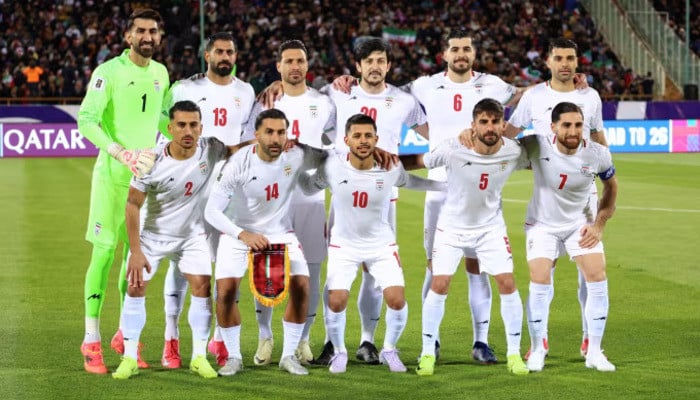
Secretary of State Marco Rubio said on Thursday Washington had no objections to Iranian players participating in the 2026 Fifa World Cup but he added the players will not be allowed to bring with them people with ties to Iran’s Islamic Revolutionary Guard Corps (IRGC).
“Nothing from the US has told them they can’t come,” Rubio told reporters.
President Donald Trump also said his administration “would not want to affect the athletes” in comments he made at the White House.
The 2026 soccer World Cup is set to begin on June 11 across the United States, Mexico and Canada.
Paolo Zampolli, a Trump envoy who has no official connection with the World Cup, had earlier suggested that Italy should replace Iran at the tournament.
“The problem with Iran would be not their athletes. It would be some of the other people they would want to bring with them, some of whom have ties to the IRGC. We may not be able to let them in but not the athletes themselves,” Rubio said.
“They can’t bring a bunch of IRGC terrorists into our country and pretend that they are journalists and athletic trainers,” Rubio added. Washington has designated the IRGC as a “foreign terrorist organisation.”
Currently there is no suggestion Iran will withdraw or be banned from the tournament that Italy missed out on.
After the start of the Iran war, Iran requested that Fifa move the team’s three group matches from the US to Mexico, which was rejected.
The US and Israel attacked Iran on February 28. Iran responded with its own strikes on Israel and Gulf states with US bases. US-Israeli strikes on Iran and Israeli attacks in Lebanon have killed thousands and displaced millions. A fragile ceasefire in the Iran war began over two weeks ago.
NEWYou can now listen to Fox News articles!
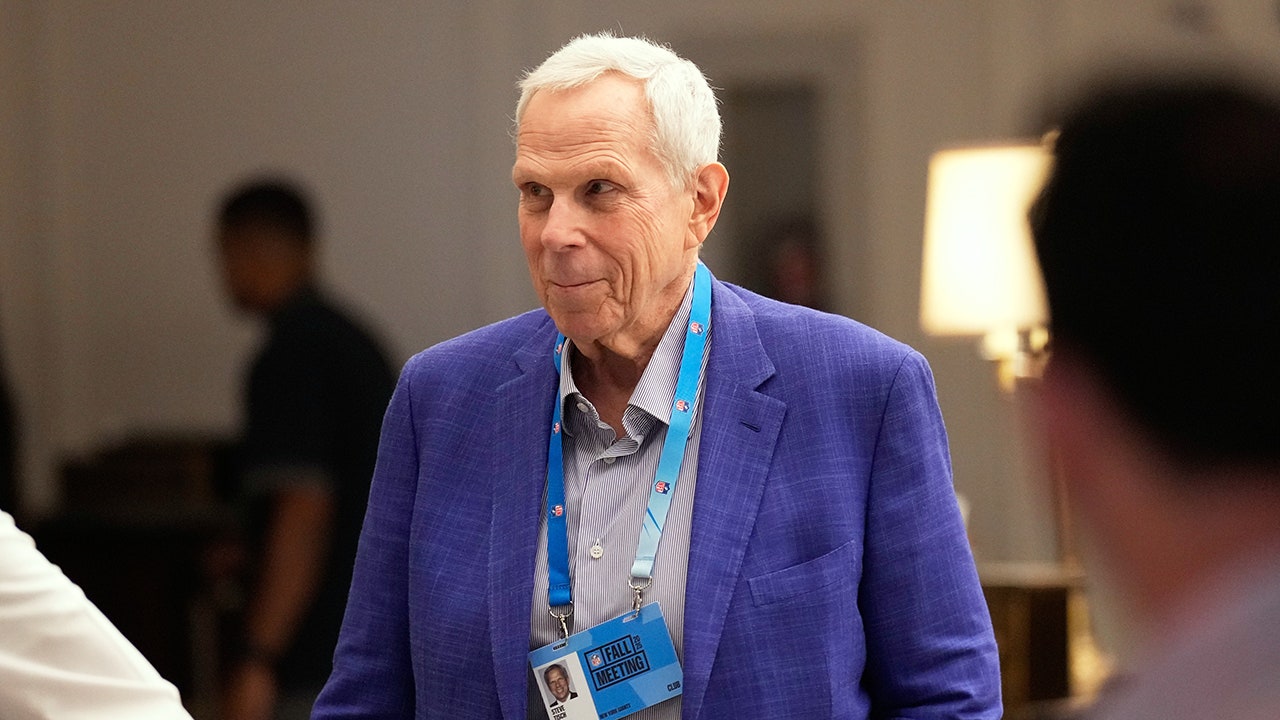
Cameras showed former New York Giants co-owner Steve Tisch in the team’s draft room Thursday night during the first round.
At one point, Tisch was seen standing near Giants head coach John Harbaugh. Despite no longer holding a majority stake in the NFL franchise, Tisch remains the Giants’ chairman of the board.
ESPN obtained an NFL memo last month detailing plans by Steve Tisch and his siblings to transfer their stake in the Giants to trusts for their children.
CLICK HERE FOR MORE SPORTS COVERAGE ON FOXNEWS.COM
New York Giants co-owner Steve Tisch warms up before the NFL game between the Washington Redskins and New York Giants at Met Life Stadium in East Rutherford, N.J., on Oct. 28, 2018. (Rich Graessle/Icon Sportswire)
“Prior transfers to these Trusts were completed pursuant to 2023 and 2024 Finance Committee approvals,” the memo stated. “The Sellers now propose to transfer their entire remaining interests, totaling 23.1% of the Club, to the Trusts. … Following the transactions, the Sellers will no longer own any interest in the Club.”
It was not clear if the transfer requests were in any way related to Tisch’s name appearing in the Epstein files released by the U.S. Justice Department in January. Tisch’s name came up more than 400 times in the files. Tisch at the time said he knew Epstein but denied visiting Epstein’s island.
As for draft night, the Giants made what some viewed as an unconventional pick at No. 10, selecting offensive lineman Francis Mauigoa.
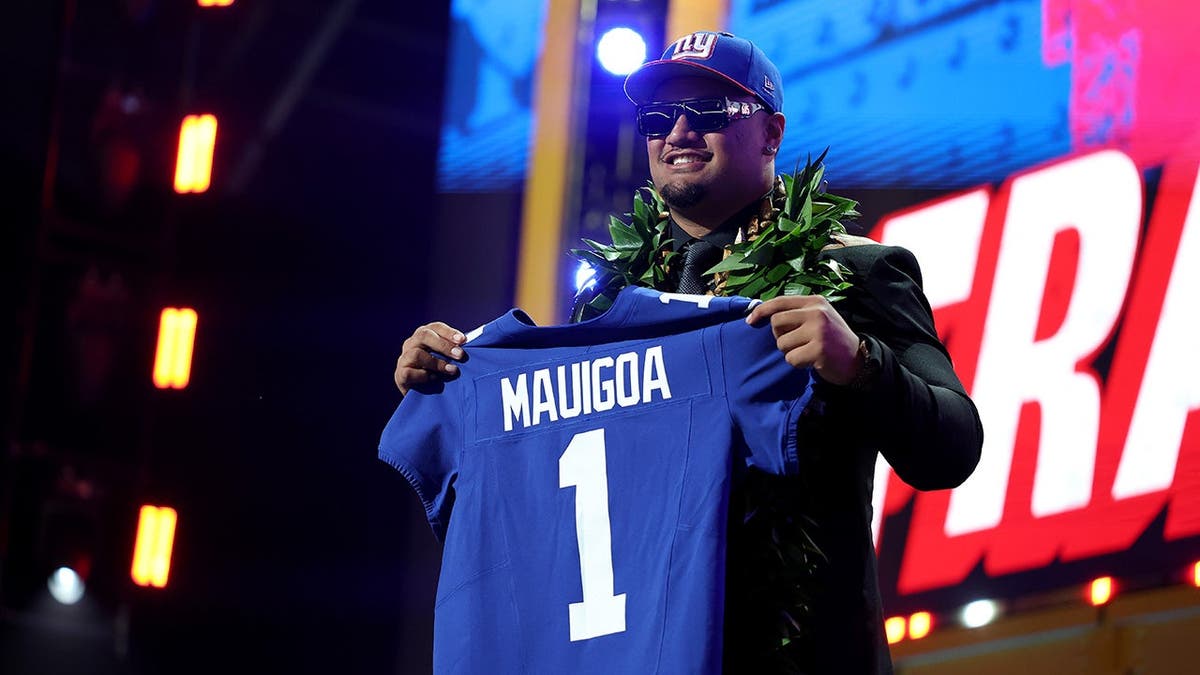
Francis Mauigoa of Miami celebrates after being selected as the tenth overall pick by the New York Giants during the first round of the 2026 NFL Draft at Acrisure Stadium in Pittsburgh, Pa., on April 23, 2026. (Emilee Chinn/Getty Images)
Before that, the Giants added another piece to their pass rush, selecting hybrid edge/off-ball linebacker Arvell Reese at No. 5.
Reese earned All-American honors at Ohio State and finished his first season as a full-time starter with 6.5 sacks.
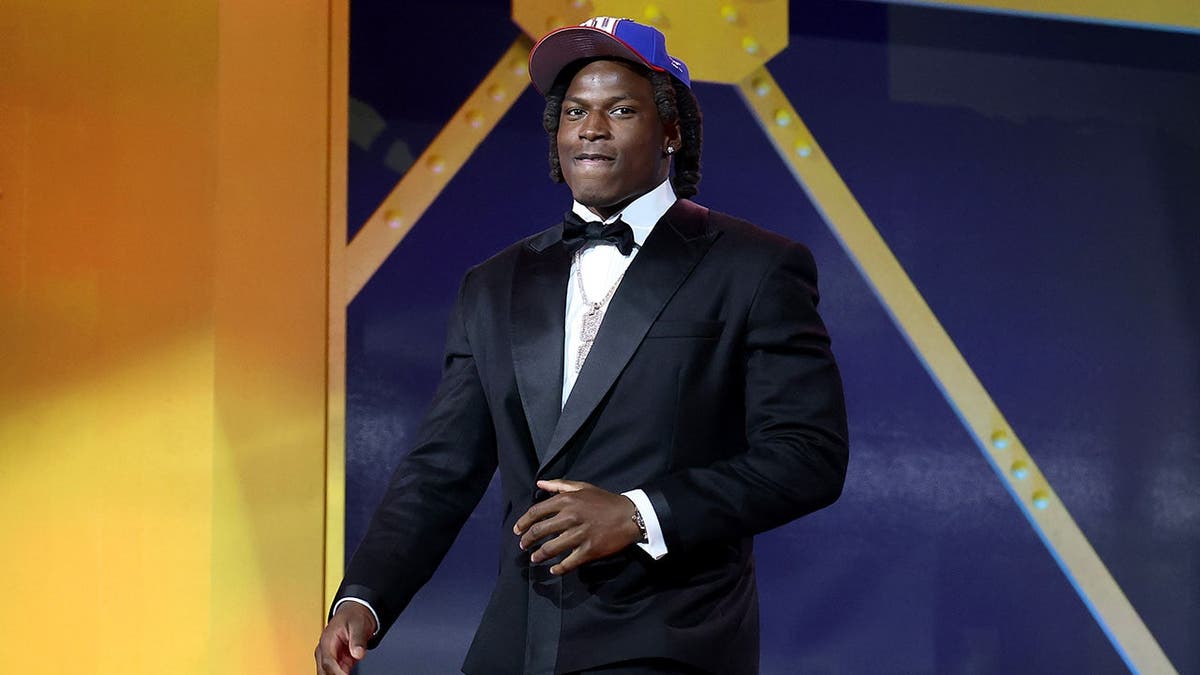
Arvell Reese of Ohio State celebrates after being selected as the fifth overall pick by the New York Giants during the first round of the 2026 NFL Draft at Acrisure Stadium in Pittsburgh, Pa., on April 23, 2026. (Emilee Chinn/Getty Images)
CLICK HERE TO DOWNLOAD THE FOX NEWS APP
Reese is set to join a pass rush that includes Brian Burns, Abdul Carter and, likely, Kayvon Thibodeaux.
Follow Fox News Digital’s sports coverage on X, and subscribe to the Fox News Sports Huddle newsletter.
NEWYou can now listen to Fox News articles!
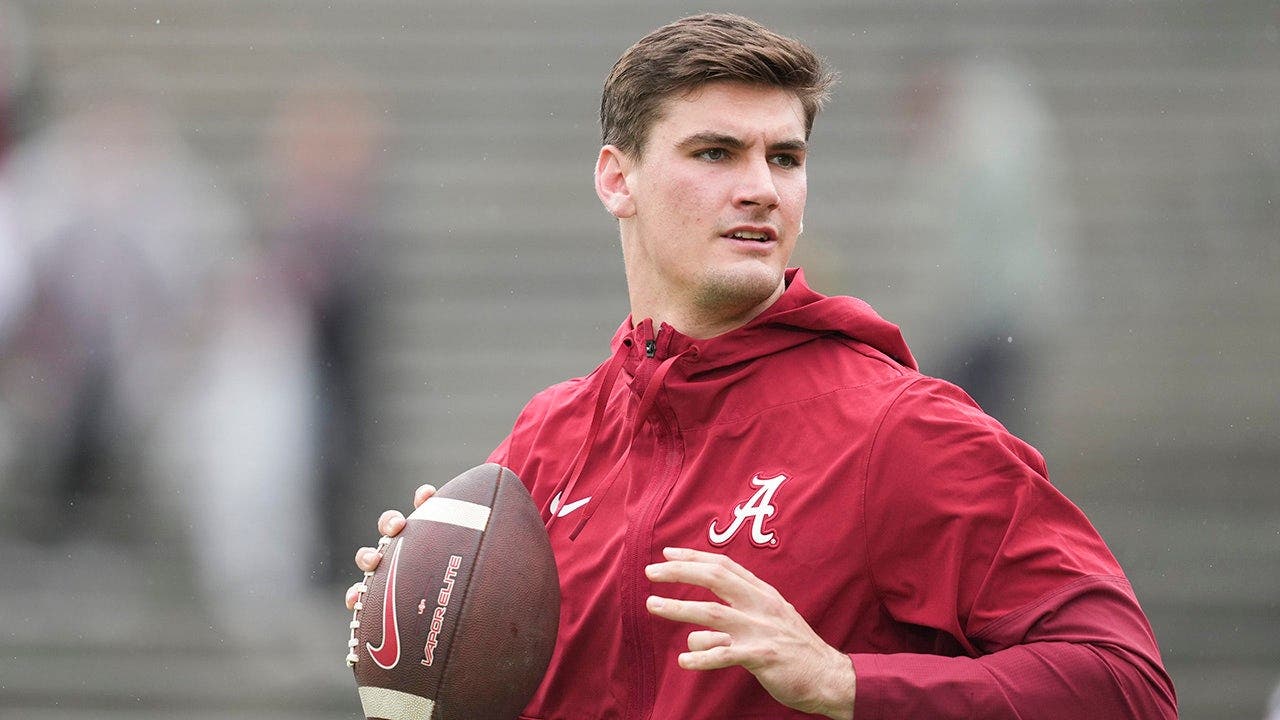
One of the most intriguing stories entering the first round of the NFL Draft was where Alabama quarterback Ty Simpson might land. Well, fans got their answer sooner than they expected.
The Los Angeles Rams surprisingly selected Simpson with the No. 13 pick in the 2026 NFL Draft.
The selection isn’t completely out of left field and is arguably the best-case scenario for Simpson. The Rams have Matthew Stafford as their starter for 2026, but Stafford has flirted with the idea of retirement each of the past two offseasons. It’s clear the clock is ticking on his NFL career.
CLICK HERE TO DOWNLOAD THE FOX NEWS APP
The Los Angeles Rams pulled a stunner and drafted Alababam QB Ty Simpson with the No. 13 pick in the NFL Draft. (CFP/Getty Images)
Now, Simpson gets to sit behind one of the NFL’s best veteran quarterbacks, learn the position while adapting to life in the NFL, and not face immediate pressure to succeed. Additionally, the Rams are one of the most well-run franchises in the league right now. Sean McVay is an elite head coach who led the team to a Super Bowl victory to cap the 2021 season and just had the team within one win of another Super Bowl berth before falling to the Seattle Seahawks in the NFC Championship.
ZERO BS. JUST DAKICH. TAKE THE DON’T @ ME PODCAST ON THE ROAD. DOWNLOAD NOW!
The most surprising aspect is the Rams looking toward the future, quite frankly. This is a team that has had no problem trading away first-round picks to make its team the best it can be each season. It seemed most likely the team would use the No. 13 pick to improve its team for next season, which could be Stafford’s last. Instead, the team decided to put itself in position for Stafford’s retirement without skipping a beat.
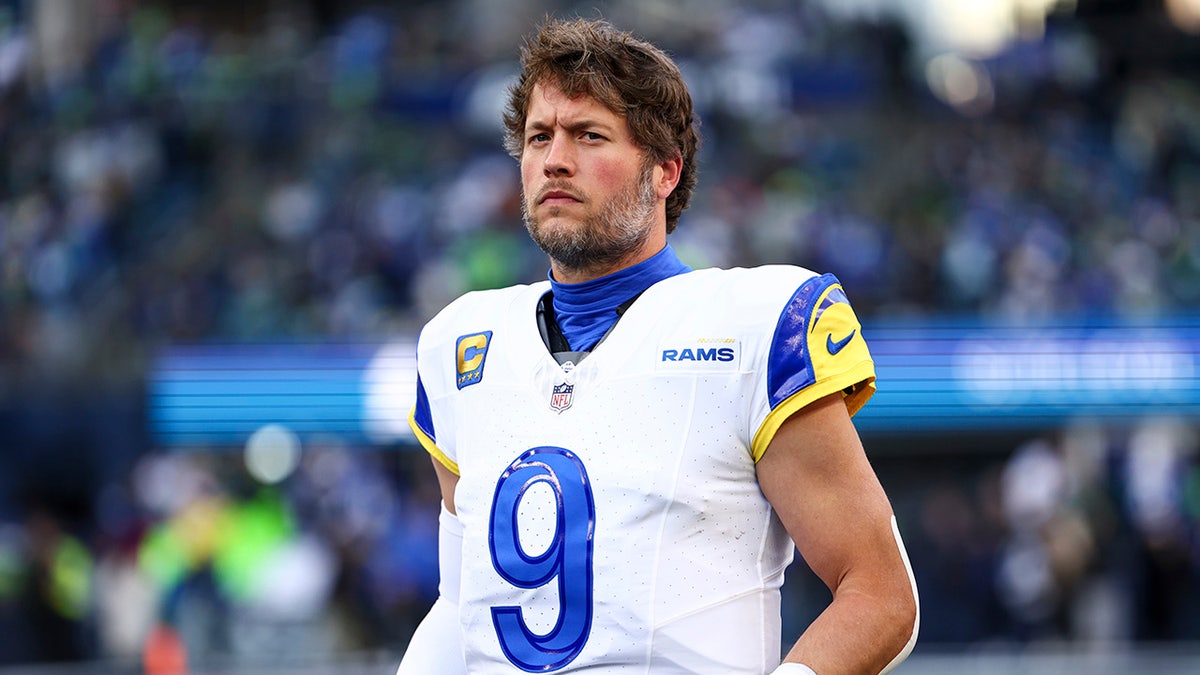
Los Angeles Rams QB Matthew Stafford, now 38-years-old, has flirted with retirement after each of the past two seasons. (Kevin Sabitus/Getty Images)
There were several surprises in the first 13 picks of the 2026 NFL Draft: the Cardinals taking Notre Dame running back Jeremiyah Love at No. 3, the Titans selecting Ohio State wide receiver Carnell Tate at No. 4, the Kansas City Chiefs trading up to take LSU cornerback Mansoor Delane at No. 6 and even the Cowboys trading up one spot to make sure they drafted Ohio State safety Caleb Downs at No. 11.
CLICK HERE FOR MORE SPORTS COVERAGE ON FOXNEWS.COM
But the Rams completely abandoning their recent strategy (usually trading away first-round picks and loading up for now) to select Stafford’s heir apparent is easily the biggest early shock of the 2026 NFL Draft.


North India cotton yarn steady despite continued push by spinners

The WIRED Gear Team’s Tips on Ways to Save Money

Bangladesh, EU sign Partnership and Cooperation Agreement

-

 Fashion1 week ago
France’s LVMH Q1 revenue falls 6%, shows resilience amid Iran war
-

 Entertainment1 week ago
Is Claude down? Here’s why users are seeing errors
-

 Sports1 week ago
PSL 11: Peshawar Zalmi win toss, opt to field first against Quetta Gladiators
-

 Tech1 week ago
CYBERUK ’26: UK lagging on legal protections for cyber pros | Computer Weekly
-
 Business1 week ago
PepsiCo earnings beat estimates as North American food business improves
-

 Sports5 days ago
WWE WrestleMania 42 Night 2: Live match results and analysis
-

 Fashion1 week ago
Raymond unveils luxury Chairman’s Collection Store in Mumbai
-

 Sports5 days ago
NCAA men’s gymnastics championship: All-time winners list