

Business
When Can A Woman Head A Hindu Undivided Family? The Rules Explained


Last Updated:
After the 2005 Hindu Succession Act amendment, daughters can become Karta of a Hindu Undivided Family if they are senior-most coparceners




Legal experts note that while daughters qualify as coparceners by birth, wives enter the HUF only as members through marriage.
Can a woman head a Hindu Undivided Family (HUF)? The answer today is yes, but only under specific legal conditions. In an HUF, the head of the family is known as the Karta, the person responsible for managing the family’s property and affairs. While this position was traditionally reserved for men, legal changes over the past two decades have opened the door for women to assume the role.
However, eligibility depends on whether the woman is a coparcener by birth or merely a member of the family, a distinction that determines ownership rights, management authority and tax implications.
Before 2005, only sons were recognised as coparceners in a Hindu joint family, and the senior-most male member typically served as the Karta. This position changed with the amendment to the Hindu Succession Act in 2005, which granted daughters coparcenary rights by birth, placing them on an equal footing with sons in terms of rights and responsibilities.
Priyanka Desai, founder and co-managing partner at The Fort Circle, said that the amendment marked a decisive shift in the legal framework governing Hindu joint families. “Before the 2005 amendment, only sons were considered coparceners in a Hindu joint family, and the oldest male member was regarded as the head,” she said, adding, “After the amendment, daughters also became coparceners from birth, with equal rights and duties as sons. If the daughter is the senior-most coparcener, she can become the Karta of the HUF.”
Courts have reinforced this interpretation, clarifying that seniority among coparceners, not gender, determines who can serve as the head of the family. The amendment effectively granted daughters equal status in matters of property ownership and family management.
However, the same rights do not extend to wives or daughters-in-law. Legal experts note that while daughters qualify as coparceners by birth, wives enter the HUF only as members through marriage.
Radhika Gaggar, partner and co-head of the private client practice at Cyril Amarchand Mangaldas, said the right to become Karta rests exclusively with coparceners. “The senior-most coparcener has the right to be the Karta, whether a daughter or a son. But it is important to note that the wife of a coparcener does not have this right,” she said.
Desai explained that this distinction is fundamental to understanding HUF law. “The wife or daughter-in-law is only a member of the HUF, while sons and daughters born into the family are coparceners from birth,” she said.
The difference between coparceners and members is crucial because coparceners enjoy ownership rights over HUF property. They can demand partition, participate in management decisions and are eligible to become the Karta. Members, on the other hand, have more limited rights.
“The wife is a member, but not a coparcener. Therefore, she does not have ownership rights over HUF property. Her rights are limited to maintenance and reasonable expenses,” Gaggar said.
As the Karta, the head of the HUF manages the family’s assets, makes financial and investment decisions, and represents the family before courts and tax authorities. The Karta is also regarded as the legal guardian of the family’s property.
Under the present legal framework, daughters can serve as Karta if they are the senior-most coparceners. Wives, despite being integral members of the family, remain ineligible for the role because coparcenary rights arise only by birth, not by marriage.
 Click here to add News18 as your preferred news source on Google.
Follow News18 on Google. Join the fun, play games on News18. Stay updated with all the latest business news, including market trends, stock updates, tax, IPO, banking finance, real estate, savings and investments. To Get in-depth analysis, expert opinions, and real-time updates. Also Download the News18 App to stay updated.
February 26, 2026, 18:01 IST
Read More
Experts say Mythos potentially has an unprecedented ability to identify and exploit cybersecurity weaknesses.
Source link
Business
Anthropic’s new AI model exposes fresh risks, flaws for cybersecurity, IT services – The Times of India
New Delhi: A powerful new AI model is forcing govts, banks, and technology firms to rethink the rules of cybersecurity – and in India, the stakes may be even higher.Claude Mythos, developed by Anthropic, has demonstrated the ability to autonomously detect and exploit software vulnerabilities, including flaws that have persisted for decades. Early tests revealed that the model could identify long-standing weaknesses and simulate complex, multi-step cyberattacks, prompting the company to restrict its wider release. Anthropic CEO Dario Amodei highlighted the shift, noting that AI systems are now capable of finding vulnerabilities “that humans have missed”, a signal of how quickly the cybersecurity landscape is changing.US Treasury Secretary Scott Bessent reportedly convened a meeting with top bank executives – including leaders from JPMorgan Chase, Goldman Sachs, Citigroup, BoA, and Morgan Stanley – to assess the risks posed by such advanced AI systems.That concern is not theoretical. According to Jaydeep Singh, GM for India at Kaspersky, the emergence of such systems represents a turning point not just for security professionals, but for everyday users. “We have been closely monitoring how AI is reshaping the threat landscape, and Claude Mythos represents a moment that every user, not just the cybersecurity industry, needs to understand,” Singh said.The dual-use nature of AI is at the heart of the concern. The same capability that strengthens defences can just as easily be weaponised. “The same capability that finds a 27-year-old vulnerability in hardened infrastructure is the capability that, in the wrong hands, turns every unpatched system into an open door,” Singh added.Cybersecurity firm Check Point Software Technologies echoed the warning. Sundar Balasubramanian, MD, India and South Asia, for Check Point, says, AI is “dramatically lowering the barrier to entry for cyber attackers,” enabling even less-skilled actors to identify and exploit vulnerabilities. He added that defensive tools can be repurposed offensively, compressing the traditional gap between attackers and defenders. Jayant Saran, partner, Deloitte India, described this as a “changed reality,” where organisations must prepare for risks that were previously invisible. He called AI a “double-edged sword…that cannot be reversed,” highlighting an accelerating race between those securing systems and those attempting to break them.In India, the risks are amplified by scale. From UPI to banking and govt platforms, millions depend on digital infrastructure – much of it built on legacy systems. These systems are often slower to patch, harder to monitor, and lack continuous threat intelligence, creating what Saran called an “asymmetric risk exposure.” Singh pointed out that this gap is especially critical in India, where legacy infrastructure serves hundreds of millions.Beyond cybersecurity, ripple effects could reach financial markets. Analysts say models like Mythos could automate parts of software development, testing, and security – core functions of IT services industry. While disruption may be gradual, labour-intensive outsourcing models could face pressure, while firms embracing AI may benefit.
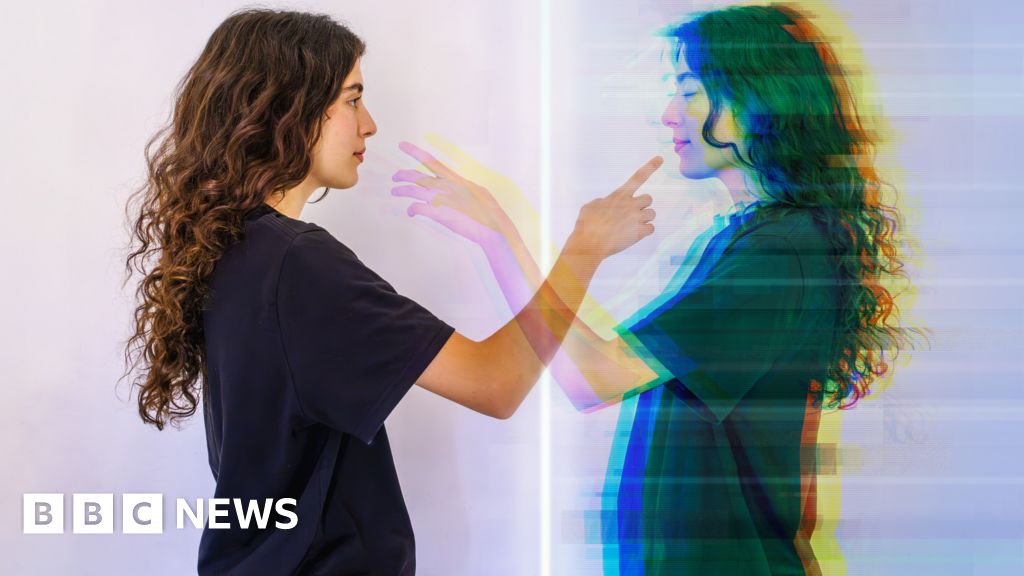
Firms say digital twins make staff more productive, but are they a potential legal minefield?
Source link

Finance ministers and top bankers raise serious concerns about Mythos AI model
Anthropic’s new AI model exposes fresh risks, flaws for cybersecurity, IT services – The Times of India

Mike Trout crushes fifth Yankee Stadium HR in four games

-

 Entertainment1 week ago
Queen Elizabeth II emotional message for Archie, Lilibet sparks speculation
-

 Tech1 week ago
Azure customers up in arms over ‘full’ UK South region | Computer Weekly
-

 Tech1 week ago
As the Strait of Hormuz Reopens, Global Shipping Will Take Months to Recover
-

 Fashion1 week ago
CII submits 20-pt agenda to Indian govt to back firms hit by Iran war
-

 Tech1 week ago
This AI Button Wearable From Ex-Apple Engineers Looks Like an iPod Shuffle
-

 Politics7 days ago
Indian airlines hit hardest after Dubai limits foreign flights until May 31
-

 Entertainment4 days ago
Palace left in shock as Prince William cancels grand ceremony
-
Uncategorized1 week ago
[CinePlex360] Please moderate: “Trump considers