

Business
When tax zealotry chokes export growth | The Express Tribune

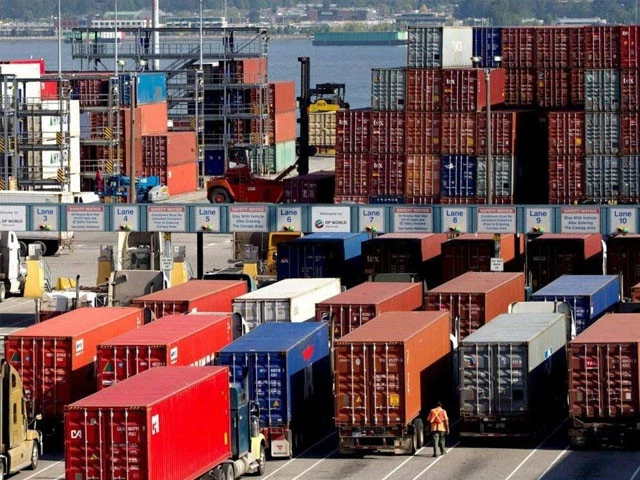
Taxes on inputs for export goods do not generate sustainable revenue; they merely reduce export volumes
ISLAMABAD:
Pakistan’s value-added garments sector has long been regarded as the country’s most promising engine for export growth. It combines labour intensity with high value addition, links backward industries such as spinning and weaving with global markets, and has the potential to generate employment on a scale unmatched by most other sectors.
However, despite this inherent strength, policy choices in recent years have steadily undermined its competitiveness. The latest demands by exporters to restore the Export Facilitation Scheme (EFS) to its original form are not merely routine lobbying; they reflect a deeper structural failure in tax policy and administration.
When the Export Facilitation Scheme was introduced through SRO 957(I)/2021, its core objective was clear: remove the burden of duties and taxes from export production. It consolidated earlier fragmented schemes and allowed exporters to import inputs free of customs duty, sales tax and other levies, while also permitting zero-rated local supplies. This was not a concession but a recognition of a fundamental principle: exports must be tax neutral. The scheme aimed to eliminate the need for refunds, reduce compliance costs and ensure liquidity for exporters operating in highly competitive global markets.
That principle has since been diluted. Changes introduced in recent budgets have effectively reversed the logic of the scheme. Zero-rating on local supplies has been withdrawn, duties and taxes have been imposed on imports for exporters, and the system has been pushed back into a refund-based regime. Exporters who were earlier insulated from upfront taxation are now forced to pay taxes first and wait for refunds later. The result is predictable: liquidity pressures, delayed refunds and rising cost of doing business.
The scale of the problem is not trivial. Exporters report that billions of rupees are currently stuck in refund claims, effectively converting the state into a borrower of working capital from the private sector. This is precisely what the original EFS sought to avoid. A scheme designed to eliminate refunds has been transformed into one that depends on them. The contradiction is not merely administrative; it reflects a deeper policy inconsistency.
The garments sector is particularly vulnerable to such distortions. Unlike primary textiles, value-added garments rely heavily on timely availability of high-quality inputs, often imported, and operate on thin margins in highly competitive markets. Even small disruptions in cash flow can lead to loss of orders. As industry representatives have repeatedly pointed out, the sector already faces high energy costs, expensive credit and infrastructural constraints. Adding tax-induced liquidity shocks further weakens its ability to compete internationally.
The irony is that the EFS was originally conceived precisely to address these challenges. It merged earlier schemes such as Duties and Tax Remission for Export (DTRE), manufacturing bonds and export-oriented units into a single automated framework, reducing documentation and improving ease of doing business. It recognised that export competitiveness depends not only on production efficiency but also on policy stability and predictability. By ensuring duty-free access to inputs and eliminating refund delays, it provided a level playing field to exporters.
The shift away from this framework reflects what may be described as tax over-zealotry. In an effort to maximise short-term revenue, policymakers have reintroduced upfront taxation even in sectors where such taxation is economically counterproductive. This approach ignores a basic economic reality: taxes on export inputs do not generate sustainable revenue; they merely reduce export volumes. The apparent gain in tax collection is offset by loss of foreign exchange earnings, employment and industrial growth.
This is not an isolated policy inconsistency but part of a broader pattern. Pakistan’s tax system has increasingly relied on advance and withholding taxes rather than expanding the tax base. The same mindset that treats mobile users as taxpayers and imposes advance taxes on low-income individuals is now being applied to exporters. In both cases, the focus is on immediate collection rather than long-term growth. The consequences are already visible. Export growth has remained uneven, and Pakistan continues to lag behind regional competitors in value-added exports. Countries such as Bangladesh and Vietnam have built export ecosystems that minimise tax distortions and ensure rapid refunds or duty-free input regimes. Pakistan, by contrast, has moved in the opposite direction, reintroducing complexities that discourage investment.
The demand to restore the EFS to its original form is therefore not merely a sectoral demand; it is a test of policy coherence. If exports are to be treated as a priority, then the tax system must align with that objective. This requires returning to the principle of zero-rating and duty-free inputs for export production, not as a concession but as a necessity.
The issue also raises broader questions about governance and accountability. Frequent policy changes, often introduced without adequate consultation, create uncertainty for businesses. Exporters plan investments and production cycles over long horizons. Sudden changes in tax treatment disrupt these plans and erode confidence. Stability of policy is as important as its content.
There is also a need to revisit the underlying philosophy of taxation. Revenue mobilisation cannot be pursued in isolation from economic growth. A tax policy that undermines export competitiveness ultimately weakens the revenue base itself. The objective should be to expand the economy and then tax the resulting income, not to extract revenue in ways that constrain growth. Pakistan’s value-added garments sector still retains significant potential. It has demonstrated resilience despite structural constraints and policy inconsistencies. With the right policy framework, it can become a major driver of export growth, employment generation and industrial development. But this potential cannot be realised if tax policy continues to work at cross-purposes.
Restoring the EFS to its original form would be a first step in correcting this course. It would signal a commitment to export-led growth and recognition of the need for policy consistency. More importantly, it would reaffirm a principle that should guide all export policy: exports should be free of domestic taxes.
The choice facing policymakers is clear. They can continue to pursue short-term revenue through tax over-zealotry, or they can adopt a coherent policy that supports export growth. The former offers immediate but unsustainable gains; the latter promises durable economic benefits.
In the end, the issue is not merely about one scheme or one sector. It is about whether Pakistan’s tax system will serve as an instrument of growth or an obstacle to it.
The writer is the Advocate Supreme Court, Adjunct Faculty at Lahore University of Management Sciences (LUMS), member Advisory Board and Visiting Senior Fellow of PIDE







Heineken has announced a substantial investment exceeding £44 million into hundreds of its pubs across the UK, a move expected to create approximately 850 jobs.
The Dutch brewing giant’s Star Pubs operation, which manages 2,350 sites nationwide, is undertaking this significant financial commitment despite a challenging period for the pub sector.
The industry has faced considerable pressure over the past year, grappling with escalating labour costs and increases in national insurance contributions.
Concurrently, consumer spending has been constrained by concerns over inflation and rising unemployment, further impacting pub revenues. However, pubs did receive additional business rates support from the government last month, aimed at alleviating some of these financial burdens.
Lawson Mountstevens, managing director of Star Pubs, indicated that the investment strategy is partly designed to bolster revenues and help the group navigate the recent “sustained increases in running costs”.
This year, £44.5 million will be allocated to upgrades for 647 pubs. A notable 108 of these venues are earmarked for particularly significant cash injections, with each transformation costing at least £145,000.
Heineken clarified that while the majority of its pubs are group-owned, they are independently operated by local licensees. A key focus for this investment, particularly in the lead-up to the 2026 football World Cup, will be on sports-focused venues.
The pub firm and brewer has a history of significant investment in British pubs, having pumped £328 million into the sector since 2018. Work has already commenced at 52 locations, including eight projects dedicated to reopening boarded-up pubs that have endured lengthy closures.
Mr Mountstevens also urged the government to reduce the tax burden on pubs, arguing it would ease cost pressures and foster further job creation within the industry.
He stated: “We can only do so much; the root-and-branch reform of business rates that the industry has been calling for over many years is urgently required, as well as a lowering of the burden of taxation on pubs, including VAT and beer duty.”
He concluded with a direct appeal: “We are calling on the Government to support us in bringing out the best in the Great British pub.”

GameStop’s boss Ryan Cohen says he sees potential to make eBay a much bigger rival to Amazon.
Source link
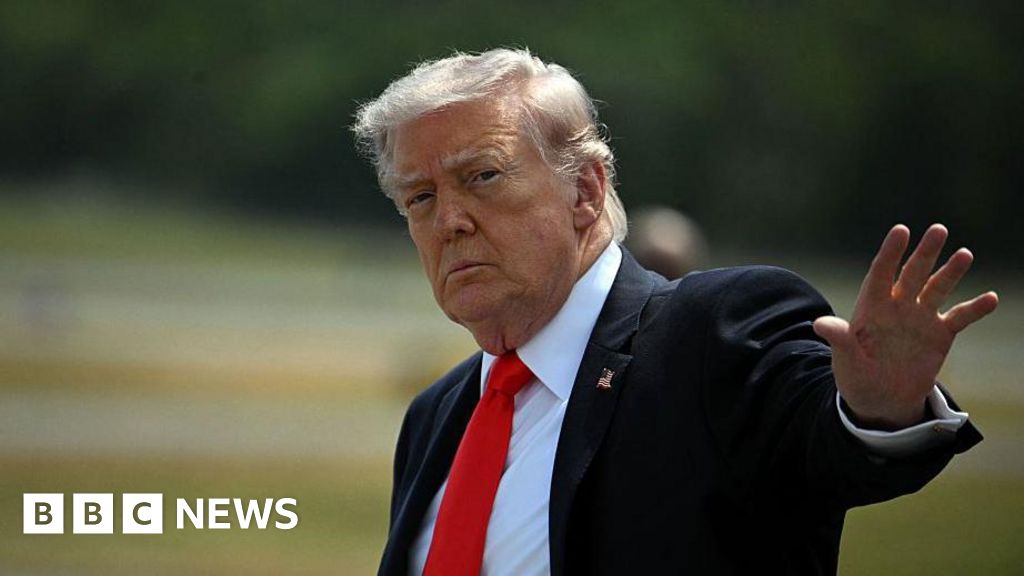
It comes as the US said on Monday it will begin to help “guide” vessels out of the Strait of Hormuz.
Source link


Met Gala 2026 “Costume Art” red carpet pictures from New York City

Tarik Skubal to undergo elbow surgery, sidelining Tigers ace for months ahead of free agency

Jake Paul breaks silence after Olivia Rodrigo’s savage SNL joke

-

 Tech1 week ago
A Brain Implant for Depression Is About to Be Tested in Humans
-

 Tech1 week ago
Almost 90% of women leave tech industry within 10 years | Computer Weekly
-
 Business7 days ago
‘I had £20,000 stolen and had to fight a 13-month fraud reporting rule to get it back’
-
 Business1 week ago
Pakistan’s oil market is fuelling the crisis | The Express Tribune
-

 Sports6 days ago
Pro wrestling star Steph De Lander reveals how colleague’s advice helped lead her to title triumph at ACW
-

 Entertainment1 week ago
Melania Trump says ABC should ‘take a stand’ on late-night host Kimmel
-

 Tech7 days ago
This Ambitious Laptop Doesn’t Leave Much Room for Your Hands
-

 Entertainment1 week ago
Norway joins Type 26 Frigate Programme to boost NATO naval power