

Business
Who is Jane Lauder? Wife of Fed chair pick Kevin Warsh is billionaire Ronald Lauder’s daughter – The Times of India

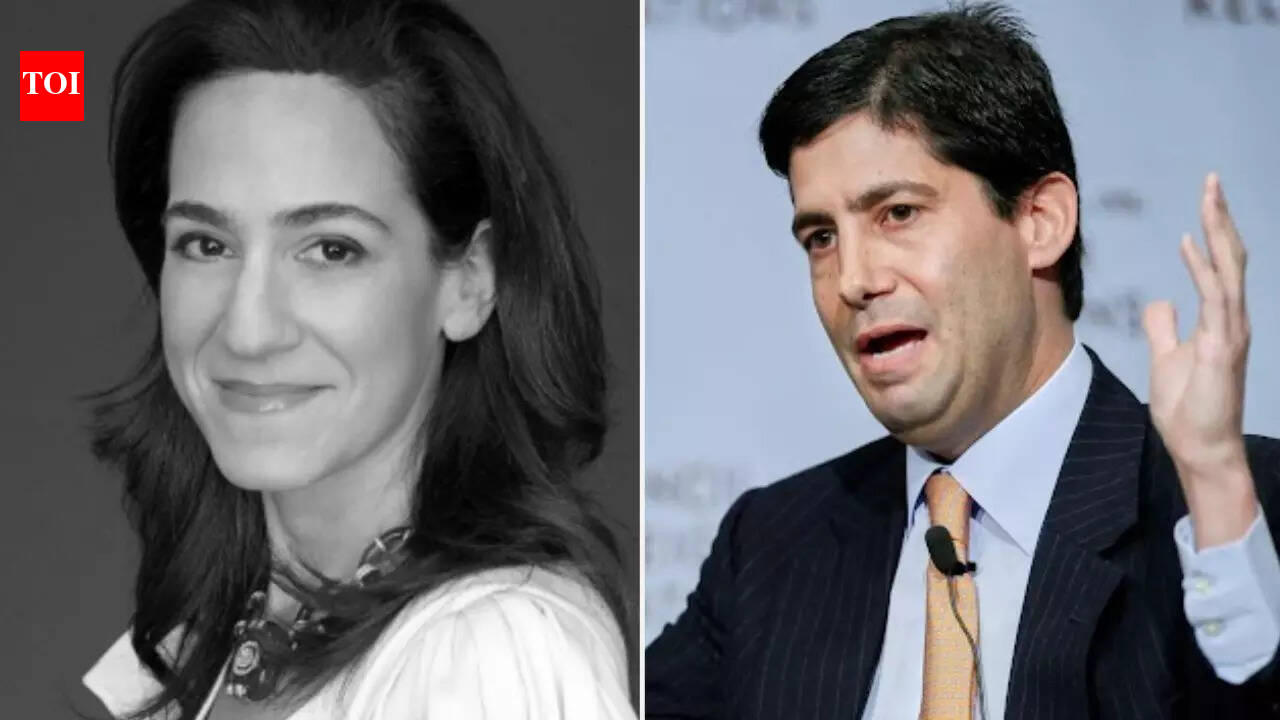
Kevin Warsh is President Donald Trump’s pick to be the next chairman of the US Federal Reserve. He is expected to succeed the current Fed chief Jerome Powell in May this year. Powell has been at the receiving end of Trump’s wrath for several months, with repeated verbal attacks for not lowering interest rates as fast or by as much as the US President wants.The position of Federal Reserve chair ranks among the most influential jobs in the US government, carrying substantial sway over the direction of the world’s largest economy.
Kevin Warsh’s name had been doing the rounds, and Trump’s announcement therefore came as no surprise. In a post on social media platform Truth Social, Trump listed Warsh’s qualifications and reasons for picking him:“I am pleased to announce that I am nominating Kevin Warsh to be the CHAIRMAN OF THE BOARD OF GOVERNORS OF THE FEDERAL RESERVE SYSTEM. Kevin currently serves as the Shepard Family Distinguished Visiting Fellow in Economics at the Hoover Institution, and Lecturer at the Stanford Graduate School of Business. He is a Partner of Stanley Druckenmiller at Duquesne Family Office LLC. Kevin received his A.B. from Stanford University, and J.D. from Harvard Law School. He has conducted extensive research in the field of Economics and Finance. Kevin issued an Independent Report to the Bank of England proposing reforms in the conduct of Monetary Policy in the United Kingdom. Parliament adopted the Report’s recommendations. Kevin Warsh became the youngest Fed Governor, ever, at 35, and served as a Member of the Board of Governors of the Federal Reserve System from 2006 until 2011, as the Federal Reserve’s Representative to the Group of Twenty (G-20), and as the Board’s Emissary to the Emerging and Advanced Economies in Asia. In addition, he was Administrative Governor, managing and overseeing the Board’s operations, personnel, and financial performance. Prior to his appointment to the Board, from 2002 until 2006, Kevin served as Special Assistant to the President for Economic Policy, and Executive Secretary of the White House National Economic Council. Previously, Kevin was a member of the Mergers & Acquisitions Department at Morgan Stanley & Co., in New York, serving as Vice President and Executive Director. I have known Kevin for a long period of time, and have no doubt that he will go down as one of the GREAT Fed Chairmen, maybe the best. On top of everything else, he is “central casting,” and he will never let you down. Congratulations Kevin!”But, Warsh is not an obvious pick. He and Trump hold sharply different views on monetary policy. A former Federal Reserve governor, Warsh is widely seen as an inflation hawk and stepped down in 2011 after warning that the central bank was injecting excessive liquidity into the economy. He has long been associated with a “hard money” stance, favouring a strong dollar and a restrained balance sheet.Trump’s preferences have typically leaned the other way. But as noted economist Paul Krugman notes in his blog: “Warsh calls for tight money and opposes any attempt to boost the economy when Democrats hold the White House. Like all Trumpers, he has been all for lower interest rates since November 2024.”According to Fortune, in choosing Warsh, Trump may be wagering that someone who appears ideologically distant could prove more adaptable once in the role. Warsh also brings a background likely to appeal to the president: he began his career as a young Wall Street executive, later emerged as an independent-minded Fed governor, and has since been associated with several high-profile policy institutions. He also has family connections to Trump, adding another layer to the selection.Ironically, Kevin Warsh’s choice is being talked about by experts not just for what it means for the independence of the central bank of the world’s largest economy, but also for the billionaire family he is married into.
Who are Jane Lauder & Ronald Lauder ?
Jane Lauder, Kevin Warsh’s wife, is the granddaughter of global cosmetics industry legend Estée Lauder. She is the daughter of billionaire Ronald Lauder, who is the sole heir to the The Estée Lauder Companies. According to Forbes, Jane Lauder has a net worth of $2.7 billion, making her among the world’s wealthy individuals.Jane Lauder has served as executive vice president and chief data officer at her family-run company. She began her career at Estée Lauder in 1996, shortly after completing her studies at Stanford University, and went on to oversee brands such as Clinique and Origins.The company, co-founded by her grandmother in 1946, has grown into a portfolio of more than 20 brands and has annual revenues of $15.6 billion, according to Forbes. Jane Lauder stepped away from her role as executive vice president in 2024, though she has been a member of the company’s board of directors since 2009.Jane Lauder’s father Ronald Lauder is incidentally the same person who has actively been encouraging Donald Trump to acquire Greenland!Ronald Lauder, has shared a long personal history with Donald Trump, dating back to their days as students at the University of Pennsylvania’s Wharton School. The relationship forged during their undergraduate years has endured, with Trump and Lauder remaining close associates and trusted advisers over time.Ronald Lauder is widely seen as the person who first encouraged Trump to consider the idea of acquiring Greenland in 2020 and has continued to counsel him on the matter since then. Earlier this month, The Guardian reported that Lauder has built commercial interests in Greenland.According to reports in Arctic-focused media, Lauder is part of an investor consortium known as Greenland Development Partners, which supports projects related to water, energy, and infrastructure in the region. He is also said to have put money into a small bottled water venture called Greenland Water Bank.





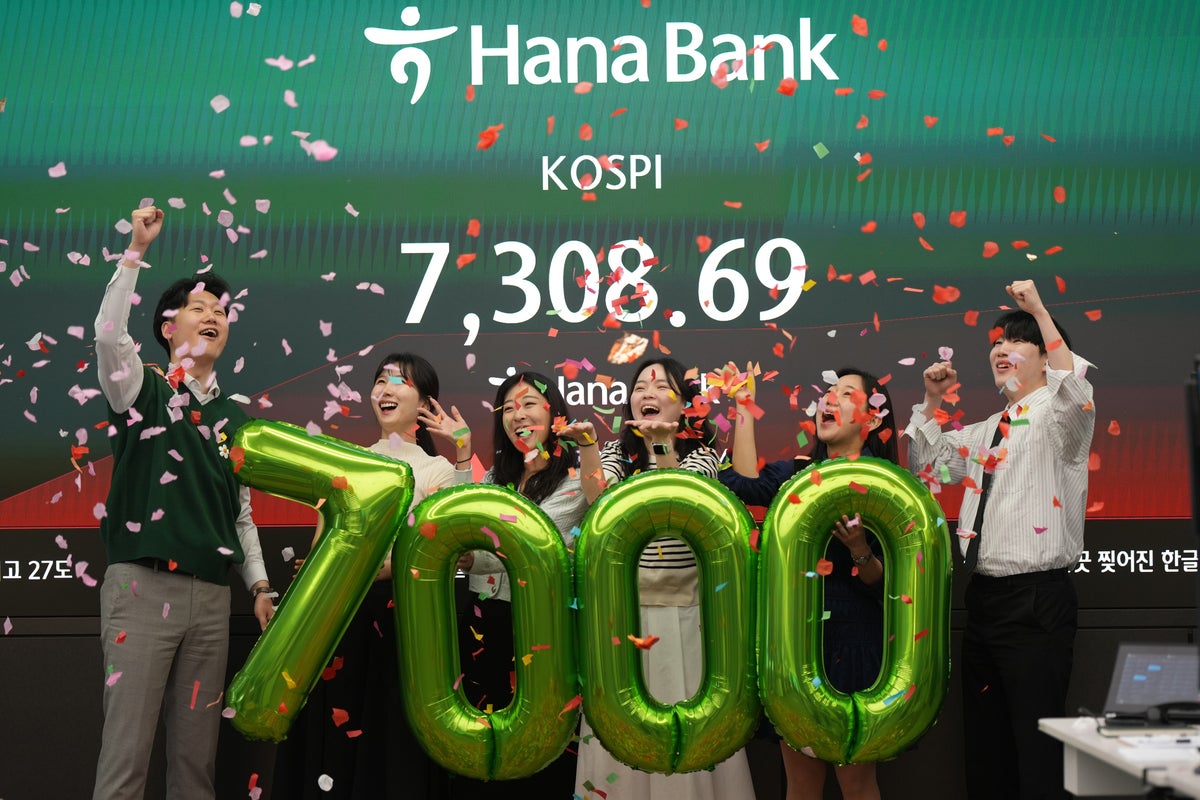
Oil prices fell and Asian stock markets surged to record highs on Wednesday after Donald Trump said negotiations with Iran were making “great progress” toward a final agreement and announced a brief pause in US operations escorting ships through the Strait of Hormuz.
Brent crude tumbled 1.2 per cent to $108.51 a barrel, still well above its roughly $70 price before the war began, but lower than the highs of recent weeks.
Wall Street had already set records on Tuesday, with the S&P 500 rising 0.8 per cent to a new all-time high and the Nasdaq gaining 1 per cent, as oil pulled back sharply after briefly crossing $115 on Monday.
Strong corporate earnings underpinned the Wall Street rally. DuPont surged 8.4 per cent after the chemical giant reported better-than-expected first-quarter profits and raised its full-year forecasts, even as it acknowledged some impact from logistics disruptions in the Middle East.
Pinterest jumped 6.9 per cent after its number of active monthly users rose 11 per cent to 631 million, beating Wall Street’s sales and profit targets. AB InBev climbed 8.7 per cent after topping profit forecasts on growth for its Corona, Stella Artois and Michelob Ultra brands. “Cheers to beer,” chief executive Michel Doukeris said.
Palantir fell 6.9 per cent despite beating expectations, as its stock continued to struggle on worries about increased competition. American Electric Power rose 1.8 per cent and Cummins added 2.8 per cent after both reported stronger-than-expected results.
In Europe, markets were mixed. The CAC 40 rose 1.1 per cent in Paris while the FTSE 100 fell 1.4 per cent in London. Hong Kong’s Hang Seng fell 0.8 per cent. Many Asian markets were closed for holidays.
The momentum carried into Asia on Wednesday, where MSCI‘s broadest index of Asia-Pacific shares outside Japan jumped 2.3 per cent to a fresh all-time high. South Korea’s Kospi surged 5.1 per cent, clearing the 7,000 mark for the first time, as Samsung Electronics jumped 12 per cent and crossed a $1 trillion market valuation, overtaking Berkshire Hathaway.
The AI trade drove much of the enthusiasm. Advanced Micro Devices jumped 16.5 per cent in extended trading after forecasting second-quarter revenue above Wall Street expectations on strong demand from cloud computing companies accelerating spending on AI infrastructure.
“Due to the capital expenditure we are seeing from hyperscalers in the US, the earnings growth trajectory for sectors such as semiconductors, tech hardware, industrials and materials in Asia exceeds anything I have seen in a long time,” Rushil Khanna, head of equity investments for Asia at Ostrum, an affiliate of Natixis Investment Managers, told Reuters. “This capex is leading to material value creation in Asia as the provider of the picks and shovels to the AI ecosystem.”
The diplomatic backdrop of US-Iran talks also helped the markets. Mr Trump said he would briefly pause US operations escorting ships through the strait, which has been effectively closed since Iran blockaded it in late February, triggering a global energy shock. US defence secretary Pete Hegseth confirmed the ceasefire remained in place despite the US and Iran exchanging fire the previous day.
“Markets embraced a sense of calm and stability overnight, with the risk of escalation in the Middle East conflict viewed as having diminished,” analysts from Westpac wrote in a note.
Despite the optimism, analysts cautioned that significant uncertainties remained this week.
“A fragile ceasefire, a novel blockade, Friday’s NFP and diminishing odds of a US-Iran peace deal are all converging this week,” said Lukman Otunuga, head of market research at trading broker FXTM.
“Gold may find itself on the losing end of conflict-induced inflation fears, even as uncertainty grips markets.”
Gold rose 1.2 per cent to $4,609.59. The dollar index slipped 0.1 per cent, snapping a three-day winning streak, with the euro rising to $1.1724 and sterling to $1.3577.
The Australian dollar climbed 0.6 per cent to its highest since June 2022, buoyed by improved risk appetite and underpinned by a third consecutive interest rate rise from the Reserve Bank of Australia, which cited the Middle East conflict’s impact on fuel and commodity prices. The ten-year US Treasury yield held flat at 4.424 per cent.

Josh D’Amaro, chairman of Disney Experiences, speaks during the grand opening ceremony of Shanghai Disney Resort’s Zootopia-themed land on December 19, 2023 in Shanghai, China.
Vcg | Visual China Group | Getty Images
Disney will release its fiscal second-quarter results before the bell Wednesday. It will mark the first earnings call led by Josh D’Amaro since the former parks executive took over as CEO in March.
Under the new CEO, who replaced Bob Iger after his two turns at the helm totaling roughly 20 years, Disney has already been through a round of layoffs and has faced mounting political pressure surrounding its late night TV host Jimmy Kimmel.
“This earnings call marks Disney’s first real gut‑check under D’Amaro’s leadership, and a test of how his theme‑parks roots translate, or don’t, into the rest of the business,” said Mike Proulx, research director at Forrester. “Streaming is still the main event, but the market is consolidating. A potential combination of Paramount+ and HBO Max would reset the competitive calculus for Disney+.”
Streaming and TV results have gobbled up much of the focus for media investors across the board as the industry faces significant upheaval and consolidation.
Here’s how Disney is expected to perform in its fiscal second quarter, according to LSEG:
- Earnings per share: $1.49 expected
- Revenue: $24.78 billion expected
Last quarter Disney stopped reporting some details for the entertainment segment — which is comprised of its traditional TV, streaming and theatrical releases — including the breakdown of revenue and operating income for each segment. The company has also stopped reporting quarterly streaming subscriber numbers.
The consumer shift from pay TV bundles to streaming has weighed on media companies for years, with both distribution and advertising profits continuously decreasing. Still, traditional TV remains a cash cow, and investors have been keen to see how and when streaming can make up for the declines.
Updates on the state of Disney’s theme parks, which are part of its experiences unit and the profit driver of the company, will also be of particular interest on Wednesday.
In February, Disney provided second-quarter guidance that called for “modest” growth in operating income for the experiences division due to international visitation headwinds at domestic parks. That forecast was issued before the U.S. and Israel launched attacks on Iran roughly two months ago, causing a surge in oil prices.
This story is developing. Please check back for updates.
Business
Top stocks to buy today: Stock recommendations for May 6, 2026 – check list – The Times of India
Stock market recommendations: Mehul Kothari, DVP – Technical Research at Anand Rathi Shares has recommended Castrol India, Concord Biotech, and Intellect Design Arena as the top stocks to buy today, May 6, 2026.Castrol India Ltd – Harmonic Completion with Momentum ConfirmationBuy: ₹186–₹180 | Stop Loss: ₹166 | Target: ₹214Castrol India has completed a classic AB=CD harmonic structure, highlighting price symmetry and a potential reversal zone. This completion aligns with the 61.8% internal Fibonacci retracement, reinforcing the importance of this support area. Additionally, the presence of the 1.27 external retracement adds further confluence to the bullish setup. Momentum indicators support this view, with RSI sustaining above the 50 mark, indicating improving strength and positive bias. Overall, the structure suggests a high probability of upward movement from current levels.Concord Biotech Ltd – Base Formation with Momentum ExpansionBuy: ₹1200–₹1170 | Stop Loss: ₹1070 | Target: ₹1380Concord Biotech has formed a strong base in the ₹1000–₹1100 zone, supported by bullish divergence, indicating accumulation at lower levels. The RSI has crossed above the 60 mark for the first time in several months, reflecting a pickup in momentum and strengthening trend bias. Additionally, the stock has closed above the Williams Alligator indicator, suggesting a transition into a sustained uptrend. The confluence of these factors indicates improving sentiment and increasing buying interest, pointing toward potential continuation of the bullish move.Intellect Design Arena Ltd – Base Breakout with Trend Reversal SignalsBuy: ₹740–₹720 | Stop Loss: ₹660 | Target: ₹850Intellect Design Arena has developed a strong base in the ₹600–₹700 zone, supported by bullish divergence, indicating accumulation at lower levels. The RSI has moved above the 50 mark, signaling improving momentum and strengthening trend conditions. Additionally, the stock has broken above its previous swing high, confirming a potential trend reversal and shift towards an uptrend. The alignment of these technical factors reflects improving sentiment and rising buying interest, suggesting a high probability of continued bullish momentum in the near to medium term.(Disclaimer: Recommendations and views on the stock market, other asset classes or personal finance management tips given by experts are their own. These opinions do not represent the views of The Times of India.)


Cambodia cuts 2026 growth forecast to 4.2% amid Middle East turmoil

Trump pauses effort to escort ships in Hormuz at ‘Pakistan, others’ request’
[CinePlex360] Please moderate: “How investment

A Brain Implant for Depression Is About to Be Tested in Humans

Pro wrestling star Steph De Lander reveals how colleague’s advice helped lead her to title triumph at ACW

‘I had £20,000 stolen and had to fight a 13-month fraud reporting rule to get it back’

-
 Tech1 week ago
A Brain Implant for Depression Is About to Be Tested in Humans
-
 Sports1 week ago
Pro wrestling star Steph De Lander reveals how colleague’s advice helped lead her to title triumph at ACW
-
Business1 week ago
‘I had £20,000 stolen and had to fight a 13-month fraud reporting rule to get it back’
-

 Entertainment1 week ago
Norway joins Type 26 Frigate Programme to boost NATO naval power
-
 Entertainment1 week ago
Melania Trump says ABC should ‘take a stand’ on late-night host Kimmel
-

 Tech1 week ago
Are tech leaders risking a cyber resourcing crisis? | Computer Weekly
-
 Business6 days ago
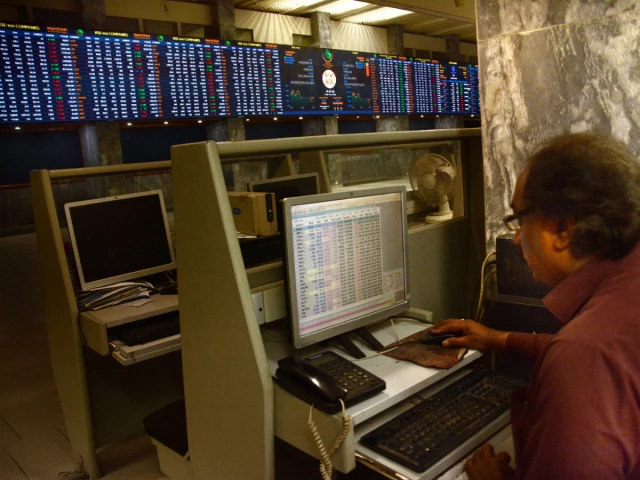
PSX plunges over 4,800 points | The Express Tribune
-
 Business1 week ago
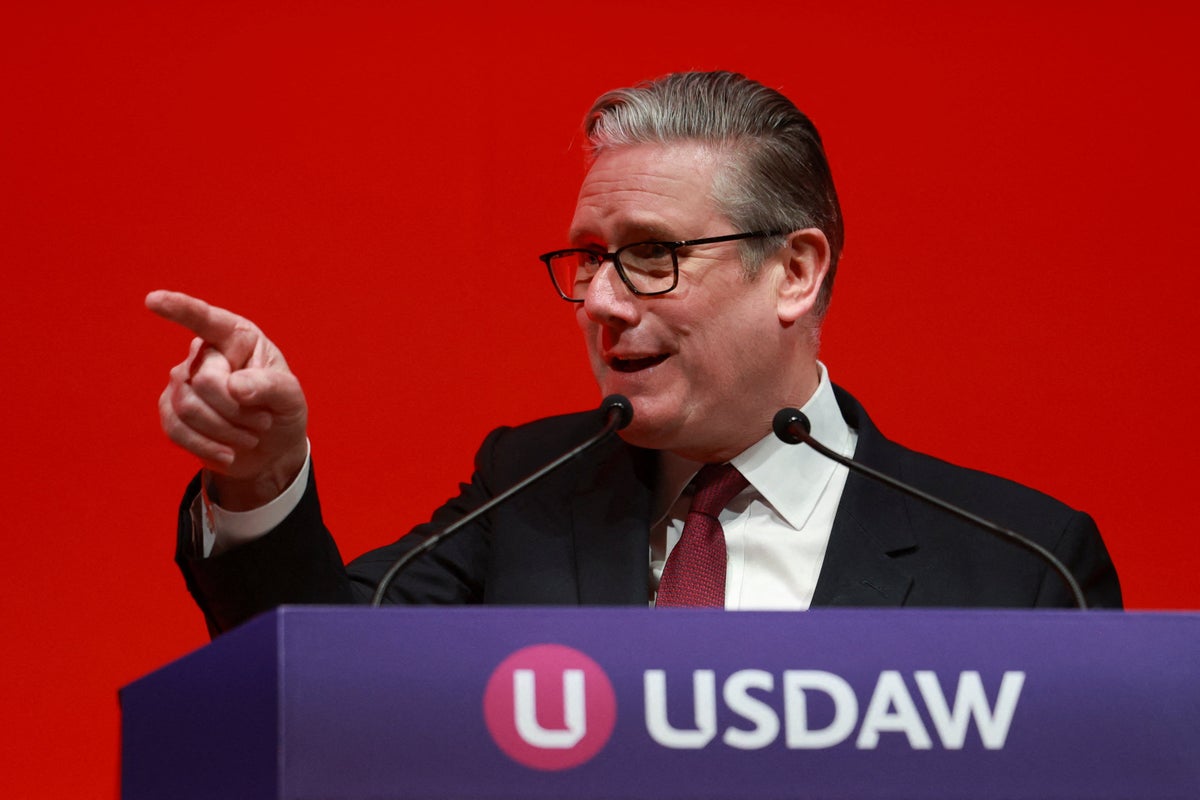
Starmer says ‘tide could be turning’ on shoplifting epidemic