

Politics
Who is Mojtaba Khamenei, Iran’s new supreme leader?

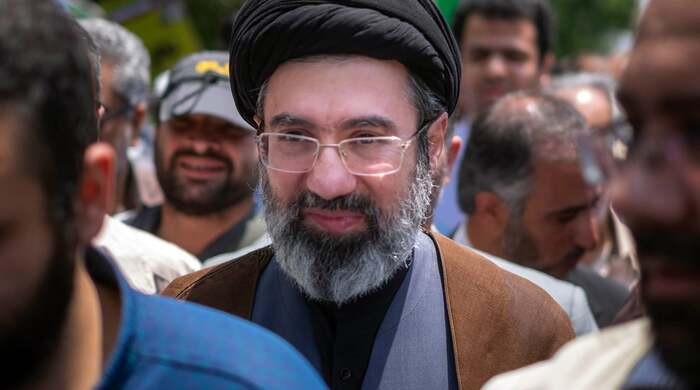
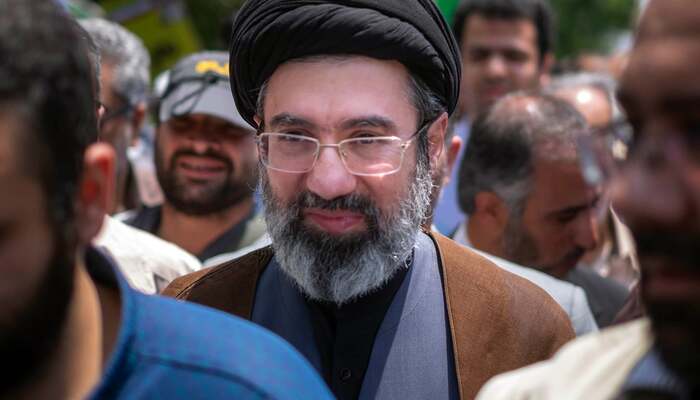
Mojtaba Khamenei, the son of late Iranian supreme leader Ali Khamenei, has been appointed to succeed his father as the new head of the nation.
The younger Khamenei was named supreme leader by the top clerical body, the Assembly of Experts, in a statement published shortly after midnight on Monday in Iran.
The 56-year-old mid-ranking cleric has survived the US-Israeli air war on Iran. His 86-year-old father, Ayatollah Ali Khamenei, was martyred in an airstrike by US-Israel last week.
A member of the council, Ayatollah Mohsen Heidari Alekasir, said in a video on Sunday that a candidate had been selected based on Khamenei’s guidance that Iran’s top leader should be “hated by the enemy”.
“Even the Great Satan (US) has mentioned his name,” Heidari Alekasir said of the chosen successor, days after US President Donald Trump said Mojtaba was an “unacceptable” choice for him.
Other contenders for the top position had included Alireza Arafi, one of the three members of the interim council running the country, Mohsen Araki, and even Hassan Khomeini, the grandson of the founder of the Islamic republic — Ruhollah Khomeini — in 1979.
‘Gatekeeper’
Mojtaba amassed power under his father as a senior figure close to the security forces and the vast business empire they control. He has opposed reformers seeking to engage with the West as it tries to curb Iran’s nuclear programme.
His close ties with the elite Revolutionary Guard Corps (IRGC) give him added leverage across Iran’s political and security apparatus and he has built up influence behind the scenes as his father’s “gatekeeper”, sources familiar with the matter said.
“He has strong constituency and support within the IRGC, in particular amongst the younger […] generations,” said Kasra Aarabi, head of researching the IRGC at United Against Nuclear Iran, a US-based policy organisation.
The supreme leader has the final say on matters of state, including foreign policy and Iran’s nuclear programme. Western powers want to prevent Tehran developing nuclear arms. Iran says its nuclear programme is for civilian purposes only.
Mojtaba could face opposition from Iranians who have shown they are ready to stage mass protests to press their demands for greater freedoms despite resistance from authorities.
He was born in 1969 in the holy city of Mashhad and grew up as his father was helping lead the opposition to the Shah. As a young man, he served in the Iran-Iraq war.
Mojtaba studied under religious conservatives in the seminaries of Qom, Iran’s center of theological learning, and has the clerical rank of Hojjatoleslam.
He has never held a formal position in the Islamic Republic’s government. He has appeared at loyalist rallies, but has rarely spoken in public.
He is regarded as close to conservatives, notably because of his ties with the Revolutionary Guards, the ideological arm of Iran’s military. That relationship dates back to his service in a combat unit at the end of the war between Iraq and Iran that lasted from 1980 to 1988.
US sanctions
The US Treasury Department imposed sanctions on Mojtaba in 2019, saying he represented the supreme leader in “an official capacity despite never being elected or appointed to a government position” aside from working in his father’s office.
Its website said Khamenei had previously delegated some of his responsibilities to Mojtaba, who it said had worked closely with the commander of the IRGC’s Quds Force and the Basij, a religious organisation affiliated with the Guards, “to advance his father’s destabilising regional ambitions and oppressive domestic objectives”.
Mojtaba bears a strong resemblance to his father, and wears the black turban of a sayyed.
His wife, Zahra Haddad-Adel, daughter of a former speaker of parliament, was also martyred in the US-Israeli strikes that martyred the supreme leader.
Israel has issued a stark warning to the new supreme leader and whoever selected him, saying “the hand of the State of Israel will continue to follow any successor and anyone who seeks to appoint a successor”.
The Assembly of Experts has 88 members who are elected every eight years.
It has only overseen one leadership transition process to date, when Khamenei was selected in 1989 following the death of Khomeini.
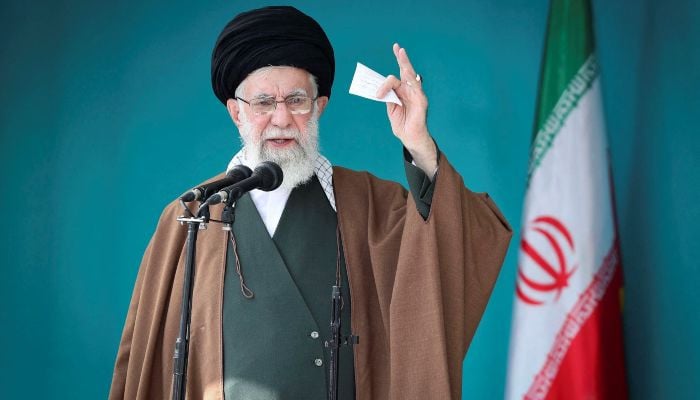
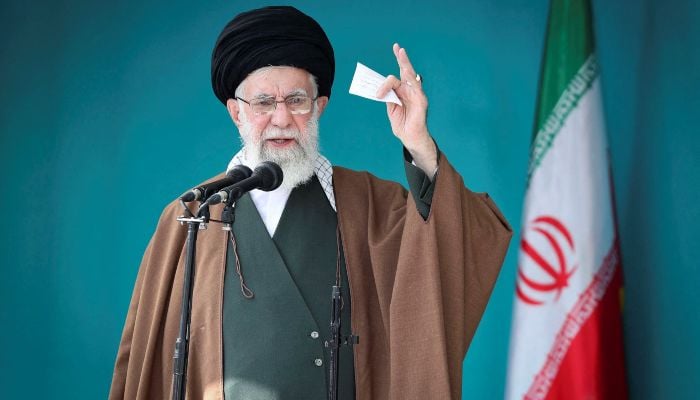
US-Israeli strikes on Iran have martyred several senior political and military figures, hitting the Islamic Republic’s core leadership as the regional war disrupts energy markets and global shipping.
Below are some of the most prominent figures killed:
Supreme Leader
Ayatollah Ali Khamenei, who as Supreme Leader since 1989 built an iron grip over Iran while entrenching hostility towards the US and Israel, was martyred aged 86 in a US-Israeli air strike on his compound on February 28.
His more than three-decade rule was marked by consolidation of power through the security apparatus, and expansion of Iran’s regional influence, even as tensions over its nuclear programme repeatedly brought it into confrontation with the West.
Senior officials
Ali Larijani, secretary of the Supreme National Security Council and a veteran powerbroker, was assassinated at 67 in a US-Israeli air strike in the Pardis area on March 17, along with his son and one of his deputies, Iranian media reported.
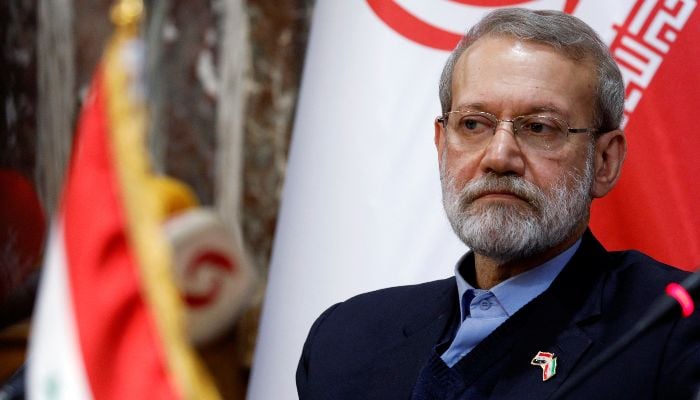
A former Revolutionary Guards commander and nuclear negotiator, he was a close adviser to the slain Supreme Leader and played an important role in shaping Iran’s security and foreign policy.
Esmail Khatib, Iran’s intelligence minister, was eliminated in an Israeli strike on March 18. A hardliner cleric and politician, he worked in Ayatollah Ali Khamenei’s office and was mentored by him, before heading the civilian intelligence apparatus in August 2021.
Ali Shamkhani, a close adviser to Khamenei and a key figure in Iran’s security and nuclear policymaking, was cut down in US-Israeli strikes on Tehran on February 28.
He had earlier survived an attack on his home during the 12-day June war between Israel and Iran.
Top military commanders
Mohammad Pakpour, commander-in-chief of the IRGC, Iran’s most powerful military force, was assassinated in the February 28 strikes in Tehran, Iranian state media said.
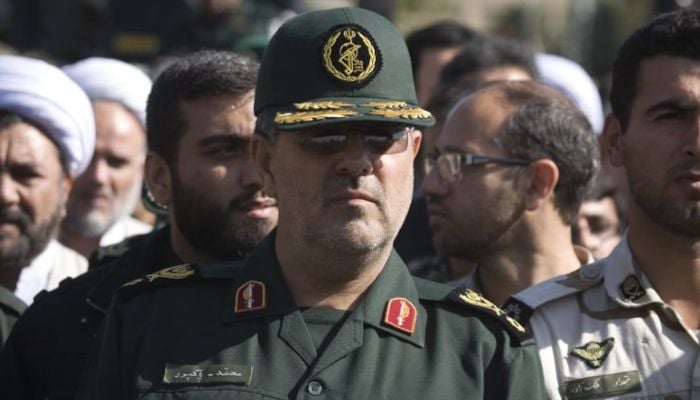
He rose through the ranks to lead the Revolutionary Guards after his predecessor Hossein Salami was eliminated in the 12-day war in June.
Aziz Nasirzadeh, Iran’s defence minister and a career air force officer, was martyred in the same wave of strikes targeting senior leadership in Tehran on February 28, according to sources. He played a key role in military planning and defence policy.
Abdolrahim Mousavi, chief of staff of Iran’s armed forces, was assassinated in the February 28 strikes during what Iranian media said was a meeting of senior leadership in Tehran. He was responsible for coordinating Iran’s military branches and overseeing conventional forces.
Gholamreza Soleimani, commander of Iran’s Basij paramilitary force, was eliminated in US-Israeli strikes on March 17, according to Iranian state media. A senior Revolutionary Guards officer, he led the force central to internal security and the enforcement of state authority.
Behnam Rezaei, the Revolutionary Guards’ navy intelligence chief, was martyred in an Israeli strike in the port city of Bandar Abbas on March 26, according to the Israeli military, which said he was responsible for collecting information on regional countries.
- Trump reiterates claims Tehran ready to make deal.
- Talks ongoing to negotiate end to month-long war: Trump.
- “Tehran’s leadership, nuclear programme suffered damage.”
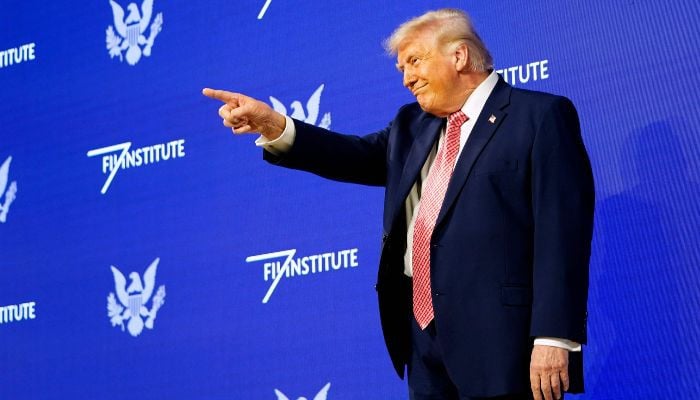
WASHINGTON: US President Donald Trump on Friday insisted Iran must open up the Strait of Hormuz to oil traffic to make a peace deal — and dubbed the crucial waterway the “Strait of Trump.”
Trump, who has renamed several buildings in Washington after himself during his second term, said his comment was a “mistake” but then added that “there’s no accidents with me.”
Repeating his claims that Tehran is ready to make a deal despite its denials, the 79-year-old US leader said that talks were underway to negotiate an end to the month-long conflict.
Trump added that Iran was “on the run” and reiterated assertions that Tehran’s leadership, navy, air force and nuclear programme had all suffered significant damage.
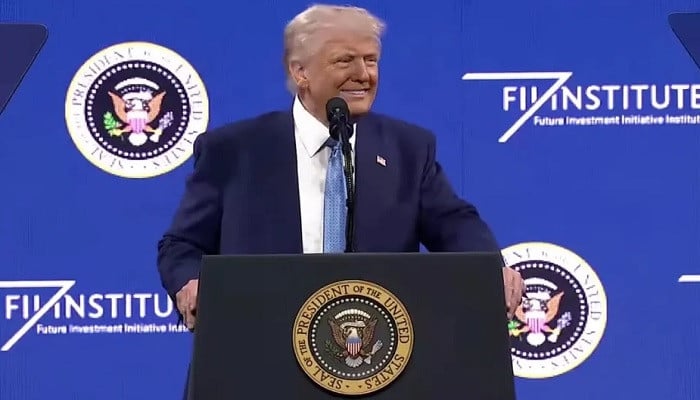
“We’re negotiating now, and it would be great if we could do something, but they have to open it up,” Trump told a Saudi-backed FII Priority investment forum in Miami.
“They have to open up the Strait of Trump — I mean Hormuz. Excuse me, I’m so sorry. Such a terrible mistake.”
Trump said the media would pounce upon the comment, but then added “there’s no accidents with me, not too many.”
He also talked about how he had ordered the renaming of the Gulf of Mexico as the “Gulf of America” shortly after returning to power.
During a cabinet meeting on Thursday, Trump said it was “an option” to take control of Iran’s oil as the United States has effectively done with Venezuela — despite the fact that the war is still raging.
Republican Trump, who rose to fame as a property tycoon with his name plastered across his own skyscrapers, made similar teasing comments before renaming Washington’s Kennedy Centre the “Trump-Kennedy Centre.”
A peace institute in Washington was also renamed after Trump last year.
The Strait of Hormuz was open to international shipping before the conflict, but the narrow waterway has since ground to a standstill, leading to a surge in global energy prices.
Earlier Friday, US Secretary of State Marco Rubio voiced alarm that Iran would seek to establish a permanent “tolling system” for vessels in the strait, through which one-fifth of global oil normally transits.
- Trump suggests Cuba nearing collapse amid economic crisis.
- Says US opens talks with Cuban leaders to avoid escalation.
- Hints force an option, saying “sometimes you have to use it”.
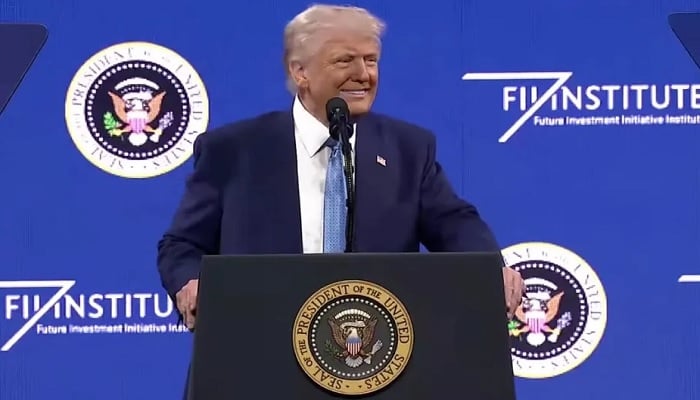
US President Donald Trump on Friday said “Cuba is next” during a speech at an investment forum in Miami, during which he touted the successes of US military action in Venezuela and Iran.
While the president did not specify what precisely he plans to do with the island nation, he has frequently said he believes the government in Havana, facing a severe economic crisis, is on the verge of collapse.
His administration has opened up negotiations with elements of Cuba’s leadership in recent weeks, while Trump himself has hinted that kinetic action could be possible.
“I built this great military. I said, ‘You’ll never have to use it.’ But sometimes you have to use it. And Cuba is next, by the way,” Trump told the conference on Friday.
“But pretend I didn’t say that. Pretend I didn’t.”
Cuban President Miguel Diaz-Canel has acknowledged that the country is in talks with the US in a bid to avert potential military confrontation. Cuba’s economy has been battered by disruptions in oil imports, which it relies on to run power plants and transportation.
Prior to the US operation to capture now-deposed Venezuelan leader Nicolas Maduro in January, Venezuela had provided much of Cuba’s oil needs, but Caracas’ new government, under pressure from Washington, has ended those shipments.
Earlier in March, Trump had said Cuba may be subject to a “friendly takeover,” before adding: “It may not be a friendly takeover.”


EU Parliament, Council reach deal on major reform of Customs Code
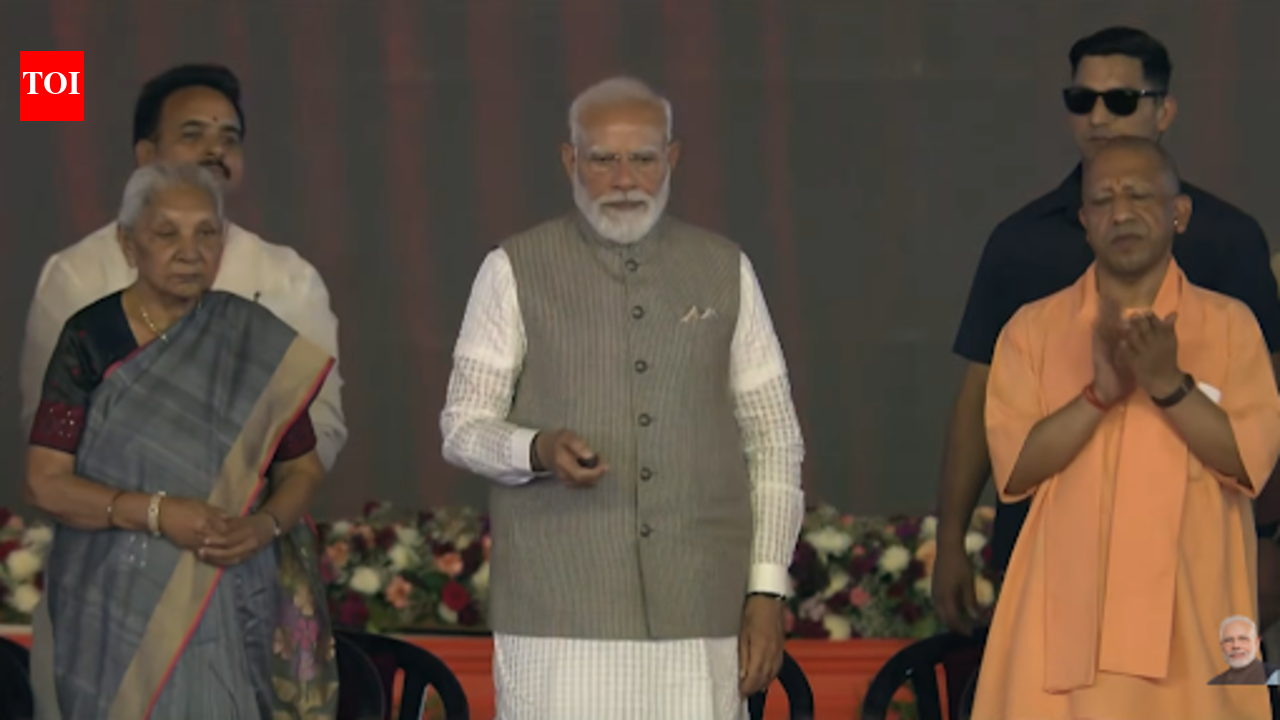
Noida International Airport inauguration: Delhi-NCR gets new airport – all you need to know – The Times of India

Why supermarket prices really became sky high in the UK

-
 Business1 week ago
Flipkart group CFO to leave co amid IPO plans – The Times of India
-
 Business1 week ago
Video: The Effects of High Oil Prices
-

 Fashion1 week ago
China’s textile & apparel exports surge 17% to $50 bn in Jan-Feb 2026
-

 Sports1 week ago
Rating Adidas’ 2026 World Cup away shirts: Argentina, Spain, Mexico and more
-

 Fashion1 week ago
The hidden $1.62 war tax now embedded in every garment you source
-

 Sports1 week ago
American Conference Commissioner Tim Pernetti thanks Trump for Army-Navy game executive order
-
Tech1 week ago
The Corsair 4000D RS PC Case Keeps Your System Cool
-
 Tech1 week ago
‘Uncanny Valley’: Nvidia’s ‘Super Bowl of AI,’ Tesla Disappoints, and Meta’s VR Metaverse ‘Shutdown’