

Business
Why Did Stock Market Fall Today? Key Factors Behind Sensex, Nifty Decline On November 21


Last Updated:
Equity benchmark indices slip on Friday, ending a two-day winning run, as weak global cues dampened investor sentiment.
Why Is Stock Market Down Today?
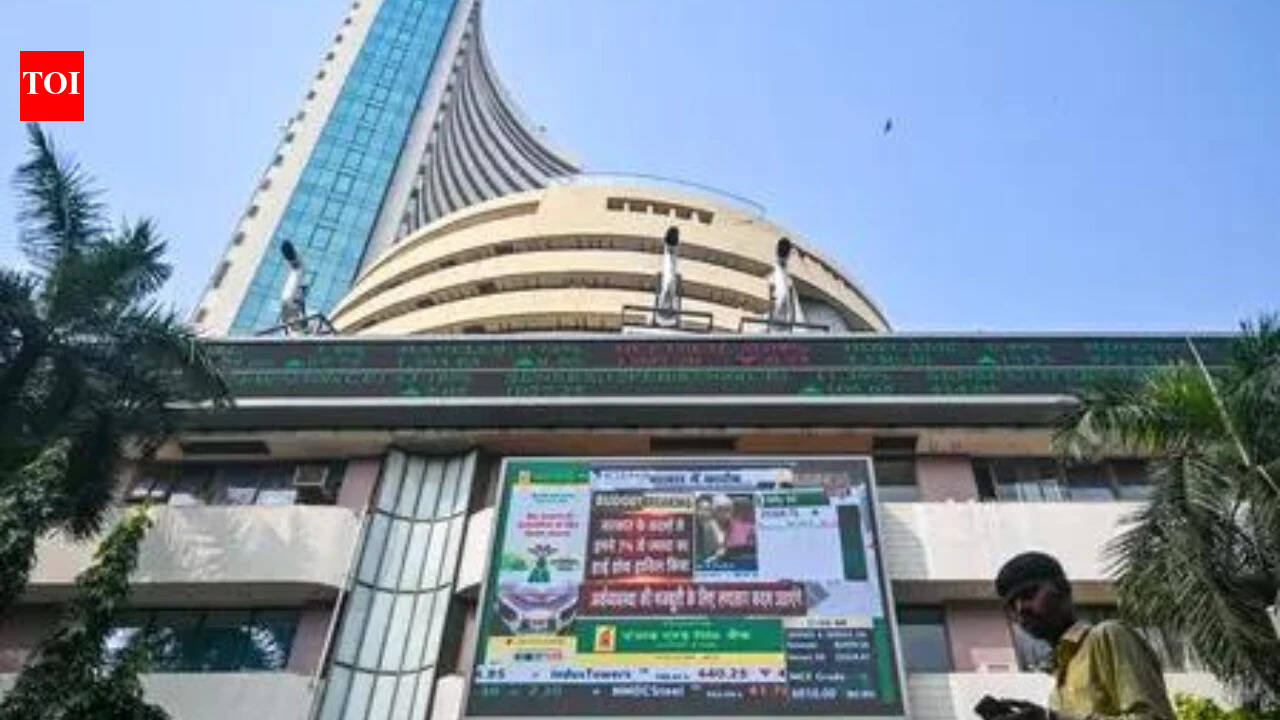
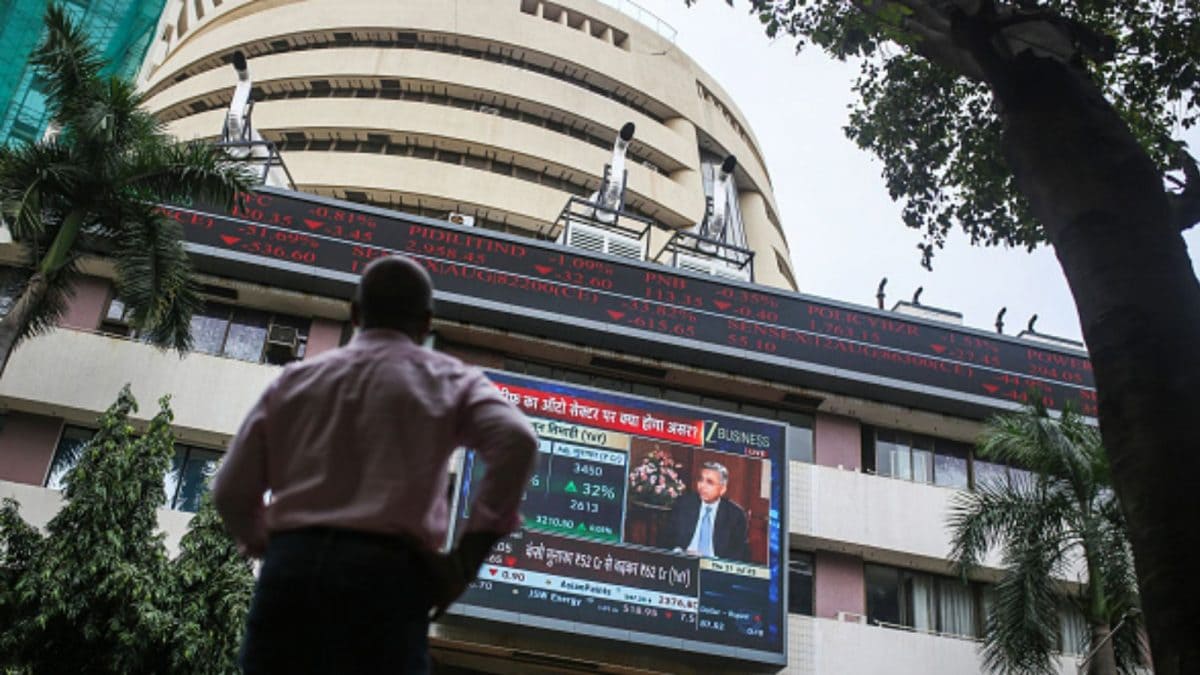
Equity benchmark indices slipped on Friday, ending a two-day winning run, as weak global cues dampened investor sentiment. The BSE Sensex declined 400.76 points to settle at 85,231.92, while the NSE Nifty fell by 124 points to end the day at 26,068.15.
Among the 30 Sensex shares, 17 stocks closed in the red. Among the top losers were Tata Steel, Bajaj Finance, HCL Tech, Bajaj Finserv, and BEL falling by up to 2.58%. On the other hand, the gainers were Maruti Suzuki, Mahindra & Mahindra, Tata Motors PV, ITC, and Asian Paints rising by up to 1.17%.
Key factors behind Friday’s market decline
1. Nifty Metal index slides
The Nifty Metal index fell 1.4% after the government extended exemptions from mandatory quality-control rules for certain steel and stainless-steel grades — a move expected to increase imports and pressure domestic prices. Except for Adani Enterprises, all constituents traded lower, with Hindalco leading the decline.
Hindalco was also the top loser on the Nifty 50, dropping over 2% to ₹783.45, after a fire at its Novelis aluminium plant in Oswego, New York, on November 21. Novelis — which contributes nearly 60% of Hindalco’s revenue — had already recorded a $21 million charge in Q2 due to an earlier fire. The Oswego unit supplies aluminium for Ford’s F-150 truck line.
2. Selling pressure hits IT stocks
IT shares also declined as concerns over stretched valuations resurfaced. The slump in US tech stocks overshadowed Nvidia’s better-than-expected quarterly results, adding further pressure to domestic IT counters.
3. Weak global cues
Asian markets were broadly lower on Friday, tracking the sell-off on Wall Street. South Korea’s Kospi plunged more than 3%, while Japan’s Nikkei 225 slipped over 2%. Markets in Shanghai and Hong Kong also opened weak, extending the negative global sentiment. Overnight in the U.S., all major indices closed in the red, with the Nasdaq Composite falling 2.15%, the S&P 500 down 1.56%, and the Dow Jones Industrial Average losing 0.84%.
Currency movements further weighed on sentiment. The yen hovered near a 10-month low, though it saw a brief rebound after Japanese Finance Minister Satsuki Katayama hinted at possible intervention to limit excessive volatility. The U.S. dollar continued to strengthen and was on track for its strongest week in more than a month. Meanwhile, Japan’s latest stimulus package is projected to have an overall economic impact of $265 billion, adding another factor for markets to consider.
4. Fading hopes of a U.S. rate cut
Renewed uncertainty over US monetary policy also weighed on sentiment. Stronger-than-expected September job growth reduced the likelihood of a December rate cut. Higher U.S. rates typically pull capital away from emerging markets like India.
Adding to the caution, Federal Reserve Governor Lisa Cook, in a speech at Georgetown University, flagged risks to the financial system — including the rapid expansion of private credit and hedge-fund activity in the Treasury market — without providing clarity on near-term rate moves.
5. Volatility spikes
The India VIX jumped 13% to 13.68, signalling heightened uncertainty and potential for wider market swings.
Despite the early decline, analysts noted that markets remain close to record highs, and buying on dips could emerge later in the session, supported by improving earnings and firm domestic flows.
Nifty Technicals
On the technical front, Anand James, Chief Market Strategist at Geojit Financial Services, said the breakout above a month-long range keeps Nifty’s 26,550 target intact. However, Thursday’s move above the upper Bollinger band — followed by a close below — points to limited upside in the near term.
A failure to hold above 26,237 or a drop below 26,160 could shift momentum to the bears, with downside levels at 26,028–25,984, he added.

Aparna Deb is a Subeditor and writes for the business vertical of News18.com. She has a nose for news that matters. She is inquisitive and curious about things. Among other things, financial markets, economy, a…Read More
Aparna Deb is a Subeditor and writes for the business vertical of News18.com. She has a nose for news that matters. She is inquisitive and curious about things. Among other things, financial markets, economy, a… Read More
November 21, 2025, 11:19 IST
Read More



Business
Top stocks to buy today: Stock recommendations for April 17, 2026 – check list – The Times of India

Stock market recommendations: Reliance Industries, and Varun Beverages are the top stock recommendations by Bajaj Broking Research for April 17, 2026.Reliance IndustriesBuy in the range of ₹ 1330.00-1350.00
Reliance Industries stock has undergone a corrective phase over the past three months and is currently consolidating near a crucial support zone of ₹1270–₹1300. This technical setup offers a favorable risk-reward profile, positioning the stock for a potential bullish reversal and the next leg of uptrend.This ₹1270–₹1300 range serves as a crucial support area, reinforced by the convergence of multiple technical factors: (a) 61.8% retracement of the previous April 2025-January 2026 up move (1115-1611) (b) 200 weeks EMA placed around 1292, which has historically acted as strong demand area for the stockThe ongoing corrective phase appears to be nearing exhaustion, with price action indicating the potential for a fresh bullish reversal. We anticipate the stock to resume its uptrend and head towards ₹ 1474 levels in the coming quarters being the high of February 2026 and the 61.8% retracement of the recent decline of the last 3 months ₹ 1611-1290.Varun BeveragesBuy in the range of 455-465
The share price of Varun Beverages has generated a breakout above the falling channel containing last 3 months decline signaling strength and offers fresh entry opportunity.The stock has also formed a higher high and higher low signaling resumption of up move after recent corrective decline.We expect the stock to head higher towards 503 levels in the coming weeks being the 80% retracement of the previous decline from 534 to 381.(Disclaimer: Recommendations and views on the stock market, other asset classes or personal finance management tips given by experts are their own. These opinions do not represent the views of The Times of India)
Experts say Mythos potentially has an unprecedented ability to identify and exploit cybersecurity weaknesses.
Source link
Business
Anthropic’s new AI model exposes fresh risks, flaws for cybersecurity, IT services – The Times of India
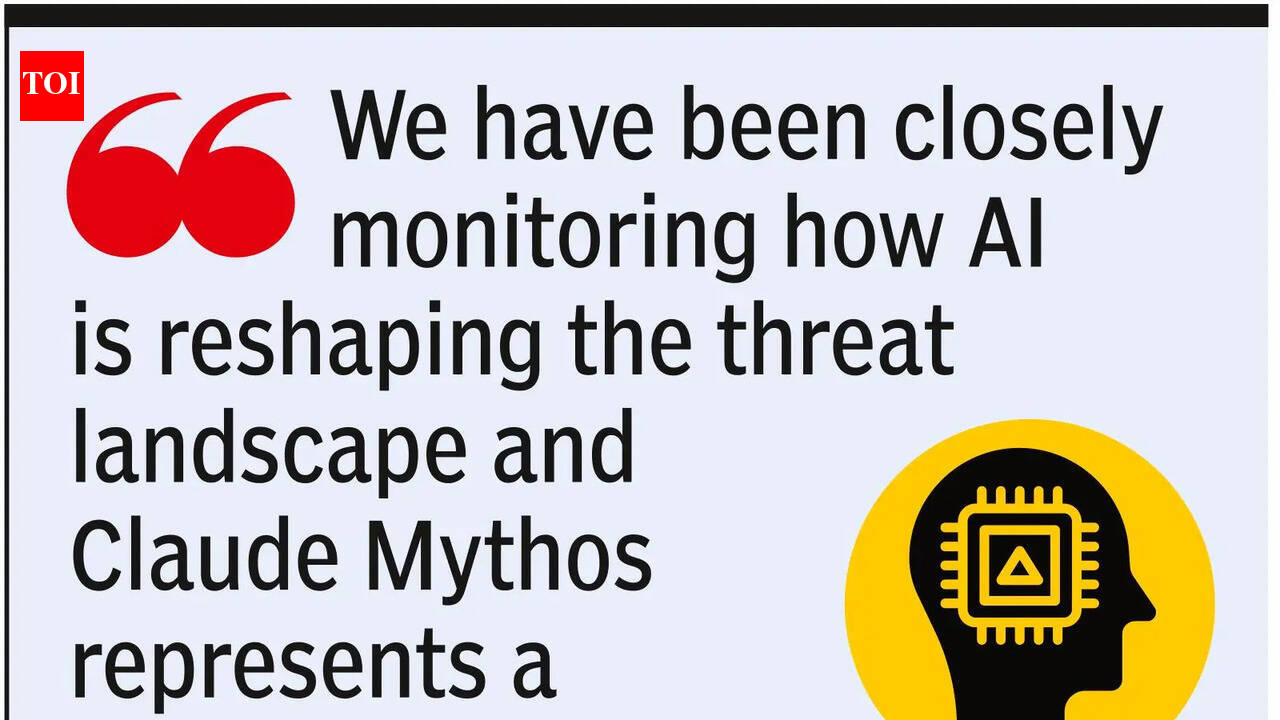
New Delhi: A powerful new AI model is forcing govts, banks, and technology firms to rethink the rules of cybersecurity – and in India, the stakes may be even higher.Claude Mythos, developed by Anthropic, has demonstrated the ability to autonomously detect and exploit software vulnerabilities, including flaws that have persisted for decades. Early tests revealed that the model could identify long-standing weaknesses and simulate complex, multi-step cyberattacks, prompting the company to restrict its wider release. Anthropic CEO Dario Amodei highlighted the shift, noting that AI systems are now capable of finding vulnerabilities “that humans have missed”, a signal of how quickly the cybersecurity landscape is changing.US Treasury Secretary Scott Bessent reportedly convened a meeting with top bank executives – including leaders from JPMorgan Chase, Goldman Sachs, Citigroup, BoA, and Morgan Stanley – to assess the risks posed by such advanced AI systems.That concern is not theoretical. According to Jaydeep Singh, GM for India at Kaspersky, the emergence of such systems represents a turning point not just for security professionals, but for everyday users. “We have been closely monitoring how AI is reshaping the threat landscape, and Claude Mythos represents a moment that every user, not just the cybersecurity industry, needs to understand,” Singh said.The dual-use nature of AI is at the heart of the concern. The same capability that strengthens defences can just as easily be weaponised. “The same capability that finds a 27-year-old vulnerability in hardened infrastructure is the capability that, in the wrong hands, turns every unpatched system into an open door,” Singh added.Cybersecurity firm Check Point Software Technologies echoed the warning. Sundar Balasubramanian, MD, India and South Asia, for Check Point, says, AI is “dramatically lowering the barrier to entry for cyber attackers,” enabling even less-skilled actors to identify and exploit vulnerabilities. He added that defensive tools can be repurposed offensively, compressing the traditional gap between attackers and defenders. Jayant Saran, partner, Deloitte India, described this as a “changed reality,” where organisations must prepare for risks that were previously invisible. He called AI a “double-edged sword…that cannot be reversed,” highlighting an accelerating race between those securing systems and those attempting to break them.In India, the risks are amplified by scale. From UPI to banking and govt platforms, millions depend on digital infrastructure – much of it built on legacy systems. These systems are often slower to patch, harder to monitor, and lack continuous threat intelligence, creating what Saran called an “asymmetric risk exposure.” Singh pointed out that this gap is especially critical in India, where legacy infrastructure serves hundreds of millions.Beyond cybersecurity, ripple effects could reach financial markets. Analysts say models like Mythos could automate parts of software development, testing, and security – core functions of IT services industry. While disruption may be gradual, labour-intensive outsourcing models could face pressure, while firms embracing AI may benefit.


Wings stifle questions about Azzi Fudd-Paige Bueckers relationship

China’s industrial output grows 6.1% in Q1 2026

Italy’s apparel export-import plunge after positive trend in 2025

-

 Entertainment1 week ago
Queen Elizabeth II emotional message for Archie, Lilibet sparks speculation
-

 Tech1 week ago
Azure customers up in arms over ‘full’ UK South region | Computer Weekly
-

 Tech1 week ago
As the Strait of Hormuz Reopens, Global Shipping Will Take Months to Recover
-

 Fashion1 week ago
CII submits 20-pt agenda to Indian govt to back firms hit by Iran war
-

 Tech1 week ago
This AI Button Wearable From Ex-Apple Engineers Looks Like an iPod Shuffle
-

 Politics7 days ago
Indian airlines hit hardest after Dubai limits foreign flights until May 31
-
Uncategorized1 week ago
[CinePlex360] Please moderate: “Trump considers
-

 Entertainment4 days ago
Palace left in shock as Prince William cancels grand ceremony