

Sports
Why the NFL stood by Bad Bunny for the Super Bowl halftime show

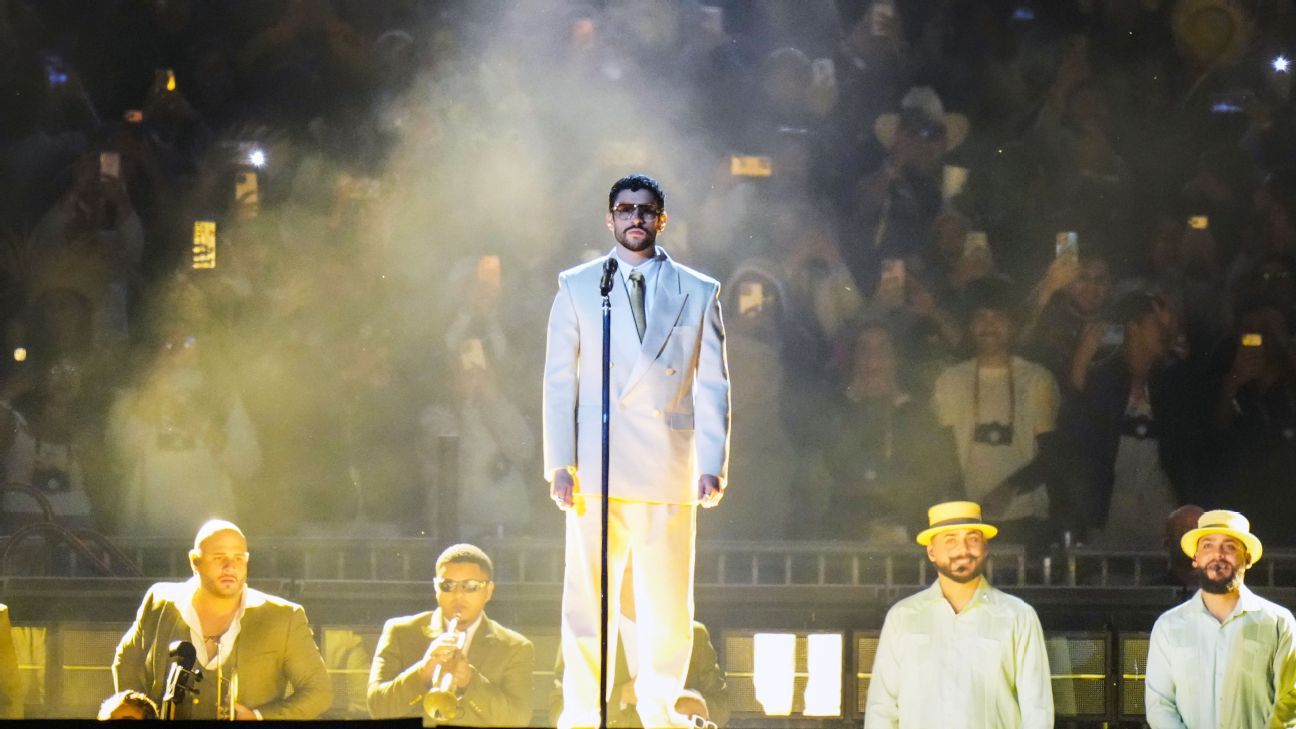
IN LATE SEPTEMBER, the NFL announced that Puerto Rican superstar rapper and singer Bad Bunny, who has openly criticized the Donald Trump administration for its immigration policies, would perform this year’s Super Bowl halftime show. Five days later, U.S. Secretary of Homeland Security Kristi Noem admonished the NFL for its decision.
“They suck, and we’ll win,” Noem told right-wing podcast host Benny Johnson, who had asked what message she wanted to send to the league. “They won’t be able to sleep at night because they don’t know what they believe. And they’re so weak, we’ll fix it.”
Department of Homeland Security adviser Corey Lewandowski said on the same podcast: “It’s so shameful that they’ve decided to pick somebody who just seems to hate America so much to represent them at the halftime game.”
Despite the almost immediate backlash from the Trump administration and its supporters, the NFL has stood by its decision to book Bad Bunny for the Feb. 8 game in Santa Clara, California. It’s a departure from how the league reacted to the president’s criticism nearly a decade ago when some players began kneeling during the national anthem. According to interviews with and public statements by several high-level club and league office executives, the NFL has remained steadfast despite the blowback because Bad Bunny, one of the most popular artists in the world, helps fulfill a top business objective: growing the NFL’s international and Latino audience.
One high-level club executive who regularly attends the NFL’s league meetings said that some owners at first were concerned about Bad Bunny’s fit because he sings primarily in Spanish and that many were unfamiliar with him.
“And then I think everybody was just kind of like, ‘OK, we’re going to get on board, because the goal is global reach,'” the executive said. “And this guy has a massive global reach.”
THE NFL HAS a long-standing goal of growing its international audience. This season, the NFL played a record seven games in five international cities: Sao Paulo, Dublin, London, Berlin and Madrid. The league will add Australia in 2026. In September, NFL commissioner Roger Goodell said he wants each team to play a game abroad every year.
More specifically, the league has been focused on growing its Latino audience, inside the U.S. and in Latin America. Marissa Solis, the NFL’s senior vice president of global brand and consumer marketing, told ESPN in November that the league first identified the U.S. Latino population as a “critical growth area” several years ago.
“It is a community of more than 70 million people here in the U.S. … so it was very important for us to ensure that we were relevant,” Solis said.
In 2020, the Super Bowl halftime show was headlined for the first time by two Latina pop stars, Jennifer Lopez and Shakira. (Bad Bunny also appeared in the show.) At the time, the NFL hired veteran entertainment and brand marketer Javier Farfan as a consultant to add authenticity to the performance.
“People don’t see it, but to the broader global and Latino community, they’re like, ‘Wow. The NFL gets me,'” Farfan, who still consults for the league, said in an interview with ESPN in December. “And then now, they’re seeing [Bad Bunny] and it’s like, ‘Wow, they really get me.'”
Since 2019, the NFL has partnered with rapper and business mogul Jay-Z and his entertainment company Roc Nation to advise on the selection of halftime performers and promote “culture- and cause-focused initiatives,” according to a statement at the time announcing the arrangement.
Exactly how Roc Nation chooses the Super Bowl artist and what role the NFL plays in that decision isn’t publicly defined. Roc Nation declined ESPN’s requests to comment for this story.
“Jay-Z understands the platform,” Goodell said at an October sports conference regarding his conversations with the rapper about Bad Bunny. “… And so, it doesn’t get real deep because he knows I’m not going to challenge him.”
Solis said that Roc Nation and the NFL’s halftime strategy is to book “the cultural artist of the year.”
This year, that artist is Bad Bunny, born Benito Antonio Martínez Ocasio, who was the top-streamed artist on Spotify in 2025. His sixth studio album “Debí Tirar Más Fotos” pivoted from straight reggaeton to a fusion of reggaeton, salsa and Puerto Rican genres. The lyrics discuss his love for Puerto Rican culture, the island’s struggle with gentrification that prices out locals and his desire for the island’s independence from the U.S. (Puerto Rico is a U.S. territory.) The album topped the Billboard charts for four weeks. He stayed in Puerto Rico for much of 2025 and performed a 31-show residency in San Juan.
Bad Bunny filmed the halftime show announcement and trailer in Puerto Rico, per his request, said Tor Myhren, vice president of marketing and communications for Apple Music, the performance’s presenting sponsor. When Myhren’s team asked Bad Bunny about his goals for the halftime show, Myhren said Bad Bunny responded, “This isn’t my halftime show, this is for everyone.” The Apple Music trailer shows Bad Bunny dancing to his song “Baile Inolvidable” with people of all races, ages and genders, with the tagline, “February 8 the world will dance.”
Multiple representatives for Bad Bunny did not respond to messages from ESPN seeking interviews with the artist.
Choosing Bad Bunny potentially exposed the NFL to Trump’s ire because the artist has been openly critical of the administration’s vow to remove millions of people from the U.S. via mass deportation programs.
In an interview published in September, Bad Bunny told i-D Magazine that he chose not to take his world tour to the U.S. because he was worried about potential raids by U.S. Immigration and Customs Enforcement.
“F—ing ICE could be outside [the concert],” he said. “And it’s something that we were talking about and very concerned about.”
Bad Bunny also appeared to mock Trump on the Fourth of July when he released the music video for his song “NUEVAYoL,” a salsa tribute to the Puerto Rican diaspora in New York. In the video, he sings from the crown of the Statue of Liberty, who wears the Puerto Rican flag on her forehead like a bandanna. In the final scenes, a Trump-sounding voice apologizes to immigrants over a radio broadcast.
“I want to say that this country is nothing without the immigrants,” the voice says. “This country is nothing without Mexicans, Dominicans, Puerto Ricans, Colombians, Venezuelans, Cubans.”
In 2024, Bad Bunny endorsed Kamala Harris for U.S. president, criticizing the Trump administration’s 2017 response to Hurricane Maria in Puerto Rico.
When the NFL announced Bad Bunny as the halftime performer, Noem said ICE agents would be “all over” the Super Bowl. “I think people should not be coming to the Super Bowl unless they’re law-abiding Americans who love this country,” she said.
The day after Noem’s comments, Bad Bunny hosted “Saturday Night Live” and addressed the backlash in his monologue. He said in English: “I’m very excited to be doing the Super Bowl, and I know people all around the world who love my music are also happy.” Then he switched to Spanish and said: “Especially all of the Latinos and Latinas in the world here in the United States who have worked to open doors. It’s more than a win for myself, it’s a win for all of us. Our footprints and our contribution in this country, no one will ever be able to take that away or erase it.”
“And if you didn’t understand what I just said,” he added, switching back to English, “you have four months to learn.”
Trump was first asked about Bad Bunny on Oct. 6. NewsMax’s Greg Kelly asked the president if people should boycott the NFL because of “Bad Bunny Rabbit or whatever-his-name.”
Trump said: “I’ve never heard of him. I don’t know who he is. I don’t know why they’re doing it.”
Speaker of the U.S. House of Representatives Mike Johnson, R-La., told a reporter in October that booking Bad Bunny was a “terrible decision.”
“There are so many eyes on the Super Bowl, a lot of young, impressionable children. And I think, in my view, you would have Lee Greenwood or role models doing that,” he said. Greenwood, who is 83, is famous for his song “God Bless the USA.”
Bad Bunny’s announcement prompted the conservative organization Turning Point USA to counterprogram with its own performance, called “The All-American Halftime Show.” On the show’s website, the group provided a survey for viewers to choose the music they want to hear. “Anything In English” was the first option. Turning Point USA has yet to update its website with any information about the performance, and a spokesperson said in early January that they will not be releasing any artist information ahead of time.
Last weekend, Trump told the New York Post he would not be attending the Super Bowl because it’s “too far away.”
He also shared his opinion about Bad Bunny and Green Day, who will perform before kickoff and whose music has been sharply political: “I’m anti-them. … All it does is sow hatred.”
Trump’s immigration crackdown escalated this month in Minneapolis, with government agents clashing with protestors and fatally shooting two people. The administration has since worked to ease tensions and shift its policy.
Regarding ICE’s presence at the Super Bowl, DHS assistant secretary Tricia McLaughlin said this week that the agency does not disclose operations or personnel plans.
“DHS is committed to working with our local and federal partners to ensure the Super Bowl is safe for everyone involved, as we do with every major sporting event,” McLaughlin said in an email. “Those who are here legally and are not breaking other laws have nothing to fear.”
A person with knowledge of the administration’s plans said that ICE agents will be assigned to the Super Bowl because the event requires coverage by multiple federal agencies.
“This is routine,” the person said. “DHS was there last year and in past years. Nothing about this is unusual.”
A source familiar with Super Bowl planning told ESPN that league security officials “have not been told there will be immigration enforcement actions.”
In a statement to ESPN, the NFL said fan safety is its “top priority.”
“We have the utmost confidence in our comprehensive security plans,” an NFL spokesperson said in the statement. “Our security team has worked with federal, state, local and private sector partners over the past two years to develop extensive plans to provide a safe and secure environment at our events and on gameday.”
WITHIN THE NFL, at least one owner met the decision to book Bad Bunny with skepticism, particularly considering the league’s pending agreement to sell the NFL Network and other assets to ESPN in exchange for a 10% stake in the media company.
Shortly after the Bad Bunny announcement, an NFL owner told Goodell that he feared the decision could threaten the government’s antitrust approval of the pending deal, a source with firsthand knowledge of the discussion told ESPN.
“I told Roger he should’ve thought through that better,” the owner said, according to the source.
At the October league meeting in midtown Manhattan, Goodell said the league had no intentions of changing the halftime performer.
“He’s one of the most popular entertainers in the world,” Goodell told reporters at a news conference. “… It’s carefully thought through. I’m not sure we’ve ever selected an artist where we didn’t have some blowback or criticism. … We’re confident it’s going to be a great show.
“I think it’s going to be exciting and a united moment.”
At a marketing conference in October, NFL chief marketing officer Tim Ellis also addressed the controversy: “Well, not everyone has to like everything we do. Bad Bunny is f—ing awesome.”
Two sources who have attended owners meetings since the Bad Bunny announcement told ESPN that the artist hasn’t come up in groupwide discussions.
“There’s not some great strife here,” the high-level club executive said. “The league is tasked with setting financial and brand goals, and that’s a lot of what we asked the league to do. … Of course, it is tricky, because you have a room of 32 people that are unfamiliar with the artist or may have political concerns.”
Three club executives told ESPN they think Bad Bunny helps achieve the league’s goal of growing globally.
Dallas Cowboys chief brand officer Charlotte Jones, whose father Jerry Jones owns the team and has donated millions to Trump and his political action committee, told “The Katie Miller Podcast” in November that she supported the Bad Bunny choice.
“I think it’s awesome, and I think our Latino fan base is amazing,” Jones told Miller. “We are on a global stage, and we can’t ever forget that. … We have a mixed culture and our whole society is based on immigrants who have come here and founded our country, and I think we can celebrate that.”
Miller, who was a communications director for former vice president Mike Pence and is married to Trump adviser Stephen Miller, pushed back on Jones: “You don’t think that a time when his comments were divisive as it relates to President Trump — when everyone is just seeking a political unification — that you would want somebody who maybe didn’t touch politics to be on that stage?”
“I don’t think our game is about politics,” Jones replied. “I don’t think people tune in to look at politics. We do everything we can to avoid politics. … This is about bringing people together.”
When Trump was first president in 2017, his criticism of NFL players who chose to kneel for the national anthem — an action started by former 49ers quarterback Colin Kaepernick — created a national political crisis that threatened the NFL’s brand and its business. Trump said NFL owners should fire any player who knelt and encouraged fans to walk out. In response, more players started kneeling, and they resisted the league’s attempts to stop the protest.
According to reporting from ESPN’s Don Van Natta Jr. and Seth Wickersham at the time, owners and Goodell met with players to discuss racial and social injustice. As a result, the NFL created the Inspire Change initiative, committing $89 million to support social causes, and partnered with Roc Nation to reshape the halftime show and help the league be more proactive in social justice work. Goodell ultimately acknowledged the league initially had been wrong in its approach with players.
One club executive and a source familiar with league business said the NFL learned lessons from its interactions with the first Trump administration. The club executive said the league isn’t being as “reactionary.”
“Those are probably just lessons learned,” the executive said. “Drawing the president’s ire, there’s so many things that happen on a daily basis. I think people just have a different opinion this time around.”
Another club executive said the NFL is trying to “double down 1769811008 on an apolitical stance.”
“I think maybe in the past, the league office got a little turned around with some of the owners, or some of the other influential people, saying you have to take a stand here,” the other executive said.
The NFL spokesperson declined to comment on the league’s strategy in dealing with the Trump administration.
Multiple sources said the tension with Trump is less this time around.
“Last time with Kaepernick, that was players and owners and the president. Bad Bunny doesn’t affect any of that,” a club executive said. “It doesn’t affect week-to-week games or television coverage. It’s just a halftime show. And I don’t mean that flippantly, but it’s just a halftime show.”
The league office is engaging with Trump for other upcoming events. In May, Goodell visited Trump at the White House with Commanders owner Josh Harris to announce that Washington, D.C., will host the NFL draft in 2027.
And in November, the NFL announced it would commemorate the United States’ 250th birthday in 2026 with commemorative game balls and on-field markings. The Athletic reported that Goodell is also expected to attend an upcoming America 250 unveiling event at the Oval Office, along with the four other major professional men’s sports commissioners.
“If the league has layups or an easy win, it’s like, take the layup,” the source familiar with league business said.
When asked in November whether the league office has faced any political pressure to change its Latino-focused marketing strategy, Solis told ESPN: “Our strategy has always been to reach every fan in their culture, in their language, to make this sport global, and to make this sport for everyone. So I don’t think that strategy will change regardless of language, country, artists, players. … We have a responsibility with this platform to ensure that we continue to reach everybody.”
Farfan said in December that he wasn’t surprised by the president’s criticism and the larger backlash to Bad Bunny because everyone has the right to express their opinion. “We have the right to do what we need to do for our business and stand tall against that, regardless of the noise happening outside.”
ESPN’s Don Van Natta Jr. and researcher John Mastroberardino contributed to this report, which also includes information from The Associated Press.
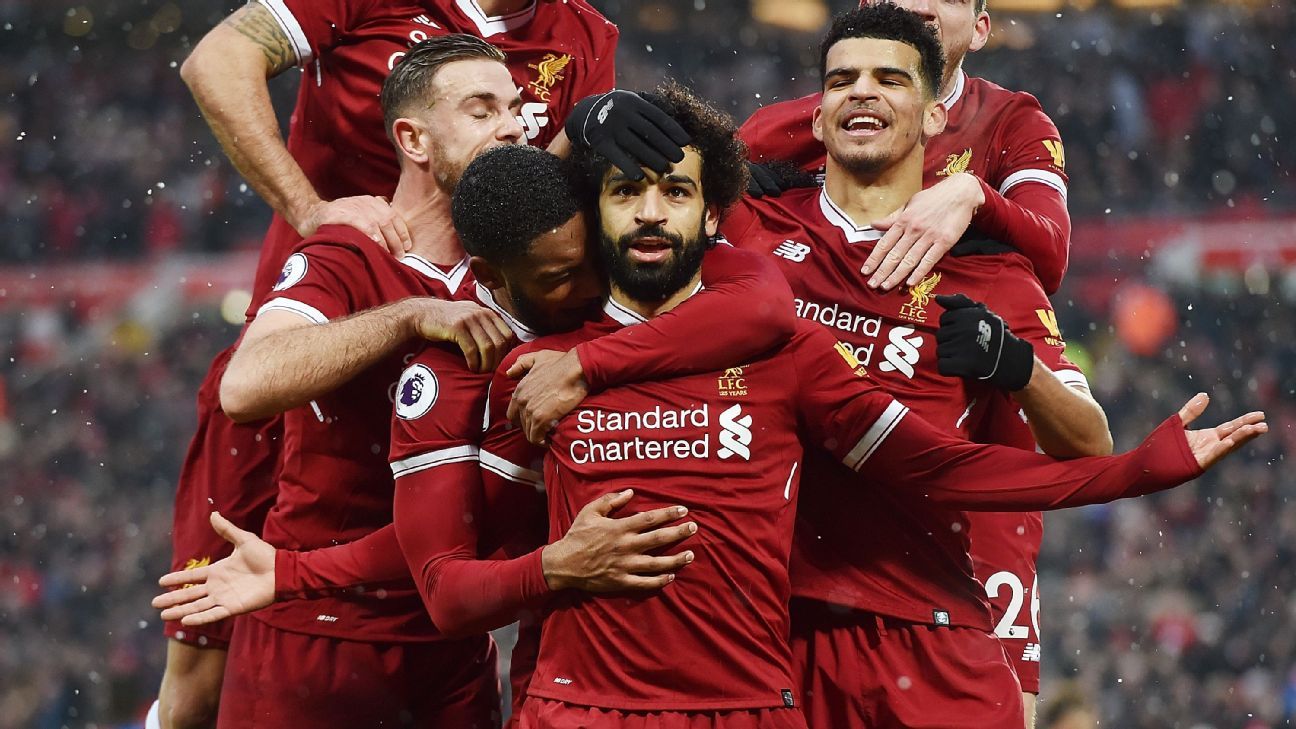
Mohamed Salah formally broke the news on Tuesday that many Liverpool fans had felt was coming for several months: that he will be cutting his contract short and leaving Anfield on a free transfer at the end of the season.
Salah signed a new two-year deal with the Reds last summer. However, since then a dip in form, a slip down the pecking order, an explosive public outburst and a subsequent nosedive in his relationship with head coach Arne Slot, has seen the Egypt international fail to get as much game time as he feels he deserves.
However, since arriving in 2017, Salah has firmly established himself as one of Liverpool’s greatest-ever players and will undoubtedly depart a hero regardless of the current circumstances.
– Why Salah beats Ronaldo, Henry as Premier League’s greatest
– Salah will get the Liverpool farewell, but he leaves a void to fill
– Liverpool’s ‘greatest’: Mohamed Salah saluted by teammates
The 33-year-old has scored 255 goals in 435 appearances for the club (putting him third on their all-time list) and been instrumental in two Premier League title triumphs, domestic cup successes and the UEFA Champions League trophy in 2018-19.
He has also collected a number of individual plaudits, including three PFA Players’ Player of the Year awards, two Premier League Player of the Season awards and four Premier League Golden Boots.
Salah was also bestowed with the illustrious Puskás Award as part of The Best FIFA Award gala night in 2018, which — unlike the majority of his vast array of prizes and trophies — raised more than a few quizzical eyebrows around the world.
The forward was handed world football’s Goal of the Year award via an online fan vote for his strike against Everton in December 2017, when he collected the ball on the edge of the box before darting between two defenders and curling an exquisite finish beyond the goalkeeper.
Of course, it was and remains a perfectly decent goal. Yet many at the time were baffled to see Salah’s effort deemed to be the most beautiful goal scored that year … when it wasn’t even his best goal of 2017-18, or anywhere close.
The sentiment was even echoed by teammate James Milner, who offered wry congratulations to his then-Liverpool teammate after the winner was announced, fending off competition from Cristiano Ronaldo, Gareth Bale and a clutch of scorching golazos from the 2018 FIFA World Cup.
“Congrats Mo Salah on your 7th best goal from last season winning goal of the year,” Milner wrote in a social-media post which also featured “#oneofmanyworldies” among several hashtags and emojis.
But was Milner right? By our count there were at least six Salah strikes from his imperious 2017-18 season that deserved a place on the Puskás short list ahead of his goal in the Merseyside derby. But, whether you agree with this subjective list or not, it serves as a reminder of just what a player Salah has been for Liverpool.
Salah scored twice in a 3-0 victory against Southampton including a lovely effort from outside the box. The precise, angled finish was fairly similar to his strike against Everton but from a little further out.
2. Nov. 29, 2017 vs. Stoke City
Another rampant 3-0 win saw Salah score the goal of the game when he connected with a dinked cross from Sadio Mané to thump a vicious volley past the goalkeeper. The powerful finish was actually voted Goal of the Month by Liverpool fans.
Liverpool inflicted a first Premier League defeat of 2017-18 on Manchester City with a frantic 4-3 victory over the leaders at Anfield that went down as the game of the season. The score went from 1-1 to 4-1 in the space of just nine hectic minutes with Salah scoring what proved to be the decisive goal with an audacious 35-yard lob.
Liverpool and Spurs contested another dramatic thriller that saw the two sides trade stoppage-time goals in a pulsating 2-2 draw at Anfield. Salah opened the scoring for the home side before Victor Wanyama pegged them back with an absolutely monstrous hit from distance. The Egypt international then looked to have snatched a 91st-minute win when he wriggled through a cluster of four defenders and belted it past Hugo Lloris. However, a 96-minute penalty from Harry Kane spoiled the party somewhat.
5. March 17, 2018 vs. Watford
Salah scored four goals (and assisted the other) in a 5-0 rout at Anfield on what proved to be one of many virtuoso displays for the nimble forward this season. His first was good, the second was slick and the third was nigh-on ingenious as the Reds star somehow fended off an entire pack of defenders before prodding an improvised finish past the goalkeeper.
6. April 24, 2018 vs. AS Roma
If you’ll forgive the obvious pun, Salah filed another five-star performance in Liverpool’s 5-2 thrashing of his former club in the first leg of the Champions League semifinal. He opened the scoring with his best goal of the night, curling an immaculate shot beyond the outstretched arm of future teammate Alisson Becker. He then dinked home a second before laying on assists for the Reds’ third and fourth goals of the evening.
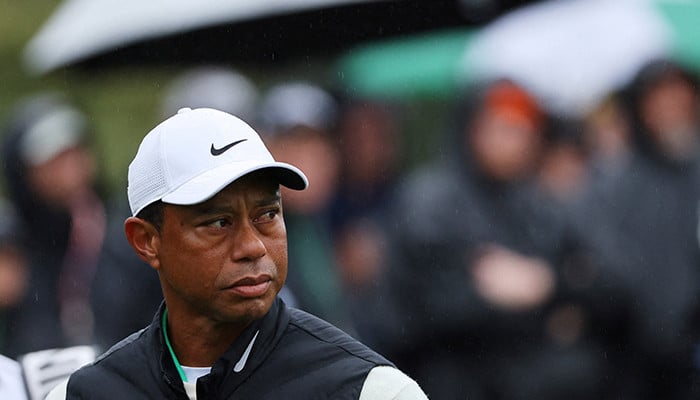
Tiger Woods’ turbulent career veered into fresh turmoil on Friday when the golf icon was arrested and charged with driving under the influence after a rollover crash near his Florida home, authorities said.
Woods, 50, escaped injury but was detained after his vehicle clipped a truck while attempting to overtake on a residential road on Jupiter Island, flipping onto its side before sliding to a stop.
Martin County Sheriff John Budensiek said Woods — who was arrested for driving under the influence in 2017 — showed signs of “impairment”, although he passed a breathalyser test.
“When it came time for us to ask for a urinalysis test, he refused, and so he’s been charged with DUI, with property damage and refusal to submit to a lawful test in the crash,” Budensiek said.
The 15-time major champion was released later on Friday, with Florida law requiring him to remain in jail for at least eight hours before he could post bail.
Budensiek said drug recognition experts who examined Woods at the scene found the golfer “lethargic” and believed he was impaired with “some kind of medication or drug.”
No drugs or medication were found in his vehicle and since Woods refused the urine test, his right under Florida law, authorities “will never get definitive results as to what he was impaired on at the time of the crash,” Budensiek said.
‘Could have been worse’
While neither Woods nor the driver of the other vehicle was injured, Budensiek said the incident on the two-lane road “could have been a lot worse.”
“Had somebody been moving in the opposite direction, we would not be having a conversation saying there was no injuries,” he said.
Budensiek said he didn’t know how fast Woods was driving in the moments before the crash.
He said the driver of the truck had slowed to make a turn, then tried to move to the side of the road when he saw Woods’s fast-moving vehicle attempting to overtake him.
“When I show you the photos, they kind of speak for themselves … you can see that [Woods] slid for a decent space before he came to a stop,” said the sheriff, who said that after the crash Woods climbed out of the passenger-side window of his Land Rover.
President Donald Trump expressed sympathy for Woods in remarks to reporters in Miami following the incident.
“He’s got some difficulty, there was an accident, and that’s all I know,” Trump said. “Very close friend of mine. He’s an amazing person, amazing man, but, uh, some difficulty.”
Woods was arrested in Jupiter in 2017 after police found him asleep at the wheel of his damaged car. Woods eventually pleaded guilty to reckless driving and said he had taken a mix of painkillers.
Five years ago, Woods was involved in a serious car crash in California that left him with severe right leg injuries that required pins inserted in his foot and ankle and a rod in his tibia as well as a follow-up surgery in 2023.
Woods returned from that crash at the 2022 Masters, where he struggled to walk all four rounds on the way to a 47th-place finish.
Woods, whose clean-cut image was left in tatters after a 2009 sex scandal that upended his career, has been working to return from an Achilles tendon rupture last March and back surgery last October.
He competed earlier this week in the TGL simulator indoor golf league finals and had not ruled out playing in next month’s Masters, where his five victories include his first major title in 1997 and his most recent in 2019.
“This body … it doesn’t recover like it did when it was 24, 25. It doesn´t mean I’m not trying,” Woods said. “I keep trying.”
Woods, whose 82 PGA Tour career victories are level with Sam Snead for the all-time record, has not competed on tour since missing the cut at the British Open in July 2024.
He last made the cut at the 2024 Masters, where he finished 60th.
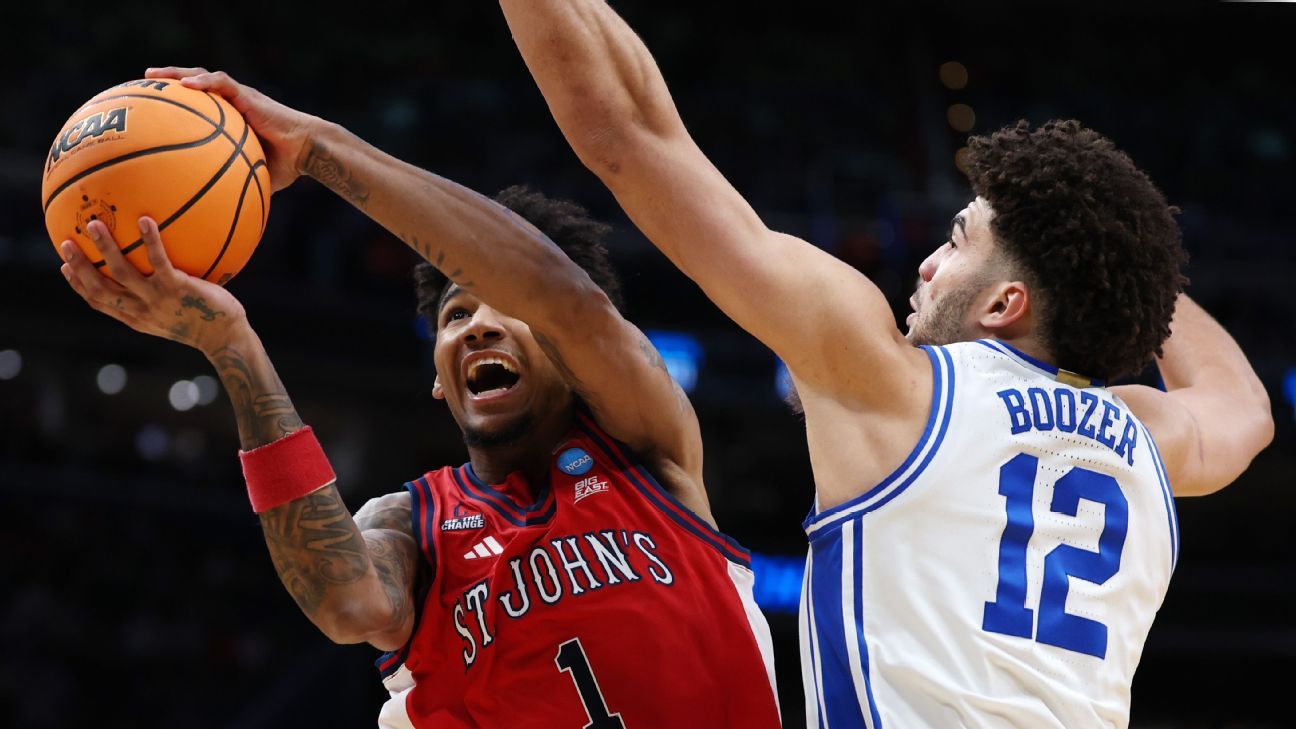
The first half of the Elite Eight is set with Arizona, Illinois, Purdue and Iowa punching their tickets Thursday. Who could join them in the regional finals of the 2026 men’s NCAA tournament?
ESPN reporters on-site in Chicago and Washington, D.C. tracking Friday’s Sweet 16 action in real-time.
Jump to: Game previews, predictions
SWEET 16 LIVE TRACKER

SWEET 16 PREVIEWS
All times Eastern.
9:45 p.m., CBS
Borzello’s prediction: UConn 68-64
Medcalf’s prediction: UConn 70-65
How Michigan State can advance to Elite Eight: Personnel matchups generate the most headlines during the NCAA tournament, but coaching matchups are equally — if not more — impactful. During a tenure that began in 1995, Tom Izzo has developed an uncanny ability to zero in on an opposing team’s top players and create problems for them. That’s the Spartans’ ticket to another Elite Eight.
Izzo’s primary mission against UConn is to limit Tarris Reed Jr.’s impact on the game. The Huskies are a different team when he’s a dominant presence in the post. If Reed is grabbing offensive rebounds and giving them an abundance of second-chance opportunities, Michigan State will be in a tough spot. The good news for the Spartans is that they are connecting on 35.9% of their 3-point attempts and capitalizing on second-chance opportunities with a No. 10 national ranking in offensive rebounding rate. It will be key for them to hit more 3s, extend UConn’s defense and create more paths to the basket for Jeremy Fears Jr. & Co. They have to give UConn a reason to guard on the perimeter — if the Spartans just allow the Huskies to sit in the lane, challenge shots around the rim and grab rebounds, Michigan State could lose.
Izzo has been in this position before — against better teams — and won. His experience will matter in a matchup against Dan Hurley.
How UConn can advance to the Elite Eight: To beat Izzo, UConn will have to show up as the top-notch defensive outfit that held UCLA to just a 39% clip inside the arc in the second round. The Huskies’ win over the Bruins served as a reminder that they can be a great defensive team when they want to be. In the Big Ten tournament, UCLA had produced 132 points per 100 possessions in a win over Michigan State. In the round of 32, the Bruins — who played without leading scorer Tyler Bilodeau (knee) — scored only 57 points, their second-lowest total of the season. UCLA star Donovan Dent had nine assists but also finished 2-for-9 shooting with a pair of turnovers. That’s the same attention UConn will need to give Fears. When he’s comfortable, Michigan State’s offense soars. The Huskies can’t let that happen.
On offense, Braylon Mullins could be an X factor. Reed had a double-double against UCLA but not the historic numbers he put up against Furman in the first round (31 points, 27 rebounds). Alex Karaban recorded a career-high 27 points against the Bruins, with Solo Ball and Silas Demary Jr. scoring two points combined. If Reed and Karaban can create a balanced inside-outside attack, Michigan State will have to find a way to disrupt that, which could give Mullins — who is averaging 14.5 points in two NCAA tournament games — more freedom and opportunities to make plays and create off the dribble or on off-ball screens.
The Huskies have a multitude of options to score, and as long as most of them are effective, they can get back to the Elite Eight. — Medcalf
10:10 p.m., TBS/truTV
Borzello’s prediction: Iowa State 67-65
Medcalf’s prediction: Iowa State 74-68
How Tennessee can advance to the Elite Eight: To beat Iowa State, Tennessee will have to play the same disciplined defense that stopped Virginia in the final minutes of Sunday’s second-round game. That task begins with Felix Okpara, who had four blocks against the Cavaliers and altered other shots, including a late drive by Thijs De Ridder that Okpara blocked during Virginia’s comeback attempt. Opposing players had made only 30% of their shots around the rim against Okpara entering Sunday’s game, per Synergy Sports data. He’ll have to protect the rim against Iowa State, which had a significant advantage in paint points against Kentucky (34-20) — but he won’t have to do it alone.
Tennessee has the personnel to handle every one-on-one matchup defensively. The Vols can guard at every spot. They will have to put pressure on Tamin Lipsey, sharpshooter Milan Momcilovic and Joshua Jefferson, if he plays, to win. That defensive effort coupled with standout performances from Ja’Kobi Gillespie and Nate Ament would be the formula for a Tennessee trip to the Elite Eight.
How Iowa State can advance to the Elite Eight: With or without Jefferson, Iowa State will have the same blueprint against Tennessee: Move the ball to find the best shot on offense, force turnovers with defensive pressure and score on fast breaks. Although they didn’t have Jefferson, who is a game-time decision because of an ankle injury, the Cyclones forced 20 turnovers in their second-round win over Kentucky. Playing through Lipsey — who finished with 26 points, 10 assists and only three turnovers against Kentucky — the Cyclones registered 150 points per 100 possessions and made 63% of their shots after halftime. They are 18-2 when Lipsey’s assist-to-turnover ratio is 3-to-1 or better.
Gillespie and Ament combined for five turnovers in Tennessee’s second-round win over Virginia. Iowa State can pressure that duo into the same mistakes Otega Oweh and Denzel Aberdeen (eight turnovers combined) made for Kentucky, even if Jefferson sits out another game. That’s how the Cyclones can advance. — Medcalf


Zayn Malik shares personal video message on ‘Mind of Mine’ 10th anniversary

EU Parliament, Council reach deal on major reform of Customs Code
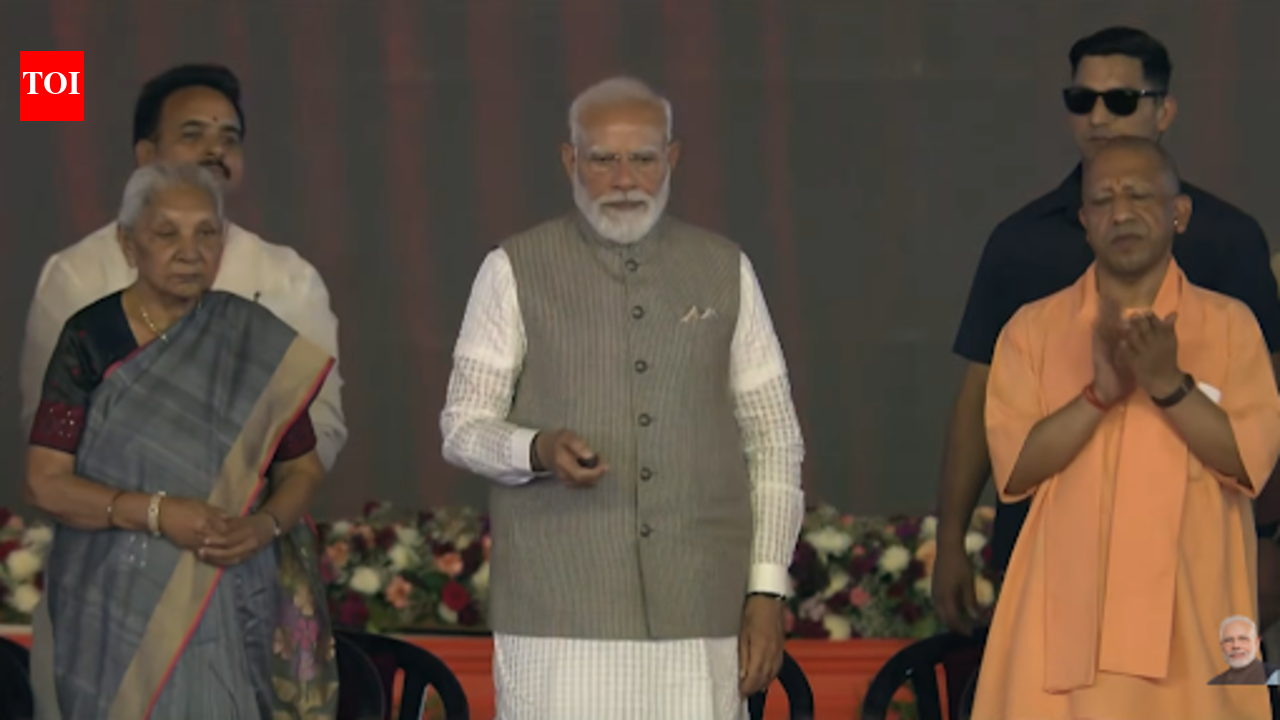
Noida International Airport inauguration: Delhi-NCR gets new airport – all you need to know – The Times of India

-
 Business1 week ago
Flipkart group CFO to leave co amid IPO plans – The Times of India
-

 Fashion1 week ago
China’s textile & apparel exports surge 17% to $50 bn in Jan-Feb 2026
-
 Business1 week ago
Video: The Effects of High Oil Prices
-

 Sports1 week ago
Rating Adidas’ 2026 World Cup away shirts: Argentina, Spain, Mexico and more
-

 Fashion1 week ago
The hidden $1.62 war tax now embedded in every garment you source
-

 Sports1 week ago
American Conference Commissioner Tim Pernetti thanks Trump for Army-Navy game executive order
-
Tech1 week ago
The Corsair 4000D RS PC Case Keeps Your System Cool
-

 Tech1 week ago
‘Uncanny Valley’: Nvidia’s ‘Super Bowl of AI,’ Tesla Disappoints, and Meta’s VR Metaverse ‘Shutdown’