

Business
Why vinyl records like Taylor Swift’s ‘The Life of a Showgirl’ are protected from tariffs


Taylor Swift performs onstage during The Eras Tour at Wembley Stadium on June 21, 2024, in London.
Kevin Mazur | Getty Images
On Friday, 24-year-old Tayra McDaniels will scamper down the stairs of her East Village apartment building and pick up four preordered vinyl editions of Taylor Swift’s new album, “The Life of a Showgirl” — each a different color and with a different collectible cover. Then she’ll head over to Target to snag three more exclusive CDs and another vinyl, she said.
The haul will cost her more than $200. “I know it’s a lot of money,” she said. “But I don’t want to miss out.”
One point of reprieve in the price: McDaniels and other vinyl fans won’t have to worry about tariffs on their hauls.
Vinyl records, CDs and cassettes were spared from the Trump administration’s late-August rollback of the “de minimis” exemption. The exemption, which had allowed packages valued at less than $800 to be imported without tariffs, was designed to simplify customs for low-cost imports and reduce fees for both consumers and small retailers. Trump’s rollback of the exemption allowed tariffs to take effect on such shipments — but not on physical music.
A Cold War-era carveout known as the Berman Amendment to the International Emergency Economic Powers Act prevents presidents from regulating the flow of “informational materials,” a category that includes physical music, books and artwork.
“If vinyl had gotten tariffed, you could have possibly seen the price of a record going up to $40 and $50,” Berklee College of Music professor Ralph Jaccodine told CNBC. “So, this is welcome news for people buying physical music.”
The exemption, which is protecting one of the fastest-growing segments of the music industry, is also welcome on Wall Street.
Vinyl sales have roared back in the past decade, particularly during the pandemic, driven by younger buyers and an appetite for nostalgia. The PVC discs now account for nearly three-quarters of all U.S. physical music revenue — a nearly 20% jump since 2020, according to data from the Recording Industry Association of America.
“It is very encouraging and a bit of a relief that physical music formats have been classified as exempt to tariffs,” said Ryan Mitrovich, general manager of the Vinyl Alliance, a nonprofit promoting physical media that works with manufacturers, distributors and music labels. “However, we’re not really taking anything for granted here with the chaotic climate around trade disruptions.”
The sales boom has been lucrative for record labels such as Universal Music Group, or UMG, which works with Swift.
Her last album, “The Tortured Poets Department,” sold 3.49 million physical and digital copies, according to entertainment data company Luminate, driving a 9.6% jump in UMG’s second-quarter revenue in 2024 compared with the same period in 2023. Physical revenue, which includes vinyl, surged by 14.4% during the quarter.
Without a Swift album on shelves so far this year, UMG’s most recent earnings report, in July, showed a 4.5% uptick in revenue year over year, but physical revenue decreased by 12.4%. UMG shares fell 24% after the July earnings release.
Universal Music Group declined to comment.
The downturn could be short-lived. Estimates from Billboard predict that first-week vinyl sales of Swift’s new 12-track album, which debuts Friday, could top 1 million — breaking her own record of 859,000 for “The Tortured Poets Department.”
“Taylor Swift has unique ability to drive the market through her decisions of what and how to release music,” said Jaccodine, who has worked with artists such as Bruce Springsteen. “Swift’s release can and will likely cause a boom in the music business.”
Tariff trade-offs
Not everyone is celebrating the tariff exemptions. Some American record manufacturers say they’re missing out on business.
“We support the tariffs because it helps U.S. manufacturing, and we want to be a part of the wave of making things in the USA,” Alex Cushing, co-founder and president of Dallas-based Hand Drawn Records, told CNBC.
Most vinyl is pressed overseas, industry experts said, with the largest manufacturer, GZ Media, based in the Czech Republic. GZ CEO Michal Štěrba said the company has made top-selling albums for artists such as Lady Gaga, Madonna and U2. On average, the company produces 1 in 4 records from plants around the globe, including ones in Nashville and Memphis, Tennessee, he added.
“Our goal is to keep production as close to the customer as possible, so that a record sold in the U.S. is also made in the U.S.,” Štěrba told CNBC.
If tariffs were imposed, Štěrba said, costs would get passed on to consumers. The Czech Republic is part of the European Union, which faces a 15% blanket tariffs on EU exports to the U.S.
“By keeping tariff costs out of the supply chain — regardless of the product or country — consumers benefit through better pricing,” Štěrba said in a statement. “Ultimately, it’s usually the customer who has to pay a higher price if tariffs are applied.”
Cushing, a board member of the Vinyl Record Manufacturers Association, said he believes there would be more American jobs if tariffs were to apply to vinyl.
“We could put more hard-working Americans to work with good wages,” he said. “Our company makes 2 million records annually with a staff of just 60. If you want to grow manufacturing jobs, this would be a great industry.”
Cushing said U.S. manufacturers like his don’t have the capacity to handle the demand for an album on Swift’s scale. But for smaller-scale artists, he said, tariffs on imports could shift more business stateside.
“Our raw materials are tariffed, but with skyrocketing shipping and material costs globally, regional shipping in the U.S., coupled with having lower inventory, could help lower costs,” Cushing said.
Some American manufacturers preempted extra costs earlier this year.
“Tariffs were definitely forecasted, and the industry was preparing for this for quite a while,” Vinyl Alliance’s Mitrovich said. “We saw a lot of companies defend against this by increasing their stocks of ink, PVC and other things in the months leading up to the tariffs.”
A man browses through vinyl records.
SOPA Images | LightRocket | Getty Images
Artists’ earnings
For many artists, physical sales remain more lucrative than streaming.
On Spotify, earnings usually range between $0.003 and $0.005 per stream based on an artist’s contract with their record label, Jaccodine said. Meanwhile, artists typically enjoy between 10% and 25% of royalties on physical records, according to the American Society of Composers, Authors and Publishers.
“Unless you are just a handful of musicians, you basically are not making enough money from streaming to sustain,” Jaccodine said. “For artists large and small, merchandise like records, CDs, cassettes, hats, hoodies and ticket sales are the bread and butter.”
For comparison, Swift’s Eras Tour, which was the highest-grossing tour of all time, sold over $2 billion worth of tickets for 149 shows over two years, The New York Times reported. Meanwhile, she earned between $200 million and $400 million from streaming platforms over that same period, according to figures from Billboard.
Fans take photos with Taylor Swift’s new album “The Life of a Showgirl” at a Target store in New York City, U.S., Oct. 3, 2025.
Kylie Cooper | Reuters
Gen Z’s buying power
Analysts expect the vinyl market to keep expanding, though not at the explosive pace seen during the pandemic.
“The market for vinyl is strong and is likely to be for the foreseeable future, but there could always be supply troubles,” Jaccodine said.
Gen Z has fueled vinyl’s resurgence, industry experts said. Nearly 60% of 18- to 24-year-olds in a survey by music manufacturer Key Production said they listen to physical music, the highest of any demographic group. The survey was conducted Feb. 27-March 5, 2024, in the U.K., and had 503 respondents.
The vinyl comeback also kicked off an explosion in the number of “variants” released: collectible editions of albums or singles with alternative cover art, colored discs or vinyl-exclusive bonus tracks.
On TikTok, “vinyl hauls” rack up millions of views as fans show off rare variants and collections, sparking demand and motivating fans such as McDaniels to buy.
“It’s sort of like Pokémon where you ‘gotta catch ’em all,'” McDaniels said. “There’s FOMO [fear of missing out] if someone has a variant that you don’t.”
Experts said Gen Z’s interest in vinyl is also a response to digital burnout.
“So many groups are on their screens paying fees to have access to content but do not ever actually own anything, so this gives them physical ownership,” Cushing said. “Vinyl is counter to all the ease of modern music listening and that’s why people want it.”
No artist has capitalized on the trend more than Swift.
“The Tortured Poets Department” was 2024’s top album, accounting for over 6% of total album sales — more than seven times the next-best-selling artist, according to Luminate. Swift released 36 different album variants in the U.S. across digital and physical music.
“The Life of a Showgirl” comes in at least seven different variants of colored vinyl, each with a unique cover. For Swift and UMG, every exclusive edition of a vinyl record, CD or cassette has the potential to generate millions in extra revenue.
“Sales of Swift’s albums act as drivers for the fortunes of almost the entire music industry,” Jaccodine said. “Her fans are waiting with bated breath for the release, but so is the industry.”
For McDaniels and thousands of other superfans, the lingering question is how easy it will be to get the exclusive variants first.
“I know people think it’s crazy,” she said. “As long as a vinyl stays under $75 for a new release, I feel like it is worth it. It’s like an addiction to getting these, but I love collecting them.”



Illuminated logo for Pepsi on a soda fountain in Walnut Creek, California, March 4, 2026.
Smith Collection | Gado | Archive Photos | Getty Images
PepsiCo on Thursday reported quarterly earnings and revenue that topped analysts’ expectations as its struggling North American food business reported a return to volume growth.
Here’s what the company reported compared with what Wall Street was expecting, based on a survey of analysts by LSEG:
- Earnings per share: $1.61 adjusted vs. $1.55 expected
- Revenue: $19.44 billion vs. $18.94 billion expected
Pepsi reported first-quarter net income attributable to the company of $2.32 billion, or $1.70 per share, up from $1.83 billion, or $1.33 per share, a year earlier.
Excluding items, the company earned $1.61 per share.
Net sales rose 8.5% to $19.44 billion.

Bank of England governor Andrew Bailey has warned the global economy is set for a “very big energy shock” that will lead to surging inflation, but said policymakers would not rush to hike interest rates.
Speaking at the International Monetary Fund (IMF) spring meeting in Washington DC, Mr Bailey told the BBC the Bank is facing a “very, very difficult” decision on rates at its meeting on April 30.
The Middle East conflict has sent oil prices surging by around 60% since the start of the year, at one stage hitting nearly 120 US dollars a barrel, which is pushing up fuel and energy costs.
This is expected to feed through to wider prices, with forecasts for UK inflation to jump higher in the coming months and Britain’s growth outlook sharply downgraded.
But official figures on Thursday, which were released after Mr Bailey’s comments, showed the UK economy was far stronger than expected at the start of the year, with growth of 0.5% in February following upwardly revised expansion of 0.1% in January.
Experts said while welcome, UK activity is still set to slow sharply as higher energy prices weigh on spending and hamper growth.
Mr Bailey told the BBC: “There’s really difficult judgments to be made.
“We’re not going to rush to judgments on those things, because there are a lot of uncertainties around this, not just how it’s going to play out, but also how it’s going to pass through into the UK economy.”
The IMF’s economic outlook report earlier this week showed the UK facing the biggest downgrade to growth among the G7 group of countries, with 0.8% forecast for 2026, down sharply from the 1.3% predicted in January.
The influential financial body said the spike in energy prices caused by the war will help push UK inflation towards 4% – double the Bank of England’s target.
But the IMF cautioned central banks about making hasty decisions on interest rates.
The Bank of England had previously been expected to cut rates further this year, down from 3.75% currently, but the predicted inflation surge caused by the Iran war has led to forecasts that hikes could be on the way.
Mr Bailey said the Bank is taking the IMF’s “serious advice” into account.
On fears over supply shortages caused by the Iran war disruption and blockage of the crucial Strait of Hormuz shipping route, Mr Bailey said there is “a certain amount of resilience in the system” but that will only last so long.
He added: “The faster there is a resolution to this situation – I particularly mean in terms of the supply of energy coming out of the Gulf – the easier and better the outcome will be.
“That’s really critical at this moment.”
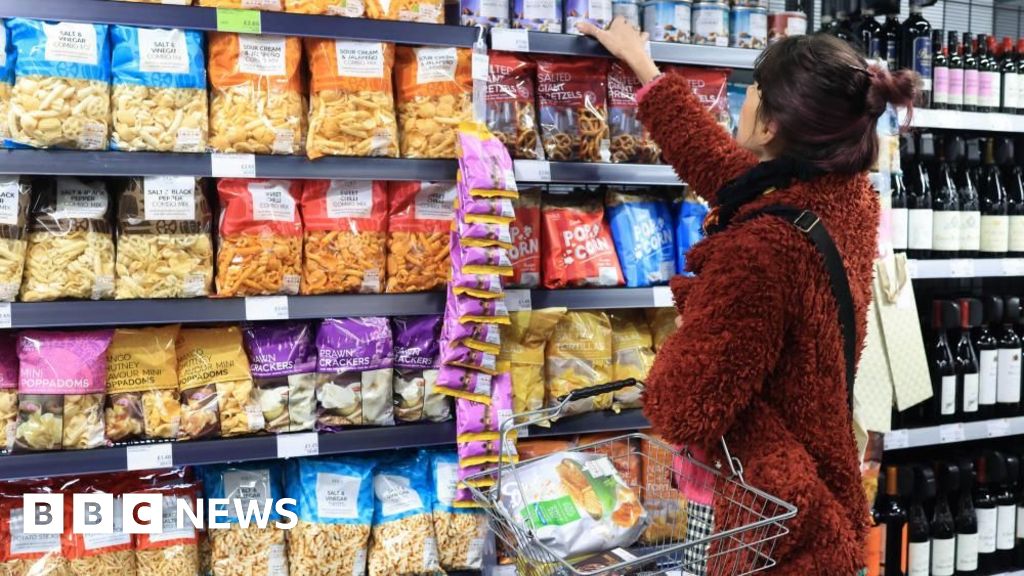
The economy saw its biggest monthly rise in more than two years just before the outbreak of the US-Israeli war with Iran.
Source link


Australian consumer confidence drops in April on rising living costs

LG’s High-End Soundbar System Makes My Living Room Feel Like a Home Theater

‘Miss Congeniality’ Benjamin Bratt opens up on working with Sandra Bullock

-

 Entertainment1 week ago
Queen Elizabeth II emotional message for Archie, Lilibet sparks speculation
-

 Tech1 week ago
Azure customers up in arms over ‘full’ UK South region | Computer Weekly
-

 Tech1 week ago
As the Strait of Hormuz Reopens, Global Shipping Will Take Months to Recover
-

 Fashion1 week ago
CII submits 20-pt agenda to Indian govt to back firms hit by Iran war
-

 Tech1 week ago
This AI Button Wearable From Ex-Apple Engineers Looks Like an iPod Shuffle
-

 Politics6 days ago
Indian airlines hit hardest after Dubai limits foreign flights until May 31
-

 Fashion1 week ago
ICE cotton hits 11-month high on drought concerns, demand boost
-

 Politics6 days ago
Chinese, Taiwanese will unite, Xi tells Taiwan opposition leader