

Tech
Wildix looks to bring conversations under enterprise control with eSIM | Computer Weekly


Wildix has launched a capability in its Mobility Cloud offering that it says will bring business mobile calls directly into enterprise workflows and eliminate a long-standing blind spot in customer communications.
Introducing Wildix eSIM, the artificial intelligence (AI)-powered unified communications as a service provider noted that conversations often sit outside enterprise systems, fragmented across devices and locations. As a result, it was reconnecting mobile calls to the business, ensuring continuity and control as work happens in real time.
Part of the Wildix Mobility Cloud portfolio, the Wildix eSIM extends enterprise identity and intelligence directly to mobile calling. Employees place and receive business calls using their phone’s native dialler, while firms retain routing, presence and policy controls. Each interaction enters the enterprise system of record in real time, where it can be captured, transcribed, summarised and connected to CRM and sales intelligence workflows.
Designed for mobile-first teams, the Wildix eSIM is targeted at business professionals who rely on mobile communication as their primary work tool, including sales teams, field services, healthcare workers, real estate professionals, legal advisors and executives. It is attributed with allowing employees to work naturally on mobile devices while preventing business conversations from being isolated on personal phones.
Mobile calls routed through the Wildix eSIM follow what are described as “enterprise-grade logic” typically reserved for contact centre environments. Availability, escalation and routing rules apply consistently, enabling service continuity even when interactions originate outside traditional agent settings.
The Wildix eSIM can be powered by voice AI to enrich mobile conversations with real-time transcription, summaries, sentiment analysis and structured outcomes. These insights feed directly into Wildix’s sales intelligence layer, to translate conversations into actionable follow-ups, handoffs and workflow updates.
Looking at the product’s core capabilities, Wildix says that unlike app-based mobility services that rely on interface switching or parallel identities, its eSIM anchors mobility at the identity level. A single business identity is maintained across SIM, mobile, browser and desk endpoints, keeping presence, routing and availability synchronised as users move between devices.
Features of the Wildix Mobility Cloud also include a unified business identity across endpoints, persistent context across calls and channels, unified presence, walk-away call continuity, RCS-enabled business messaging and AI-powered insight generation.
“Work is fluid, and conversations move with it,” said Dimitri Osler, co-founder and CIO of Wildix. “Mobility Cloud ensures that context moves, too. We built it so conversations do not reset every time someone changes device, location or role, but instead continue with the business, intact and actionable.”
The Wildix eSIM is available now through the company’s global partner ecosystem, and is already in use across early deployments. The company claims that early implementations show improved visibility into mobile interactions and stronger continuity across customer engagement workflows.
The eSIM launch follows the company specialising in USaaS business solutions. In May 2025, Wildix launched what it claimed was the industry’s first fully embedded agentic AI layer for UCaaS, after spending years building AI features designed for real business use cases, from live call summaries and multilingual support to headset-triggered in-store alerts and sales coaching. The release was attributed with consolidating those innovations into a single automation layer that can scale without disrupting daily operations or introducing third-party complexity.
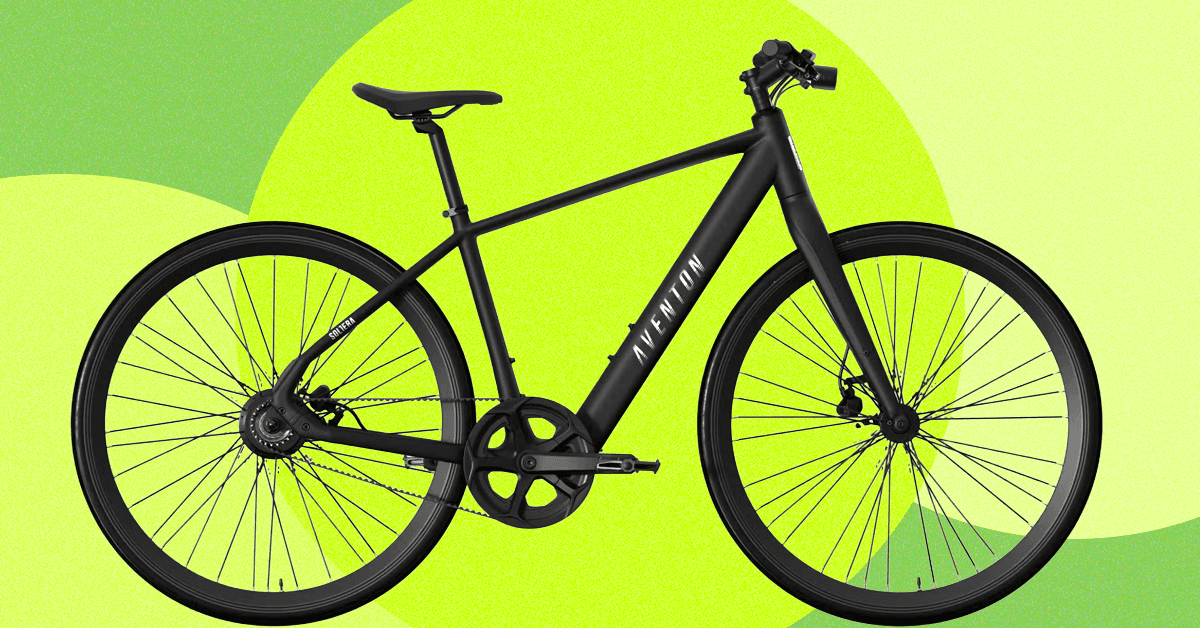
Belt-drive bikes offer some huge upsides. First, they usually require less maintenance, with many belts often lasting twice as long as a typical chain. Second, there’s no grease to speak of, and therefore, no black smudges on your work pants. Third, in the case of the Soltera 3, the belt comes from the Gates brand, whose drivetrain belts are as good as it gets. Belt-drive bikes are silent and often smoother than their chain-driven counterparts.
That said, the inclusion of a low-maintenance element such as a belt drive paired with hydraulic disc brakes, which require bleeding roughly every year, struck me as an odd choice. If Aventon wanted to make the Soltera 3 as hands-off as possible, cable-actuated brakes would have been a more intuitive choice.
The other thing that immediately jumps out about the Soltera 3 is its relatively light weight. At 37 pounds, the Soltera 3 is heavy for an analog bike. But it’s certainly not heavy for an ebike, and it’s nearly as stiff, nimble, and navigable as a conventional bicycle. One issue I’ve always had with ebikes is their heft. Given that they’re often made to replace a car, they’re built with load bearing in mind. Also, ebike batteries are heavy.
Adding to that sense of “this is just like my other bikes,” the Soltera 3 simply looks cool, which is often not the case when it comes to ebikes. The matte black my tester bike arrived in looks cool because matte black almost never doesn’t look cool. (Additionally, the Soltera 3 is available in dark matte blue and a sleek silver.) But beyond the finish, the bike’s geometry; its wide, almost perfectly flat handlebars; and its narrow (by ebike standards) 700 x 36 tires make it feel closer in DNA to a road bike than a traditional ebike.
Button Press
Photograph: Michael Venutolo-Mantovani
I’m 6′4′′, and the extra large Soltera 3 that I tested was at a maximum saddle height. It was suitable for me, but I couldn’t recommend anyone bigger than me riding the Soltera 3. That said, with four sizes ranging from small to extra large, the line covers a wide swath of riders, ranging from my height all the way down to 5′ tall.

Chet Kittleson, 38, is the cofounder of Tin Can and a father of three kids, 10, 8, and 5. I suspect he wouldn’t much like my description of the product’s function as “spying” (keeping watch over one’s kids is part of a parent’s job) or the product itself as a “toy.” He thinks of it, instead, as a utility: a way for kids to talk to Grandma or make plans with friends and to be “part of the same world that grown-ups are a part of.” When he was a kid, he says, the landline was “arguably the most successful social network of all time.” Every house had one. Then came cell phones and smartphones. Direct lines to the internet. “And somewhere along the way we decided the landline was obsolete,” Kittleson says. “In doing that, we overlooked a group that was a major beneficiary of it: kids.”
I’m talking to him over Zoom one afternoon from my home in Los Angeles and his office in Seattle. When I tell him that Amos and Clara had called me more than two dozen times, he doesn’t seem particularly surprised. At first there’s a burst of activity, he says, and then over the course of a few weeks, the kids mature. “They’re like, oh, OK, I see that I can actually do things with this that are important,” he says.
Kittleson, who guesses that most Tin Can users are between the ages of 5 and 13, says he wants to help create a “better childhood” or, as he puts it, “giving kids back a sense of independence and confidence.” (Mike Duboe, a partner at Greylock Ventures, which led a round that invested $12 million in the company in October, says something similar.) One parent, describing their kid’s Tin Can use on X, wrote that it “felt like the old days.”
Amos and Clara weren’t the only ones who, over the holidays, got the gift of gab. In late December, frustrated parents flooded the company’s feedback forms and posted on Reddit that their Tin Cans weren’t working. Though the Tin Can engineers had anticipated a surge in usage around the holidays, the hundredfold increase in call volume took them by surprise.
When I ask Kittleson about the holiday meltdown, he winces. “It was a stressful Christmas,” he concedes. (A message on the Tin Can homepage said, “We’re investigating an issue impacting the network.”) He says that future shipments of the product will be staggered.
And the product’s far from perfect: There can be echoes, unstable sound quality, and long pauses. The buttons on the device are hard to press, which can be challenging to little fingers like Amos’. His mother, Rebecca, sometimes has to help him make calls. “It takes a little bit out of the independence of it,” she says.
My first phone, like that of other kids in my generation, was my family’s, a mustard yellow piece of hard plastic that sat on the mottled brown linoleum counter adjacent to the kitchen. It held a special place in my imagination—an object full of potential—but like most phones back then it was shared within a family and maybe even overheard or monitored. It was also tethered to a wall, making it difficult to multitask or move around while on a call. Kittleson, in fact, says that one inspiration for Tin Can was his frustration when he called his mother on her cell phone. She was, he says, “the worst”: the sort of person who ran around the house while on the call, doing laundry or whatnot. Difficult to hear. Easily distracted.

Noting that as enterprises embed artificial intelligence (AI) across distributed environments, connectivity must evolve from a background utility into production-grade, lifecycle-managed infrastructure capable of supporting real-time, autonomous operations, Ericsson has embarked on a partnership with NTT Data to offer a standardised 5G-first architecture designed to operationalise AI at global scale.
The firms said their goal is to create a globally aligned deployment model spanning design, integration and lifecycle management under unified operational governance. This model will generate a “clear path” for enterprises to move from AI pilots to scalable, production-ready deployments across manufacturing, mining, ports, airports, energy, transportation and smart cities. They stated that together they can help enterprises move from pilots to globally scalable, production-ready solutions.
“Private 5G is the backbone for scaling AI in production, where autonomous systems must operate reliably and at scale, but integration complexity often remains the final hurdle,” said Alejandro Cadenas, associate vice-president of worldwide telco research at IDC, commenting on the challenges facing today’s businesses.
“The combined expertise of NTT Data and Ericsson integrates edge AI and physical AI with enhanced connectivity, overcoming operational, scalability and accountability challenges, and accelerating the deployment of AI.”
On a practical level, the partnership will combine Ericsson’s private 5G products and services and Wireless WAN solutions with NTT Data’s global systems integration, managed services expertise and vertical domain knowledge. This will be the fulcrum in delivering a connectivity infrastructure engineered for the performance, security and operational accountability that firms need, according to the companies. Edge AI and physical AI capabilities will be embedded directly into enterprise connectivity infrastructure, enabling real-time intelligence where data is generated and real-time, autonomous decision-making to result in AI-driven, outcome-focused transformation.
The partnership will focus on four priority areas: global private 5G managed services at scale; AI embedded directly into enterprise connectivity; repeatable industry solutions; and a unified global go-to-market.
In the former domain, NTT Data will act as one of Ericsson’s key global system integration and managed services providers, delivering private 5G as a fully managed service with consistent architecture, operations and security worldwide. In addition, NTT Data Edge AI agents will run on Ericsson’s enterprise Edge platforms, enabling real-time intelligence and autonomous decision-making where data is generated. Joint Ericsson and NTT Data sales, marketing and delivery will look to give enterprises a single, consistent path to deployment, reduce supplier complexity and speed time to value.
As regards to repeatable industry solutions, the firms assured that they will be able to deliver private 5G, edge AI and physical AI use cases across manufacturing, mining, ports, airports, energy, transportation and smart cities, helping enterprises to accelerate deployment and realise measurable ROI.
Looking at the expected key use cases supported by the partnership, the firms said that in manufacturing, they could support automated quality inspection, predictive maintenance and real-time safety monitoring using sensor and vision data.
Autonomous operations in transportation, ports and logistics could be driven by real-time vehicle and asset data for dynamic routing, tracking and safety while in energy and mining, the tech could see use for remote and autonomous operations, intelligent inspection and AI-driven monitoring in complex and hazardous environments.
Smart cities will also be capable of delivering intelligent traffic management, public safety monitoring and real-time optimisation of energy and municipal services, they said.
“As enterprises adopt AI at the edge, they need partners who can bring connectivity, intelligence and security together in a way that actually works in production,” said Shahid Ahmed, global head of edge services at NTT Data. “Private 5G gives enterprises the foundation they need to achieve real, measurable impact with edge AI and physical AI deployments.”
Asa Tamsons, Ericsson senior vice-president and head of business area enterprise wireless solutions, added: “This [partnership] extends [Ericsson’s enterprise connectivity] capability to support edge AI and physical AI at scale across industries. By combining our global platforms with NTT Data’s engineering and managed services, industry expertise and AI-driven operations, enterprises can move from experimentation to always-on, production-grade operations.”


Bobby J. Brown, “The Wire” and “Law & Order: SUV” actor, dies of smoke inhalation after reported fire

Bangladesh commerce minister seeks Chinese investment in jute sector

Washington State’s Emmanuel Ugbo suspended for rest of season

-

 Tech1 week ago
A $10K Bounty Awaits Anyone Who Can Hack Ring Cameras to Stop Sharing Data With Amazon
-
 Business7 days ago
US Top Court Blocks Trump’s Tariff Orders: Does It Mean Zero Duties For Indian Goods?
-

 Fashion7 days ago
ICE cotton ticks higher on crude oil rally
-

 Tech1 week ago
Donald Trump Jr.’s Private DC Club Has Mysterious Ties to an Ex-Cop With a Controversial Past
-

 Entertainment7 days ago
The White Lotus” creator Mike White reflects on his time on “Survivor
-
 Business6 days ago
Eye-popping rise in one year: Betting on just gold and silver for long-term wealth creation? Think again! – The Times of India
-

 Fashion1 week ago
India’s $28 bn reset: How 5 trade deals will reprice its T&A exports
-

 Sports7 days ago
Brett Favre blasts NFL for no longer appealing to ‘true’ fans: ‘There’s been a slight shift’