

Politics
With Iran war exit elusive, Trump aides vie to affect outcome

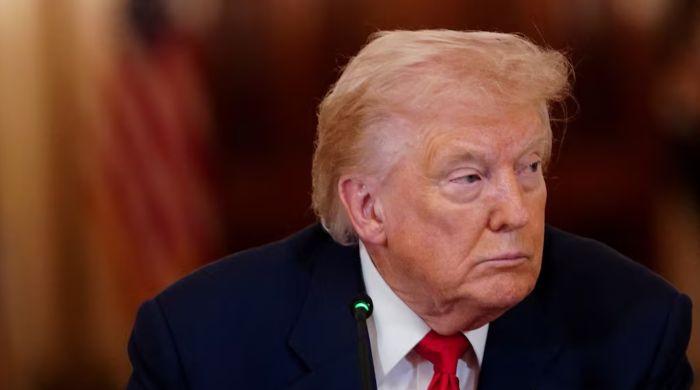
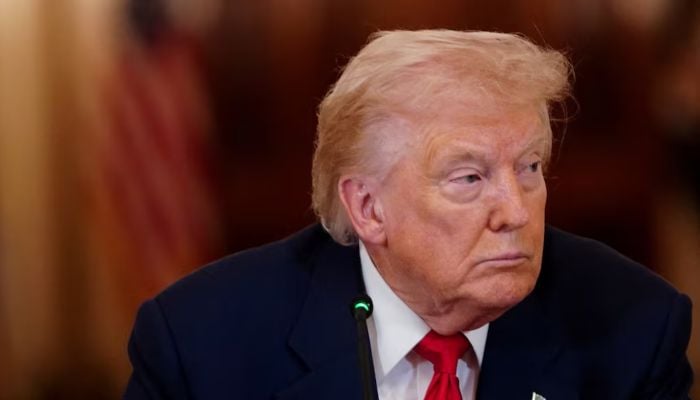
A complex tug-of-war inside the White House is driving US President Donald Trump’s shifting public statements on the course of the Iran war, as aides debate when and how to declare victory even as the conflict spreads across the Middle East.
Some officials and advisers are warning Trump that surging gasoline prices could exact a political cost from the US-Israeli attacks on Iran, while some hawks are pressing the president to maintain the offensive against the Islamic Republic, according to interviews with a Trump adviser and others close to the deliberations.
Their observations to Reuters offer a previously unreported glimpse inside White House decision-making as it adjusts its approach to the biggest US military operation since the 2003 Iraq war.
Shifting messages, various internal viewpoints
The behind-the-scenes manoeuvring underscores the high stakes Trump, who returned to office last year promising to avoid “stupid” military interventions, faces nearly two weeks after plunging the nation into a war that has rattled global financial markets and disrupted the international oil trade.
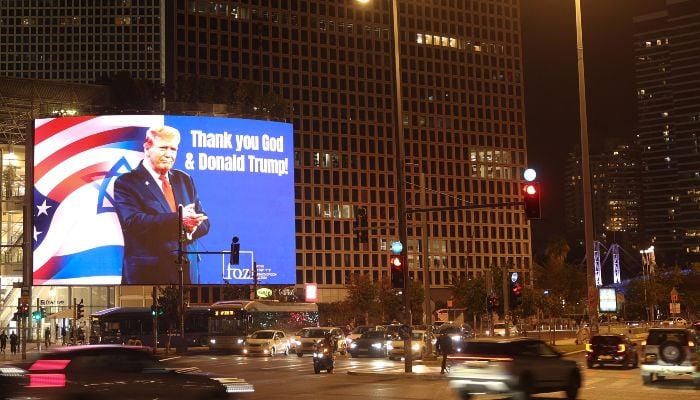
The jockeying for Trump’s ear is a feature of his presidency, but this time the consequences are a matter of war and peace in one of the world’s most volatile and economically critical regions.
Shifting from the sweeping goals he framed in launching the war on February 28, Trump in recent days has emphasised that he views the conflict as a limited campaign whose objectives have mostly been met.
But the message remains unclear to many, including the energy markets, which have lurched in both directions in response to Trump’s statements.
He told a campaign-style rally in Kentucky on Wednesday that “we won” the war, then abruptly pivoted: “We don’t want to leave early, do we? We’ve got to finish the job.”
Economic advisers and officials, including from the Treasury Department and the National Economic Council, have warned Trump that an oil shock and rising gasoline prices could quickly erode domestic support for the war, said the adviser and two others close to the deliberations, speaking on the condition of anonymity to disclose internal discussions.
Political advisers, including Chief of Staff Susie Wiles and deputy chief James Blair, are making similar arguments, focusing on the political fallout from higher gas prices and urging Trump to define victory narrowly and signal the operation is limited and nearly finished, the sources said.
Pushing in the other direction are hawkish voices urging Trump to sustain military pressure on Iran, including Republican lawmakers such as US Senators Lindsey Graham and Tom Cotton, and media commentators such as Mark Levin, according to people familiar with the matter.
They argue the US must prevent Iran from obtaining a nuclear weapon and respond forcefully to attacks on American troops and shipping.
A third force comes from Trump’s populist base and figures such as strategist Steve Bannon and right-wing television personality Tucker Carlson, who have been pressing him and his top aides to avoid getting dragged into another prolonged Middle East conflict.
“He is allowing the hawks to believe the campaign continues, wants markets to believe the war might end soon and his base to believe escalation will be limited,” the Trump adviser said.
Asked for comment, White House press secretary Karoline Leavitt said in a statement: “This story is based on gossip and speculation from anonymous sources who aren’t even in the room for any discussions with President Trump.
“The President is known for being a good listener and seeking the opinions of many people, but ultimately everyone knows he’s the final decision maker and his own best messenger,” she said. “The President’s entire team is focused on ensuring the objectives of Operation Epic Fury are fully achieved.”
Other people named for their roles in the deliberations did not immediately respond to Reuters’ questions.
Looking for an exit
In taking America to war, Trump offered little explanation, and the administration’s stated war aims have ranged from thwarting an imminent attack by Iran to crippling its nuclear programme to replacing its government.
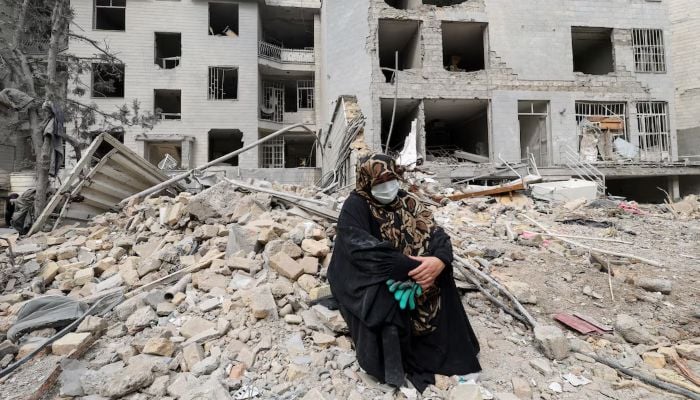
As he seeks an exit from an unpopular conflict, Trump is trying to juggle competing narratives that some critics say have complicated an already difficult situation, with Iran defiant despite the devastating US-Israeli air assault.
Top political aides and economic advisers, whose warnings before the war of the potential economic shock were largely ignored, appear to have played a major role in pushing Trump’s efforts this week to reassure skittish markets and contain rising oil and gas prices.
His public shift to downplaying the war’s impact, describing it as a “short-term excursion,” and his insistence that gas price hikes would be short-lived appeared aimed at calming fears of an open-ended conflict.
Some top aides have advised him to work toward a conclusion to the conflict that he can call a triumph, at least militarily, the sources said, even if much of the Iranian leadership survives, along with remnants of a nuclear program that the campaign was meant to target.
Wave after wave of US and Israeli air strikes have killed a number of top Iranian leaders among some 2,000 people overall — some as far away as Lebanon – devastated its ballistic missile arsenal, sunk much of its navy and degraded its ability to support armed proxies around the Middle East.
But the military achievements have been seriously undercut by Iran’s stepped-up attacks on oil tankers and transport facilities in the Gulf, driving up oil prices.
Trump has said he will decide when to end the campaign. He and his aides say they are far ahead of the four- to six-week timeframe Trump initially announced.
The shifting reasons for launching the conflict, which has spilt over into more than half a dozen other countries, have only made it more difficult to predict what comes next.
For their part, Iran’s rulers will claim victory, analysts say, for simply surviving the US-Israeli onslaught, especially after demonstrating their ability to fight back and inflict damage on Israel, the US and its allies.
Venezuela miscalculation
Critical to the war’s final trajectory will be the Strait of Hormuz. A fifth of the world’s oil shipments, which normally traverse the narrow waterway, have come to a near-standstill.
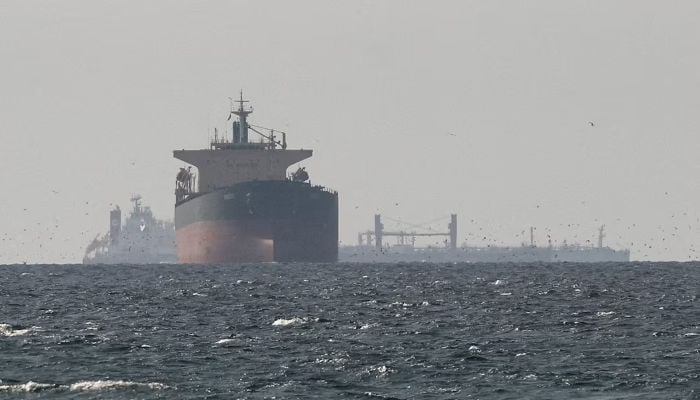
Iran, in recent days, has struck tankers in Iraqi waters and other ships near the strait, and the new Supreme Leader Mojtaba Khamenei has vowed to keep it shut.
If Iran’s stranglehold on the waterway pushes US gas prices high enough, that could increase political pressure on Trump to end the military campaign to help his Republican Party, which is defending narrow majorities in Congress in November’s midterm elections.
Trump has recently refrained from pushing the idea that the war seeks to topple the government in Tehran. US intelligence indicates that Iran’s leadership is not at risk of collapse anytime soon, Reuters reported on Wednesday.
At least some of the confusion over the war’s trajectory appears rooted in the quick US military success in Venezuela.
Since the start of the war, some aides have struggled to convince Trump that the Iran campaign was unlikely to unfold in the same way as the January 3 Venezuela raid that captured President Nicolas Maduro, according to another source familiar with the administration’s thinking.
That operation opened the way for Trump to coerce former Maduro loyalists into giving him considerable sway over the country’s vast oil reserves – without requiring extended US military action.
Iran, by contrast, has proved a much tougher, better-armed foe with an entrenched clerical and security establishment.
Experts have rejected claims by Trump aides that Iran had been within weeks of being able to produce a nuclear weapon, despite the president’s insistence in June that US-Israeli bombing had “obliterated” its nuclear program.
Most of Iran’s stockpile of highly enriched uranium is believed to have been buried by the June strikes, meaning the material potentially could be retrieved and purified to bomb grade. Iran has always denied seeking nuclear weapons.
If the war drags on, American casualties mount and the economic costs multiply, some analysts say it could erode backing from Trump’s political base. But despite criticism from some supporters opposed to military interventions, members of his “Make America Great Again” movement have so far largely stayed with him on Iran.
“The MAGA base is going to give the president wiggle room,” said Republican strategist Ford O’Connell.
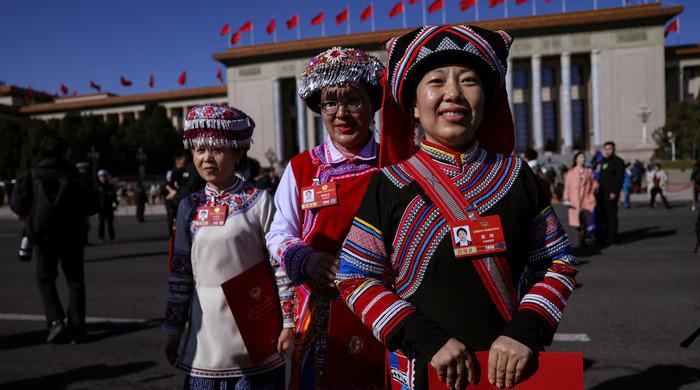
China passed a law on a “shared” national identity among the country’s 55 ethnic minority groups on Thursday, a move critics say will further erode the identity of people who are not majority Han Chinese and risk making anyone challenging that “unity” a separatist punishable by law.
Called “Promoting Ethnic Unity and Progress”, the ethnic minority law aims to forge national unity and advance the rejuvenation of the Chinese nation with the Chinese Communist Party (CCP) at its core, a draft copy of the law showed.
It was passed at the closing session of the annual meeting of the National People’s Congress, China’s legislature, by 2,756 votes, with three opposing votes and three abstentions, according to a Reuters witness.
The law will come into force on July 1 this year, state media reported.
Officially, China has 56 officially recognised ethnic groups, dominated by the Han Chinese, who account for more than 91% of the country’s 1.4 billion people.
China’s ethnic minority populations — including Tibetans, Mongols, Hui, Manchus, and Uyghurs — are concentrated in regions that together cover roughly half of the country’s land area, much of it rich in natural resources.
The law aims to promote integration across ethnic groups through education, housing, migration, community life, culture, tourism, and development policy, the law said.
It mandates that Mandarin is the basic language of instruction in schools, and for government and official business.
In public settings, where Mandarin and minority languages are used together, Mandarin must be given “prominence in placement, order, and similar respects,” the draft said.
“The state respects and protects the learning and use of minority languages and scripts,” it added.
Religious groups, religious schools, and religious venues must adhere “to the direction of the Sinicization of religion in China,” according to the draft.
The law also seeks to ban any interference with marriage choices based on ethnicity, custom, or religion, to enable more intermarriage between ethnic groups.
‘Integrate with the minority’
Allen Carlson, an associate professor of government at Cornell University and an expert on Chinese foreign policy, said the law underlined a move towards assimilation.
“The law makes it clearer than ever that in President Xi Jinping’s PRC non-Han peoples must do more to integrate themselves with the Han majority, and above all else be loyal to Beijing,” he said, referring to China by the initials for its official name.
Ethnic affairs are incorporated into China’s social governance system, with clauses that include anti-separatism, border security, risk prevention, and social stability.
An editorial in state newspaper China Daily said that the law had followed a rigorous legislative process, been through multiple readings and consultations with lawmakers and representatives from ethnic minority communities.
“The law stresses the protection of cultural traditions and lifestyles of all ethnic groups… it is misleading to claim that ethnic minorities in China must choose between economic development and cultural preservation,” it said.
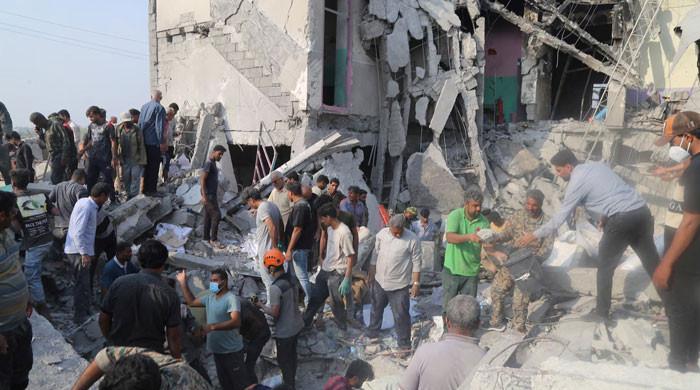
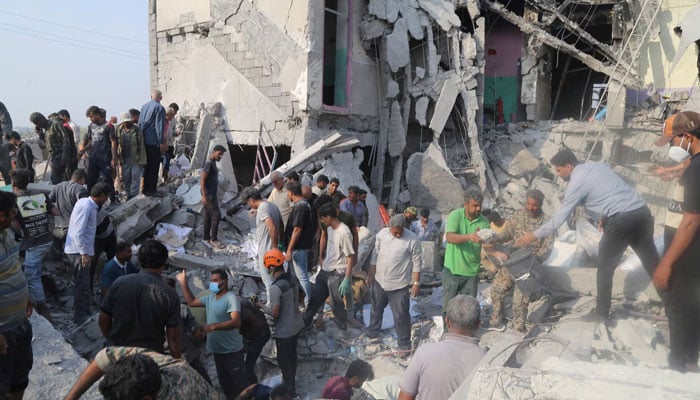
LONDON: An Iranian girls school that took a direct hit on the first day of the war had a years-long online presence, including dozens of photos of the children and their activities, before it was struck along with at least six other buildings in an adjacent military compound, a Reuters investigation found.
The school’s online activity calls into question how the American military vets and reviews strike locations. Reuters first reported that investigators at the Defence Department believe US forces were likely responsible for the bombing, and new indications emerged that the US may have relied upon outdated targeting data.
Separated from the base by a wall painted with bright murals, the Shajareh Tayyebeh School was the northernmost building hit on February 28. The building was destroyed during the barrage, and 150 students were killed, according to Iran’s ambassador to the UN in Geneva, Ali Bahreini. Reuters has not independently confirmed the death toll, which the Iranian Red Crescent said reached a total of 175.
The coloured walls visible from satellite imagery as early as 2018 can be seen in a version of the school’s website archived in 2025, whose photos showed girls dressed in identical pink and white in class and at play.
The school was also tagged in a local business listing, Reuters found, and multiple satellite images from the months leading up to the strike provide other indications it was a school, including playground markings.
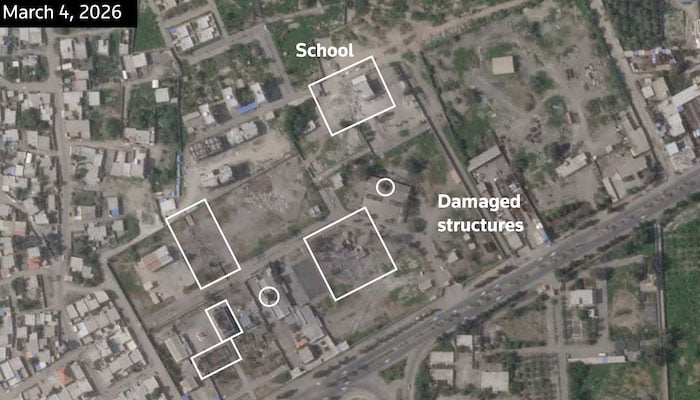
The cluster of buildings appeared to have been struck by a series of munitions, including at least one American Tomahawk cruise missile, according to an analysis of satellite imagery data, photos and video of the strikes and their aftermath.
Video of the moment of impact by the Tomahawk on the buildings nearby showed a plume of smoke rising in the background. Satellite images from after the attack showed signs of at least seven distinct explosions along a roughly 325-metre axis, including the destroyed school, a rooftop punctured by a gaping hole, and a flattened building.
US President Donald Trump said Monday that Iran might have Tomahawks, although he did not explain how, and no US officials have offered evidence of that claim.
The Pentagon said the strike is under investigation but declined to comment on the school’s online presence, the satellite imagery or on the decision to target the Minab compound.
Two sources, both speaking on condition of anonymity, told Reuters that outdated targeting data may have been to blame, which was first reported by the New York Times.
Mark Cancian, a retired US Marine officer and defence expert with the Centre for Strategic and International Studies think tank, said the US Central Command would have had a longstanding list of potential targets in case of conflict with Iran. “The lesson learned here would be to review the target lists periodically and more closely,” he said.
The school and at least six buildings in the adjacent Islamic Revolutionary Guard Corps (IRGC) compound were the only places struck within five kilometres between February 28 and March 2, Reuters found. This suggests they were specifically targeted, rather than struck as part of a broad bombing campaign on the southern city.
Located near the Strait of Hormuz and surrounded by farm fields, Minab is home to one of the IRGC’s largest missile bases, according to state media.
The Reuters analysis included changes detected between those dates by satellites, which, even over a large area, can measure shifts from upheavals such as destroyed buildings, fire, flooding or landslides.
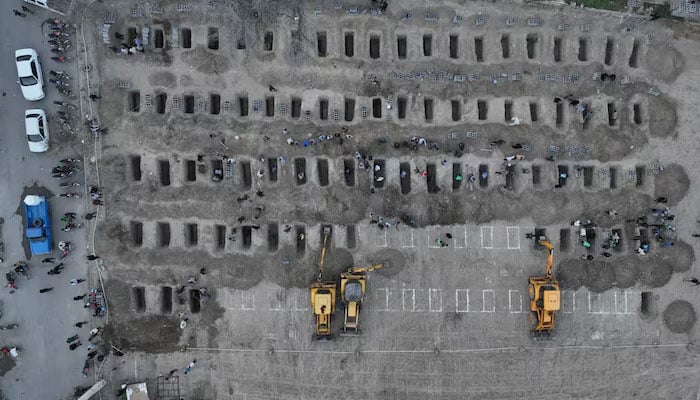
Graves being prepared for the victims in Iran’s Minab on March 2, 2026. — Reuters
In the days after the strike, another place in Minab showed major disturbance in the analysis: the town cemetery. There, on March 2, the dead children were buried, creating row after row of 20 tidy rectangular holes in the earth.
The school
The Shajareh Tayyebeh School in Minab was one of 59 schools within the Persian Gulf Martyrs’ Cultural Educational Institute. The school’s website includes photos of students gathered in the yard, which matched verified videos outside the building after the strike.
Some of the schools in that network, including the Shajareh Tayyebeh girls’ school and its equivalent boys’ school in Minab, listed their addresses as being in or adjacent to IRGC-controlled locations, according to the archived website.
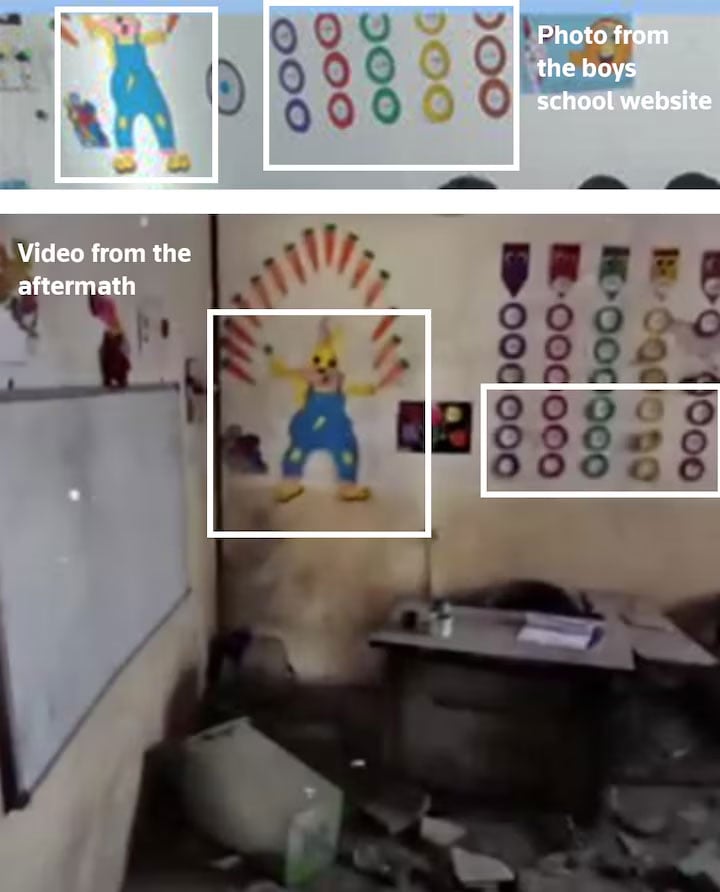
The address for the Minab girls’ school is specifically listed as “Resalat Blvd, Alley No 9, behind Asef Brigade.” The girls’ school is also included in a local business listing website that shows a photo of the alley with a sign clearly marked “Girls School”.
The boys’ school seems to share the address and be located on the side of the building that did not collapse. A comparison of post-strike images with archived photos of boys studying appears to show debris scattered on desks where students had once studied.
According to the London-based news website IranWire, the Asef Brigade is a missile unit based in Minab, under the command of the IRGC navy.
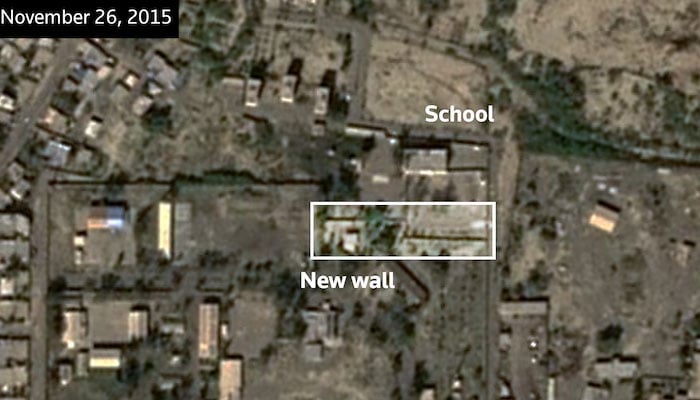
Satellite imagery from mid-2015 shows the building was walled off from the rest of the base and appears to have operated as a school since at least 2018, when the painted murals are first visible on its outer walls.
Feb 28 attack
In the early days of the war, the United States released photos and videos showcasing its use of Tomahawks in Iran, including on the war’s first day, February 28, when the school was struck.
In three photos and a video from that day that were taken by the US Navy, a Tomahawk missile launches from the deck of the USS Spruance, a guided-missile destroyer. The missiles are US-made and can be launched from surface ships or submarines.
On Sunday, the semi-official Mehr news agency published a video showing the moment one of the buildings within the IRGC compound was hit. According to local media, the attack happened around 10:45am local time.
Before impact, smoke from what appears to be a previous attack on the compound is already visible in the video. Reuters verified the visual as taken on February 28 from videos of the aftermath and satellite imagery of intact buildings taken on the morning of the strike.
Reuters shared the video of the attack with five munitions experts. Four of the experts said the missile was likely a Tomahawk; one thought it was a glide bomb.
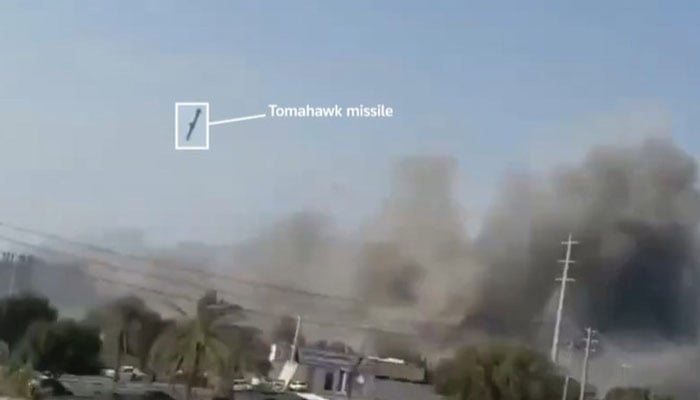
Joost Oliemans, a Netherlands-based conflict analyst who specialises in military equipment, concluded the compound was hit by a US Tomahawk, saying that while a few countries had similar missiles, neither Israel nor Iran were among them.
Joseph Dempsey, a military analyst with London’s International Institute for Strategic Studies, also identified it as a type of Tomahawk, although he did not rule out the possibility of a previously unknown missile.
In a March 4 press conference at the Pentagon, the US military shared a map of locations it had struck in Iran. The map did not list Minab by name, but one of the strikes was marked with a red diamond where the city is located.
On Monday, the state-controlled Tehran Times newspaper published photos of what it said were the “remnants of an American missile that struck an elementary school in Minab.” At the request of Reuters, Hany Farid, a digital forensics and computer science professor for the University of California at Berkeley, analysed the images and found no evidence of manipulation or AI generation.
Two of those missile parts, laid out on a desk and photographed in front of the remains of the school, match recovered parts of other Tomahawk missiles shared by Houthis in 2025 and documented by the Open Source Munitions Portal NGO.
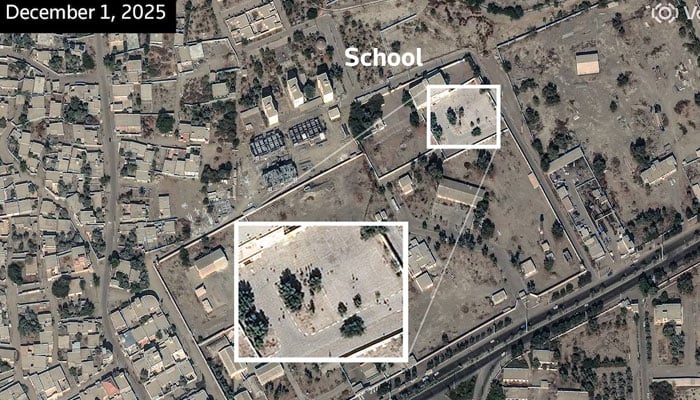
But at the school there was activity as recently as December 2025. Satellite imagery showed what appeared to be people gathered in the schoolyard on a cloudless day.
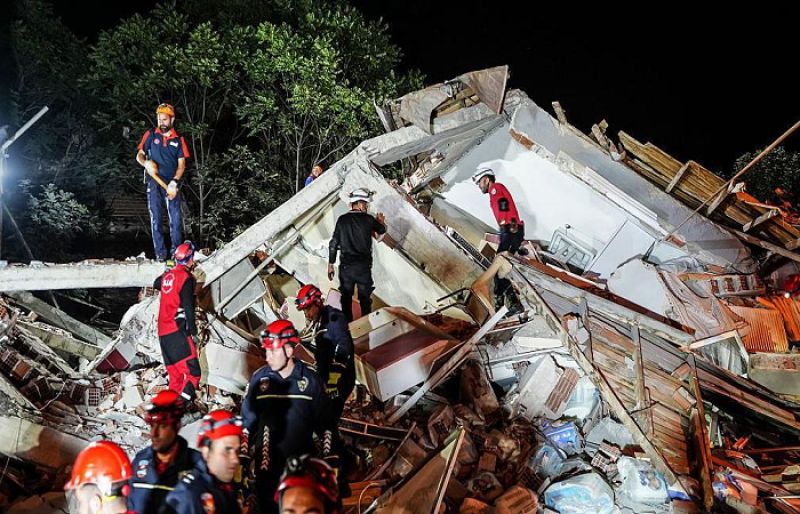

A magnitude 5.5 earthquake rattled north-east Turkey on Friday, the country’s disaster management agency said.
The tremor hit around 3:35 am (0035 GMT) in Tokat province, with no reports of damage, the Turkish disaster and emergency management authority said.
The agency added it was continuing to assess the situation.
The governor of Tokat announced that schools would be closed on Friday.
Turkey is crisscrossed by several geological fault lines which have previously caused catastrophes in the country.
A quake in February 2023 in the southwest killed at least 53,000 people and devastated Antakya, site of the ancient city of Antioch.


Why India’s Next Growth Story Will Come From Rail Connectivity and Mid-Sized Cities

Gotham signs Norway’s Guro Reiten on initial loan from Chelsea

No shortage of petrol-diesel, kerosene, ATF, fuel oil: Indian minister

-
 Politics6 days ago
India let Iran warship dock the day US sank another off Sri Lanka, say officials
-

 Sports6 days ago
Pakistan set for FIH Pro League debut | The Express Tribune
-
 Business6 days ago
Restaurant group changes name after bid to buys pubs across the UK
-

 Entertainment6 days ago
Harry Styles kicks off new era with ‘One Night Only’ comeback show
-

 Sports6 days ago
Winners and losers of the 2026 NHL trade deadline
-
 Business6 days ago
Home heating oil: ‘Most of my pension has gone on home heating oil’
-

 Tech1 week ago
Google’s Pixel 10a May Not Be Exciting, but It’s Still an Unbeatable Value
-

 Entertainment6 days ago
Kanye ‘Ye’ West trips during trial: ‘Is he asleep?’