

Business
WNBPA President Nneka Ogwumike says new CBA will have a major impact on players’ bank accounts


The Women’s National Basketball Player’s Association ratified the terms of a new collective bargaining agreement Monday, calling it “transformational” and “bigger than basketball.”
The new CBA begins this season and runs through 2032.
When asked her opinion of the most important outcome from the deal, WNBPA President Nneka Ogwumike had two words: “Bank accounts.”
“Being able to have your worth tied mostly in your salary is all that we’ve been fighting for, and it’s what we were able to achieve,” Ogwumike told CNBC Sport in an interview.
The deal increases the average player salary to $583,000 in 2026 with the potential to increase to more than $1 million by 2032. The maximum salary for players will now be $1.4 million in 2026 and could grow to more than $2.4 million by 2032, based on current WNBA financial projections.
Ogwumike acknowledged the salary increases may change players’ plans for how they spend their off-seasons.
The average WNBA salary was $120,000 in 2025, spurring many players to play abroad or in other leagues, such as 3-on-3 league Unrivaled, for extra money.
“Prioritizing where you want to play is going to look a lot different now that we’ve been able to negotiate a structure, a salary structure, that is tied to the revenue of the business,” Ogwumike said.
Several WNBA players, including five-time WNBA All-Star Napheesa Collier, have expressed a loss of confidence in WNBA Commissioner Cathy Engelbert in recent months, criticizing her empathy and communication with players. Ogwumike expressed optimism that players will be able to work in tandem with Engelbert under the new CBA structure.

“I told her that we’re standing here with you, Cathy,” Ogwumike said. “We were able to come to this deal and go through the process of this deal, however bumpy or smooth it was, we got here. It’s important for her to understand that we as players are at the table with her and all WNBA leadership to have achieved something that’s incredibly historical. So, I feel like there probably isn’t a better way to represent us settling our differences and moving forward in a league that we all care about then by signing this deal.”
Watch CNBC Sport’s full interview with WNBPA President Nneka Ogwumike.
— CNBC’s Jessica Golden contributed to this report.









Business
FPI May trade: Foreign portfolio investiors withdrew Rs 14,231 crore from Indian equities – The Times of India
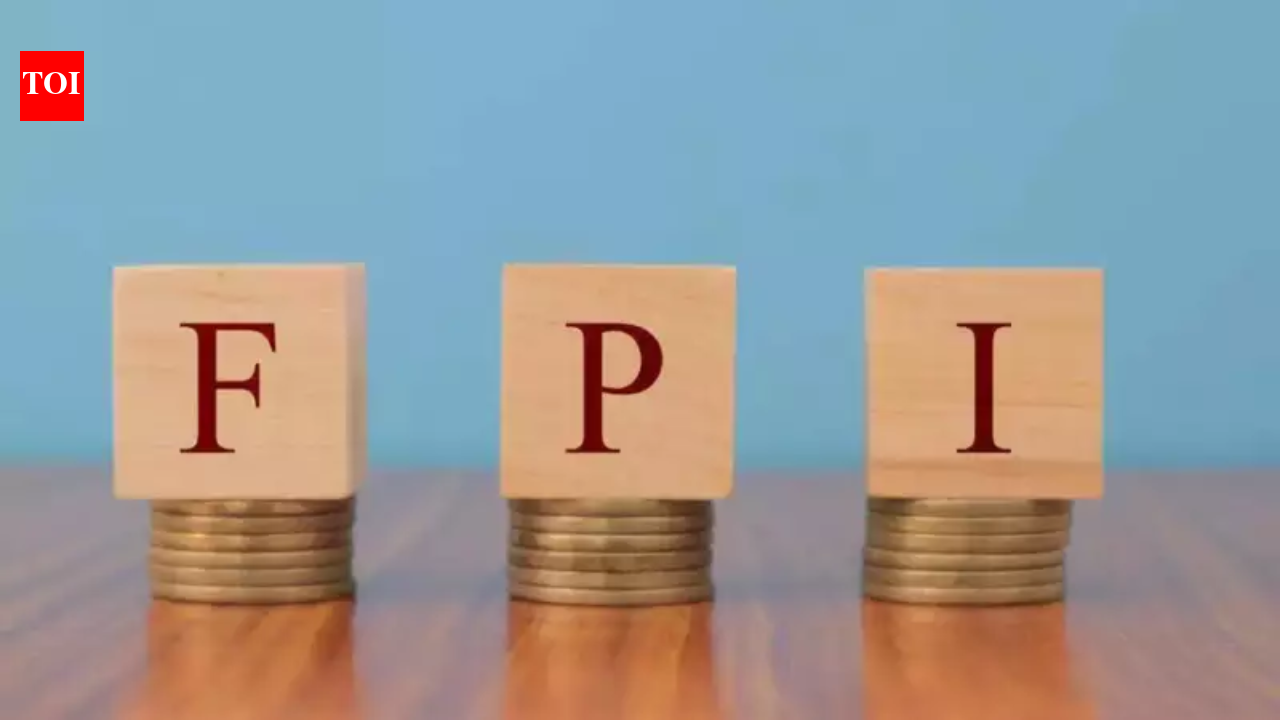
Foreign portfolio investors have extended their retreat from Indian equities in May, taking their total withdrawal from the market in 2026 beyond Rs 2 lakh crore as global economic concerns continue to drag down sentiment. Data from NSDL showed FPIs have pulled out Rs 14,231 crore so far this month, adding to a year marked by persistent selling pressure. The cumulative outflow this year has now surpassed the Rs 1.66 lakh crore foreign investors withdrew during the whole of 2025. The pattern through 2026 has largely remained negative, with February standing out as the lone exception. January opened with FPIs selling equities worth Rs 35,962 crore. In February, however, foreign investors briefly reversed course, bringing in Rs 22,615 crore, their biggest monthly investment in 17 months. That momentum did not last. March recorded the sharpest reversal, with a record Rs 1.17 lakh crore exiting Indian equities. April followed with another steep outflow of Rs 60,847 crore, while May has continued the same trajectory. “The selling was largely driven by persistent global macroeconomic uncertainties, particularly concerns around inflation, interest rates and geopolitical risks, which continued to weigh on sentiment toward emerging markets,” Himanshu Srivastava, Principal, Manager Research at Morningstar Investment Research India, said. According to Srivastava, uncertainty over how global interest rates will move remains central to foreign investor behaviour. High crude oil prices and unresolved geopolitical tensions, particularly in the Middle East, have kept inflation concerns elevated worldwide, forcing investors to reassess hopes of near-term rate cuts by major central banks. This backdrop has supported firm global bond yields, increasing the appeal of developed-market debt instruments while weakening investor appetite for emerging market equities such as India. He also said intermittent weakness in the Indian rupee has affected returns for overseas investors when measured in dollar terms. Even amid sustained selling, foreign investors have not completely stepped away from Indian markets. V K Vijayakumar, Chief Investment Strategist at Geojit Investments, said FPIs have shown selective interest in segments such as power, construction and capital goods. He noted that mid-cap and certain small-cap stocks with strong earnings and growth potential are also drawing investor attention. Vijayakumar said currency depreciation and concerns around India’s earnings growth have played a significant role in shaping FPI outflows this year. He added that markets like South Korea and Taiwan are currently seeing stronger FPI interest, supported by expectations of better earnings growth linked to the artificial intelligence boom.

Campaigners are calling for a ban on the use of the weedkiller over health concerns.
Source link
Business
Aramco CEO warns 1 billion barrels lost will slow oil market recovery | The Express Tribune
Saudi energy giant posts 25% jump in quarterly profit even as Hormuz blockade chokes global oil supplies
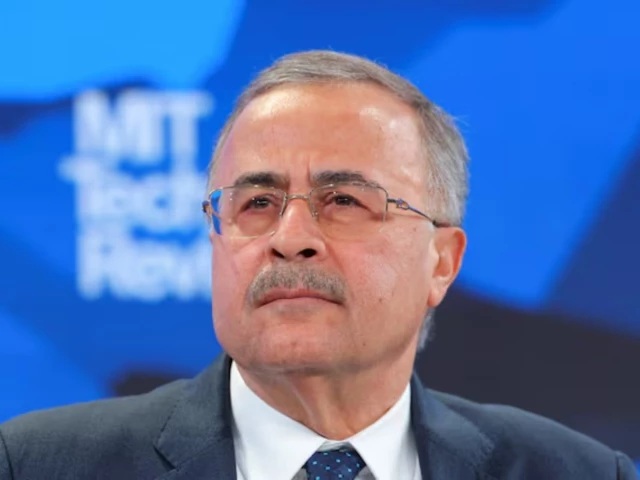
Aramco’s President and CEO Amin Nasser at the 56th annual World Economic Forum (WEF) meeting in Davos, Switzerland, on January 20, 2026. PHOTO: REUTERS
The world has lost about 1 billion barrels of oil over the past two months and energy markets will take time to stabilise even if flows resume, Saudi Aramco’s CEO said on Sunday, as shipping disruptions choke traffic through the Strait of Hormuz.
“Our objective is simple: keep energy flowing, even when the system is under strain,” Amin Nasser told Reuters in a statement after Aramco reported a 25% jump in net profit in its first-quarter.
Global energy supplies have been sharply squeezed by Iran’s blockade of the Strait of Hormuz, which has curtailed shipping and driven prices higher following the United States-Israeli war.
Read: Oil prices rise as investors weigh Middle East peace prospects
“Reopening routes is not the same as normalising a market that has been deprived of about one billion barrels of oil,” Nasser said, adding that years of underinvestment have compounded the strain on already-low global inventories.
Aramco has used its East-West Pipeline to bypass Hormuz and transport crude to the Red Sea, an asset Nasser described as a “critical lifeline” to mitigate the global supply crisis.
Despite shifts in shipping routes, Nasser reiterated that Asia remained a key priority for the company and was central to global demand.
Read More: Hormuz: the chokehold that shook the world
In March, Aramco warned of “catastrophic consequences” for the world’s oil markets if the Iran war continues to disrupt shipping in the Strait of Hormuz. Nasser stated that the longer the disruption goes on “the more drastic the consequences for the global economy.”
Further, he had stated, “While we have faced disruptions in the past, this one by far is the biggest crisis the region’s oil and gas industry has faced.”


Martin Short: Facing tragedy with joy

Main Marka-e-Haq ceremony gets underway at Pakistan Monument

Jacob Fatu unleashes vicious assault on Roman Reigns after World Heavyweight Championship loss at WWE Backlash

-

 Politics7 days ago
Iran weighs US reply delivered via Pakistan as Trump signals opposition to deal terms
-

 Fashion1 week ago
US’ J.Jill, Inc. appoints Kimberly Wallengren as CMO
-

 Fashion1 week ago
AAFA pushes for swift US House passage of key anti-counterfeiting law
-
 Fashion1 week ago
US cotton export sales show strong recovery, Upland rise 36%
-

 Sports1 week ago
Sajid Ali Sadpara summits world’s fifth-highest peak
-
 Business1 week ago
UK airlines to be allowed to cancel flights in advance over fuel shortages
-

 Politics1 week ago
Two women die on migrant boat seeking to reach UK
-
 Fashion1 week ago
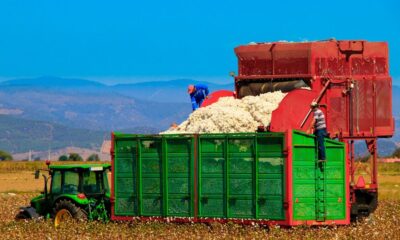
ICE cotton witnesses sharp rise on weaker dollar, strong exports