

Business
Women’s Day 2026: The Rise Of Women Investors In India’s Equity Markets


Last Updated:
Women are increasingly participating in India’s equity markets, with over 12.7 crore registered investors as of February 2026.




Women investors are steadily reshaping India’s financial landscape, with rising participation in stocks, mutual funds, and digital investing platforms.
For many women, early conversations about money tend to focus on saving, budgeting, and financial security. Discussions about trading or investing as a professional path often emerge much later, sometimes after years of just observing financial decisions.
Building a career in stock market investing, however, requires moving beyond participation as a saver or occasional investor. It calls for a structured approach to analysing markets, evaluating risks, and allocating capital with discipline over time.
Success in investing is rarely about bold predictions or reacting quickly to market noise. Instead, it depends on developing capabilities such as disciplined decision-making, risk awareness, patience, and the ability to remain objective during periods of volatility.
While markets are often portrayed as fast-moving arenas driven by quick decisions, long-term success is built on thoughtful analysis, clear exposure limits, diversification, and consistent processes that help investors navigate changing market conditions.
Expanding Participation in India’s Equity Markets
According to data from the National Stock Exchange of India, the number of unique registered investors crossed 12.7 crore as of February 2026, reflecting the growing involvement of individuals in capital markets.
Women now account for roughly one-fourth of all investors, and participation is widening geographically, with over half of India’s states reporting female investor shares above the national average.
Smaller regions such as Goa, Mizoram, Chandigarh, and Sikkim record some of the highest levels of female participation, pointing to steady gains in gender inclusivity in capital market access.
As participation grows, the next step lies in expanding the role women play within markets themselves—not only as investors but also as analysts, portfolio managers, traders, and financial decision-makers.
Capital as the Basis of Longevity
In leveraged market environments, capital functions less like ammunition and more like oxygen. Investors who lose capital too early often lose the opportunity to learn from market cycles.
Compounding knowledge and returns requires time, which is only possible when risk is managed carefully.
New market participants often focus on the potential profit from a single trade, whereas experienced investors evaluate how much risk can be taken while remaining active in the market.
This approach emphasizes position sizing, disciplined capital allocation, and clearly defined exposure limits, allowing investors to stay engaged long enough for compounding to take effect.
Equally important is the ability to avoid emotional decision-making. Markets often trigger strong reactions during sharp rallies or sudden corrections, but investors who rely on impulse or fear-driven trades tend to make inconsistent decisions.
A professional approach requires separating emotions from investment decisions and relying instead on clearly defined strategies.
Risk Management as a Professional System
Long-term investors typically rely on structured frameworks that guide decision-making across different market conditions.
Entry rules, exit strategies, defined risk limits, and position sizing models help create consistency in investment decisions.
These systems become particularly important during volatile periods, as market cycles inevitably move through phases of optimism, correction, and uncertainty.
Investors who sustain long careers in markets are rarely those who predict every movement accurately; rather, they are those who develop processes that protect capital when assumptions prove incorrect.
Equally important is the ability to avoid emotional decision-making. Markets often trigger strong reactions during sharp rallies or sudden corrections, but investors who rely on impulse or fear-driven trades tend to make inconsistent decisions.
A professional approach requires separating emotions from investment decisions and relying instead on clearly defined strategies.
Treating Investing as a Business
An important shift occurs when market participation begins to resemble a professional discipline rather than an occasional activity.
While some individuals treat trading as a series of short-term opportunities influenced by market noise, others approach it more like an enterprise by tracking performance, reviewing strategies, and analysing outcomes over time.
Investors who sustain long careers typically adopt this latter perspective, treating investing as a business and focusing on risk-adjusted returns, efficient capital allocation, and long-term process consistency rather than short-term excitement.
This professional mindset also involves maintaining detailed records, evaluating strategy performance across market cycles, and continuously improving analytical frameworks.
Shifting Household Investment Behaviour
Broader economic indicators also point to a gradual shift in household financial behaviour.
The Economic Survey 2025–26 notes that the share of equity and mutual funds in household financial savings increased from about 2% in FY12 to over 15.2% in FY25.
During the same period, individual investors’ share in equity ownership rose to 18.8% by September 2025, while household equity wealth expanded by nearly Rs 53 lakh crore between 2020 and 2025.
As households allocate a larger share of savings toward market-linked instruments, understanding risk and capital allocation becomes an increasingly valuable capability.
A Broader Role for Women in Markets
Technology has made capital markets more accessible than ever before through digital platforms, real-time data, and faster execution. Yet access alone does not translate into success.
Markets reward discipline, thoughtful preparation, and the ability to remain composed through periods of volatility.
For women considering a career in stock market investing, the key lies in building analytical confidence, understanding market structures, and approaching investing with patience, discipline, and emotional balance.
Greater participation by women in financial markets strengthens the quality of investment decision-making itself. As more women engage as investors, analysts, and decision-makers, markets benefit from more balanced risk assessment, deeper participation, and a stronger culture of disciplined capital allocation.
The views expressed in this article are those of the author and do not represent the stand of this publication.
 Click here to add News18 as your preferred news source on Google.
Follow News18 on Google. Join the fun, play games on News18. Stay updated with all the latest business news, including market trends, stock updates, tax, IPO, banking finance, real estate, savings and investments. To Get in-depth analysis, expert opinions, and real-time updates. Also Download the News18 App to stay updated.
March 08, 2026, 12:54 IST
Read More
Business
Top stocks to buy today: Stock recommendations for April 24, 2026 – check list – The Times of India

Stock market recommendations: Bharat Electronics, and Colgate-Palmolive (India) have been recommended as the top stocks to buy today (April 24, 2026) by Bajaj Broking Research. Take a look at the target prices and expected returns:Bharat ElectronicsBuy in the range of ₹ 440.00-450.00
The stock is in structural up trend forming higher high and higher low in all time frame signaling strength and continuation of the uptrend. The entire up move of the last 8 months is in a rising channel as can be seen in the chart highlighting sustained demand at an elevated level.On the smaller time frame, the stock is at the cusp of generating a breakout above the bullish Flag like formation as post a sharp up move in the first 3 weeks of April the stock went into a consolidation phase in the last four sessions. It is seen resuming up move and is at the cusp of generating a breakout above the bullish Flag formation highlighting continuation of the up move and offers fresh entry opportunity.We expect the stock to extend the up move and head towards 495 levels in the coming months being the confluence of the 123.6% external retracement of the previous decline 473 – 400 and the upper band of the rising channel of the last 8 months.Colgate-Palmolive (India)Buy in the range of 2120-2160
The share price of Colgate-Palmolive has generated a breakout above bullish Flag pattern signaling continuation of the up move and offers fresh entry opportunity.We expect the stock to head higher towards 2330 levels in the coming months being the measuring implication of the bullish flag breakout.The daily 14 periods RSI is in buy mode thus supports the positive bias in the stock.(Disclaimer: Recommendations and views on the stock market, other asset classes or personal finance management tips given by experts are their own. These opinions do not represent the views of The Times of India)
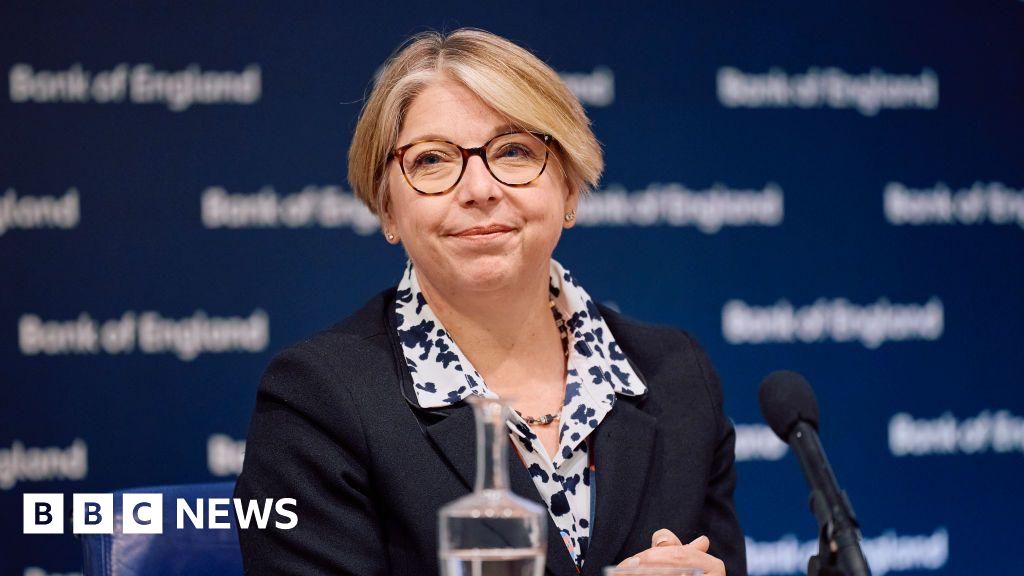
It is unusual for a senior figure at the Bank to be so forthright on market movements.
Source link

Consumer confidence has fallen for the third consecutive month amid household “jitters” over rapid price rises, figures show.
GfK’s long-running consumer confidence index fell four points to minus 25 in April, following falls of two points and three points in March and February respectively.
The deepening concern was driven by perceptions of the UK economy, with a six-point slide in confidence for the next 12 months to minus 43, its lowest level since February 2023.
Confidence in personal finances over the coming year fell five points to minus four – one point lower than this time last year.
The major purchase index – an indicator of confidence in buying big ticket items – held steady, albeit at minus 18 but one point better than last April.
The only measure to improve was the savings index – often an indication that households are concerned about their finances and looking to build contingency funds – which is up five points to 32.
Neil Bellamy, consumer insights director at GfK, said: “Consumers really do have the jitters now.
“It is a year since we last saw a monthly drop of this size, and we have to go back to October 2023 to find the last time consumer confidence was lower.
“Everyone is grappling with rapid price rises, especially at the fuel pumps, which are taking a dent out of household budgets, and people know further price hikes are coming.
“Consumer confidence is deteriorating sharply, with fuel prices and threats of more energy price increases acting as constant reminders of inflation.
“While the Gulf crisis is intensifying pressures, much of the current strain reflects earlier domestic cost increases.
“How long can all this disruption and pain continue?”


UK’s clothing exports down 7.6% to $293 mn in Jan-Feb
Top stocks to buy today: Stock recommendations for April 24, 2026 – check list – The Times of India

Mariska Hargitay expresses love for Christopher Meloni’s ‘Law & Order’ series

-

 Fashion1 week ago
France’s LVMH Q1 revenue falls 6%, shows resilience amid Iran war
-

 Entertainment1 week ago
Is Claude down? Here’s why users are seeing errors
-

 Tech1 week ago
The Deepfake Nudes Crisis in Schools Is Much Worse Than You Thought
-

 Sports1 week ago
PSL 11: Peshawar Zalmi win toss, opt to field first against Quetta Gladiators
-
 Business1 week ago
Standard Life buys rival in £2b deal to create savings giant
-

 Tech1 week ago
CYBERUK ’26: UK lagging on legal protections for cyber pros | Computer Weekly
-

 Fashion1 week ago
Raymond unveils luxury Chairman’s Collection Store in Mumbai
-
 Business1 week ago
PepsiCo earnings beat estimates as North American food business improves