

Fashion
World growth to ease to 2.6% in 2026, rise to 2.7% in 2027: World Bank


Global growth is projected to remain broadly steady over the next two years, easing to 2.6 per cent in 2026 before rising to 2.7 per cent in 2027, an upward revision from the June forecast.
World economy is proving more resilient than anticipated despite persistent trade tensions and policy uncertainty, the World Bank said.
Global growth is projected to stay broadly steady over the next two years, easing to 2.6 per cent in 2026 before rising to 2.7 per cent in 2027.
Global inflation is projected to edge down to 2.6 per cent in 2026, reflecting softer labour markets and lower energy prices.
The resilience reflects better-than-expected growth, especially in the United States, which accounts for about two-thirds of the upward revision to the forecast in 2026.
Even so, if these forecasts hold, the 2020s are on track to be the weakest decade for global growth since the 1960s.
The sluggish pace is widening the gap in living standards across the world, the report says.
In 2025, growth was supported by a surge in trade ahead of policy changes and swift readjustments in global supply chains. These boosts are expected to fade in 2026 as trade and domestic demand soften.
However, the easing global financial conditions and fiscal expansion in several large economies should help cushion the slowdown, a World Bank release said citing the report.
Global inflation is projected to edge down to 2.6 per cent in 2026, reflecting softer labour markets and lower energy prices.
Growth is expected to pick up in 2027 as trade flows adjust and policy uncertainty diminishes.
In 2026, growth in developing economies is expected to slow to 4 per cent from 4.2 per cent in 2025 before edging up to 4.1 per cent in 2027 as trade tensions ease, commodity prices stabilise, financial conditions improve and investment flows strengthen.
Growth is projected to be higher in low-income countries, reaching an average of 5.6 per cent over 2026-27, buoyed by firming domestic demand, recovering exports and moderating inflation.
However, this will not be sufficient to narrow the income gap between developing and advanced economies.
Per capita income growth in developing economies is projected to be 3 per cent in 2026—about a percentage point below its 2000-2019 average.
At this pace, per capita income in developing economies is expected to be only 12 per cent of the level in advanced economies.
These trends could intensify the job-creation challenge confronting developing economies, where 1.2 billion young people will reach working age over the next decade, according to the World Bank.
Fibre2Fashion (DS)








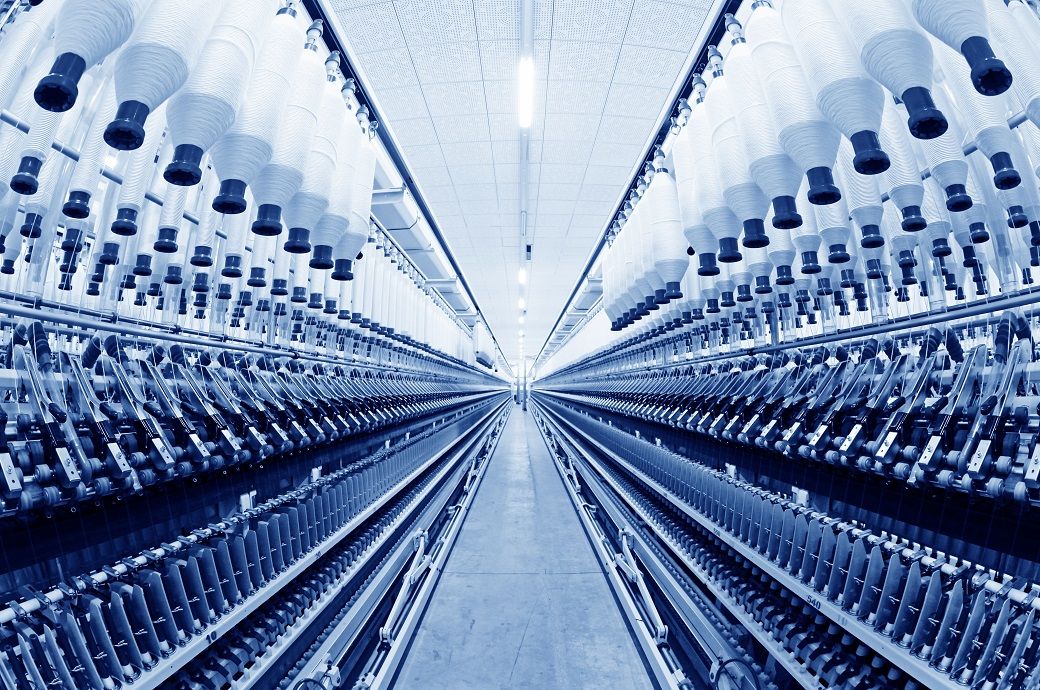
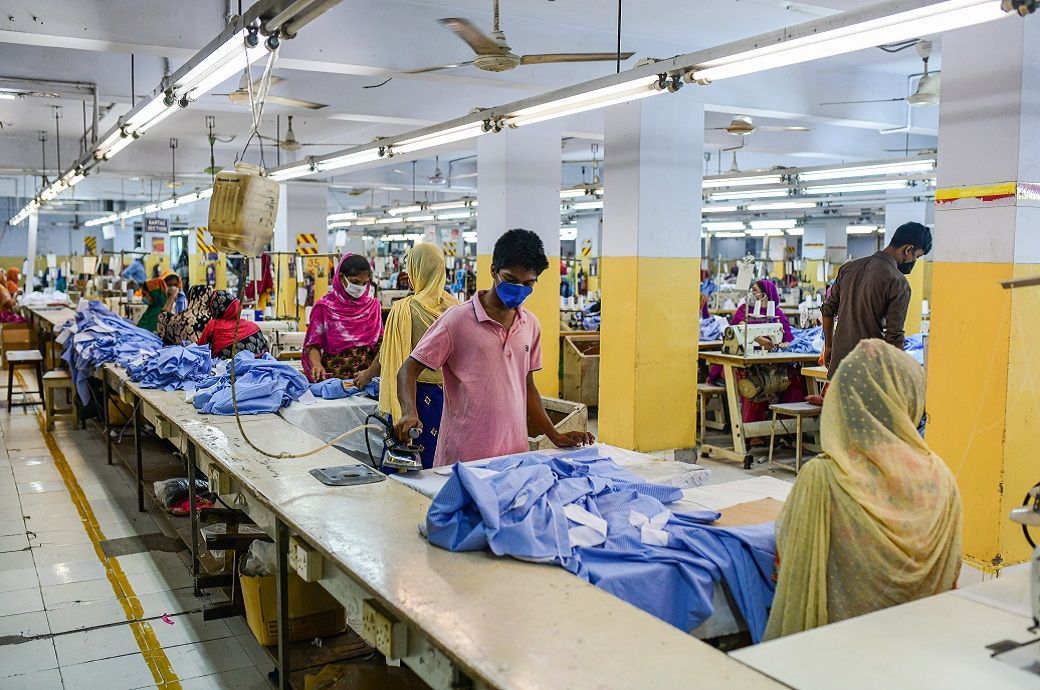
The Confederation of Indian Textile Industry (CITI) expects the upcoming Budget to futureproof India’s textile and apparel sector through measures that will make the arena more resilient, innovative, and globally competitive.
CITI has urged the Union Budget to futureproof India’s textile and apparel sector through reforms on raw material pricing, competitiveness, sustainability and trade facilitation.
Seeking duty-free cotton, technology and green schemes, and export support, CITI said that high US tariffs threaten jobs in a sector vital to GDP, exports and livelihoods.
“Our optimism that the forthcoming Union Budget will significantly move the needle on policy and regulatory reforms is bolstered by the government’s steadfast commitment to the growth and development of India’s textile and apparel sector,” CITI chairman Ashwin Chandran said.
“The Budget enabling the creation of a stronger growth ecosystem for the Indian textile and apparel sector can also have a positive ripple effect on the Viksit Bharat (developed India) goal,” Chandran added.
India’s textile and apparel sector is the second-largest provider of jobs and livelihoods in the country. It is also a significant contributor to the country’s GDP and exports.
Some of the specific measures that the Confederation of Indian Textile Industry (CITI) would like to see in the coming Budget are:
1. Raw material and price stability-related:
- Removal of import duty on all varieties of cotton fibre.
- Change in MSP formula for cotton to align with international benchmark prices.
- Launch of a Cotton Price Stabilisation Fund.
- Ensure availability of man-made fibres (MMF) at globally competitive prices.
2. Competitiveness, technology, and sustainability-related:
- Launch of a Green Technology Scheme to support MSMEs’ transition to clean energy and sustainable practices.
- Launch of an alternative scheme to the erstwhile Technology Upgradation Fund Scheme.
- Launch of a scheme to promote indigenous textile machinery manufacturing.
- Address high power costs and industrial cross-subsidies.
- Establishment of a National Textile Fund.
3. Trade Facilitation-related
- Extension of RBI’s Trade Relief Measures to cover the entire textile value chain.
- Increase in Basic Customs Duty on all types of knitted fabric to curb imports at unviable prices.
- Reintroduction of the MEIS Scheme.
- Extension of the facility of Duty-free Import of specified items/goods to exporters of made-ups.
“Combined, these measures could increase the resilience of India’s textile and apparel sector and help it become a more powerful force globally, while also contributing towards realising the national target of creating a $350 billion textile and apparel industry in India by 2030,” Chandran said.
India’s textile and apparel sector has been hit hard by the 50 per cent US tariff on Indian goods, effective August 27, 2025. The steep US tariff has adversely affected numerous Indian textile and apparel companies, thereby increasing the risk that millions of people working in this sector may lose their jobs and livelihoods.
The US is the single-largest market for India’s textile and apparel exports, contributing almost 28 per cent to the total revenue of the country’s textile and apparel exporters. India’s exports of textile and apparel products to the US were valued at nearly $11 billion in the fiscal year 2024-25.
“India’s textile and apparel exporters have stepped up their diversification efforts, but it is tough to quickly make up for potential business losses in the US. Also, while existing and upcoming FTAs would create new opportunities for India’s textile and apparel sector, these benefits will require time to materialise,” Chandran said.
Fibre2Fashion News Desk (HU)

Published
January 20, 2026
From its elegantly appointed 1,000-square-metre showroom at 11 Via Uberto Visconti di Modrone in Milan, which showcases the brand’s entire universe, high-end clothing and accessories label Eleventy presented its Autumn-Winter 2026/27 collection, marked by colours new to the house, an expanded assortment—especially in footwear—and the use of new raw materials such as vicuña, as revenue stabilises and new store openings are readied, starting in Chicago.
“It’s an important year for us, one in which we wanted to reinvent ourselves, because we believe it’s right to go back to being special,” Marco Baldassari, who continues to lead the brand he owns as CEO, tells FashionNetwork.com. “We had certainly spent many years operating in our comfort zone, with light colours, which by now are no longer distinctive. So we wanted to introduce new, more sophisticated, darker colours and silhouettes that are new to us, to differentiate ourselves once again from what the market offers.”
“The inspiration for the collection,” Eleventy’s CEO continues, “begins with an inner journey of reconnection with nature, which becomes our stage.”
Brown, therefore, assumes a central role in Eleventy’s wardrobe, as do very deep, almost black greys—like the winter sky—alongside forest greens and burgundy.
“This change has been noticed and, I must say, warmly received by buyers, also because I think it’s right to rekindle the desire of a consumer who perhaps had found the market a bit flat, lacking truly new propositions, where everything seems interchangeable,” the entrepreneur notes.
“It’s one of the contributing factors to this global downturn in fashion and luxury sales. More than tariffs, which in my view have somewhat distracted from the real issue—the strengthening of the euro, alongside the weakening of the yen and the dollar—pricing has certainly played a part, and in many cases the end consumer has not found it justified. With a very balanced price-to-quality proposition, Eleventy has not been particularly affected by this phenomenon. I hope this new collection of ours will reignite a great deal of desire, because we have completely reinvented ourselves, including in terms of fit and aesthetic.”

Eleventy, which in late 2025 opened its first flagship in Lisbon, will continue its programme of monobrand openings in 2026. The most significant will be in Chicago, in the United States.
“The U.S. is our most important market, thanks also to the mentality of the American consumer, who tends to spend more and is more inclined to purchase than the European customer,” Baldassari observes.
Eleventy currently employs 200 people and has 18 monobrand stores managed directly from headquarters, plus 22 with franchise partners, for a total of 40 monobrand stores. In the multibrand channel, the Milan-based label is carried in around 300 carefully selected doors worldwide.
“To be special, and thereby sell a quality product, you also have to be more selective in distribution, sometimes sacrificing opportunities in favour of a longer-term vision,” the CEO said.
The womenswear collection is growing within Eleventy’s business; today it accounts for 25 per cent of revenue, with turnover rising to 127 million euros from approximately 100 million in 2024 (it was 43 million euros in 2022 and 65 million in 2023, ed.), with 18 per cent generated in Italy and 82 per cent abroad. After the US comes the Middle East, Europe overall, and Asia, where Baldassari highlights South Korea and Japan as growth markets, while China remains to be defined.

The agreement between the European Union and Mercosur to further liberalise trade between them “is certainly a new opportunity that we will not fail to evaluate with great attention and interest,” said the founder, in the presence of Gianmarco Tamberi, who has officially become Eleventy’s new brand ambassador.
“The choice of Gianmarco Tamberi is due to two fundamental reasons. First, we are Italian and we want to bring Italy to the world, which an athlete like him represents excellently. Second, the alignment of our respective values: to achieve the results we have, we have made many sacrifices, with hard work, consistency, commitment and discipline. These are all elements that unite our paths,” the founder continued.
Since in recent years fashion has first seen the rise of tennis-inspired style and then that of skiing (preceded about fifteen years earlier by golfwear and polowear), can athleticwear be trendy in the coming years as well?
In other words, will athletics succeed in conveying its values to the general public, as it has almost never managed to do in the past? “Achieving results certainly helps to spur similar developments,” Tamberi replies.
“We were coming out of a period (from around 2000 to 2015) when athletics had a huge void of champions in Italy. Now something has shifted, especially since the Tokyo 2020 Olympics, after the famous five gold medals we managed to bring home. Results can allow the personalities who achieve them to emerge; otherwise it’s difficult to bring a movement to public attention. Today, many young people in athletics are coming through,” explains the high jumper, who in his discipline has won at least once everything there was to win, having been Olympic champion at the Tokyo 2020 Games, world champion in Budapest 2023, world indoor champion in Portland in 2016, and three-time European champion (2016, 2022, 2024), not to mention victories at the European Indoors and two Diamond League finals reached.

“The collaboration with Eleventy came about very naturally, as we share similar values,” confirms the Ancona-born athlete. “For a few years I had the honour of being a Giorgio Armani ambassador, whom I take this opportunity to thank and acknowledge. When that partnership ended, several companies came forward to have me as a testimonial, but I couldn’t find any that resonated with me and with what I want to represent and communicate. Then Marco Baldassari got in touch. And everything clicked into place naturally.”
Founded in Milan in 2007 by Marco Baldassari and Paolo Zuntini, joined in 2009 by Andrea Scuderi, and now majority controlled (65 per cent) by the Fashion Cube fund—a holding company composed of the VEI Capital fund and a Gulf financial group that controls all the sales networks of the high-end apparel and accessories company—Eleventy works exclusively with natural Italian materials and 100% made in Italy production. Present in more than 30 countries, it also has directly operated stores in cities such as Milan, New York, Paris, Tokyo, Seoul and Dubai.
This article is an automatic translation.
Click here to read the original article.
Copyright © 2026 FashionNetwork.com All rights reserved.


Gold steadies near record high as trade war risks sour global sentiment – SUCH TV

Asian stocks today: Markets trade mostly in red; Nikkei sheds 1%, HSI remains flat – The Times of India

World growth to ease to 2.6% in 2026, rise to 2.7% in 2027: World Bank

-

 Tech1 week ago
New Proposed Legislation Would Let Self-Driving Cars Operate in New York State
-

 Entertainment7 days ago
X (formerly Twitter) recovers after brief global outage affects thousands
-

 Sports5 days ago
Pak-Australia T20 series tickets sale to begin tomorrow – SUCH TV
-

 Fashion3 days ago
Bangladesh, Nepal agree to fast-track proposed PTA
-
 Business4 days ago
Trump’s proposed ban on buying single-family homes introduces uncertainty for family offices
-

 Tech4 days ago
Meta’s Layoffs Leave Supernatural Fitness Users in Mourning
-

 Politics3 days ago
Saudi King Salman leaves hospital after medical tests
-

 Tech5 days ago
Two Thinking Machines Lab Cofounders Are Leaving to Rejoin OpenAI