Business
Wylfa nuclear power plant plans go ahead, creating Anglesey jobs
Gareth Lewis,Wales political editor and
Steffan Messenger,Wales environment correspondent
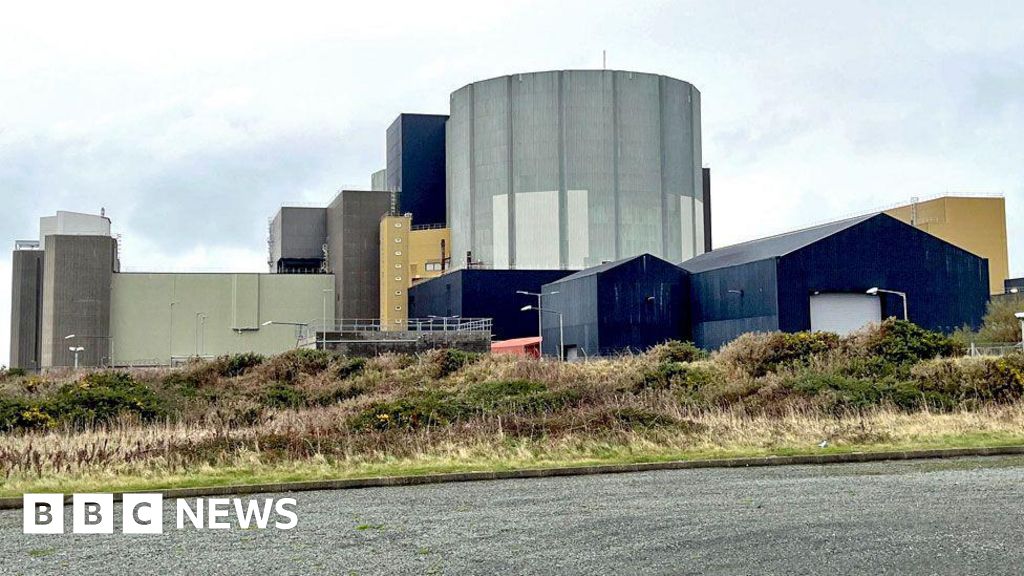
BBCA first-of-its-kind nuclear power station is to be built on Anglesey, bringing up to 3,000 jobs and billions of pounds of investment.
The plant at Wylfa will have the UK’s first three small modular reactors (SMR), although the site could potentially hold up to eight.
Work is due to start in 2026 with the aim of generating power by the mid 2030s.
Prime Minister Sir Keir Starmer said: “Britain was once a world leader in nuclear power, but years of neglect and inertia has meant places like Anglesey have been let down and left behind. Today, that changes.”
The news was also welcomed by First Minister Eluned Morgan, who said she had been “pressing the case at every opportunity for Wylfa’s incredible benefits”.
She described it as “the moment Ynys Môn and the whole of Wales has been waiting for”, using the Welsh name for Anglesey.
The project, which could power about three million homes, will be built by publicly owned Great British Energy-Nuclear and is backed by a £2.5bn investment from the UK government.
Simon Bowen, chair of Great British Energy-Nuclear, said: “This is a historic moment for the UK, and is another momentous step in realising Britain’s potential in leading the way on nuclear energy.
“These first SMRs at Wylfa will lay the groundwork for a fleet-based approach to nuclear development, strengthening the UK’s energy independence and bringing long-term investment to the local economy.”

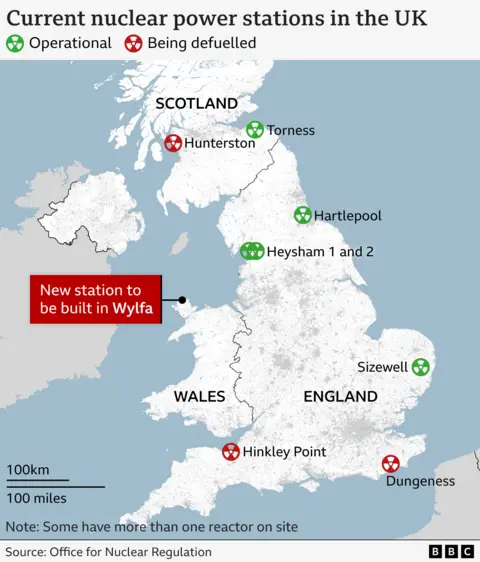
The company has also been tasked with identifying potential sites for another large-scale nuclear power plant, similar to those being built at Hinkley Point in Somerset and Sizewell in Suffolk, which have the potential to power the equivalent of six million homes.
It will report back by autumn 2026, and has been requested by Energy Secretary Ed Miliband to consider sites across the UK, including in Scotland, officials said.
It is not clear whether the SMR plans, which are smaller and more straightforward to build, rule Wylfa out from being considered after it was designated the preferred location in 2024 by the previous UK Conservative government.
The decision to opt for small modular reactors at Wylfa was criticised by the US Ambassador Warren Stephens, who said he was “extremely disappointed” by the decision.
He had been urging ministers to commit to a large-scale plant, with US firm Westinghouse having reportedly presented plans to build a new gigawatt station at the site.
“If you want to get shovels in the ground as soon as possible and take a big step in addressing energy prices and availability, there is a different path, and we look forward to decisions soon on large-scale nuclear projects,” Mr Stephens said.
‘Nuclear equivalent of an Ikea chair’
One industry expert described the announcement as “incredible”.
Prof Simon Middleburgh, director of the Nuclear Futures Institute at Bangor University, said: “They’re smaller than the average reactor, built in a modular manner in factories and shipped to the site to be put together a bit like an Ikea chair.”
The planned SMRs “fit nicely” with the existing grid capacity at the Wylfa site, offering a similar electricity output as the old power plant currently being decommissioned, he added.
There were “a few more hurdles to go through”, he cautioned – from securing regulatory approval, building the factories required to construct the SMRs and training the workforce that will run them.
Opponents of the project point to the fact that a long-term storage facility for the UK’s nuclear waste is yet to be agreed upon and say investment in renewable energy schemes – wind, wave and tidal – is what Anglesey needs.
Dylan Morgan of campaign group People Against Wylfa-B told BBC Wales the proposed SMRs were far from “small” and were in fact “an unnecessarily big development of an unproven technology”.
“Modular reactor technologies have been touted by many companies internationally but are still only plans on paper,” he said.
Wylfa beat off competition from another site at Oldbury in Gloucestershire, with the reactors designed by British engineering firm Rolls Royce, subject to final contracts, which are expected later this year.
The UK government said the plant would help provide energy independence.
The old nuclear power plant at Wylfa was switched off in 2015 and previous plans for a large-scale replacement fell through in 2021.
The company behind the scheme – the Japanese industrial giant Hitachi – cited spiralling costs and a failure to reach agreement with the UK government over funding.
Sasha Wynn Davies – now chair of the Wales Nuclear Forum – worked as a senior manager on those plans.
“I will never forget going to the secondary school in Amlwch and speaking to some of the young students and pupils there to unfortunately say that we were not progressing as a project,” she said.
“I will never forget their faces as they were so sad on behalf of their hopes for the future but also for their parents and what it meant for the area economically and socially.
“So now let’s hope our time has come again and there’s hope for our young people in particular.”
There is a huge political component to today’s announcement, with Labour at a UK level keen to show that it means business when it comes to big investment in infrastructure projects and Wylfa should demonstrate that.
In Wales, the first minister has been pushing hard for Wylfa – and the announcement comes just six months before the Senedd election.
Morgan has been trying to strike a balance: differentiating the Welsh party from UK Labour, but also pushing for extra funding, further devolution of powers and big investment announcements from her UK colleagues.
She has certainly got the latter, although plenty of other issues such as reform to the way Wales is funded and devolution of the Crown Estate – the body which owns much of the Welsh coastline and vital to future wind power – remain unresolved.

Business
PPF, Post Office FD, SSY: Govt Keeps Interest Rates On Small Savings Schemes Unchanged For Q4 FY26
Last Updated:
PPF, NSC, SSY, KVP, Post Office Deposits: Check latest interest rates on small savings schemes for the period between January 1 to March 31 this year.
Small savings schemes rate update.
PPF, Post Office FD, SSY, NSC Interest Rates: The government on Wednesday, December 31, 2025, announced that the interest rates on small savings schemes, including PPF, SSY, NSC, and post office deposits, will remain unchanged for the fourth quarter of FY 2025-26 (from January 1, 2026, to March 31, 2026), according to a finance ministry notification.
“The rates of interest on various small savings schemes for the fourth quarter of FY2025-26 starting from January 1, 2026, and ending on March 31st, 2026, shall remain unchanged from those notified for the third quarter (October 1, 2025, to December 31, 2025) of FY 2025-26″, the Department of Economic Affairs, Ministry of Finance, said in an official notification on December 31, 2025.
Latest Interest Rates On Small Savings Schemes
Sukanya Samriddhi Scheme Deposits: under the Sukanya Samriddhi scheme will continue to attract an interest rate of 8.2%.
Three-Year Term Post Office Deposit: The interest rate on a three-year term deposit remains at 7.1%.
Public Provident Fund (PPF) and Post Office Savings Deposit: The interest rates for Public Provident Fund (PPF) and post office savings deposit schemes will remain unchanged at 7.1% and 4%, respectively.
Kisan Vikas Patra: The interest rate on the Kisan Vikas Patra will be 7.5%, with investments maturing in 115 months.
National Savings Certificate (NSC): The National Savings Certificate (NSC) will attract an interest rate of 7.7% for the April-June 2025 period.
Monthly Income Scheme: The Monthly Income Scheme will earn an interest rate of 7.4% for investors.
The government last revised some schemes’ rates for the fourth quarter of 2023-24. Interest rates on small savings schemes are notified by the government every quarter.
The central government is mandated to review and set interest rates for small savings schemes every quarter. Interest rates on post office schemes are determined based on the methodology suggested by the Shyamala Gopinath Committee.
What Are Small Savings Schemes?
Small savings schemes are government-backed deposit schemes designed to promote savings among Indian citizens, especially those with low to moderate incomes. They are considered safe investments and are offered through post offices and select banks. Popular schemes include Public Provident Fund (PPF), National Savings Certificate (NSC), Sukanya Samriddhi Yojana (SSY), Senior Citizen Savings Scheme (SCSS), Post Office Monthly Income Scheme (POMIS), Time Deposits and Recurring Deposits, Interest rates on these schemes are reviewed quarterly by the government and are influenced by the yield trends in the secondary market for government securities.
December 31, 2025, 20:02 IST
Read More
Business
UK energy bills to fall by £138 in April, experts predict
UK energy bills are set to fall by £138 by April – despite households expecting a rise on Thursday during the next bout of cold weather.
Experts at Cornwall Insight said they expect energy bills to fall by £138, or 8 per cent, to £1,620 a year when the cap is next updated in April due to government measures announced in the recent Budget.
Chancellor Rachel Reeves said £150 would be cut from the average household bill from April by scrapping the Energy Company Obligation (Eco) scheme introduced by the Tories in government.
Wholesale energy prices have also dropped in recent weeks, which is set to keep a lid on energy price hikes from April, according to Cornwall Insight.
But, before then, many households’ energy bills are to rise on New Year’s Day, just as a swathe of cold health alerts have been issued for large areas of the UK.
The 0.2 per cent increase to Ofgem’s energy price cap will equate to a rise of about 28p a month for the average household in England, Wales and Scotland remaining on a standard variable tariff.
This amounts to an average overall bill of £1,758 a year, up from the current £1,755.
Regulator Ofgem said Thursday’s increase in the cap, which was announced in November, was being driven by the funding of nuclear power projects and discounts to some households’ winter bills.
This included funding the government’s Sizewell C nuclear power plant in Suffolk – with an average of £1 added to each household’s energy bills per month for the duration of the £38 billion construction.
An increase to standing charges – the amount consumers pay per day to have energy supplied to their homes – was also largely due to costs linked to the government’s warm home discount scheme.
Around 2.7 million more low-income households, including 900,000 families with children, are eligible for the £150 discount this winter.
However, the regulator said the new price cap was £37 lower than a year ago when adjusted for inflation.
Ofgem’s price cap sets a maximum rate per unit and standing charge that customers can be billed when they are not on a fixed tariff.
It does not limit total bills because households still pay for the amount of energy they consume.
The price cap increase comes just as a yellow warning for snow and ice has been issued for parts of Scotland north of the central belt from 6am on New Year’s Day until midnight on January 2.
It comes as amber cold health alerts have been issued for the North East and North West of England, which are due to remain in place until noon on January 5, with temperatures expected to fall to 3-5C.
Yellow cold health alerts have been issued by the UK Health Security Agency (UKHSA) for London and the East, South East and South West of England, as well as the East and West Midlands and Yorkshire and the Humber.
Simon Francis, co-ordinator of the End Fuel Poverty Coalition, said: “It really is a case of every little doesn’t help as households spend a fifth winter in the energy bills crisis. Tiny movements in the price cap still hit hard for families choosing between heating and eating.
“People continue to live in cold, damp homes, where the risks go beyond discomfort and into real danger, including exposure to carbon monoxide. Younger adults, private renters and households with children are among those most at risk as people cut back on heating, delay repairs and try to block draughts just to stay warm.
“Meanwhile, the wider energy industry has made more than £125 billion in UK profits since 2020, including firms operating in a dying North Sea. This isn’t a crisis of scarcity, it’s a crisis of priorities. Ministers must move beyond short-term price cap tweaks and get serious about ending fuel poverty by investing in energy efficiency, reforming energy pricing, introducing a fair social tariff and fully funding the warm homes plan.”
Which? energy editor Emily Seymour said: “As we head into the coldest months of the year, many households will be concerned that the energy price cap will increase slightly in the new year.
“There are several deals on the market for lower than the price cap so now is a good time to shop around if you’re looking to fix. As a rule of thumb, we’d recommend looking for deals cheaper than the current price cap, not longer than 12 months and without significant exit fees.
“If you’re on a variable tariff, make sure to submit a meter reading to ensure you pay the cheaper rates for any energy used before the new price cap takes effect.”
Business
What the UK bought in 2025 – from bucket hats to Labubu toys
Bucket hats, strawberries and cream sandwiches, and Greggs sausage rolls drenched in KFC gravy defined British consumer spending this year.
We explore the nation’s purchases, month by month.
January
An average temperature of 3C as well as Storm Eowyn bringing 100mph winds and a danger to life to the UK has consumers largely staying indoors. Spending on digital content and subscriptions increased 8.3 per cent year-on-year and growth in spending on takeaways hit a year-long high of 5.1 per cent, according to Barclays.
However, alongside this, online purchases of exercise equipment rise by 60 per cent on the month before, according to Adobe, while spending on supplements including multivitamin powders and pills increases by 26 per cent and sales of fruit and vegetables rise by 24 per cent.
February
More than a quarter of UK adults (27 per cent) plan to focus more on healthy eating as the warmer weather approaches. One in three (30 per cent) say they are paying closer attention to ingredient and nutrition labels and a fifth (22 per cent) have considered, or are already growing, their own fruit and vegetables at home.
This comes as 27 per cent say they are more likely to visit shops and restaurants that offer “healthier” options, increasing to 45 per cent of those aged 18-24. Sought-after alternatives include zero-sugar treats (33 per cent), organic or whole foods (29 per cent) and low or no alcohol drinks (24 per cent).
March
Easter eggs have gone up in price by as much as 50 per cent on last year while shrinking in size, according to Which? – the result of the price of chocolate rising by 16.5 per cent in a year.
Women experiencing perimenopause and menopause are spending an average £1,800 a year on products such as vitamins and smart watches to combat symptoms such as fatigue and hot flushes, a survey suggests.
Some 76 per cent of women are buying vitamins and minerals, 52 per cent have bought supplements and 40 per cent have spent money on hormone support to help manage symptoms, the poll for buy now, pay later service Clearpay found.
April
The so-called “awful April” price hikes combined with high energy costs see the average household facing an annual increase of £1,254 from essential bill rises, according to figures from comparison site Uswitch.
The third consecutive increase to Ofgem’s price cap sees the bill of a typical household paying by direct debit rise 6.4 per cent, an increase of £111 a year or £9.25 a month after it went up by 10 per cent in October and another 1.2 per cent rise in January.
This is 9.4 per cent or £159 higher than this time last year but £531 or 22 per cent lower than at the height of the energy crisis at the start of 2023.
May
The competition watchdog announces that British vets could face a temporary price cap over concerns that pet owners are being ripped off.
The Competition and Markets Authority is looking into the veterinary industry after 56,000 people raised concerns about the sector, including that they are overpaying for medicines and prescriptions and are not being given basic information such as price lists and prescription costs.
Heinz launches a new Fish & Chips Sauce in a rebranding of the classic condiment Tartare sauce.
The food giant urged consumers to think of its new sauce as “Tartare 2.0”, with the packaging describing the contents as “Tartare Sauce” and listing ingredients as including gherkins, dill, salt, parsley and mustard.
June
Consumers begin to grapple with what will become the UK’s hottest summer on record – complete with four heatwaves between June and August.
Waitrose ice cream sales rise by 10 per cent on the year before, while John Lewis reports sales of garden furniture are up 21 per cent on the previous June, while it sells one million of its basic Anyday handheld fans over the year.
The National Lottery sells 18,600 tickets a minute on June 6 at the peak of the record £208 million EuroMillions jackpot draws.
The run of EuroMillions draws lasting more than 10 weeks generates both the highest ever UK sales of more than £550 million and the biggest ever returns to good causes in the history of the game.
Marks & Spencer launches a dessert sandwich filled with strawberries and cream.
The £2.80 “game-changing” limited edition Red Diamond Strawberry & Creme Sandwich is filled with the fruit and light whipped cream cheese on fluffy sweetened bread.
July
Oasis’s long-awaited Live ‘25 reunion tour kicks off in Cardiff on July 4.
The tour sets off a boom in sales of bucket hats, with even John Lewis reporting sales are up 40 per cent in the first half of 2025 in comparison with the same period in 2024.
Tesco reports record fruit sales as consumers seek to stay hydrated amid high temperatures.
The UK’s biggest supermarket says it has seen overall demand for fruit soar by an “unprecedented” near 10 per cent over the month, with berries, stone fruit, kiwis, melons, watermelons, pineapples, grapes and bananas all hitting record volume growth.
The grocer said it had ordered extra supplies ahead of days of forecasted 30C temperatures to cope with expected demand.
August
Greggs and KFC team up to create the “culinary crossover of the century” in the form of a sausage roll drenched in gravy.
The high street food giants worked together for the first time to offer the Greggs sausage roll with KFC gravy, claiming it is the “mash-up the nation’s been craving” and “seriously flavoursome”.
September
The extended hot summer leads to sales of swimwear breaking records at John Lewis, up 18 per cent in September and 28 per cent in October on the previous year. The late summer also saw outdoor cooking kit sales continuing to soar by 42 per cent at the department store.
Fake Labubu dolls – tipped to be a best-selling toy this Christmas – are seized amid warnings they could pose a potentially fatal choking hazard for young children.
Later this month, the Intellectual Property Office says fake toys worth more than £3.5 million have been seized at the UK border already this year, with 75 per cent of them failing critical safety tests.
Of the 259,000 fake toys intercepted at the border, 90 per cent of them – or 236,000 items – were counterfeit Labubu dolls.
High street food chain Greggs announces it is to open its first pub within the Fenwick Newcastle department store, serving exclusive beers and a menu featuring its classic bakes and sausage rolls.
October
Charlie Bigham launches a range of supermarket ready meals costing up to £30 to appeal to consumers balking at the soaring price of dining out.
The entrepreneur’s new Brasserie range of beef wellington, salmon wellington, coq au vin, duck confit and venison bourguignon was motivated by the rising cost of eating in restaurants, the entrepreneur said.
Almost half of adults (48 per cent) in Great Britain have gambled in the last four weeks, according to an annual survey by the Gambling Commission.
The headline figure falls to 28 per cent when those who had only bought tickets for a lottery draw were excluded.
Virginia Giuffre’s posthumous memoir Nobody’s Girl goes on sale, in which she writes about her three alleged sexual encounters with the then Prince Andrew.
TGJones, formerly WHSmith, reports sales of the memoir increasing every day since its launch on October 21. The retailer said it was selling three times as many copies of the book as it predicted it would.
November
The Classic Bagel from London’s Papo’s Bagels is named Deliveroo’s most popular order among any of its worldwide operations, according to the firm.
Papo’s, an independent, family-run bagel kitchen, was the most ordered takeaway on Deliveroo this year with its Classic option, which combines smoked salmon, cream cheese, sliced red onion, tomatoes and capers.
Consumers learn fresh British-grown strawberries will be widely available to buy this Christmas after a firm extended the season to 12 months with new technology.
The Summer Berry Company, one of the UK’s leading fruit producers based near Chichester, is now growing British strawberries at a commercial scale all year round with the help of LED technology through the colder months.
The final of The Celebrity Traitors attracts 11.1 million viewers. John Lewis reports a run on wrist warmers after the show’s presenter Claudia Winkleman wears them throughout the series.
December
High street baker Greggs strikes again, launching its first range of Christmas cards which come with the gift of a sausage roll.
The range – called the Ultimate Secret Santa Surprise – includes a £3.95 card featuring heat-activated ink which, when warmed, reveals a code to redeem a free sausage roll or vegan sausage roll.
The cards come with the option to personalise some of the designs, such as by adding a loved one’s face to a sausage roll.
Consumers learn Christmas dinner will cost a few pence less than last year in some rare good news for household budgets.
A turkey and all the trimmings for four will cost an average £32.46 this year, slightly down on last year’s £32.57 – which was up 6.5 per cent on the year before, according to market research firm Worldpanel by Numerator, formerly Kantar.
Tesco announces it is giving away ‘wonky’ Christmas trees to help the nation embrace “the parts of Christmas that aren’t always perfect but are still just as wonderful”.
-
Sports5 days agoBrooks Koepka should face penalty if he rejoins PGA Tour, golf pundit says
-
Business5 days agoGovt registers 144olive startups | The Express Tribune
-
Politics4 days agoThailand, Cambodia agree to ‘immediate’ ceasefire: joint statement
-
Entertainment1 week agoTimothée Chalamet in question for ‘Marty Supreme’ press tour attitude
-
Fashion1 week agoNew Balance Americas SVP Melissa Worth departs
-
Entertainment5 days agoSecond actor accuses Tyler Perry of sexual assault in new lawsuit
-
Tech1 week agoTop 10 telecoms stories of 2025 | Computer Weekly
-
Entertainment1 week ago“Call of Duty” co-creator Vince Zampella dies after crash on Los Angeles highway