

Politics
Xi, Putin unite in anti-West rhetoric as China seeks bigger regional role

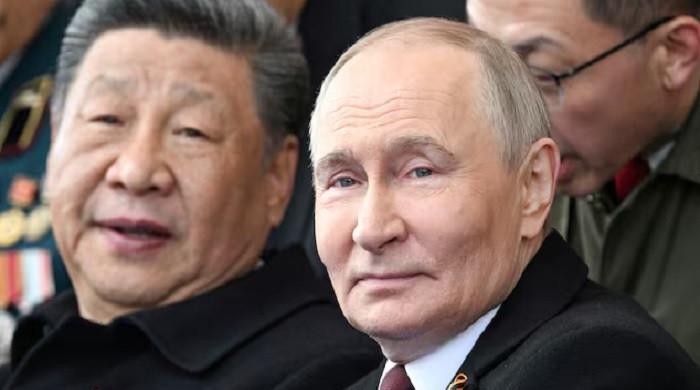
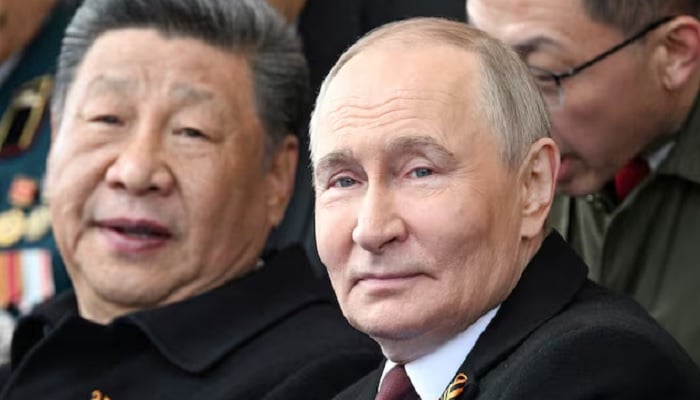
Presidents Xi Jinping and Vladimir Putin took turns Monday to swipe at the West during a gathering of Eurasian leaders aimed at putting Beijing front and centre of regional relations.
The Shanghai Cooperation Organisation (SCO)touts itself as a non-Western style of collaboration between 10 countries in the region and seeks to be an alternative to traditional alliances.
Xi told leaders, including Belarusian President Alexander Lukashenko and India´s Prime Minister Narendra Modi, that the global situation was becoming more “chaotic and intertwined”.
The Chinese leader also slammed “bullying behaviour” from certain countries — a veiled reference to the United States.
“The security and development tasks facing member states have become even more challenging,” he said in his address in the northern port city of Tianjin.
“With the world undergoing turbulence and transformation, we must continue to follow the Shanghai spirit…and better perform the functions of the organisation.”
Putin used his speech to defend Russia´s Ukraine offensive, blaming the West for triggering the three-and-a-half-year conflict that has killed tens of thousands and devastated much of eastern Ukraine.
“This crisis wasn’t triggered by Russia´s attack on Ukraine, but was a result of a coup in Ukraine, which was supported and provoked by the West,” Putin said.
Ukraine’s foreign ministry urged China to work towards peace during Putin’s visit, saying in a statement from Kyiv they “would welcome a more active role” for Beijing to help find peace “based on respect for the UN Charter”.
Putin, meanwhile, praised Turkey’s mediation efforts in the conflict as he met Turkish counterpart Recep Tayyip Erdogan.
And Putin later met his Iranian counterpart Masoud Pezeshkian, the Kremlin said, with the pair expected to discuss Iran’s nuclear programme.
‘Always insightful’
Earlier, leaders from the 10 countries — China, India, Russia, Pakistan, Iran, Kazakhstan, Kyrgyzstan, Tajikistan, Uzbekistan and Belarus — posed for a group photo on a red carpet.
Xi, Putin and Modi were seen chatting, flanked by their translators. Modi and Putin were photographed holding hands and held talks in the afternoon.
Russian state media reported the pair spent nearly an hour talking “face-to-face” in Putin’s armoured presidential car before an official meeting.
“Conversations with him are always insightful,” Modi posted on X alongside a photograph of them travelling in the car.
Before their meeting, Modi praised the “special and privileged strategic partnership” with Moscow and added that India wanted both sides in the Ukraine conflict to “find stable peace”.
‘Mutual trust’
The SCO summit kicked off on Sunday, days before a massive military parade in Beijing to mark 80 years since the end of World War II.
The member states signed a declaration on Monday agreeing to strengthen cooperation in sectors such as security and economy, China’s Xinhua news agency said.
Xinhua added that the leaders also admitted Laos as an observer country, or “dialogue partner” — the summit already has 16 observers.
Xi held a flurry of back-to-back meetings with leaders, including Lukashenko — one of Putin’s staunch allies — and Modi, who is on his first visit to China since 2018.
Modi told Xi that India was committed to taking “forward our ties based on mutual trust, dignity and sensitivity”.
The world’s two most populous nations are intense rivals, competing for influence across South Asia, and they fought a deadly border clash in 2020.
A thaw began last October, when Modi met Xi for the first time in five years at a summit in Russia.
Their rapprochement deepened as US President Donald Trump pressured both Asian economic giants with trade tariffs.
More than 20 leaders are attending the bloc´s largest meeting since it was founded in 2001.
Many of the assembled dignitaries will be in Beijing on Wednesday to watch the military parade, which will also be attended by North Korean leader Kim Jong Un.
A train carrying Kim passed into China early Tuesday, South Korea´s Yonhap news agency reported, citing the North´s state-run radio service.
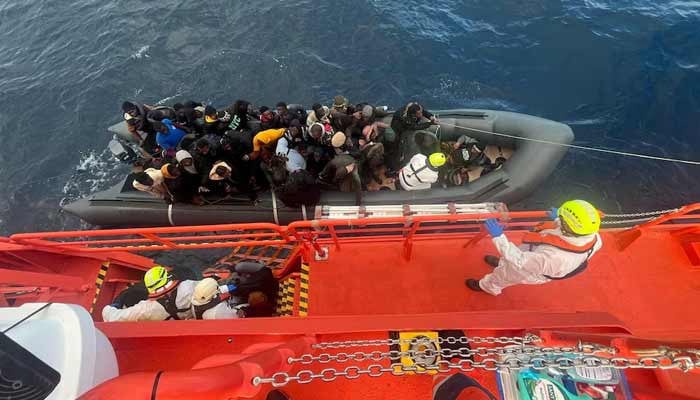
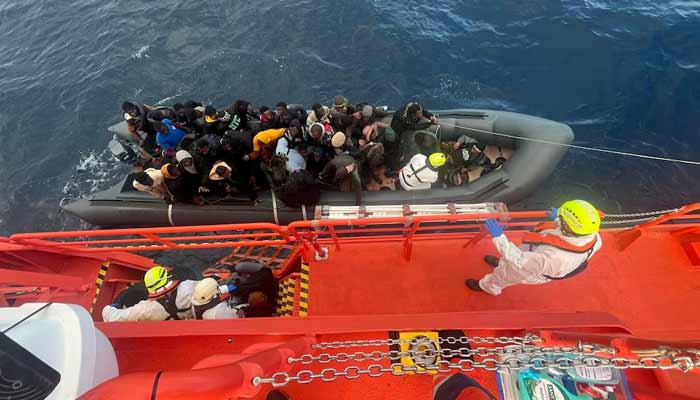
Nearly 8,000 people died or disappeared on migration routes last year, with sea routes to Europe the deadliest and many victims lost in “invisible shipwrecks”, a UN agency said on Tuesday.
“These figures bear witness to our collective failure to prevent these tragedies,” Maria Moita, who directs the International Organisation for Migration’s humanitarian and response department, told a Geneva press briefing.
Though the 7,904 people dead or missing was down from an all-time high of 9,197 in 2024, the IOM said that was partly due to 1,500 suspected cases that went unverified due to aid cuts.
More than four in every 10 fatalities and disappearances came on sea routes to Europe. Many cases were so-called “invisible shipwrecks” where entire boats are lost at sea and never found, the IOM said in a chilling new report.
The West African route northwards accounted for 1,200 deaths, while Asia reported a record number of fatalities, including hundreds of Rohingya refugees fleeing violence in Myanmar or misery in crowded refugee camps in Bangladesh.
“Routes are shifting in response to conflict, climate pressures and policy changes, but the risks are still very real,” said IOM Director General Amy Pope in a statement. “Behind these numbers are people taking dangerous journeys and families left waiting for news that may never come.”
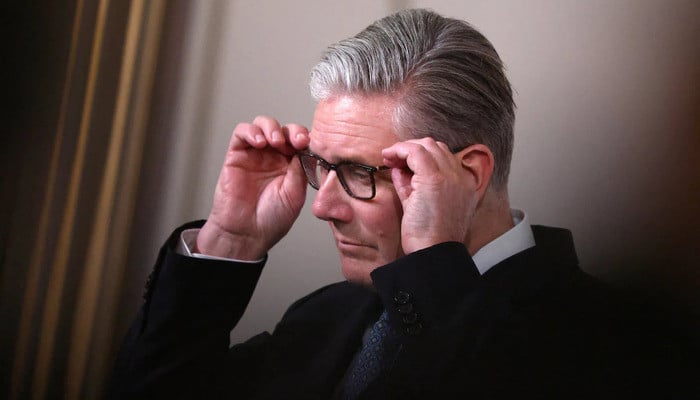
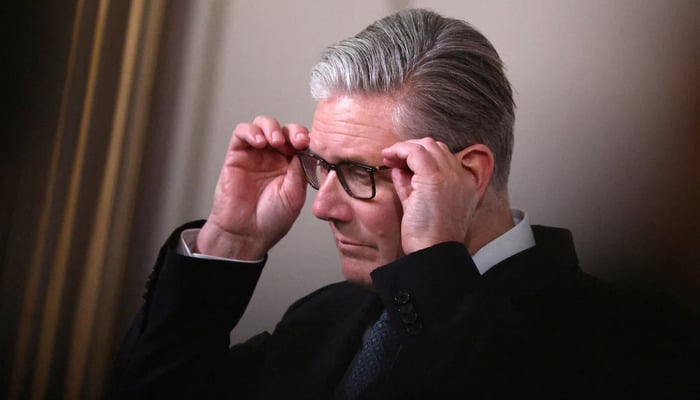
British Prime Minister Keir Starmer put the blame firmly on foreign ministry officials on Monday over the appointment of a US ambassador, saying they had withheld information about Labour veteran Peter Mandelson that would have halted his employment.
Starmer, under pressure to resign by political opponents over the scandal, has repeatedly sought to defend his role in the appointment of Mandelson and turned to parliament to set out his case that he was unaware that foreign ministry officials had been advised not to give security clearance to him.
He again said he regretted appointing Mandelson, whom he sacked in September after revelations about the depth of his ties to the late US sex offender Jeffrey Epstein. The events have prompted questions about the prime minister’s judgment, which resurfaced when the government said last week it had just found out Mandelson had failed a security vetting process.
On Monday, Starmer again expressed his anger over not being told by foreign ministry officials that in January 2025, they had disregarded advice and decided to grant Mandelson what is known as “developed vetting” clearance, a status that allows individuals access to information regarded as top secret.
“It beggars belief that throughout the whole timeline of events, officials in the foreign office saw fit to withhold this information from the most senior ministers in our system in government,” Starmer told parliament.
“That is not how the vast majority of people in this country expect politics, government or accountability to work.”
Starmer says he would not have appointed him if he had known
An appointment that once was hailed as a stroke of genius for employing a Labour veteran with trade experience who could win over incoming US President Donald Trump has turned out to be an ongoing nightmare for Starmer.

Trump, in a post on Truth Social, agreed that the appointment was a “really bad pick.”
“Prime Minister Keir Starmer of the United Kingdom acknowledged that he ‘exercised wrong judgement’ when he chose his Ambassador to Washington. I agree, he was a really bad pick. Plenty of time to recover, however!”, he said.
Starmer said he would not have appointed Mandelson if he had known the UK Security Vetting unit had advised that he should not gain the necessary clearance and that he had stopped the foreign office from being able to go against such advice in future.
Starmer, whose popularity has sunk since he won a landslide majority for Labour at a national election in 2024, had previously told parliament all due process had been followed over Mandelson.
Earlier, his spokesperson said: “The PM would never knowingly mislead parliament or the public … He clearly did not have this information when he previously spoke to parliament.”
After last week’s revelations that the foreign office had overridden a warning that Mandelson should not be appointed, Starmer sacked Olly Robbins, Britain’s top foreign ministry official, who the prime minister said had signed off on a statement on Mandelson clearing the vetting process.
Robbins has yet to make a formal statement on his sacking, but friends of his have been reported as saying he had followed the usual procedure, which allowed the foreign office to overrule advice from UK Security Vetting.
Opponents have accused Starmer of lying and incompetence, and say his position is no longer tenable.
Three weeks before local elections in which Labour is expected to suffer heavy losses, the resurgence of the scandal has triggered new questions about Starmer’s grip on government, although no senior Labour lawmakers have urged him to go.
Kemi Badenoch, leader of the main opposition Conservative Party, accused Starmer of failing to face up to the consequences of his action.
“It is how you face up to those mistakes that shows the character of a leader,” she told parliament. “Instead of taking responsibility for the decisions he made, the prime minister has thrown his staff, and his officials, under the bus.”
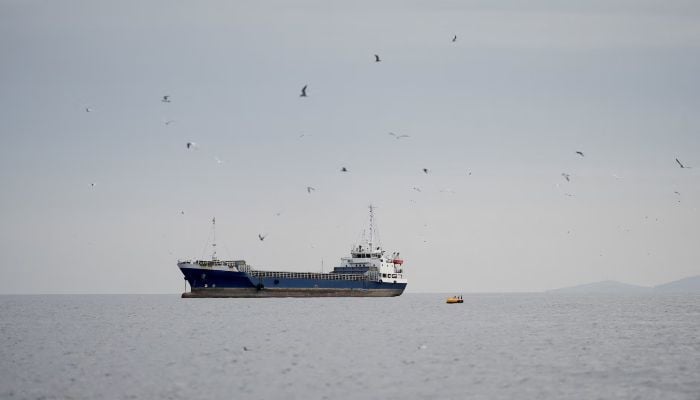
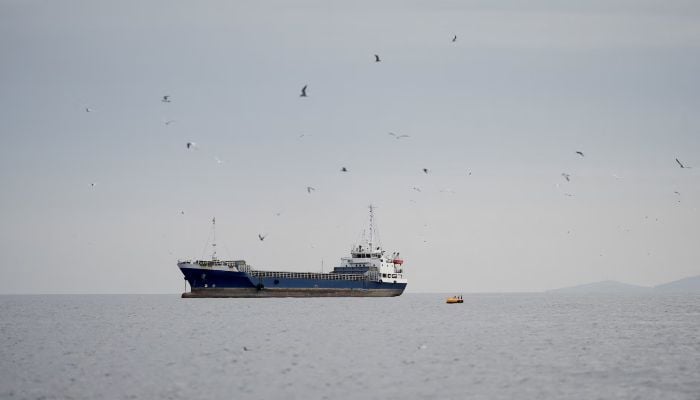
ATHENS: Fraudulent messages promising safe passage through the Strait of Hormuz in exchange for cryptocurrency have been sent to some shipping companies whose vessels are stranded west of the waterway, Greek maritime risk management firm MARISKS has warned.
The US has maintained its blockade of Iranian ports, while Iran has lifted and then re-imposed its blockade of the Strait of Hormuz, through which roughly a fifth of the world’s oil and liquefied natural gas passed before war broke out in the Middle East.
Amid ceasefire talks, Tehran, which controls the chokepoint, has proposed tolls on vessels to safely transit.
MARISKS on Monday issued an alert warning shipowners that unknown actors, claiming to represent Iranian authorities, had sent some shipping companies a message demanding transit fees in cryptocurrencies, Bitcoin or Tether, for “clearance”.
“These specific messages are a scam,” the firm said, adding the message was not sent by Iranian authorities.
There was no immediate comment from Tehran.
Hundreds of ships and about 20,000 seafarers remain stranded in the Gulf.
On April 18, when Iran briefly opened the strait subject to checks, ships tried to pass but at least two of them, including a tanker, reported that Iranian boats had fired shots at them, forcing the vessels to turn around.
MARISKS said that it believed that at least one of the vessels, which tried to exit the strait on Saturday and was hit by gunfire, was a victim of the fraud.
Reuters was not able to verify the information or track companies that had received the message.
“After providing the documents and assessing your eligibility by the Iranian Security Services, we will be able to determine the fee to be paid in cryptocurrency (BTC or USDT). Only then will your vessel be able to transit the strait unimpeded at the pre-agreed time,” said the message cited by MARISKS.


WhatsApp to let users generate private summaries of unread chats
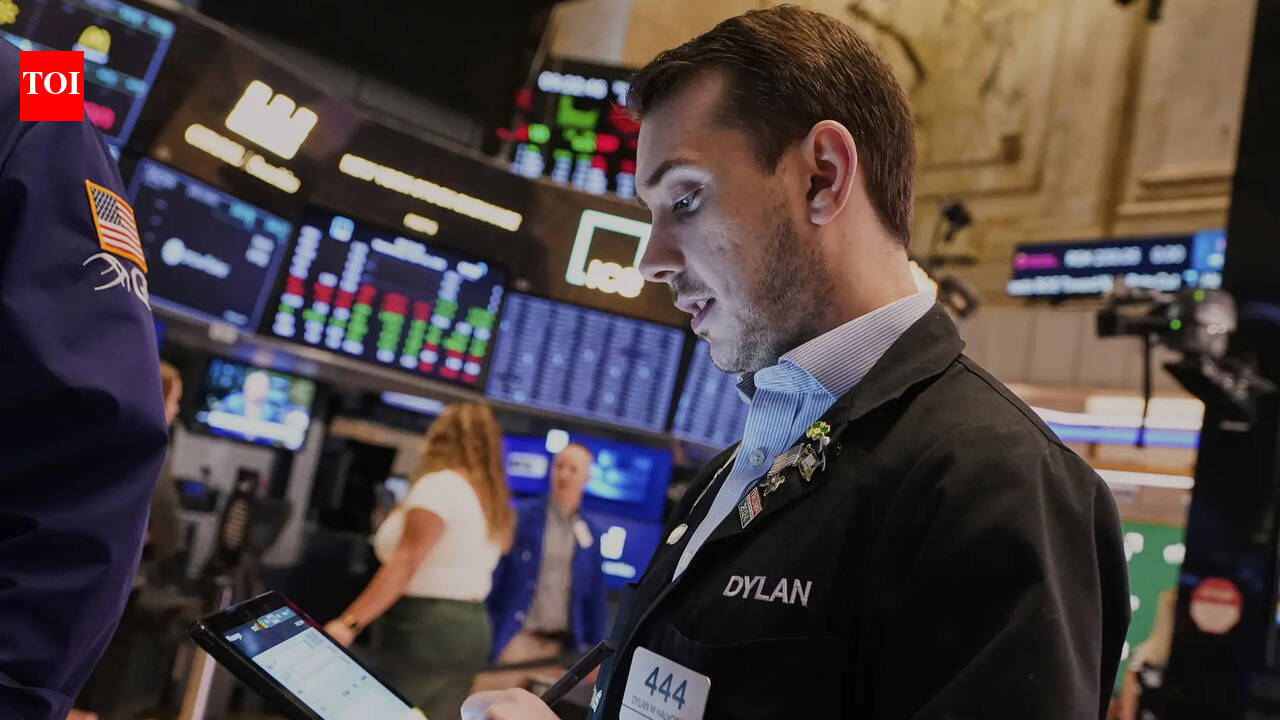
US stocks today: Wall Street inches higher as markets eye ceasefire deadline; Dow jumps 300 points, S&P 500 remains flat – The Times of India

Soccer’s incredible shrinking shin guards could be a big problem

-

 Fashion5 days ago
France’s LVMH Q1 revenue falls 6%, shows resilience amid Iran war
-

 Sports1 week ago
The case for Man United’s Fernandes as Premier League’s best
-

 Entertainment1 week ago
Palace left in shock as Prince William cancels grand ceremony
-
 Business1 week ago
UK could adopt EU single market rules under new legislation
-

 Entertainment6 days ago
Is Claude down? Here’s why users are seeing errors
-

 Fashion1 week ago
Energy emerges as biggest cost driver in textile margins
-
 Business1 week ago
Delta Air Lines unveils first new Delta One suite in premium cabin arms race
-
 Fashion1 week ago
Asia claims largest share of markets on Kearney FDI Confidence Index