

Politics
Yemen’s southern separatists call for path to independence amid fighting over key region

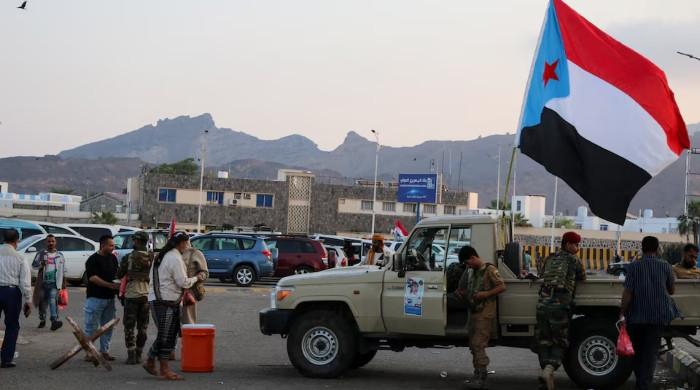
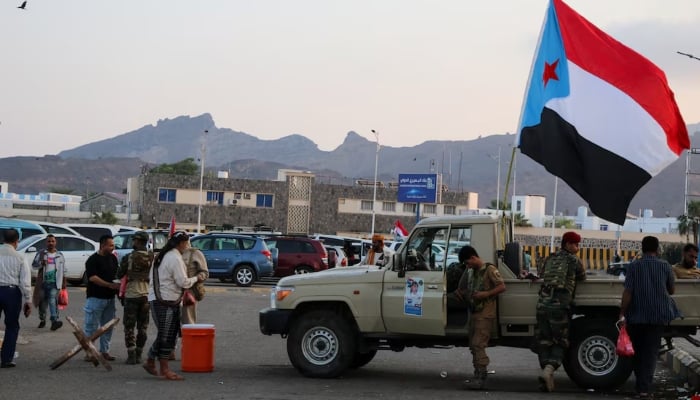
- STC says starting two-year process towards referendum.
- Saudi-backed forces took back parts of Hadramout on Friday.
- Yemen crisis triggers feud in Gulf region.
Yemen’s southern separatist movement said on Friday it aimed to hold a referendum on independence from the north in two years, as Saudi-backed forces fought to recapture areas the separatists seized last month in a move that triggered a major feud between Gulf powers.
The statement by the UAE-backed Southern Transitional Council was the clearest indication yet of its intention to secede, but may be seen by Yemen’s internationally recognised government and its Saudi backers as an escalation of the crisis.
It came hours after the government said it had launched an operation to recapture the crucial Hadramout province, one of the main areas seized by the STC last month, with Saudi military support.
Major power shift
The surprise advance by the separatists in early December shifted power in Yemen, which has been at war for more than a decade, fracturing the coalition against the Houthis and laying bare divisions between Gulf allies Saudi Arabia and the UAE.
Yemen has been split for years between the northern highlands, held by the Iran-backed Houthi group, and forces including the southern separatists that are supported by Gulf states under the internationally recognised government.
Once the twin pillars of regional security, OPEC members Saudi Arabia and the United Arab Emirates have in recent years seen their interests diverge on issues ranging from oil quotas to geopolitics.
Neither the internationally backed government nor Saudi Arabian officials could immediately be reached for comment on the STC statement.
Saba news agency reported early on Saturday that Rashad al-Alimi, head of Yemen’s Saudi-backed presidential council, has submitted a request to Saudi Arabia to host a forum aimed at resolving the southern issue.
Al-Alimi said he hopes the forum would bring together all southern factions “without distinction,” including the UAE-backed southern separatist movement.
The request comes after a number of southern political factions and figures urged Al-Alimi to submit a request to Riyadh to host a forum after they condemned what they described as “unilateral measures” on the southern issue by STC leader Aidarous Al-Zubaidi.
Saudi Arabia’s foreign ministry welcomed the request, calling on southern factions to participate in the planned forum.
On Friday, the Hadramout governor under the internationally recognised government said he had launched an operation to restore control over the area, later saying his forces had taken control of a key military base.
A local Saudi-backed tribal group and the STC both said the operation had been backed by airstrikes.
A spokesperson for the STC, Mohammed al-Naqeeb, said its forces were on full alert across the region and warned that it was ready to respond forcefully.
Oil-producing Hadramout borders Saudi Arabia and many prominent Saudis trace their origins to the province, lending it cultural and historical significance for the kingdom. Its capture by the STC last month was regarded by the Saudis as a threat.
Saudi Arabia did not immediately respond to a request for comment on the airstrikes and it was unclear if there were any casualties.
The UAE, without directly addressing Friday’s developments, said the country had approached the recent escalation with restraint, coordination and a deliberate commitment to de-escalation.
Tensions remain after UAE troop pullout
The UAE Ministry of Defence on Saturday announced the completion of the return of all UAE Armed Forces personnel from the Republic of Yemen.
The ministry stated that the return of the UAE forces follows the implementation of a previously announced decision to conclude the remaining missions of counter-terrorism units. The process has been conducted in a manner that ensured the safety of all personnel and carried out in coordination with all relevant partners.
Last week, UAE said it was pulling its remaining forces out of Yemen, after Saudi Arabia backed a call for its forces to leave within 24 hours in one of the biggest disagreements between the two Gulf oil powers to play out in public.
The move briefly eased tensions, but disagreements between the various groups on the ground in Yemen have persisted.
Saudi Arabia and the UAE are both major players in the OPEC oil exporters’ group, and any disagreements between them could hamper consensus on oil output.
They and six other OPEC+ members meet online on Sunday, and OPEC+ delegates have said they will extend a policy of maintaining first-quarter production unchanged.
Meanwhile flights remain halted at Aden international airport, the main gateway for regions of the country outside Houthi control, as the STC and Saudi Arabia traded blame as to who was responsible for the air traffic shutdown.
The stoppage was linked to new restrictions by the internationally recognised government on flights between Aden and the UAE, though there were contradictory accounts of who had ordered a halt to all air traffic.
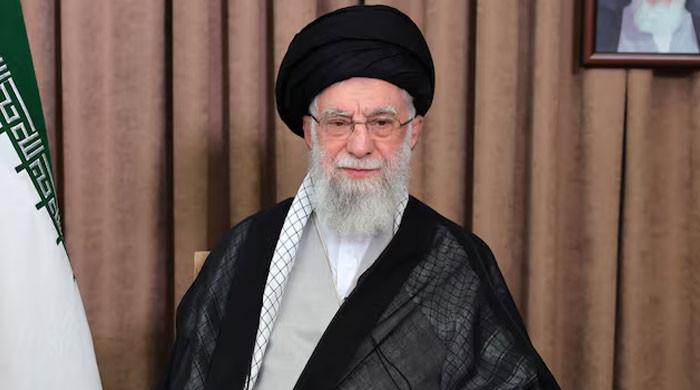
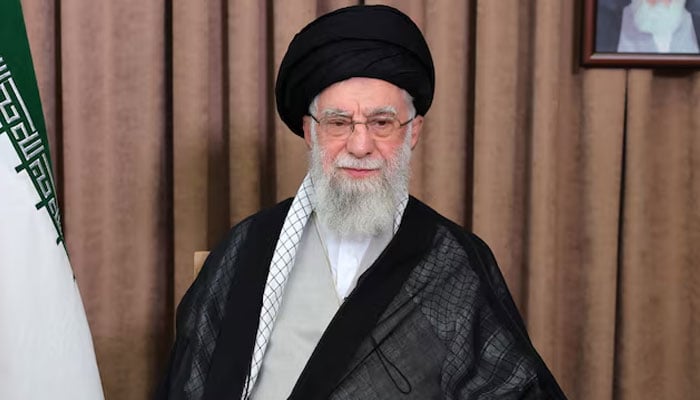
Iran’s Supreme Leader Ayatollah Ali Khamenei was martyred in US and Israeli strikes, state media confirmed, as another wave of attacks hit the country on Sunday.
Several countries, global bodies and prominent groups responded to the assassination of Iran’s supreme leader, urging de-escalation.
Pakistan
Prime Minister Shehbaz Sharif on Sunday denounced the targeting of Iran’s supreme leader in joint strikes by the United States and Israel, saying such actions were a “violation of the norms of international law”.
In a post on X, PM Shehbaz said that it was an age-old convention that the heads of state or government should not be targeted.
“Pakistan also expresses concern over the violation of the norms of international law. It is an age-old convention that the heads of state/government should not be targeted.”
Russia
President Vladimir Putin described Khamenei’s killing as a “cynical murder” that violated “all standards of human morality and international law”.
“Please accept my deep condolences in connection with the murder of the Supreme Leader of the Islamic Republic of Iran, Seyed Ali Khamenei, and members of his family, committed in cynical violation of all norms of human morality and international law.”
China
China said it “strongly condemns” the United States and Israel’s assassination of Iran’s Supreme Leader Ayatollah Ali Khamenei, calling again for a halt to military actions.
The assassination was “a serious violation of Iran’s sovereignty and security, a trampling on the aims and principles of the UN Charter and the basic norms of international relations”, Beijing’s foreign ministry said in a statement.
“China firmly opposes and strongly condemns this,” it added, calling for an “immediate halting of military operations”.
Malaysia
Malaysian Prime Minister Anwar Ibrahim on Sunday “unreservedly” condemned the killing of Iran’s Supreme Leader Ali Khamenei.
“I unreservedly condemn the killing of Iranian Supreme Leader Ali Khamenei. This act places the Middle East on the edge of grave and sustained instability. I extend my condolences to the Islamic Republic of Iran and to the Iranian people at this profoundly difficult momen,” wrote
Indonesia’s Ulema Muslim Clerical Council
“The Indonesian Ulema Council (MUI) expressed its deepest condolences for the death of Iran’s Supreme Leader, Ali Khamenei, as a result of the Israeli-American attack on February 28.
“The United States, which is playing a central role in managing the Palestinian conflict through the BoP (Board of Peace), faces a major question: is this strategy truly aimed at a just peace, or is it actually strengthening an unequal security architecture and burying Palestinian independence? Therefore, the MUI urges the Indonesian government to revoke its membership from the BoP.”
North Korea
North Korea condemned the US and Israeli strikes as an “illegal act of aggression”.
The attacks “constitute a thoroughly illegal act of aggression and the most vile form of violation of sovereignty in their nature”, a Ministry of Foreign Affairs spokesperson said, according to state media.
Iranian president
“The martyrdom of the Supreme Leader at the hands of Israel and the criminal America was a great disaster for our country… America and Israel should know that it will bring them nothing but embarrassment.”
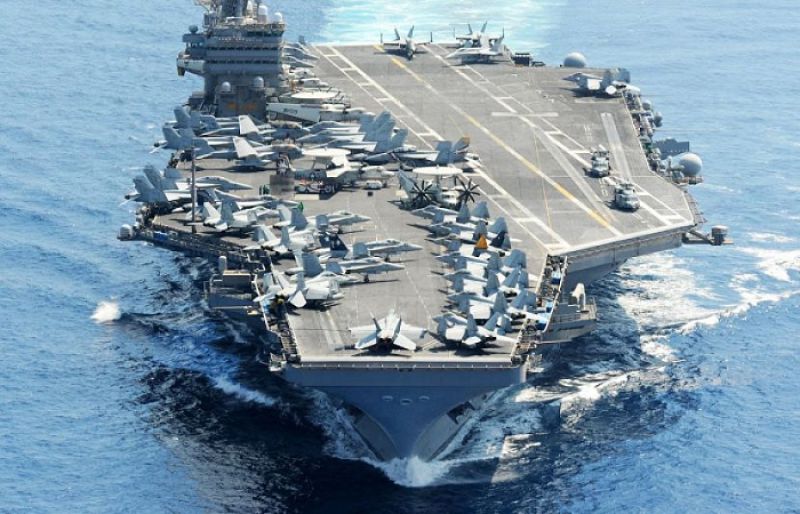
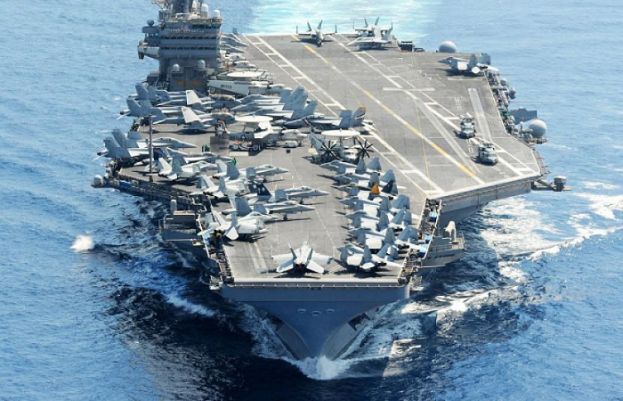
Iran’s Islamic Revolutionary Guard Corps (IRGC) on Sunday claimed it had launched ballistic missile strikes targeting a US aircraft carrier, identifying the vessel as the USS Abraham Lincoln, as part of what it called “Operation True Promise 4.”
In a statement, the IRGC’s public relations office said four ballistic missiles were fired at the carrier, adding that Iran’s military campaign had entered a “new phase.” The group warned that both land and sea would become the “burial place” for what it described as aggressors.
Multiple Waves of Strikes Announced
Earlier, the IRGC said it had launched the seventh and eighth waves of strikes under the same operation, in response to what it termed ongoing aggression by the United States and Israel.
Iran claimed it had carried out precision strikes on military targets in Israeli territory, including areas near Tel Aviv and Haifa. It also alleged that Israeli officials had taken shelter due to heightened security concerns.
Targets Across the Gulf
The IRGC further stated that it had targeted US-operated facilities in West Asia, including the US Fifth Fleet base in Bahrain, as well as installations in Qatar and the United Arab Emirates.
There has been no immediate confirmation from US or Israeli officials regarding the reported missile strikes or the extent of any damage.
Rising Regional Tensions
The developments mark a sharp escalation in regional tensions following reported military exchanges between Iran, Israel and US forces over the weekend.
Independent verification of the claims remains pending, and international observers have urged restraint amid fears of a broader conflict across the Middle East.
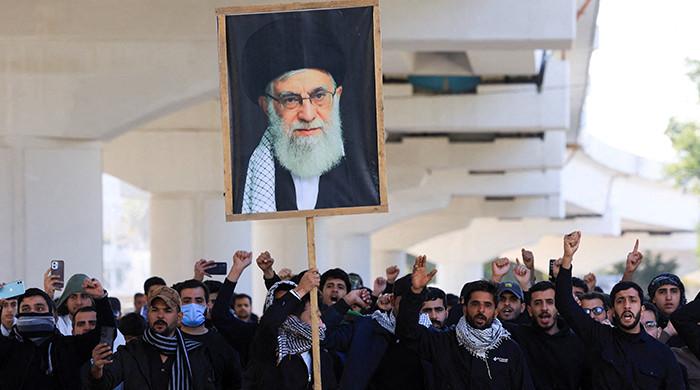
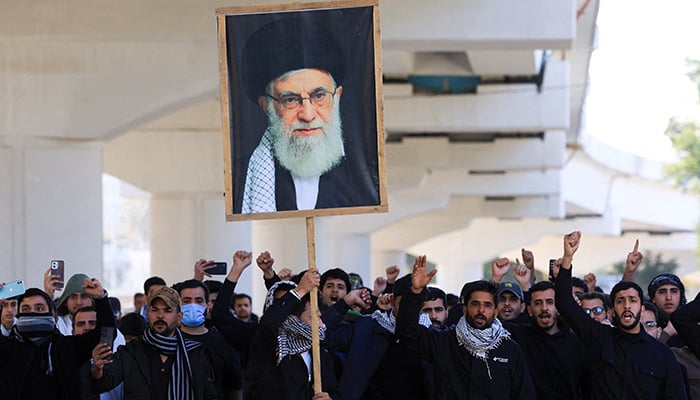
A number of Iranian senior leaders, including Supreme Leader Ayatollah Ali Khamenei, have embraced martyrdom in the “unprovoked and unwarranted” airstrikes by Israel and the United States.
As crowds gathered in Tehran, explosions rang out, and the Israeli military announced that it was again striking targets in the heart of the city — as more blasts were heard in Jerusalem, Riyadh, Dubai, Doha and Manama.
Iran’s President Masoud Pezeshkian declared Khamenei’s assassination a “declaration of war against Muslims” and warned: “Iran considers it its legitimate duty and right to avenge the perpetrators and masterminds of this historic crime.”
Iranian state media have confirmed the killing of several senior figures:
1. Ayatollah Ali Khamenei, supreme leader of Iran
2. Ali Shamkhani, representative of the Supreme Leader in the Supreme Defence Council
3. General Abdolrahim Mousavi, Iran’s Armed Forces chief of staff
4. Major General Mohammad Pakpour, commander-in-chief of the Islamic Revolution Guards Corps (IRGC)
5. Aziz Nasirzadeh, Minister of Defence
6. Gholamreza Rezaian, police intelligence chief of Iran
Separately, the daughter, son-in-law, and granddaughter of Ali Khamenei also embraced martyrdom in the US and Israeli airstrikes.


NAACP Image Award host Deon Cole issues Tourette warning after BAFTAs

Late to set-piece party, Liverpool are making up for lost time

World reacts to martyrdom of Iran’s Supreme Leader Khamenei

Pakistan carries out precision strikes on seven militant hideouts in Afghanistan

Eye-popping rise in one year: Betting on just gold and silver for long-term wealth creation? Think again! – The Times of India

Kansas’ Darryn Peterson misses most of 2nd half with cramping

-
 Politics1 week ago
Pakistan carries out precision strikes on seven militant hideouts in Afghanistan
-
Business1 week ago
Eye-popping rise in one year: Betting on just gold and silver for long-term wealth creation? Think again! – The Times of India
-
 Sports1 week ago
Kansas’ Darryn Peterson misses most of 2nd half with cramping
-
 Entertainment1 week ago
Saturday Sessions: Say She She performs "Under the Sun"
-

 Tech1 week ago
The Supreme Court’s Tariff Ruling Won’t Bring Car Prices Back to Earth
-

 Entertainment1 week ago
Viral monkey Punch makes IKEA toy global sensation: Here’s what it costs
-

 Tech1 week ago
These Cheap Noise-Cancelling Sony Headphones Are Even Cheaper Right Now
-

 Sports1 week ago
Floyd Mayweather to come out of retirement again