

Sports
Your guide to men’s college basketball Feast Week: Analysis, previews

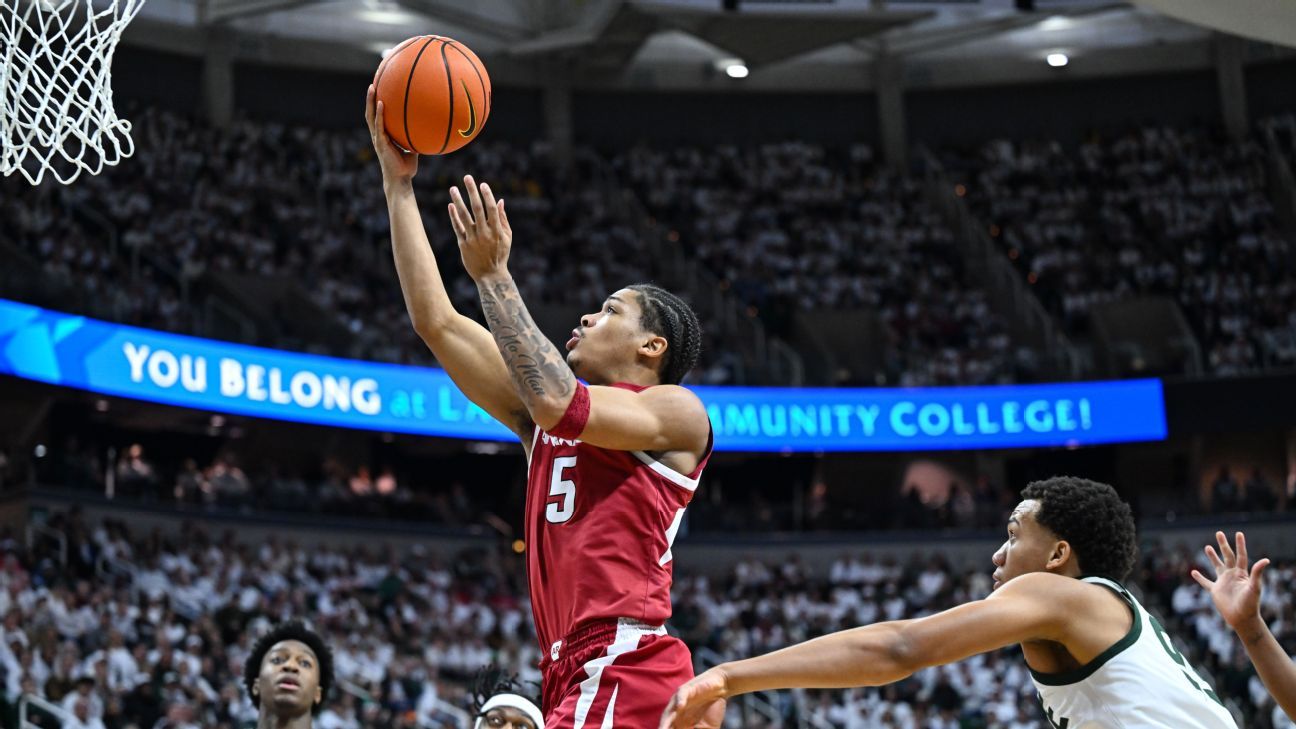
Another Feast Week, another buffet of elite nonconference matchups that offers college basketball teams the chance to pad their NCAA tournament résumés with high-quality wins.
The best action has come out of Las Vegas, where 18 of the nation’s top teams — including eight of the AP Top 25 — competed in the Players Era Festival, which culminated in a dominant performance for No. 7 Michigan.
There are more notable matchups to wrap Thanksgiving week. ESPN’s Myron Medcalf, Jeff Borzello and Joe Lunardi preview the must-watch contests below, and analyze results as they happen.
All times Eastern.
Jump to analysis of top results: Thursday | Wednesday | Tuesday | Monday
Friday games to watch
12:30 p.m. | SentinelOne Showdown
Two of America’s supreme offenses will face off at New York’s Madison Square Garden on Black Friday. Sign me up. Each suffered its first loss of the season last week, with UConn falling at home to Arizona and Illinois dropping one to Alabama in Chicago. How healthy will the Huskies be for this one? Tarris Reed Jr. missed the Arizona loss with an ankle injury, while Braylon Mullins (ankle) hasn’t played this season. UConn is capable of exploiting Illinois’ defensive issues, while the Huskies could be vulnerable to the Illini’s offensive rebounding prowess. — Borzello

Thursday results
Fort Myers Tip-Off
Jeremy Fears Jr. has been the consummate point guard for Michigan State all season, but at his core, he’s a pass-first lead guard — as evidenced by him leading the nation in assists entering Thursday. Harken back to last week’s win over Kentucky at the Champions Classic, and he was arguably the best player on the floor despite taking just three shots.
That wasn’t the case in Michigan State’s win over North Carolina, as Fears came up big throughout the second half when it felt like UNC was generating momentum. After the Tar Heels scored six straight to cut the lead to three, Fears responded with a basket. A couple of possessions later, he buried a 3 to extend the lead to eight. Then Fears got another bucket after a Caleb Wilson dunk a few minutes later to end any hopes of a Carolina run.
He finished with 19 points — 15 in the second half — to go with 7 assists and just 2 turnovers. Fears is the perfect Tom Izzo point guard and continues to prove it in big games this season. — Borzello
Cameron Boozer continues to make the case that he’s the best player in America. John Calipari put an extra defender on him nearly every time he touched the ball, but Boozer still managed to finish with 35 points and nine rebounds — and his dominance allows the Blue Devils to control every game. With Duke down in the second half on Thursday, Boozer willed his team out of a funk. He kinda does whatever he wants and Duke won — again — as a result. He might be the most unstoppable individual force in the country.
Darius Acuff Jr. (21 points) played some beautiful basketball and gave his team a chance to win. Again. But the Razorbacks have to be a better defensive squad against talented big men going forward. The same issue cost them in a loss to Michigan State earlier this month. — Medcalf
Wednesday results
Players Era Festival championship
Michigan put forth one of the most dominant Feast Weeks we’ve seen in recent memory. The Wolverines simply overwhelmed three straight opponents by a combined 110 points, averaging 99.0 points in the process.
Perhaps it’s telling that each of the teams run out of the arena by Michigan this week still leave Las Vegas with positives on their résumés.
San Diego State responded to its blowout loss by beating Oregon by 17. Auburn turned around and beat St. John’s 24 hours after losing to Michigan. Gonzaga beat Alabama by 10 two days earlier. We know these teams are good. They’re all likely NCAA tournament teams. And none landed a single punch on Dusty May’s group.
Most strikingly, the Wolverines jumped out to huge leads almost immediately in each game. They led San Diego State by 10 points six minutes into the game. They were up 16-4 on Auburn within five minutes. They took a 10-point lead on Gonzaga 190 seconds after tipoff.
Gonzaga scores in the paint as efficiently as any team in college basketball, behind an elite frontcourt. But the Bulldogs couldn’t finish against the Wolverines’ length around the basket, finishing 5-for-18 on layups. Typically, teams with the Wolverines’ size can’t run or shoot the way they did. They went 13-for-27 from beyond the 3-point line after making 14 of those shots against Auburn.
As Auburn coach Steven Pearl said after his team’s loss, “When they shoot the ball at that rate, nobody’s beating that team.” — Borzello
Players Era Festival third-place game
Kansas entered this week unranked in a November AP poll for the first time in 20 years. The Jayhawks already had losses to North Carolina and Duke, and didn’t seem as if they had the firepower to compete for 40 minutes at a high level without star guard Darryn Peterson — or Jayden Dawson, who hurt his wrist dunking in warmups Monday.
Bill Self’s team exits Vegas with three straight wins, including Wednesday’s comeback victory over Tennessee. The Volunteers led by as many as 12 points in the second half, but Elmarko Jackson and Melvin Council Jr. scored a combined 23 points over the next nine minutes to spark the comeback.
Kansas’ ability all week to find players to step up at various times was impressive. The efforts from Jackson and Council came after Tre White was the team’s best player in the first half and Bryson Tiller averaged 14.0 points in wins over Notre Dame and Syracuse. Meanwhile, Flory Bidunga has developed into a legitimate focal point of Kansas’ offense, scoring in double figures in each game in Las Vegas.
Self now gets to add Peterson back into a team with far more options than it seemed to have at the start of the season. The Jayhawks might not be national championship good, but a spot in the Top 25 all season seems like a safe bet moving forward. — Borzello
Tuesday results
Players Era Festival
This was as comprehensive and dominant a performance as we’ve seen from any team in the country this season. Michigan jumped out to a nine-point lead before the first media timeout and never let up from there. Simply put, teams with the size the Wolverines have shouldn’t be able to shoot or get out in transition and score like they did on Tuesday. They went 14-for-35 from 3-point range and had a 29-3 edge in fast-break points.
There’s no team in America that can beat Michigan when it is that effective on the offensive end — especially when combined with its No. 1 ranking in defensive efficiency, not allowing any easy buckets around the rim. Auburn was 9-23 on layups and shot 31.6% inside the arc. — Borzello
Players Era Festival
Near the five-minute mark of the second half, Tennessee’s Bishop Boswell shadowed Houston’s Kingston Flemings as he drove by. Flemings looked like he saw an easy bucket until Boswell poked the ball from his hands, leading to a turnover and points on the other end of the floor. Those gritty defensive plays swayed the game in the Vols’ favor as they forced the Cougars into a 1-for-15 stretch in the last 20 minutes.
Tennessee won ugly, with the team’s leading scorers Nate Ament and Ja’Kobi Gillespie finishing a combined 6-for-24 from the field. That might be the way the Vols have to win this season, especially when their best players struggle — and they have proved that’s enough.
Meanwhile, Houston coach Kelvin Sampson said Monday’s overtime win against Syracuse would be valuable experience for his young players, but the Cougars’ bigger concern could be the lack of consistent synergy with their top three perimeter players — Milos Uzan, Emanuel Sharp and Flemings — in Las Vegas. Their collective significance was clear when the trio couldn’t connect on shots during that cold stretch in the second half, and Houston didn’t have other ways to score. The Cougars have what it takes to be a great team, but only if Flemings, Uzan and Sharp can play well together in those stretches that change games.
Still, Flemings — the Cougars’ leading scorer on Tuesday (25 points) — has a chance to be one of the best young players Sampson has coached at Houston. — Medcalf
Players Era Festival
We’ll never know what Rick Pitino said to light a fire under St. John’s after Monday’s loss to Iowa State, but it clearly worked. The Red Storm came out aggressive on defense against Baylor on Tuesday, flying around and putting the Bears on their heels immediately to set a physical tone that Baylor struggled to match. The offensive rebounding issues that Pitino harped on after the Iowa State loss were still there (Baylor had 26 second-chance opportunities), but that was the only negative on the Red Storm’s ledger in this one. Bryce Hopkins had his best game since transferring (26 points, 5 rebounds, 5 assists), and the Red Storm made a season-high 11 3-pointers, paced by Oziyah Sellers‘ five in a second consecutive game. — Borzello
Monday results
Players Era Festival
Tyon Grant-Foster (21 points), who is gradually finding a role after missing summer workouts because of his eligibility case, could be the X factor for Gonzaga’s national title ambitions.
As dominant as Gonzaga was against Alabama, especially in the paint, it’s important to remember that the Bulldogs have had Grant-Foster in the fold for only about a month. Monday’s win was the first time the former WAC Player of the Year looked fully comfortable this season. His 6-foot-7 frame gives them a defensive boost with his ability to guard multiple positions, and he creates offensive mismatches when paired with big men Graham Ike and Braden Huff. Few opponents have an extra 6-foot-7 defender they can throw at Grant-Foster. He’s a unique problem for opponents, which changes Gonzaga’s ceiling.
For Alabama, the loss was more proof that the Crimson Tide will have trouble against top opponents if Aden Holloway isn’t the maestro they need him to be. In the first 38 minutes, he missed 9 of 15 field goal attempts and registered only one assist. Labaron Philon Jr. (29 points) could be the front-runner for SEC Player of the Year, but he can’t do everything for Nate Oats’ squad. That much was clear on Monday. — Medcalf
Players Era Festival
For Auburn to consider this trip to Las Vegas a success, the Tigers needed two things: for Tahaad Pettiford to snap out of his early-season slump, and for Keyshawn Hall to recover in time to suit up. They got both of those in Monday’s win over Oregon.
Pettiford had his best outing of the season, finishing with 24 points, four rebounds and four assists. He came out ultra-aggressive, with five shots in the first six minutes, and consistently put pressure on the defense. His perimeter shot still isn’t falling (he’s 8-for-41 from 3 this season), but he still found ways to make plays. And Hall was not only healthy, but healthy enough to start — and make his usual impact. The UCF transfer posted 18 points and six boards, looking like one of the most productive players in the SEC.
In order to avoid going 0-2 in the desert, Oregon needs to take much better care of the ball against San Diego State on Tuesday. The Ducks gave the ball away to the Tigers 18 times and rank in the bottom third nationally in turnover rate. The Aztecs, meanwhile, force turnovers at a top-10 clip. — Borzello
Players Era Festival
It was billed as a battle between two of the best defensive teams in the country, two teams that force turnovers at a high rate — specifically, in the case of Iowa State, at the highest rate. But the first half was more up-tempo and back-and-forth than expected, before the defensive grind-it-out affair commenced down the stretch. Iowa State’s frontcourt duo of Milan Momcilovic (23 points) and Joshua Jefferson (17) caused problems for St. John’s defense, and the Red Storm really struggled to generate clean looks down the stretch without a consistent playmaker at the point of attack.
All eyes for Iowa State are on Tamin Lipsey, who left the game in the final minutes and went straight back to the locker room with his jersey over his face. — Borzello
NEWYou can now listen to Fox News articles!
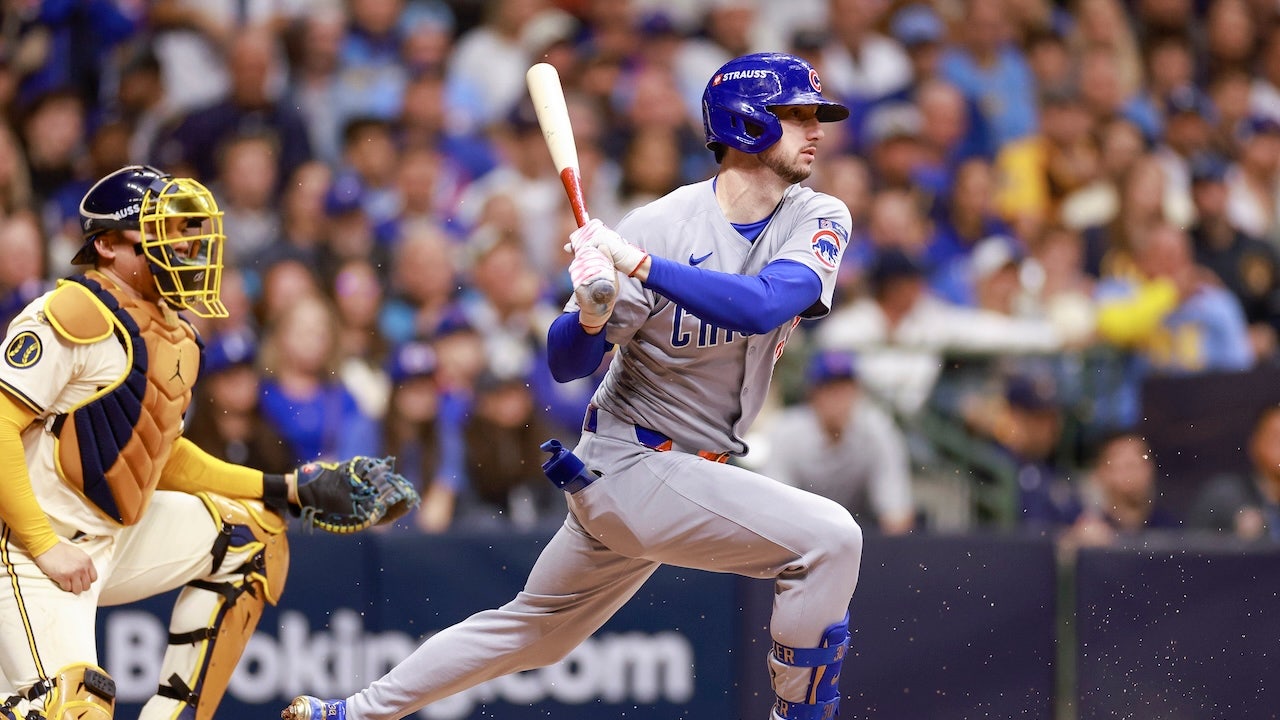
Former Chicago Cubs and Houston Astros star outfielder Kyle Tucker has agreed to a $240 million, four-year contract with the Los Angeles Dodgers, per multiple reports.
Tucker’s $60 million average annual value would be the second-highest in baseball history, not factoring discounting, behind Shohei Ohtani’s $70 million in his 10-year deal with the Dodgers that runs through 2033.
CLICK HERE FOR MORE SPORTS COVERAGE ON FOXNEWS.COM
Kyle Tucker #30 of the Houston Astros runs to third base during the first inning against the Cleveland Guardians at Progressive Field on September 28, 2024, in Cleveland, Ohio. (Nick Cammett/Diamond Images via Getty Images)
When healthy, Tucker is among the best all-around players in the majors. But the outfielder has played in just 214 regular-season games over the past two years.
CUBS, ALEX BREGMAN AGREE TO 5-YEAR DEAL: REPORTS
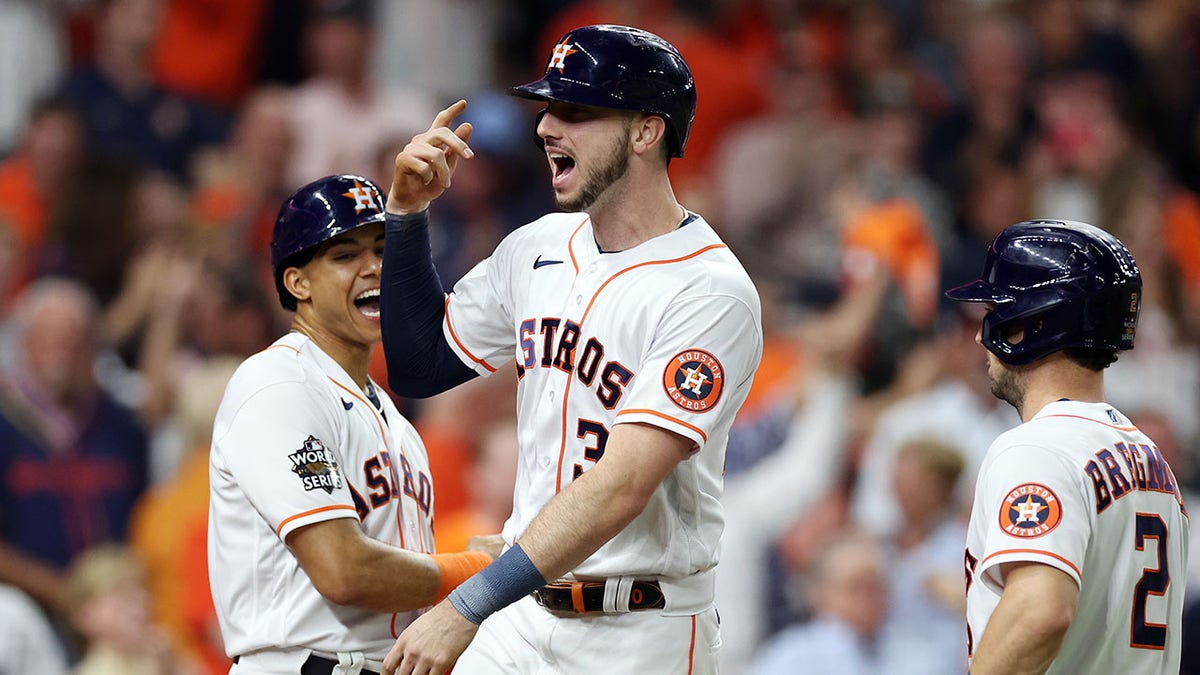
Jeremy Pena #3, Kyle Tucker #30, and Alex Bregman #2 of the Houston Astros celebrate after Tucker hit a home run in the third inning against the Philadelphia Phillies in Game One of the 2022 World Series at Minute Maid Park on October 28, 2022, in Houston, Texas. (Sean M. Haffey/Getty Images)
He batted .266 with 22 homers and 73 RBIs with the Chicago Cubs last season. He was acquired in a blockbuster trade with Houston in December 2024 that moved slugging prospect Cam Smith to the Astros.
CLICK HERE TO DOWNLOAD THE FOX NEWS APP
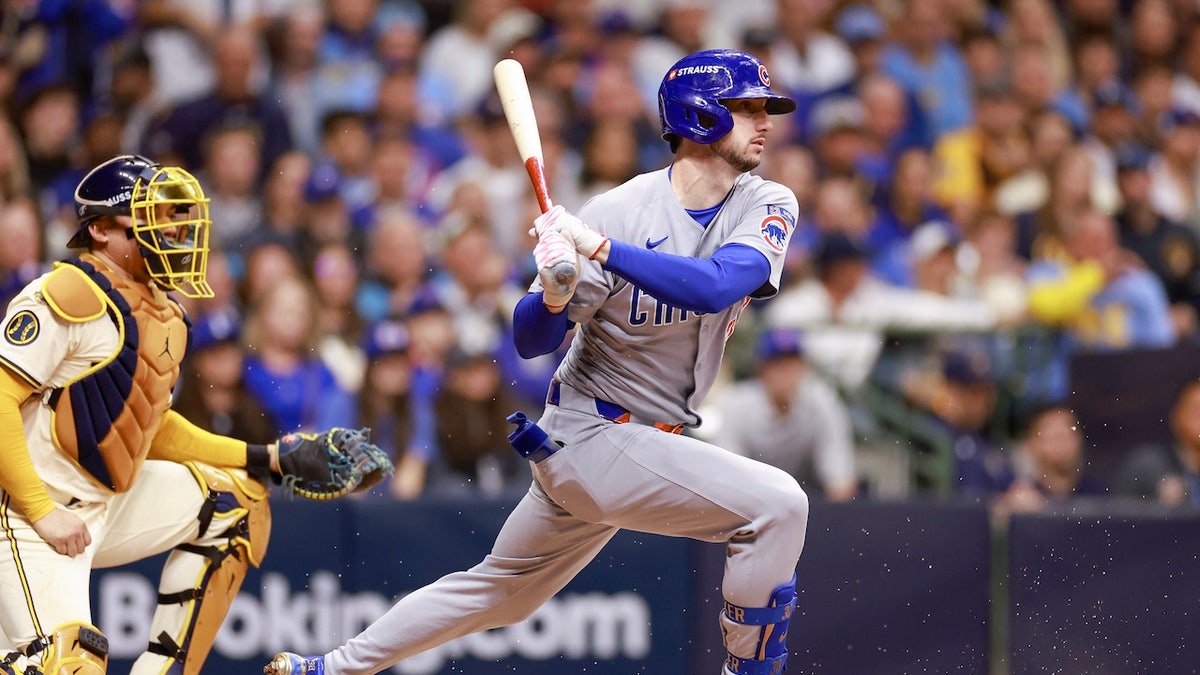
Kyle Tucker #30 of the Chicago Cubs swings the bat in the third inning during game five of the National League Division Series against the Milwaukee Brewers at American Family Field on October 11, 2025 in Milwaukee, Wisconsin. (Brandon Sloter/Chicago Cubs/Getty Images)
Tucker was slowed by a pair of injuries in his lone season with the Cubs. He sustained a small fracture in his right hand on an awkward slide against Cincinnati on June 1. He also strained his left calf against Atlanta on Sept. 2.
The Associated Press contributed to this report.
Follow Fox News Digital’s sports coverage on X, and subscribe to the Fox News Sports Huddle newsletter.
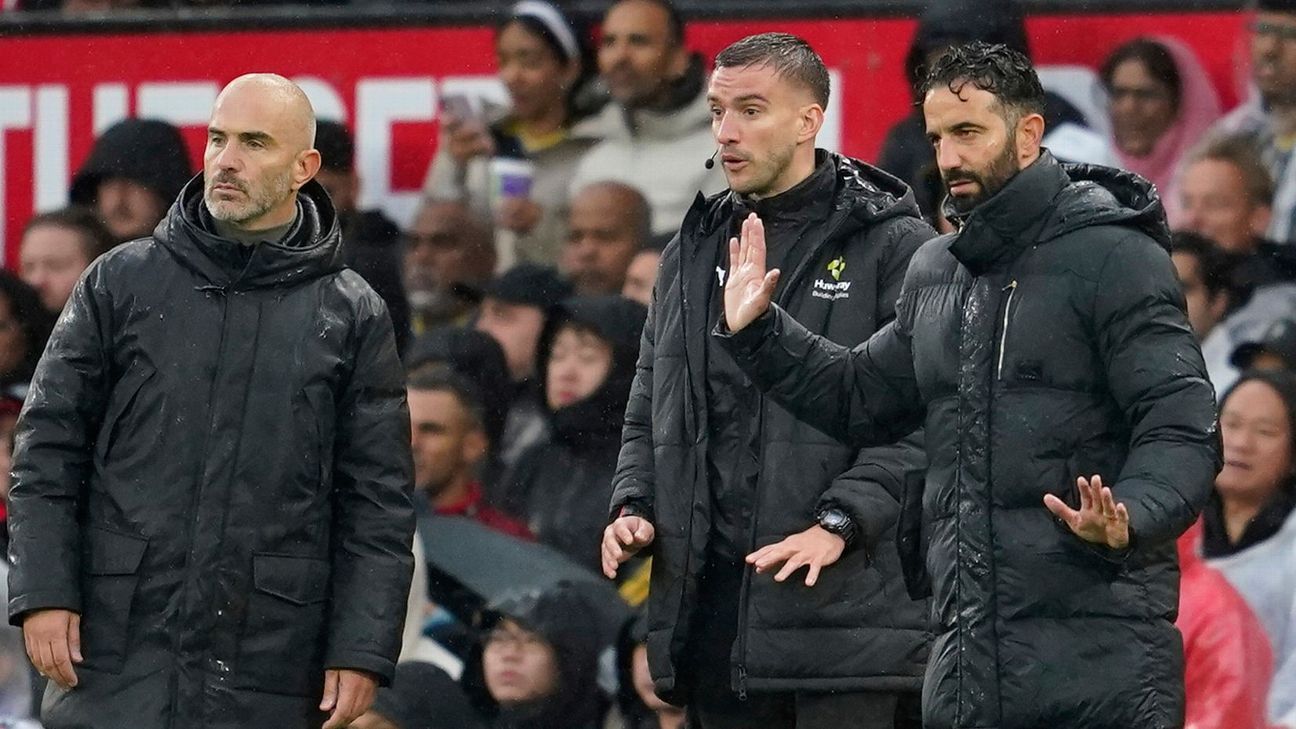
Who would be a football manager? Well, as it turns out, in the Premier League the answer is an increasing number of head coaches.
The difference between the job titles of “manager” and “head coach” may seem mere semantics at first glance, but events at Manchester United and Chelsea this month point to deeper structural problems that many clubs are now grappling with.
Both Ruben Amorim and Enzo Maresca chose to go public with frustrations they deemed as unnecessary interference from the infrastructure around them.
Maresca went first. In mid-December, after a routine 2-0 home win over Everton, which should have calmed the mood around Stamford Bridge, Maresca opted instead to ignite a fire by declaring the buildup “the worst 48 hours” of his tenure due to “a lack of support.”
– Why did Man United, Chelsea, Madrid all sack managers? It’s about culture
– How Man United chose Carrick as head coach: A no-fuss, loyal, safe option
– Real Madrid fired Xabi Alonso after 233 days. Where did it all go wrong?
His working relationship with senior figures at the club quickly eroded, and Chelsea parted company with Maresca just 19 days later. We will never know for certain, but perhaps Amorim, increasingly disgruntled at United, was inspired by those events in west London.
The following day, Amorim hinted at internal issues at a prematch news conference before facing Leeds United and, after that game, launched a full-scale assault on his bosses, insisting he joined United to “be the manager, not the head coach.” Amorim was sacked the following morning.
Chelsea have since doubled down on their existing head coach model by appointing Liam Rosenior as Maresca’s successor, not least because of his experience working for the club’s owners, BlueCo, at their sister team, Strasbourg of France’s Ligue 1.
United’s next move seems less certain after they installed Michael Carrick as an interim boss before making a permanent appointment in the summer.
The club still appears stuck at a crossroads created by legendary manager Sir Alex Ferguson’s departure in 2013, just as Arsenal were when Arsène Wenger left in 2018. They were the two most prominent exponents of the old model, which dictated that control comes at all costs for a manager. But what balance works best in 2026?
What’s the difference between ‘head coach’ and ‘manager’?
2:02
Rosenior: I’m accountable for my players mistakes
Chelsea boss Liam Rosenior refused to criticise Robert Sánchez after errors in the 3-2 Carabao Cup semifinal defeat to Arsenal.
This isn’t a new problem. Ferguson and Wenger once sat on stage together at a League Managers’ Association meeting, opining on how the preeminence they enjoyed was founded on controlling all aspects of their respective clubs. They were becoming increasingly isolated cases.
“The manager is the most important man at the club,” Wenger said. “If not, why do you sack the manager if it doesn’t go well?”
“Very good,” said Ferguson, sitting alongside him, smiling.
Ferguson later praised then-Premier League bosses Alan Curbishley and Kevin Keegan for leaving their posts on “a point of principle,” specifically that West Ham and Newcastle United, respectively, were letting players leave against the wishes of their managers. That was in 2008.
The intervening 18 years have seen the power balance shift steadily away from autonomous managerial figures toward head coaches, who are expected to work within a structure which divides responsibilities, including scouting, recruitment, medical determinations and data analysis among several others. A manager is a visionary to whom everyone must answer. A head coach is more of a prominent cog within a larger machine.
In one clear example of the transformation in thinking, Arsenal appointed nine new department heads around the time of Wenger’s departure in 2018 and trebled the number of operations staff in three years.
Top Premier League clubs routinely arrive at away games with two team buses — the expanded support staff no longer fit onto one bus with the playing squad. Club doctors Stephen Lewis (Chelsea) and Zaf Iqbal (Arsenal) were even listed on the official teamsheet for Wednesday’s Carabao Cup semifinal first-leg clash at Stamford Bridge.
Where the boundaries are drawn for each member of this infrastructure is where the tension usually lies for a head coach.
Today, there are only five Premier League clubs employing someone whose official job title is ‘manager’: Arsenal, Everton, Manchester City, Crystal Palace and Leeds.
One of those is Mikel Arteta, but he is a unique case. He was appointed as Arsenal head coach in December 2019 — following Unai Emery’s unsuccessful attempt to operate within the club’s post-Wenger model — but then “promoted” to manager in September 2020 after winning the FA Cup a month earlier in a Covid-delayed season.
Arteta revealed last week that the plan to promote him was actually hatched before his Wembley triumph.
“It was in my house,” he said. “They came to me and started to propose the idea of what they thought and the way they wanted to structure the club. That was after probably five, six months in the job.
“They believed that and [I said] ‘this is where I think I can help, this is my vision, this is what I would do, this is how I see this project.’ I presented it, and from there we started all together to start to add value to those ideas.
“I didn’t demand it. I didn’t ask for it, and they believed it was the right thing to do. When you have a leader, which is ownership in this case — Stan [Kroenke] and Josh [Kroenke, representing owners Kroenke Sports Enterprises] — and Josh that is very close to us with clear alignment to all of us what he wants to do, how he wants to create that space for everybody, I think it is very easy to work like this.
“At the end, it is about the relationships and the people that we have from great teams with very different qualities. Sometimes, I have been more on certain things; when there is somebody who is much better than me on that, I let them do it. For me, the title doesn’t really reflect the way we operate daily.”
Although KSE is an American company, well-placed sources within football point to the increase in U.S. ownership — now 22 of the top 44 clubs comprising England’s top two leagues — as a contributing factor. They want their clubs to retain a stable, long-term identity of their own, impervious to the idiosyncrasies of the man in the dugout.
The modern-day trend certainly appears to be clubs seeking to establish an identity based on principles set by their own sporting infrastructure, rather than the shorter-term whims of a manager or head coach who is just passing through. The League Managers’ Association published data last year suggesting the average tenure of a sacked manager is 1.42 years.
But there are signs head coaches are pushing back against this transient existence. Amorim and Maresca took internal tensions public while Tottenham Hotspur captain Cristian Romero broke ranks with an Instagram post that suggested the Spurs hierarchy “only show up when things are going well, to tell a few lies.”
It doesn’t help advocates of the head coach model that Arsenal under Arteta lead the Premier League from Pep Guardiola’s Manchester City and Aston Villa, who named Emery as head coach but whose influence is widely acknowledged to extend far beyond the limitations that title would suggest.
Finding the right fit
1:25
Was the Man United job ‘too big’ for Ruben Amorim?
Julien Laurens explains what went wrong for Ruben Amorim at Manchester United after being sacked following 14 months at the club.
Supporters have protested against Chelsea’s BlueCo owners, who completed their takeover in 2022 and whose methods have frustrated head coaches of high pedigree before Maresca, including Thomas Tuchel and Mauricio Pochettino.
The appointment of Rosenior has emboldened critics, suggesting the owners want a “yes man” as head coach, willing to acquiesce to the specialists who operate separately to his immediate coaching staff.
Predictably, Rosenior pushed back on any such notion when speaking at his first Chelsea news conference.
“Being a head coach, you talk about football systems and tactics,” he said. “[But] that’s 10% of the job. The job is to create spirit, energy, a culture. It doesn’t matter if you’re called a head coach, manager or anything else. The job is the same. My job is to have a team that runs, fights for each other, that plays with spirit and quality. That’s what I’m going to focus on.”
Whatever the rights and wrongs of Chelsea’s strategy — which includes employing five sporting directors, an independent medical team whose advice on player load must be followed and regular technical feedback sessions for the head coach after every game — they know exactly what they want.
Multiple sources told ESPN that BlueCo had quickly identified Rosenior as a leading candidate among a small pool of options, ruling out higher-profile names almost immediately. The belief in their model is resolute and clear.
If anything, control has been tightened. Maresca brought six staff with him from Leicester City. Rosenior has three from Strasbourg — assistant Justin Walker, first-team coach Kalifa Cissé and analyst Ben Warner — while Calum McFarlane was promoted from Chelsea’s under-21s and goalkeeper coach Ben Roberts remains in post. Set-piece coach Bernardo Cueva was appointed independently from Maresca and stayed on. All six of Maresca’s staff left.
There seems to be less clarity at United. Even caretaker boss Darren Fletcher admitting that he called Ferguson for “his blessing” before accepting the temporary position smacked of a club still struggling to emerge from the shadow of its past. They didn’t appoint a director of football and technical director until 2021, and Amorim was the first man in the club’s history to be appointed “head coach” rather than “manager.”
However, club sources have told ESPN that director of football Jason Wilcox sees recruitment falling within his sphere of influence and has said publicly that he can’t help but “interfere” in what the head coach is doing. It is, at least from the outside, a confused picture.
Carrick has brought in two staff members for his five-month stint: ex-England No. 2 Steve Holland and Jonathan Woodgate, who worked under Carrick at Middlesbrough.
‘Manager’ is a title that’s earned
Recruitment is invariably a point of friction. Club sources told ESPN that Maresca wanted a center back last summer after Levi Colwill got injured but was told to find internal solutions.
Conversely, ESPN sources say Arteta fought hard and won a battle to sign Mikel Merino from Real Sociedad in 2024 despite others involved in recruitment casting doubt over his ability and transfer fee.
Tottenham are grappling with their own approach, appointing Fabio Paratici as co-sporting director alongside Johan Lange in October, only for Spurs to confirm on Wednesday that the former will leave next month to join Fiorentina.
Gone are the days when the chief scout — and wider scouting staff that followed — operated as close allies of the manager. Some head coaches now insist on bringing their own trusted recruitment staff, often as part of their initial appointment, because they want specialists who share their way of seeing the game. This guarantees the coach a voice early in the scouting process and keeps them closely involved in the club’s strategic thinking and player selection.
Sources working in recruitment say that even though power has gradually shifted away from the manager or head coach, cases where players are signed without that individual’s involvement remain extremely rare, to the point of being almost unheard of in a top-five league environment.
However, the level of power can change over time. If a sporting director signs off on a run of mediocre transfers, a head coach may use that to push for greater influence over recruitment. Equally, when a head coach is flavour of the month with successful results, some will take the opportunity to gain a greater say in squad building.
What matters initially are the job description and the powers laid out in the contract. Perhaps the conclusion is that head coaches who want to become managers have to go to great lengths to earn it.
Arsenal recognised they needed a cultural overhaul and believed in Arteta to deliver it. Guardiola earned it before he arrived as City’s whole football structure was tailored to lure him to the club. Emery has improved Villa to such a dramatic extent that the case for greater influence was almost impossible to ignore.
Maresca and Amorim chanced their arm and failed. They almost certainly won’t be the last.
Information from ESPN’s Rob Dawson and Tor-Kristian Karlsen contributed to this report.
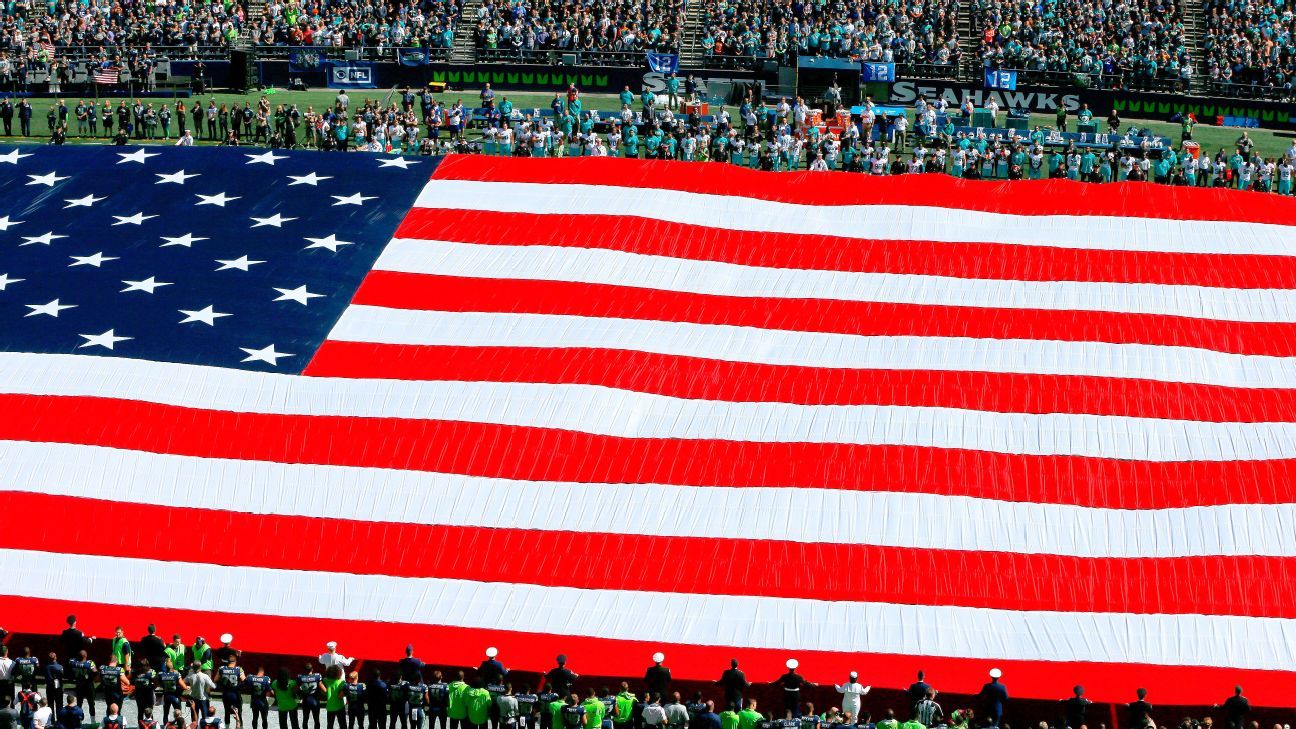
WASHINGTON — The Trump administration has identified a host of athletic competitions it classifies as “major sporting events” — aside from soccer’s 2026 World Cup and the 2028 Olympic Games — that athletes and coaches will be allowed to travel to the U.S. to take part in despite a broad visa ban on nearly 40 countries.
In a cable sent to all U.S. embassies and consulates Wednesday, the State Department said athletes, coaches and support staff for the World Cup, the Olympics and events endorsed or run by a long list of collegiate and professional sporting leagues and associations would not be subject to the full and partial travel bans that apply to citizens of 39 countries and the Palestinian Authority.
However, the cable made clear that foreign spectators, media and corporate sponsors planning to attend the same events would still be banned unless they qualify for another exemption.
“Only a small subset of travelers for the World Cup, Olympics and Paralympics, and other major sporting events will qualify for the exception,” it said.
President Donald Trump’s administration has issued a series of immigration and travel bans as well as other visa restrictions as part of ongoing efforts to tighten U.S. entry standards for foreigners. At the same time, the administration has been looking to ensure that athletes, coaches and fans are able to attend major sporting events in the U.S.
Trump’s Dec. 16 proclamation banning the issuance of visas to the 39 countries and the Palestinian Authority had carved out an exception for athletes and staff competing in the World Cup, the Olympics and other major sporting events. It delegated a decision on which other sporting events would be covered to Secretary of State Marco Rubio.
Wednesday’s cable lists the events that are covered, including “all competitions and qualifying events” for the Olympic Games, Paralympic Games, Pan-American Games, and Para Pan-American Games; events hosted, sanctioned or recognized by a U.S. National Governing Body; all competitions and qualifying events for the Special Olympics; and official events and competitions hosted or endorsed by FIFA, soccer’s governing body, or its confederations.
The exemption also will cover official events and competitions hosted by the International Military Sports Council, the International University Sports Federation and the National Collegiate Athletic Association as well as those hosted or endorsed by U.S. professional sports leagues such as the National Football League, the National Basketball Association and Women’s National Basketball Association, Major League Baseball and Little League, National Hockey League, Professional Women’s Hockey League, NASCAR, Formula 1, the Professional Golf Association, Ladies Professional Golf Association, LIV Golf, Major League Rugby, Major League Soccer, World Wrestling Entertainment, Ultimate Fighting Championship and All Elite Wrestling.
The cable said other events and leagues could be added to the list.
Of the 39 countries, a full travel ban applies to Afghanistan, Burkina Faso, Chad, the Republic of the Congo, Equatorial Guinea, Eritrea, Haiti, Iran, Laos, Libya, Mali, Myanmar, Niger, Sierra Leone, Somalia, Sudan, South Sudan, Syria, Yemen, and people with Palestinian Authority-issued passports.
A partial ban is in place for citizens of Angola, Antigua and Barbuda, Benin, Burundi, Cuba, Dominica, Gabon, Gambia, Ivory Coast, Malawi, Mauritania, Senegal, Tanzania, Tonga, Togo, Venezuela, Zambia and Zimbabwe.


Adidas Promo Codes: Up to 40% Off in January 2026

Vietnam interbank rates seen easing as credit growth cools

Canada Goose reshuffles leadership to drive global growth

-

 Politics1 week ago
UK says provided assistance in US-led tanker seizure
-

 Entertainment1 week ago
Does new US food pyramid put too much steak on your plate?
-

 Entertainment1 week ago
Why did Nick Reiner’s lawyer Alan Jackson withdraw from case?
-
 Business1 week ago
Trump moves to ban home purchases by institutional investors
-
 Sports5 days ago
Clock is ticking for Frank at Spurs, with dwindling evidence he deserves extra time
-
 Sports1 week ago
PGA of America CEO steps down after one year to take care of mother and mother-in-law
-

 Tech3 days ago
New Proposed Legislation Would Let Self-Driving Cars Operate in New York State
-
 Business1 week ago
Bulls dominate as KSE-100 breaks past 186,000 mark – SUCH TV